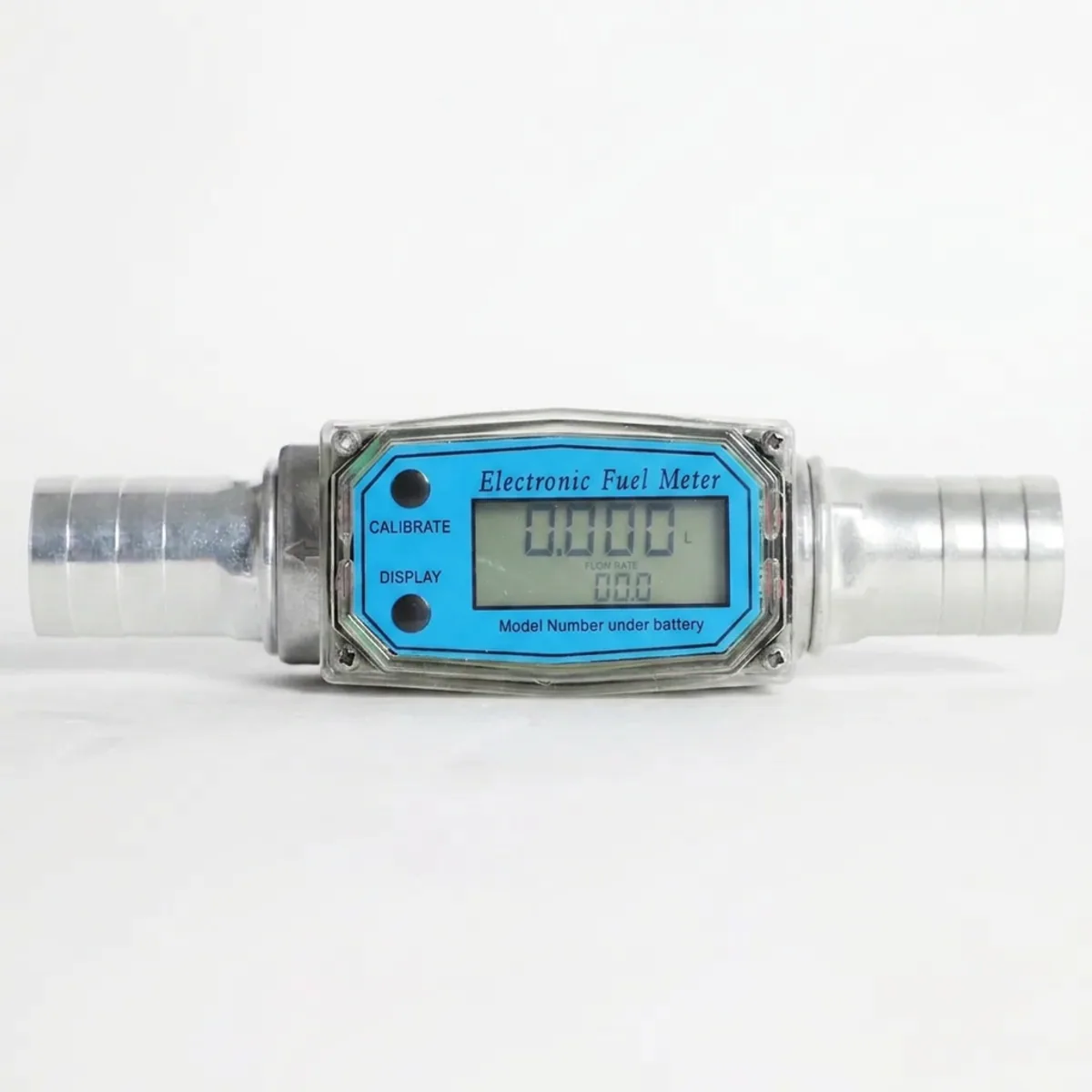
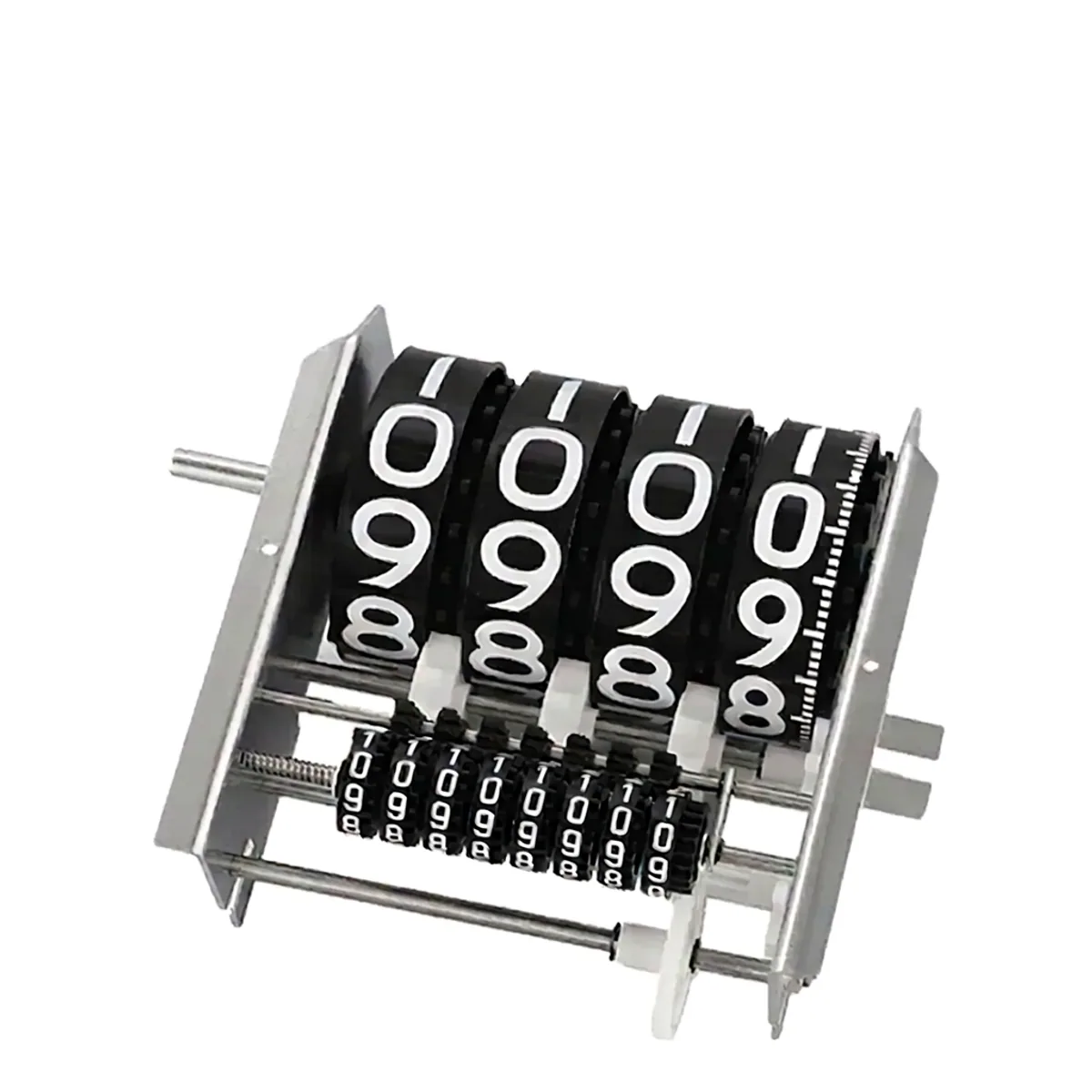
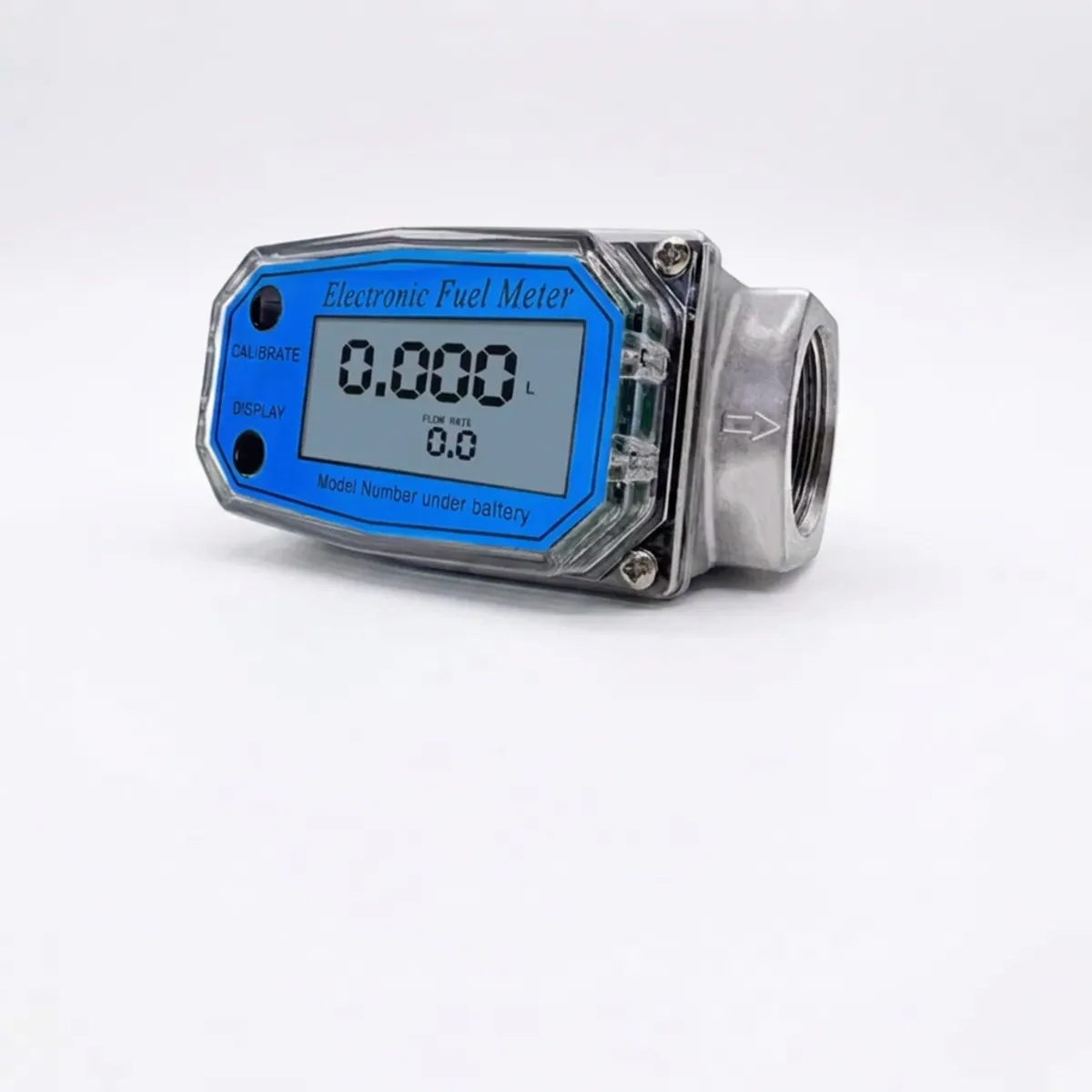
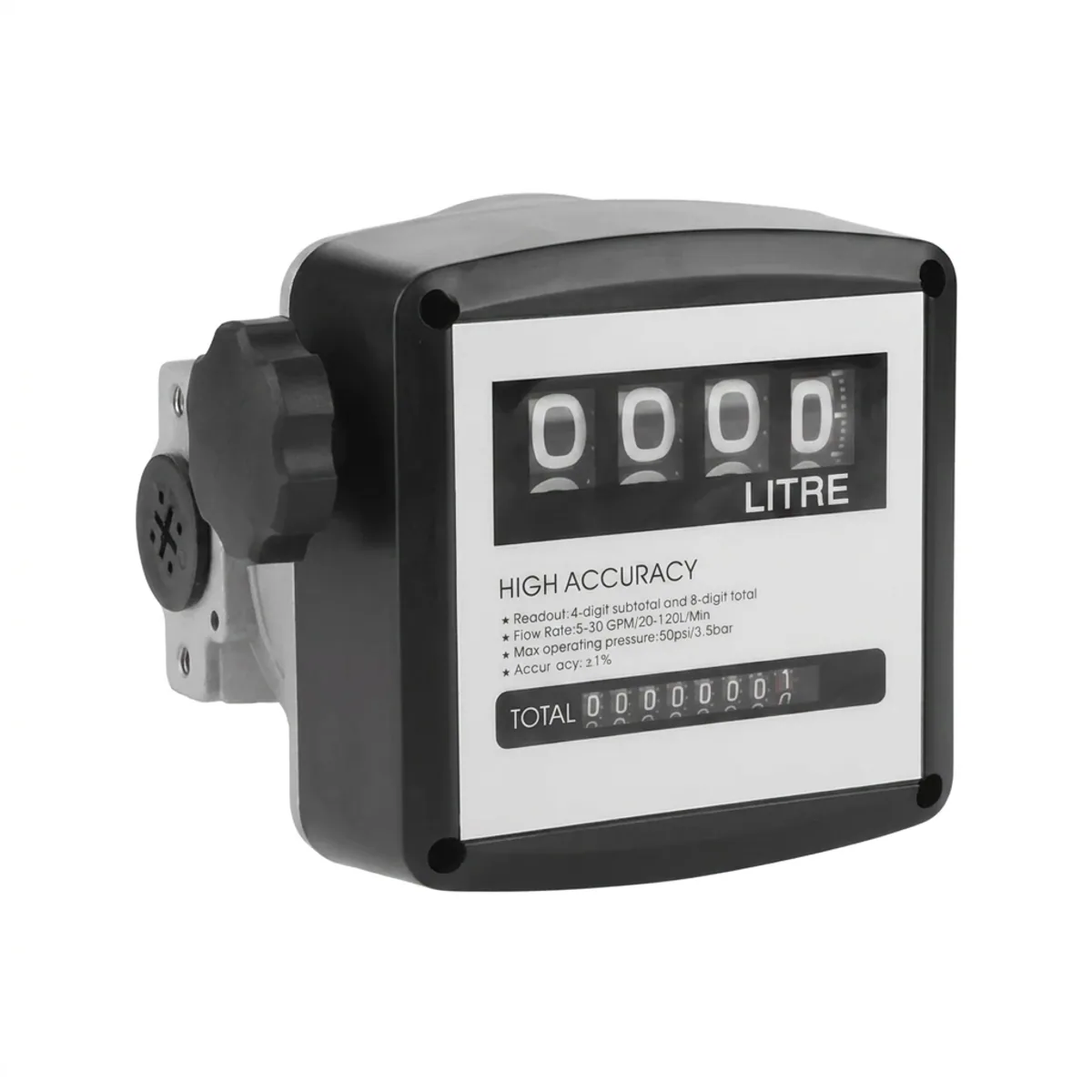
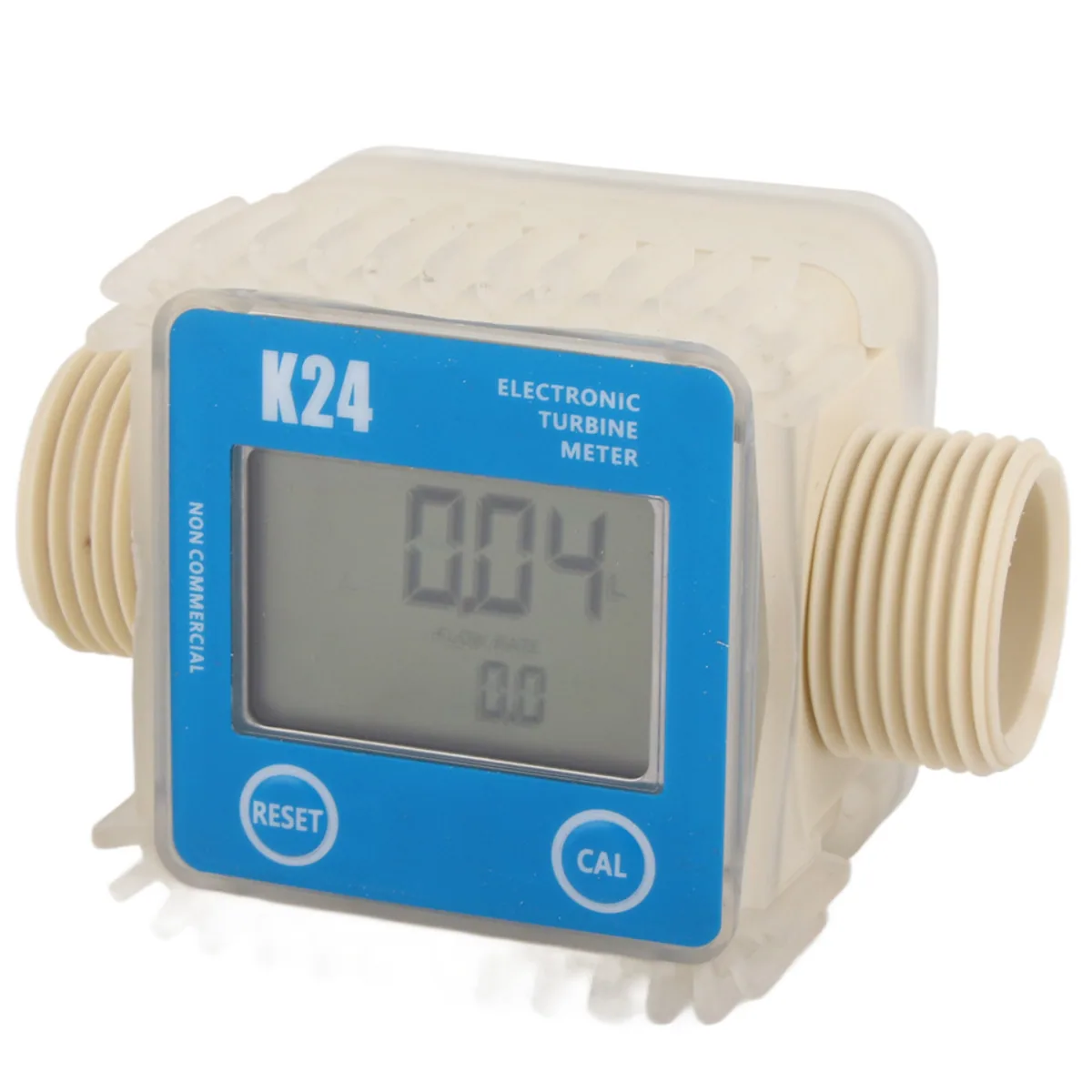
This diesel flow meter tracks fuel transfer rates with within 1% accuracy. Built from cast aluminum with internal turbine sensors, it handles diesel, kerosene, and water without seizing. The digital screen shows single-batch counts and total volume, giving you clear records during every pump transfer. Features and Benefits
- Cast aluminum housing - Resists corrosion from fuels and prevents cracking under standard pump pressures.
- Digital LCD screen - Shows both current batch volume and cumulative totals up to 99,999 units.
- Standard NPT thread options - Threads straight into 3/4-inch to 2-inch pipes without special adapters.
- Simple two-button calibration - Lets you adjust the meter factor in seconds to match different fluid thicknesses. Applications
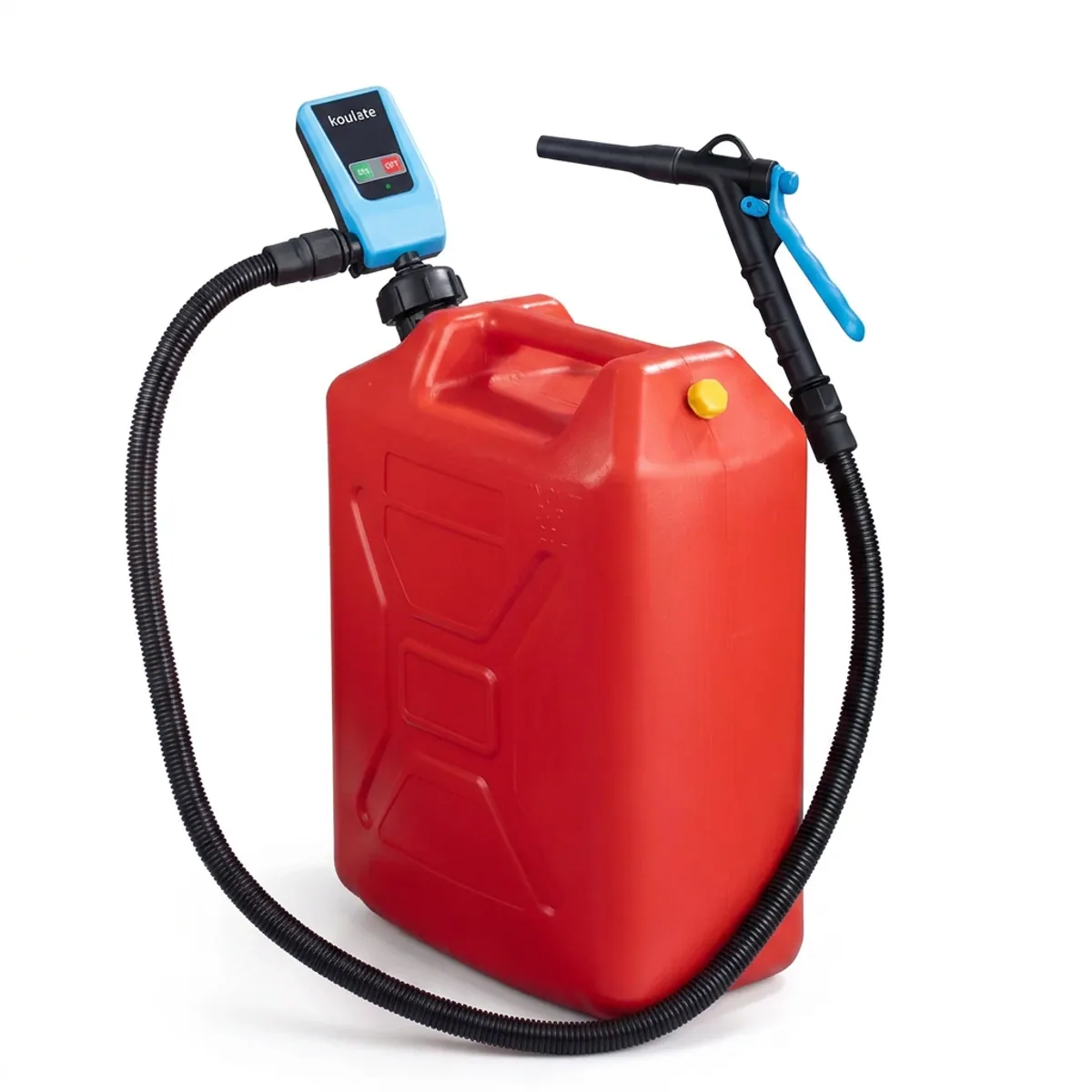
- Transfer tanks - Mount it directly onto a 12V fuel pump nozzle to measure diesel delivered to tractors and trucks.
- Farm utility stations - Track kerosene and off-road diesel consumption straight from storage drums.
- Irrigation lines - Monitor raw water volume pumping into mixing tanks or off-grid water systems.
Safety & Materials
This digital flow meter features a cast aluminum housing designed for fuel transfer rigs. It suits diesel, water, and other approved liquid fuel transfers. Do not use this gauge with petrol or volatile solvents unless explicitly certified for those fluids. Aluminum provides impact resistance on site while keeping line weight manageable. Internal moving parts often pair with stainless steel shafts in commercial turbine units to prevent premature wear. When fitting the threaded body into your line, wrap the threads with fuel-resistant PTFE tape. Keep pipe sealant clear of internal chambers to stop the internal turbine sensor from binding during operation.
Core Parts Needed:
Setting up a complete metering and transfer assembly requires compatible pipework and monitoring hardware:
- Aluminum digital turbine flow meter with 3/4", 1", 1.5", or 2" threaded ports
- Matched threaded fittings or fuel hose barbs
- Fuel transfer hose rated for diesel and liquid fuel
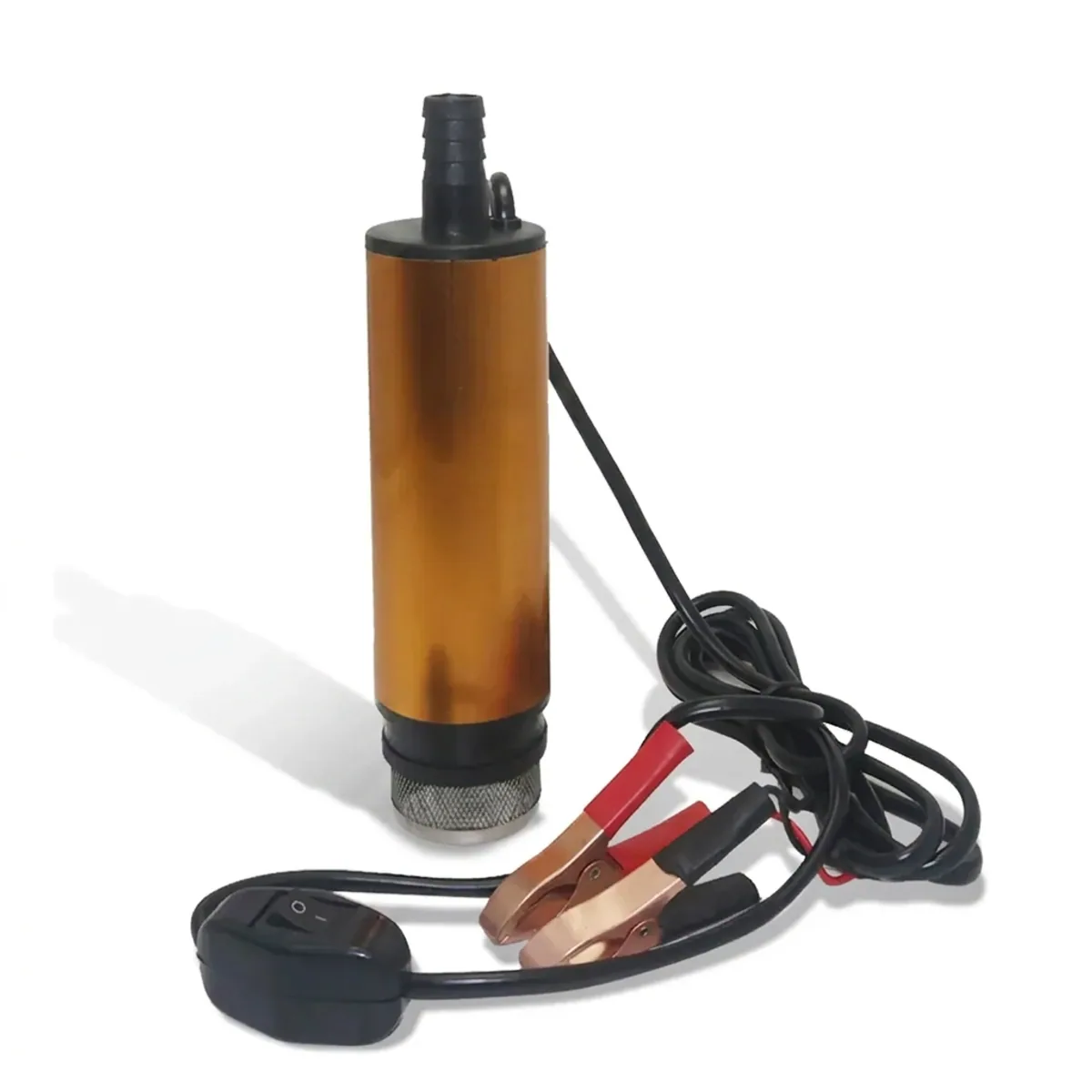
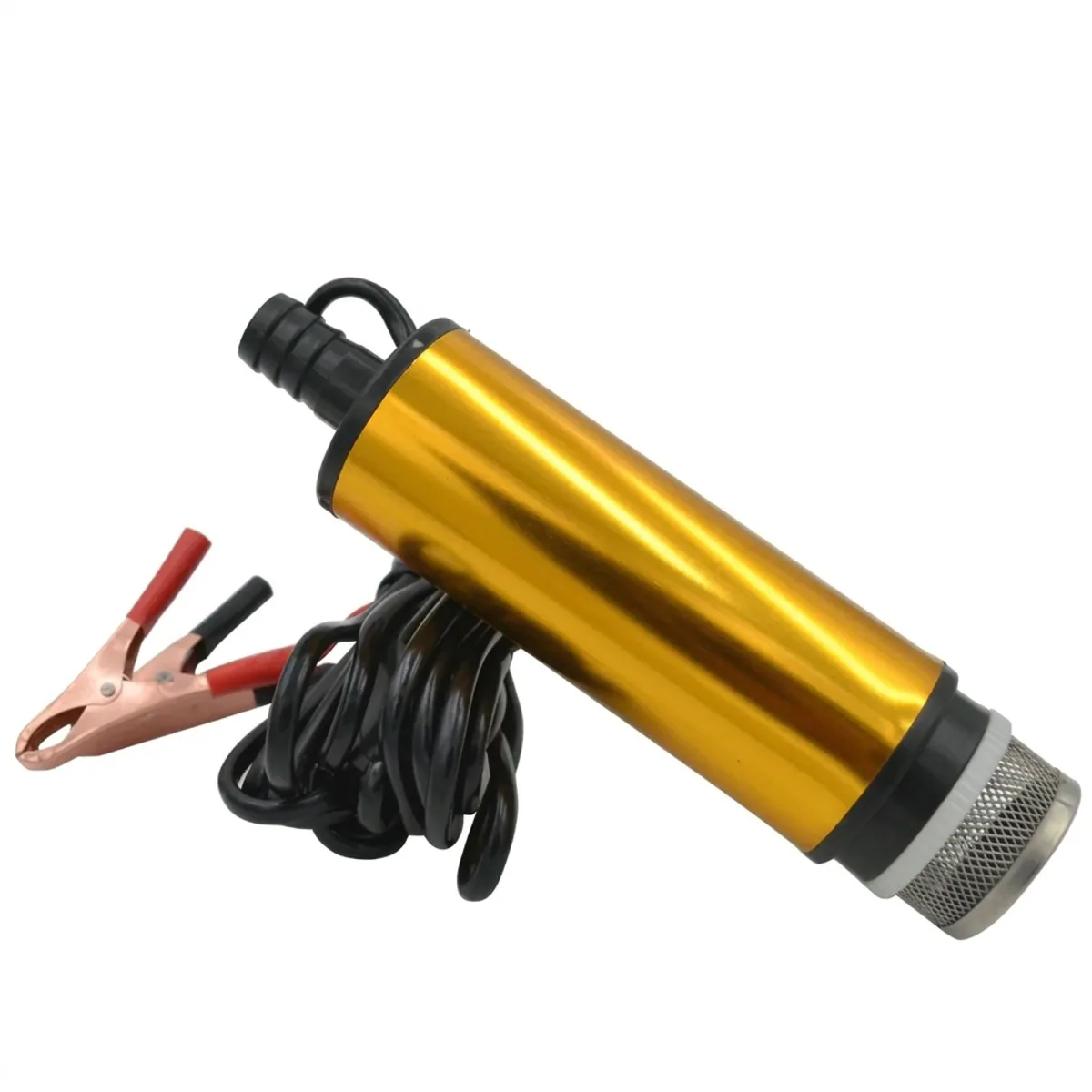
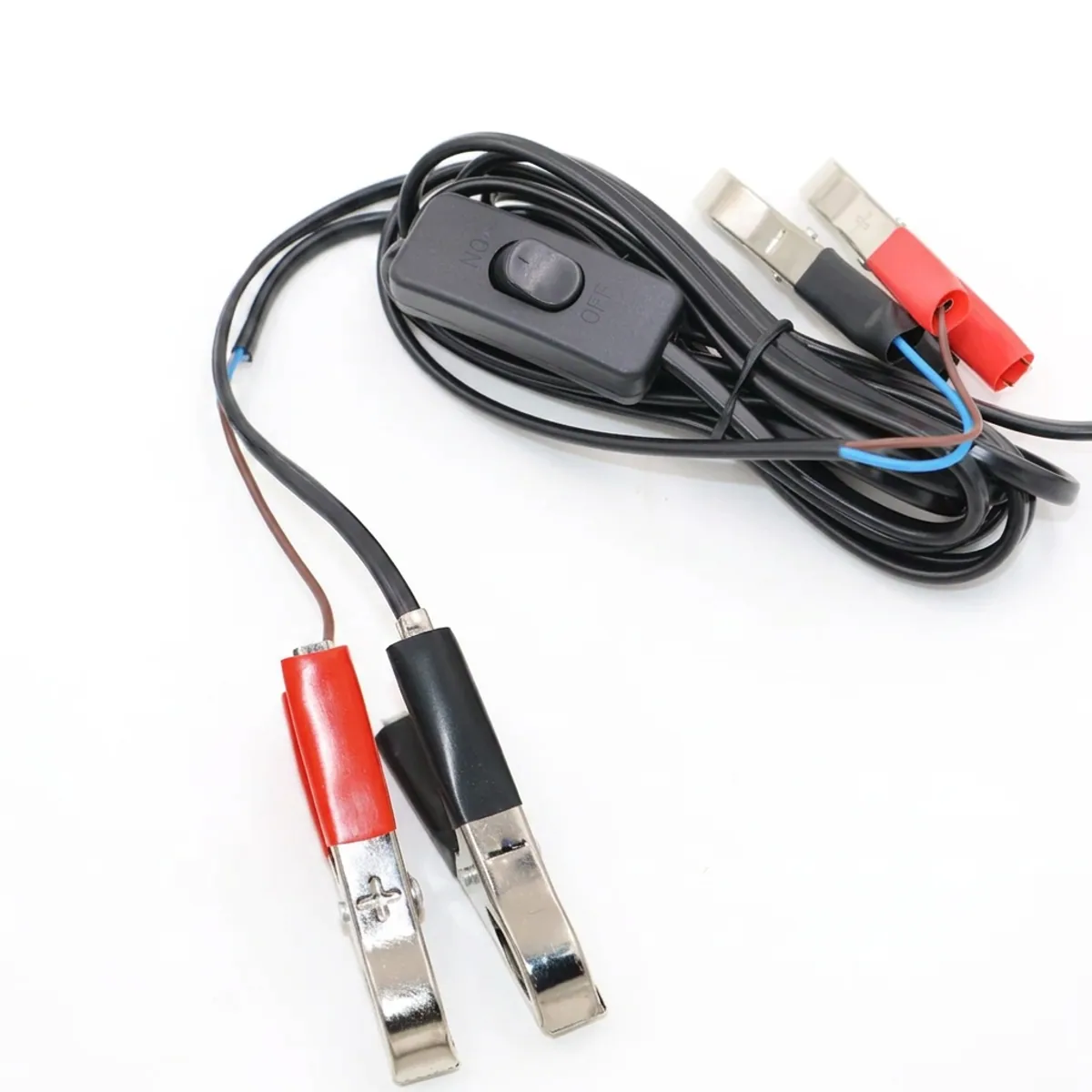
- Transfer pump powered by 12V or mains supply
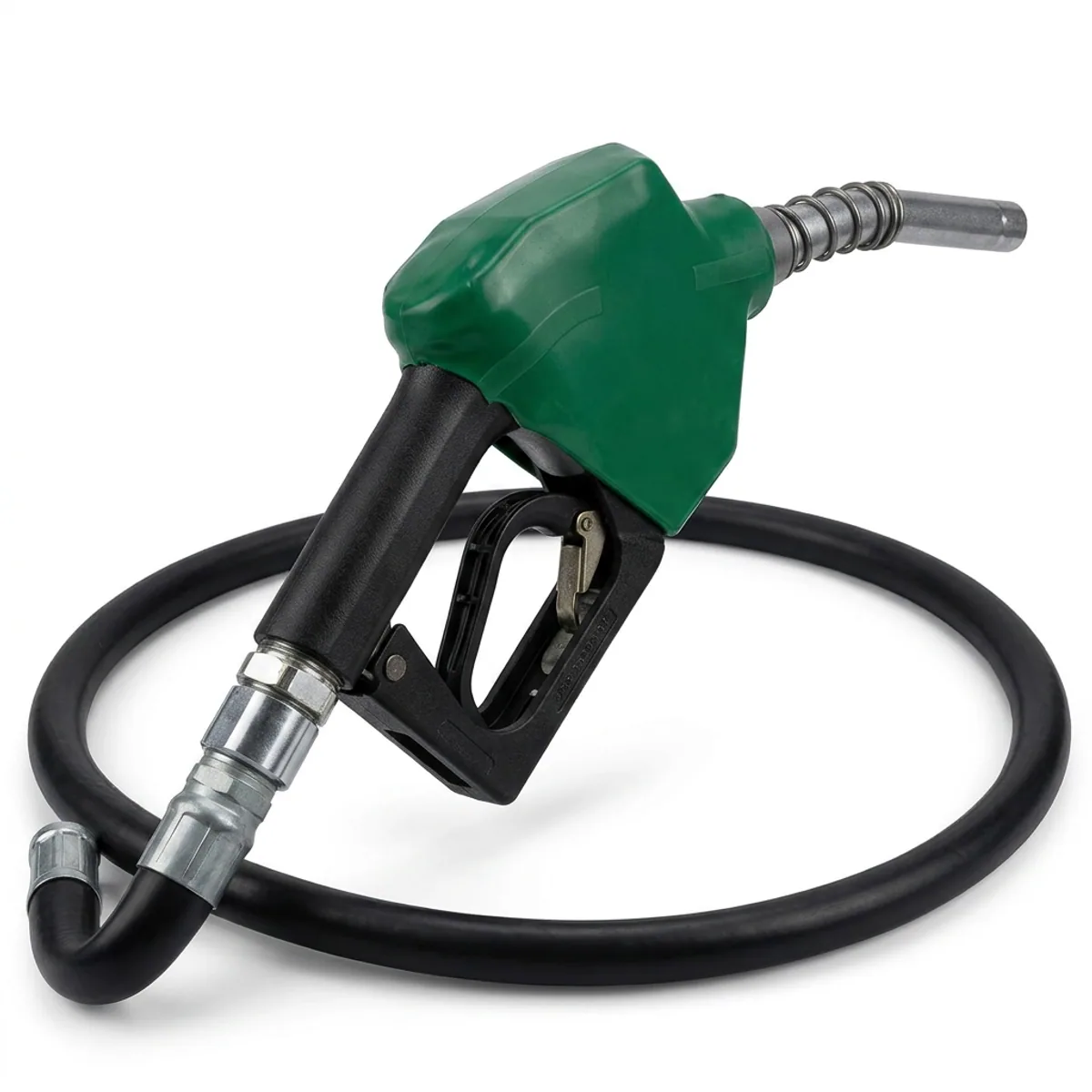
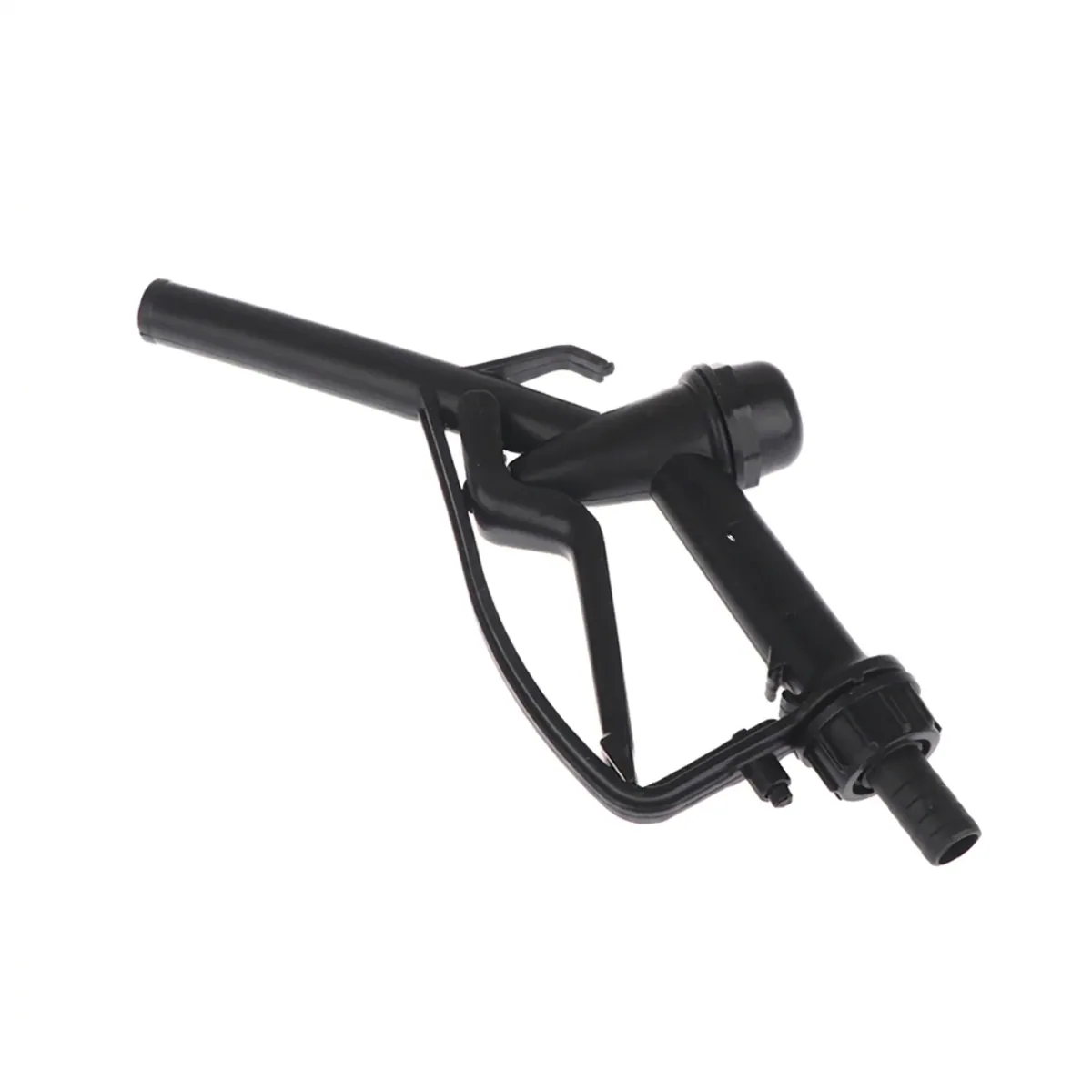
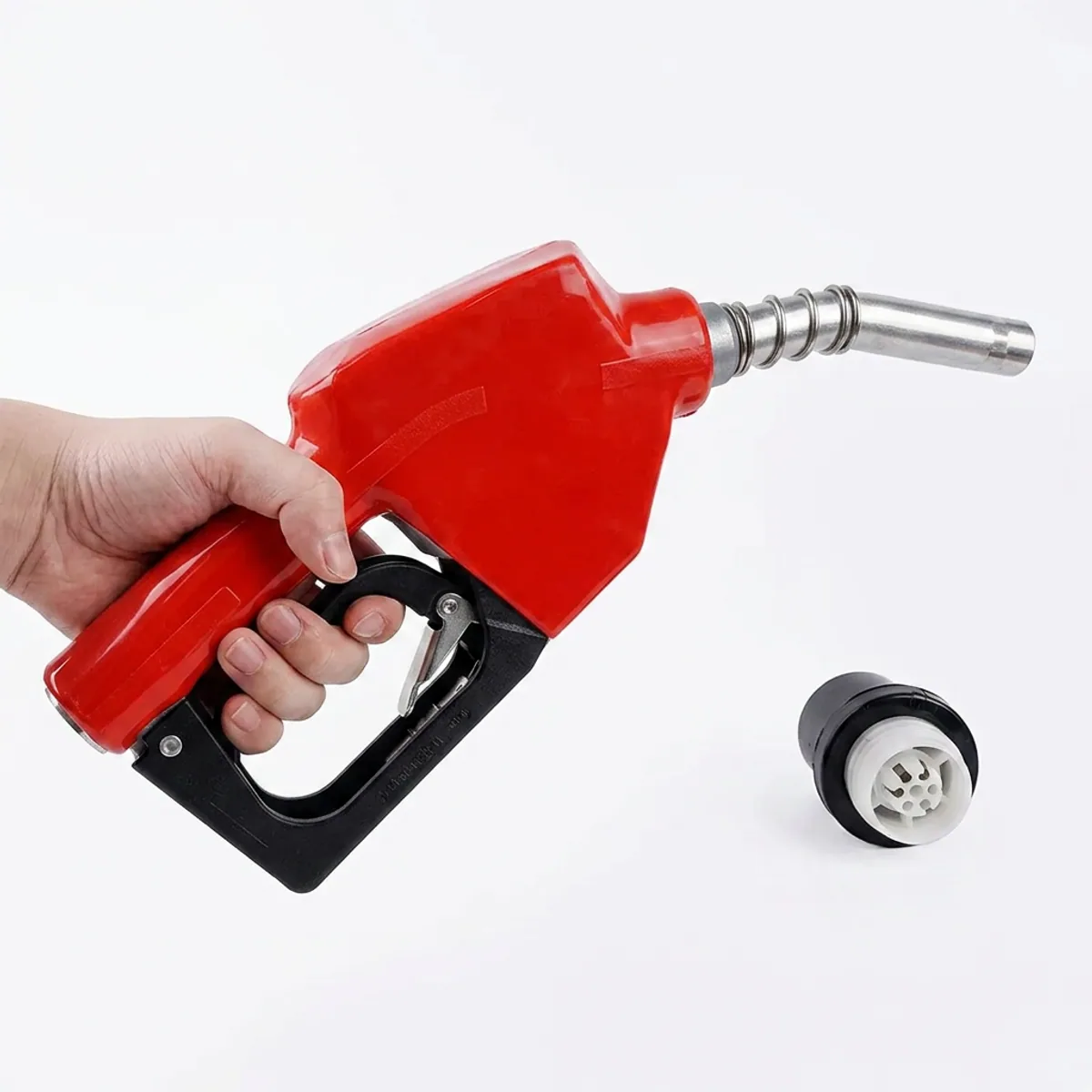
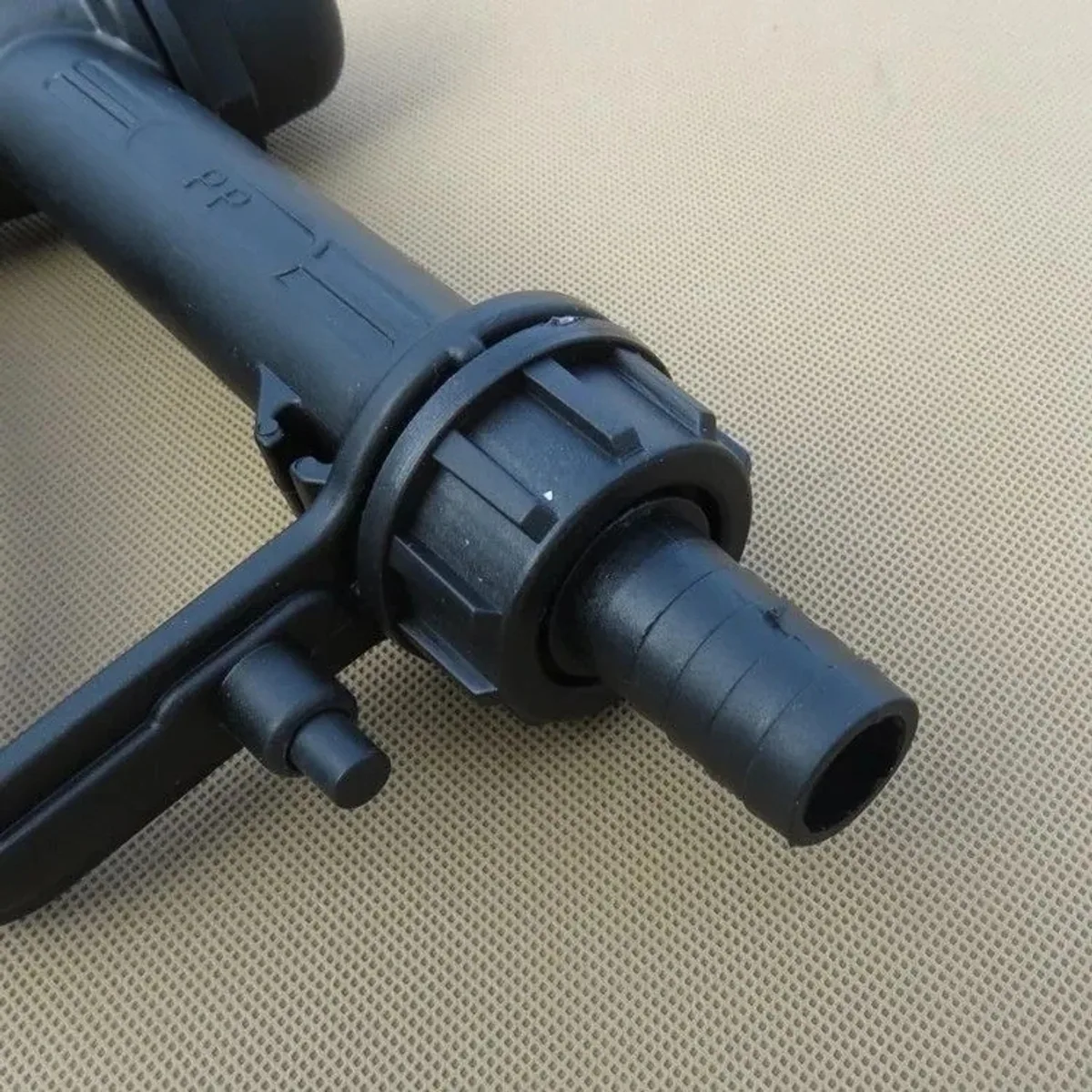
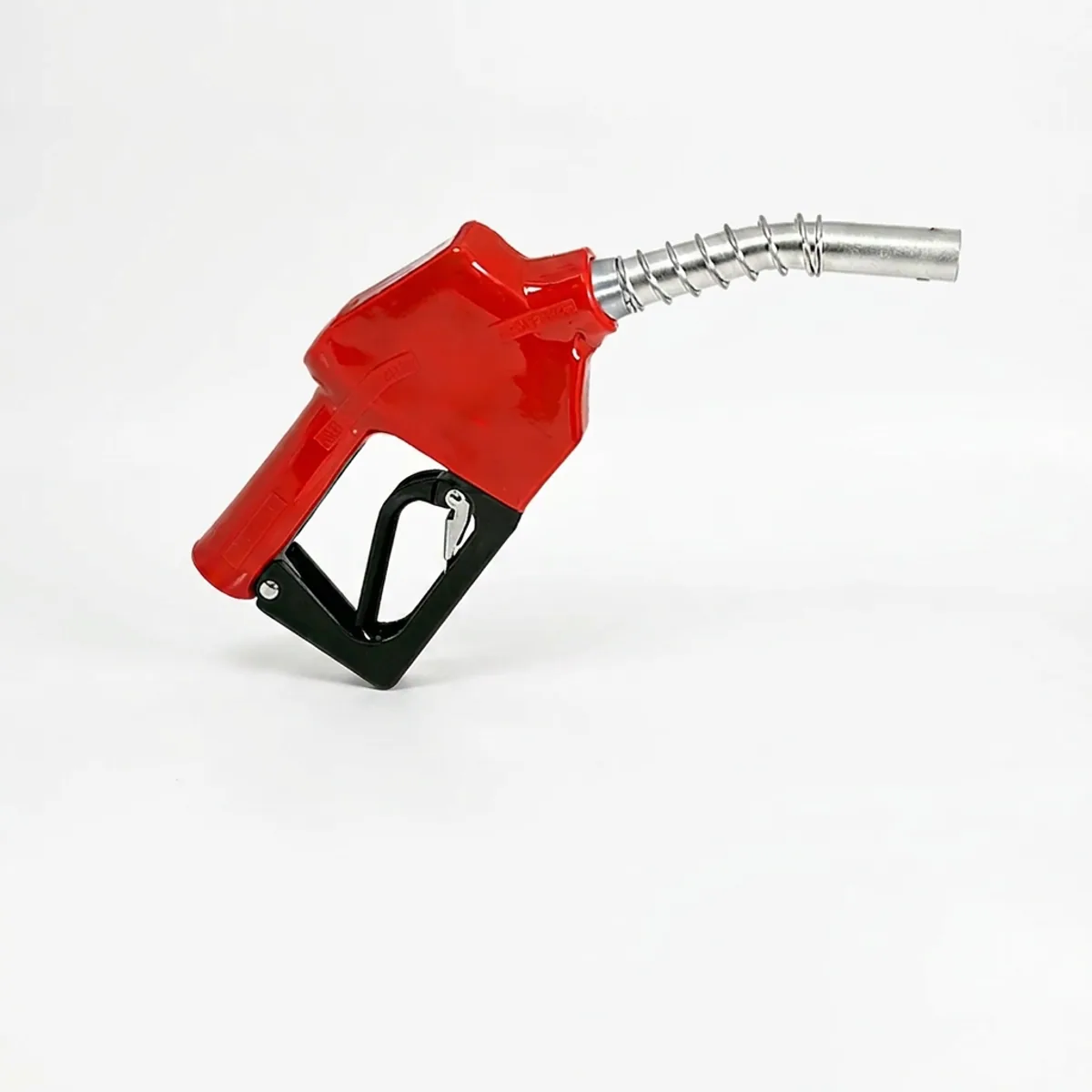
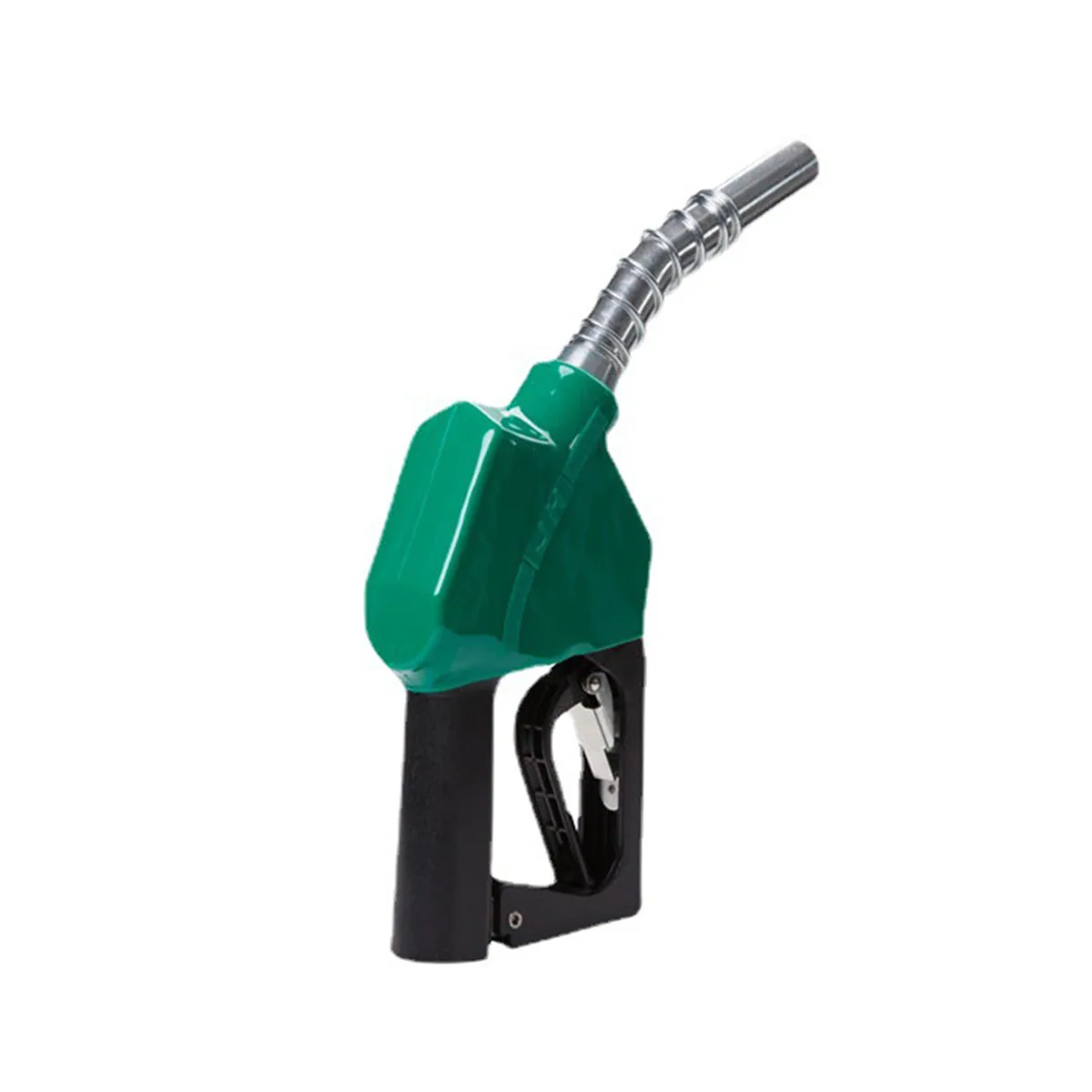
- Automatic fuel delivery nozzle
- Arduino or microcontroller board with a 5V logic input
- External pulse pickup sensor or digital interface cable
- Dedicated 12V to 5V power step-down converter
- Inline fuel filter fitted before the meter inlet
Hardware Connection & Schematic
Fit the flow meter directly downstream of your transfer pump and inline filter. Thread sizes span 3/4 inch, 1 inch, 1.5 inch, and 2 inch connections. Tradespeople asking how fuel flow meter works should note the fluid turns an internal turbine; an integrated pickup sensor registers each blade pass as an electrical pulse. When piping to an auto-shutoff nozzle, ensure proper line pressure. Trades wondering how does a fuel nozzle shut off should remember it relies on a Venturi tube at the tip; once liquid covers the hole, vacuum trips the mechanical shutoff. Connect the flow sensor signal wire to an Arduino digital interrupt pin, with common ground and a 5V or 12V feed.
Calibration & Math
Those researching how to make a fuel flow meter must understand turbine pulse calculation. The turbine sensor generates a set pulse count per volume passed, known as a K-factor. Fluid velocity determines rotational speed. To calibrate your setup, dispense a known volume of diesel into an accurate, graduated measure. Record the pulses counted by the digital display or your microcontroller. Divide the total pulses by the measured litres to find your pulses-per-litre value. Flow rate equals the pulse frequency divided by this factor. Recalibrate when switching between media like water and diesel, as changes in fluid viscosity slightly alter turbine drag and pulse counts.
Arduino Code Example
volatile unsigned long pulses = 0;
const byte sensorPin = 2;
float kFactor = 450.0;
void countPulse() {
pulses++;
}
void setup() {
Serial.begin(9600);
pinMode(sensorPin, INPUTPULLUP);
attachInterrupt(digitalPinToInterrupt(sensorPin), countPulse, RISING);
}
void loop() {
static unsigned long lastTime = 0;
if (millis() - lastTime >= 1000) {
detachInterrupt(digitalPinToInterrupt(sensorPin));
float litres = (float)pulses / kFactor;
Serial.print("Total Litres: ");
Serial.println(litres);
attachInterrupt(digitalPinToInterrupt(sensorPin), countPulse, RISING);
lastTime = millis();
}
}
Inlet/Outlet Thread Size: 3/4", 1", 1.5", 2". Material: Aluminum. Display Type: Digital LCD. Compatible Media: Diesel, Water, Liquid Fuel. Product Type: Diesel Flowm. Sensor Type: Turbine. Joint Pipe Bore Size: 1-1/4 inch (Compatible with 3/4", 1", 1.5", 2" Thread). Body Material: Cast Aluminum Alloy. Power Supply: 2 x 1.5V AAA Alkaline Batteries. Operating Flow Range: 20 - 120 L/min. Operating Temperature Range: -10°C to +60°C. Single Count Range: 0.00 - 9999.9. Total Cumulative Count Range: 0 - 999999. Maximum Operating Pressure: 20 Bar (300 PSI). Compatible Media: Diesel, Kerosene, Gasoline, Water. Display Type: Digital LCD. Measurement Accuracy: ±1%. Product Type: Digital Turbine Diesel Flow Meter. Repeatability: ±0.5%. Thread Connection Type: NPT / BSP Female Thread. Q: What are the technical specs and thread sizes for this diesel flow meter? A: This unit comes in standard NPT or BSP thread sizes including 3/4-inch, 1-inch, 1.5-inch, and 2-inch options. It features an internal turbine sensor that measures flow rates from 10 to 120 liters per minute with an accuracy rating of plus or minus 1%.. Q: What materials make up the meter housing and internal components? A: The main body is cast from corrosion-resistant aluminum to handle repeated outdoor use. Inside, the turbine assembly runs on stainless steel bearings to prevent wear during long pumping cycles.. Q: What fluids can I run through this turbine meter? A: It is calibrated for diesel, kerosene, gasoline, light oils, and plain water. Do not use it with thick motor oils, acids, or fluids containing loose sediment that could jam the turbine.. Q: What warranty and service coverage does this meter include? A: The unit includes a one-year replacement warranty against manufacturing defects in the electronics and housing. If the LCD screen fails or the sensor stops registering under normal use, you will receive a replacement unit.. Q: How does this meter save money compared to mechanical register units? A: The electronic display tracks both single-batch deliveries and cumulative lifetime volume down to two decimal places. This precise measurement helps you spot fuel theft and prevents tank overfills without the mechanical gears that wear down over time..