Picking single-phase or three-phase electrics
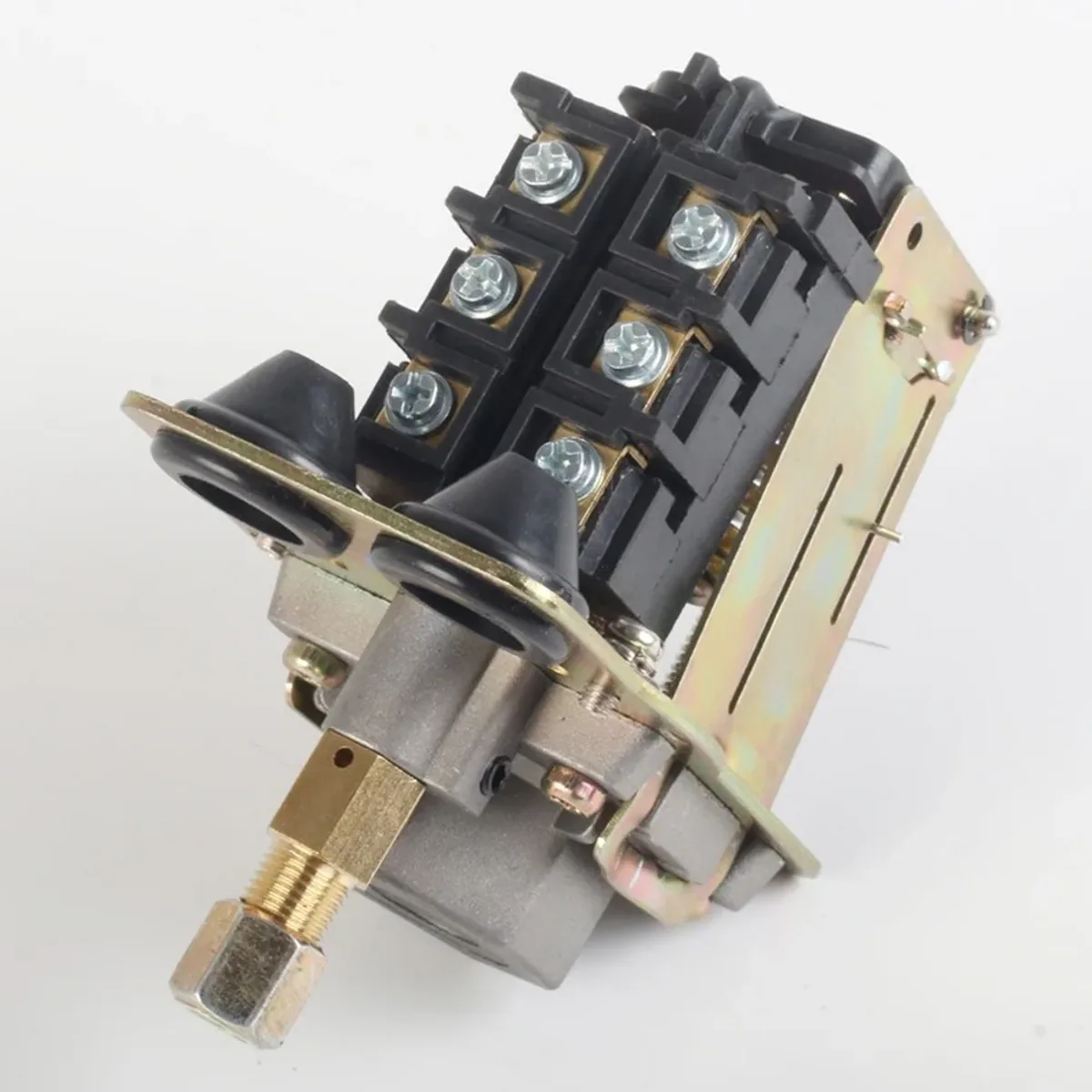
I always inspect the supply voltage and contact ratings before changing out air compressor pressure switches. Standard workshop units run on single-phase circuits with a Voltage Rating: 110 - 240 V AC or Rated Voltage: 240V / 380V. Larger industrial workshop compressors require a 3-Phase supply with Rated Voltage: 380-400 V and a Maximum Voltage: 500 V. Feeding the wrong voltage into the switch contacts will arc the terminals or weld them shut on startup.
Running motor current also dictates the switch body size. I look for a switch with Rated Current: 20 A when wiring heavier pump motors directly through internal contacts. If the motor draws more current, I wire the switch into a separate control circuit instead of passing full line current through the internal contacts. For low-voltage control setups, I use units built for Operating Voltage: < 50 V AC / < 75 V DC to signal a magnetic starter coil safely.
Setting cut-in and cut-out pressure
Setting the correct differential on a compressed air pressure switch stops the motor from short cycling under load. A typical workshop unit operates across a Pressure Range: 0.38 - 1.21 MPa (55 - 175 PSI) or a narrower factory band of 90-120 PSI (0.62-0.83 MPa). I set the cut-in pressure to kick the pump on before airline tools drop torque. Then I adjust the cut-out point so the pump shuts off before tank relief valves open.
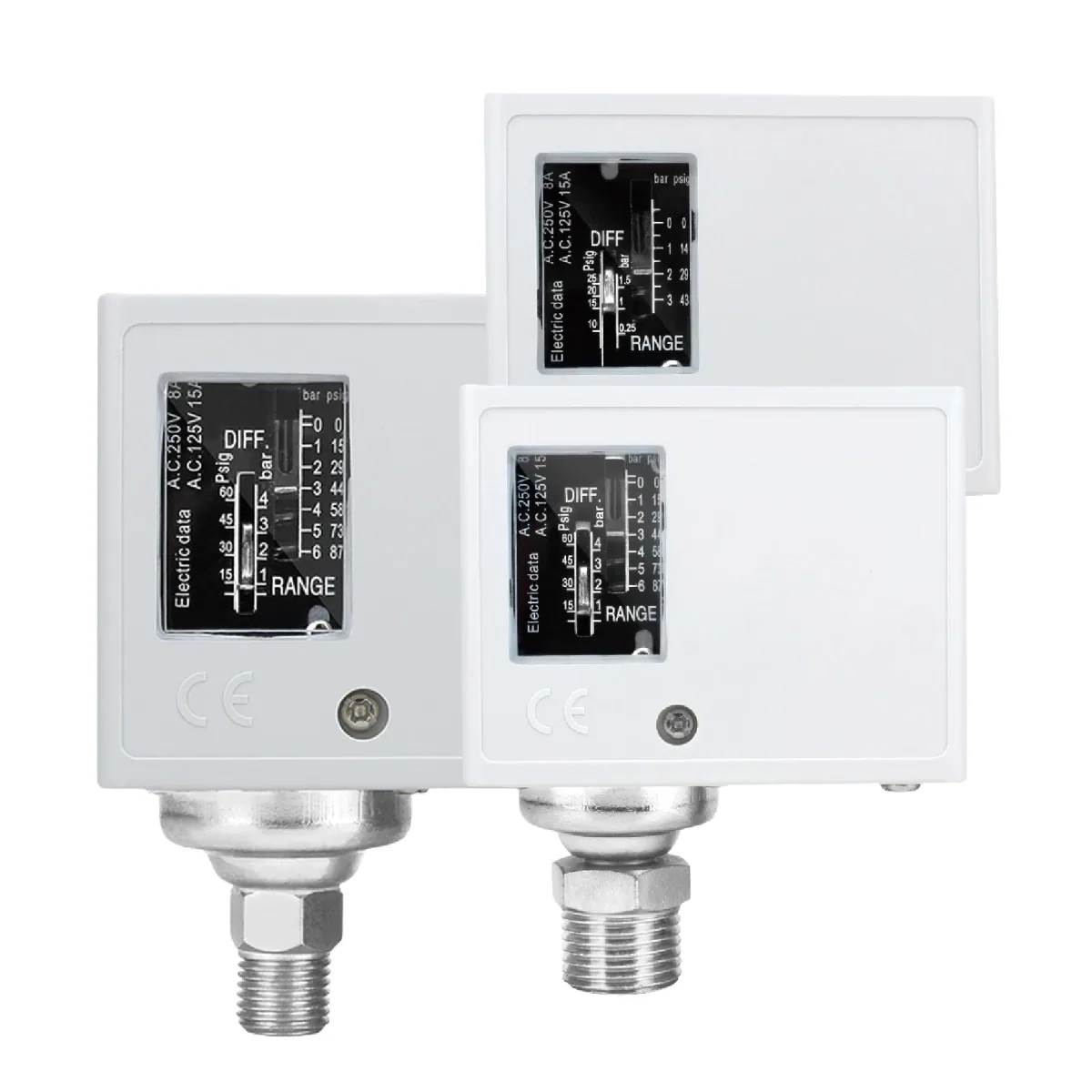
High-pressure lines need specialised ranges. For hydraulic testing rigs or booster lines, I install switches with an Operating Pressure Range: 5 - 50 bar or Alternative Pressure Ranges: 0.1 - 2 bar / 10 - 100 bar. These units use Contact Type: NO + NC to trigger cut-off circuits or warning alarms. For standard air lines, a Pressure Range: 0.05 - 1.2 MPa (7.25 - 125 PSI) covers everyday tyre changers, spray guns, and impact wrenches without overworking the cylinder heads.
| Model or Mechanism | Voltage | Pressure Range | Port Configuration |
|---|---|---|---|
| Model: LF10 | Voltage Rating: 110 - 240 V AC | Pressure Range: 0.38 - 1.21 MPa (55 - 175 PSI) | Port Configuration: 1 to 4 Ports (1/4 Inch NPT) |
| Model: LF12 | Operating Voltage: 380V | Pressure Range: 6.2 - 8.3 bar (90 - 120 PSI) | Port Quantity: 4 Ports |
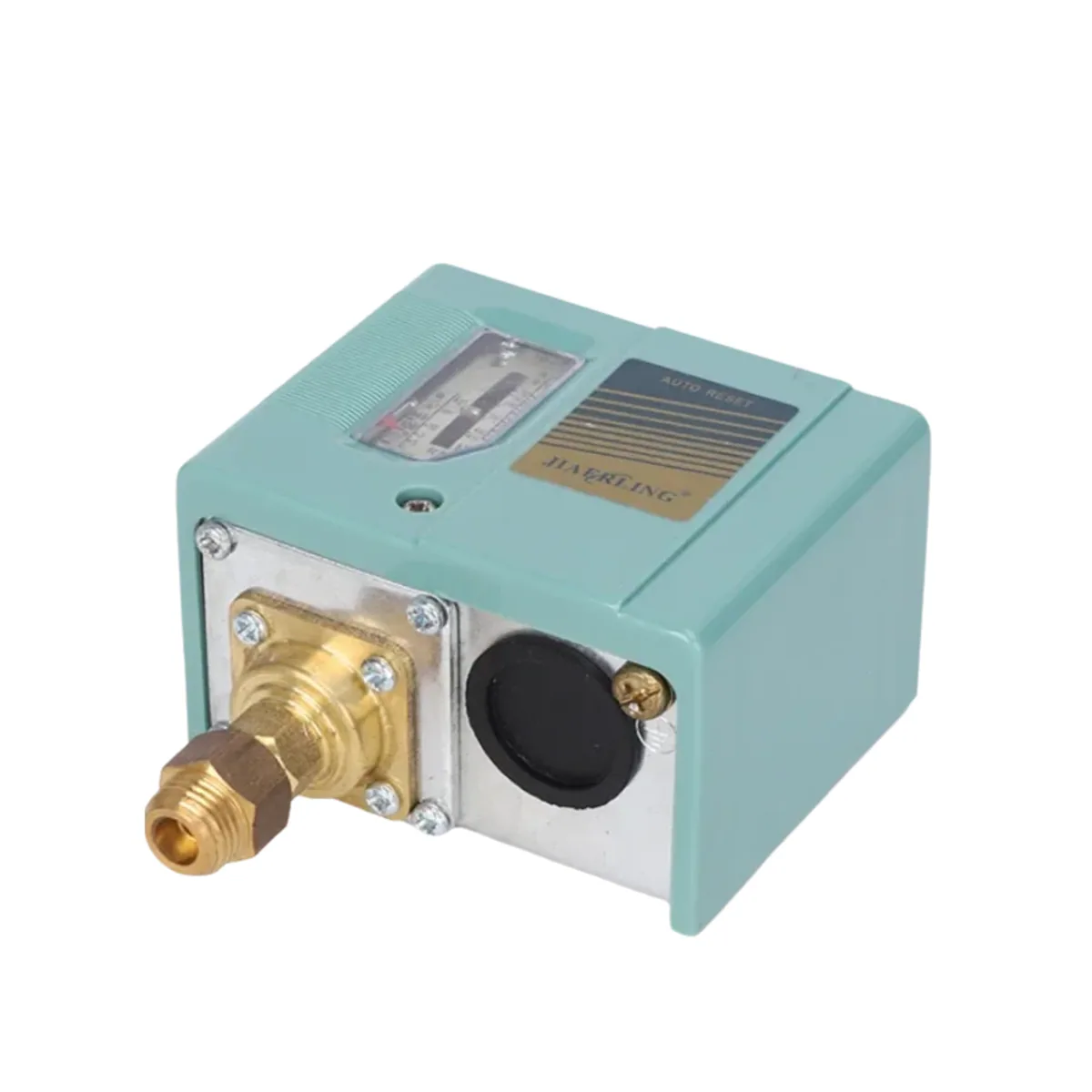
| Switch Mechanism: Diaphragm Piston | Operating Voltage: < 50 V AC / < 75 V DC | Operating Pressure Range: 5 - 50 bar | Thread Size: G1/4 / NPT1/4 / M20x1.5 |
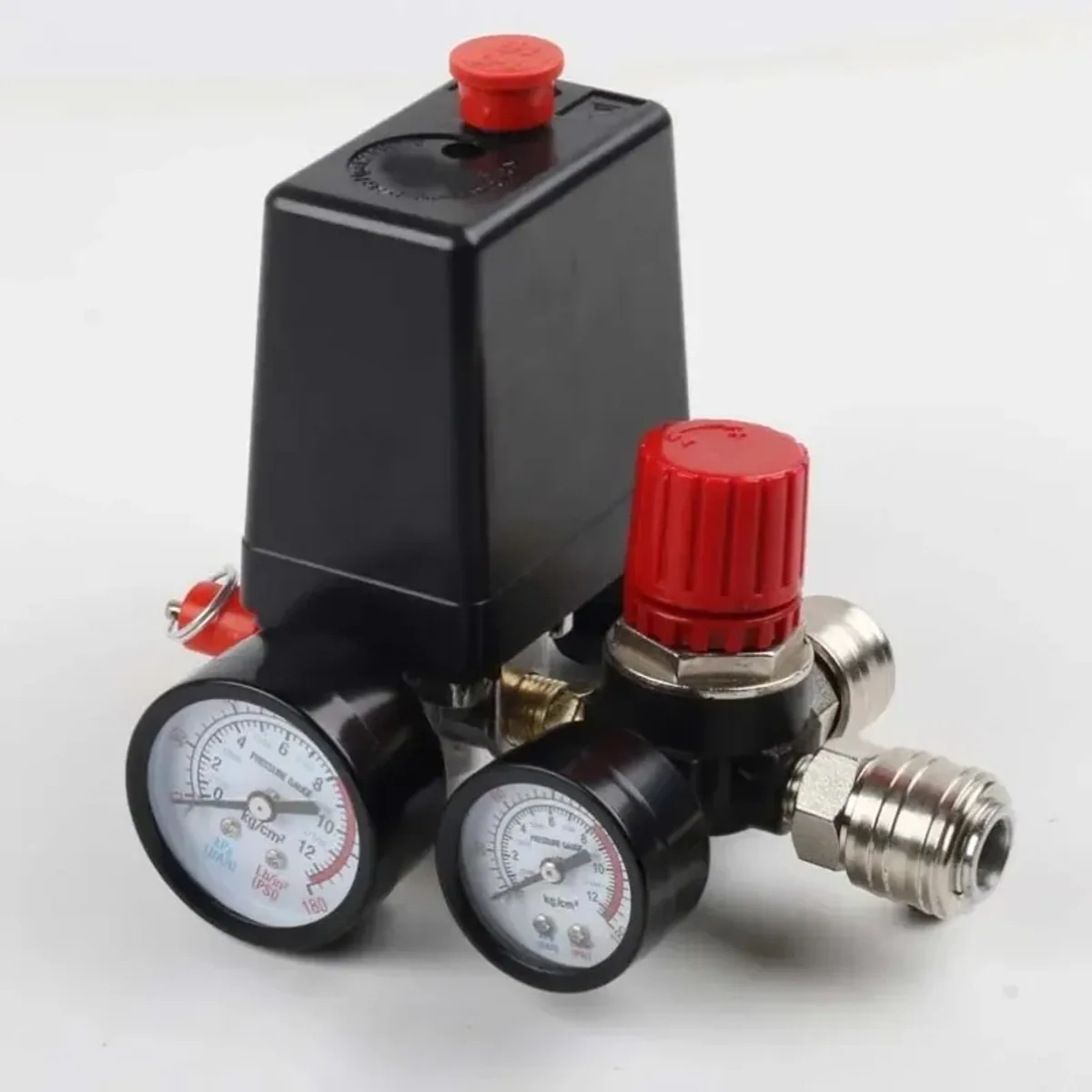
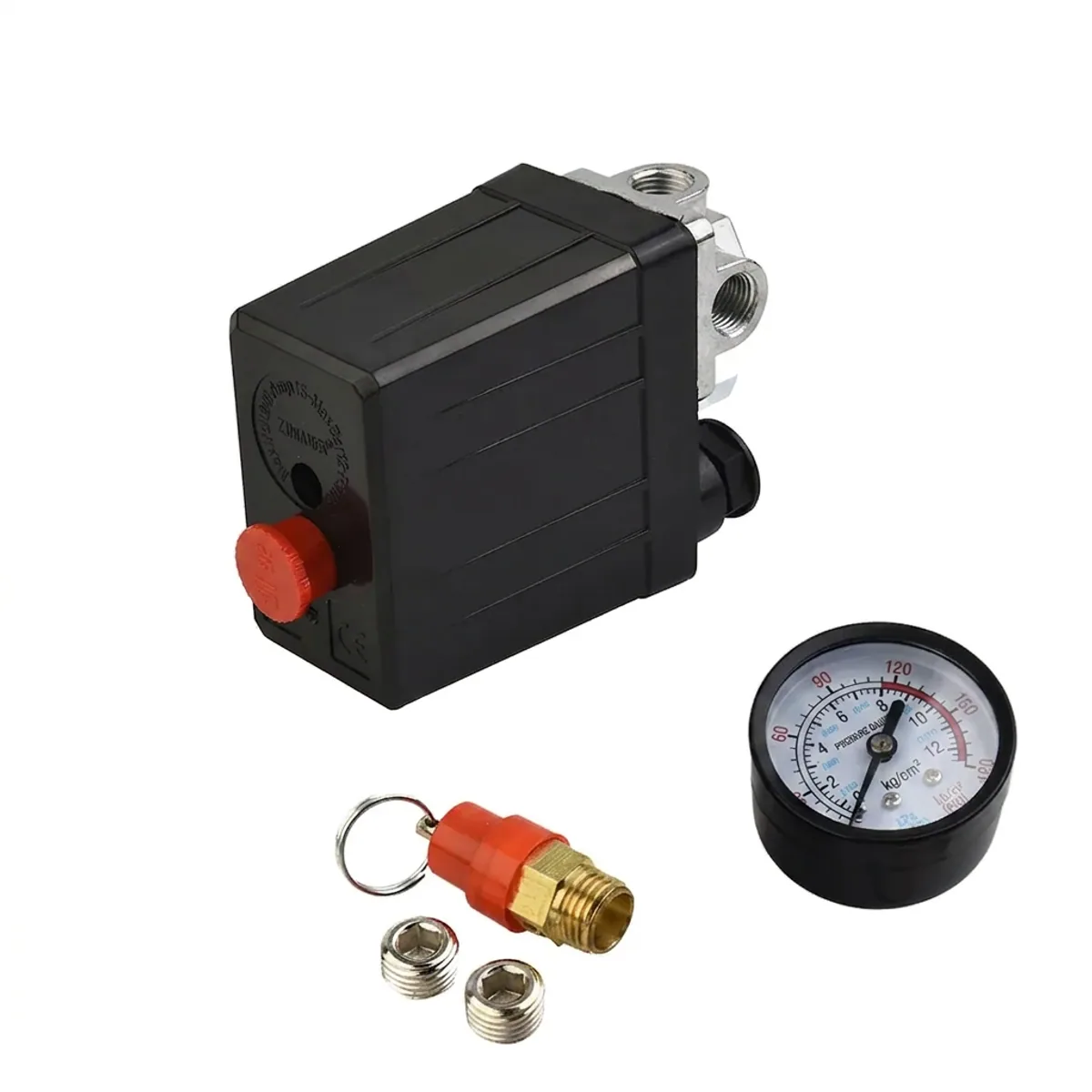
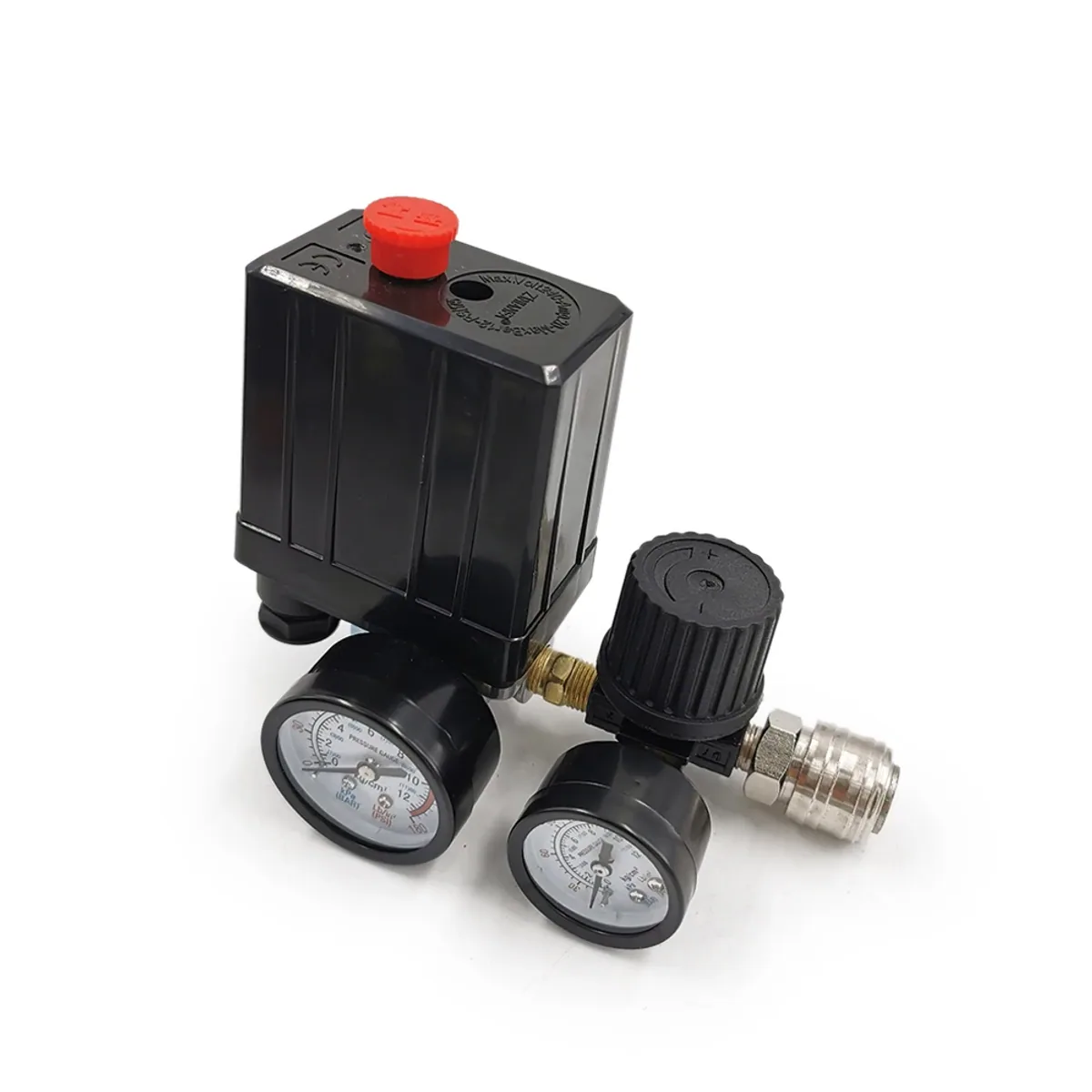
| Component Type: Pressure Control Valve with Gauge | Voltage Rating: 220V / 380V | Pressure Range: 0 - 180 PSI (0 - 12.4 bar) | Port Quantity: 4 Ports |
Connecting unloader valves and tank ports
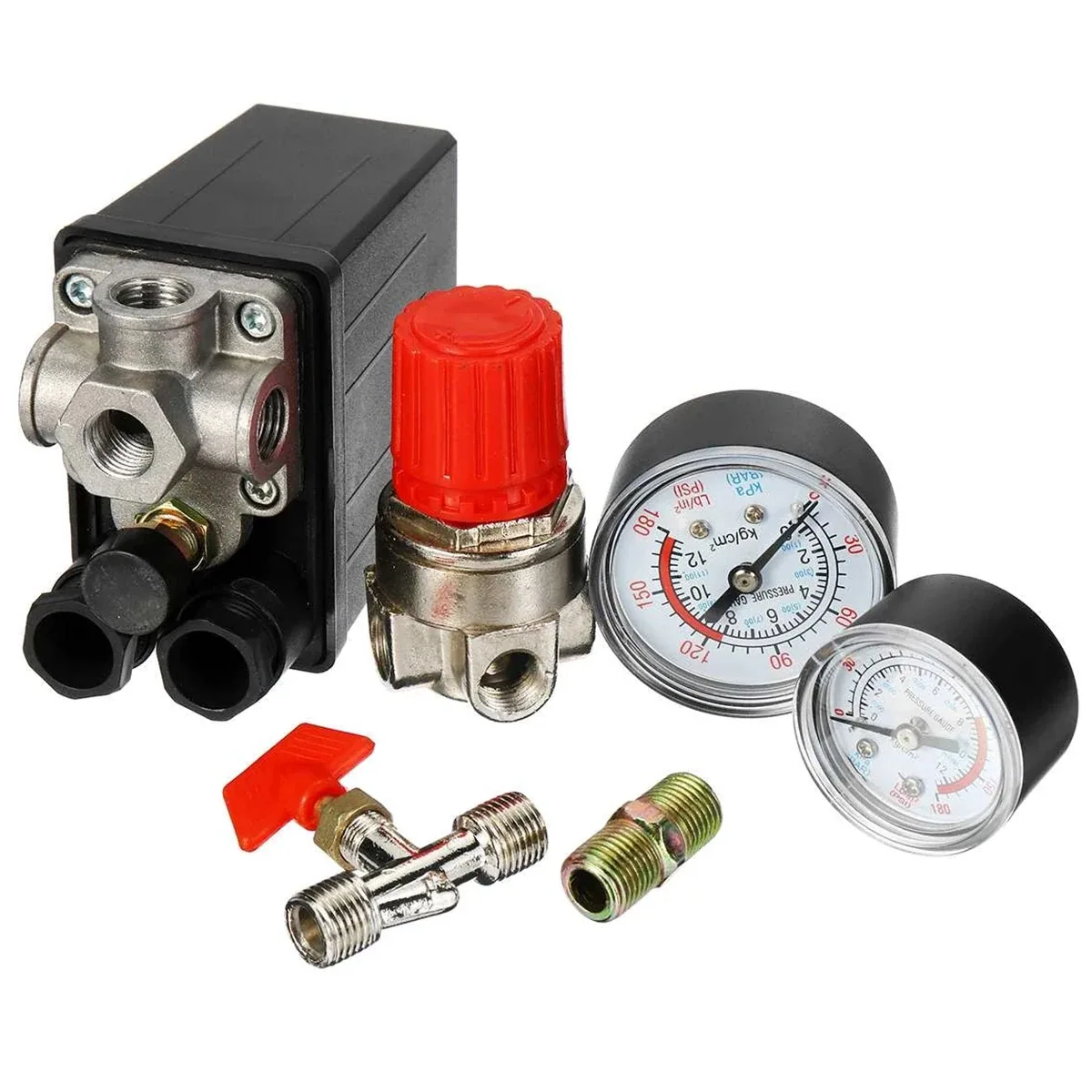
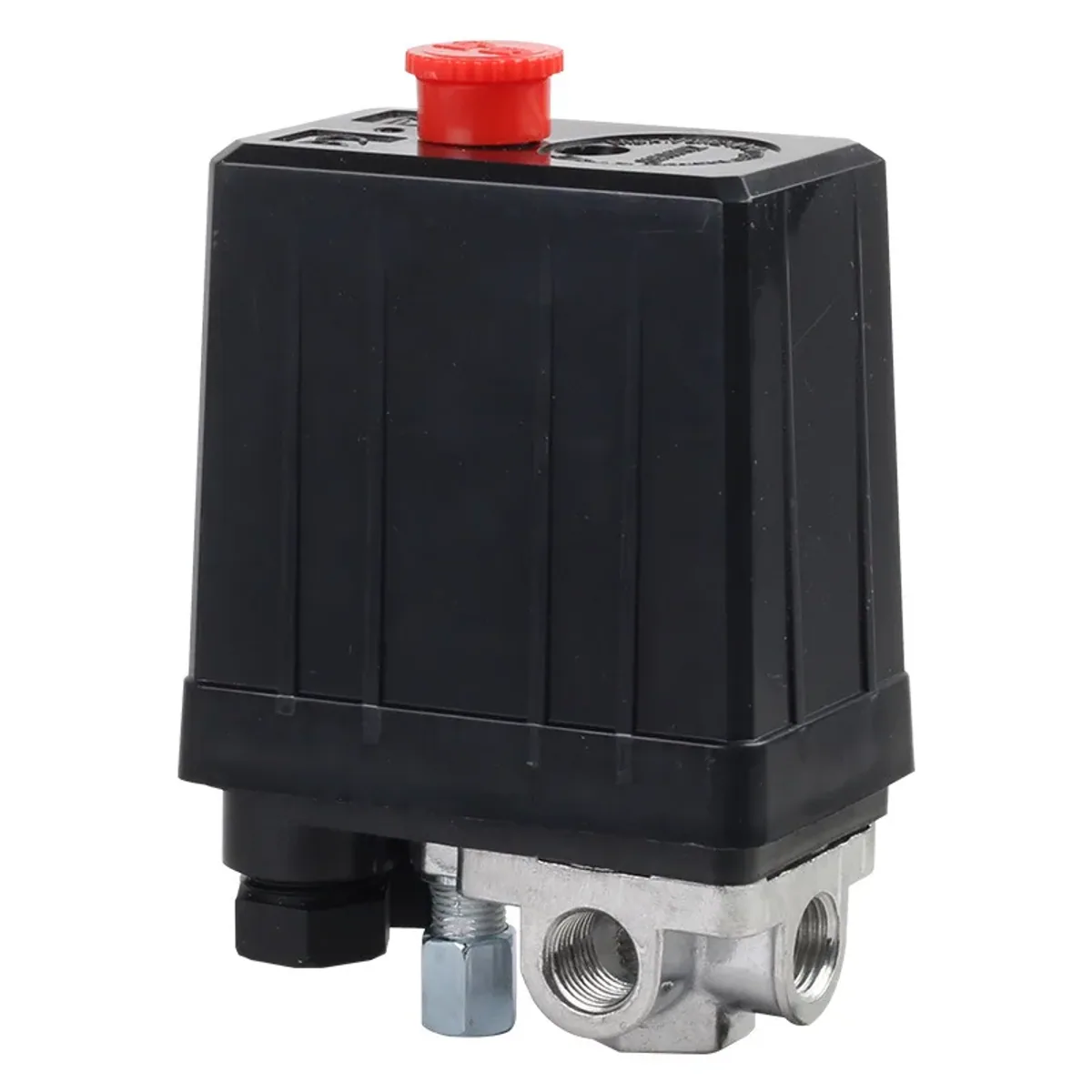
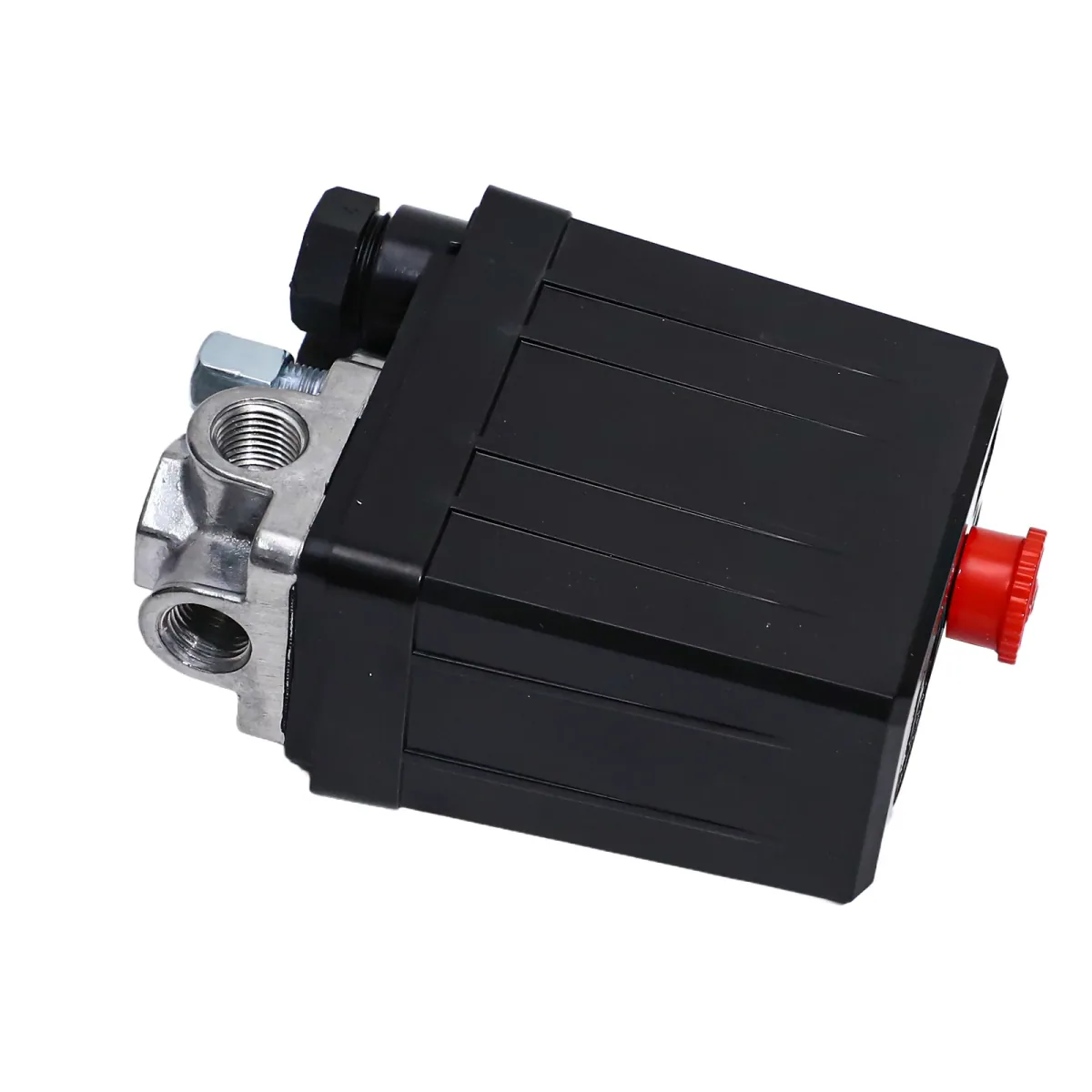
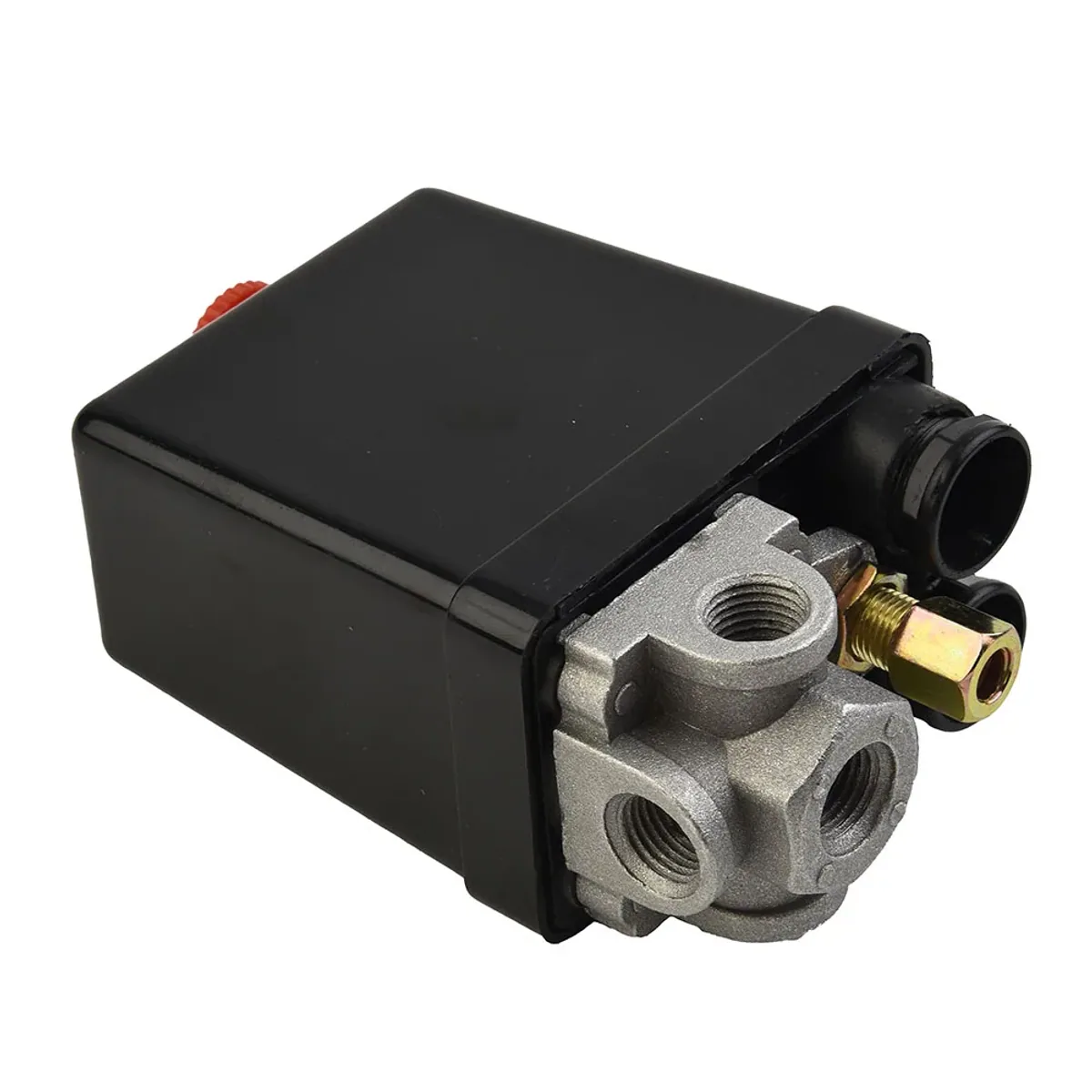
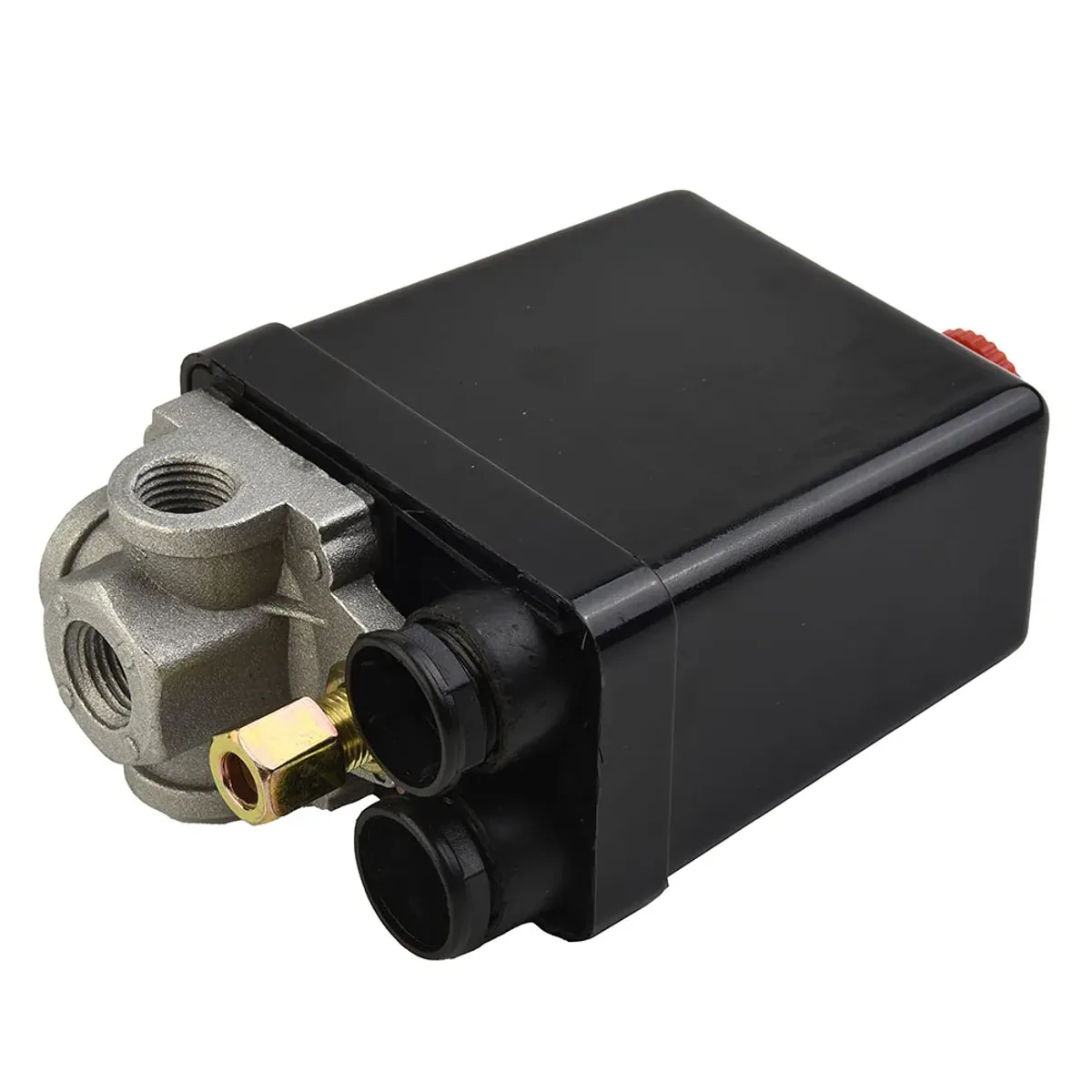
Fitting a pressure switch air compressor replacement requires matching port layouts on the manifold block. Many units come with Port Quantity: 4 Ports or a variable Port Configuration: 1 to 4 Ports (1/4 Inch NPT). The bottom port mounts directly onto the receiver tank fitting or manifold tree. The side ports take tank pressure gauges, safety relief valves, or quick-release airline couplings. Using a single block keeps every control component in one rigid assembly.
Thread standards must match the air tank fittings exactly to prevent air leaks. Common port connections use Thread Size: G1/4 / NPT1/4 / M20x1.5 or Thread Size: M20 x 1.5. I always verify that the unloader valve line connects properly to the small side fitting on the switch. If that unloader line leaks or remains closed, the compressor motor tries to restart against head pressure, which trips the breaker or burns out the start capacitor.
Checking contact wear and thermal overloads
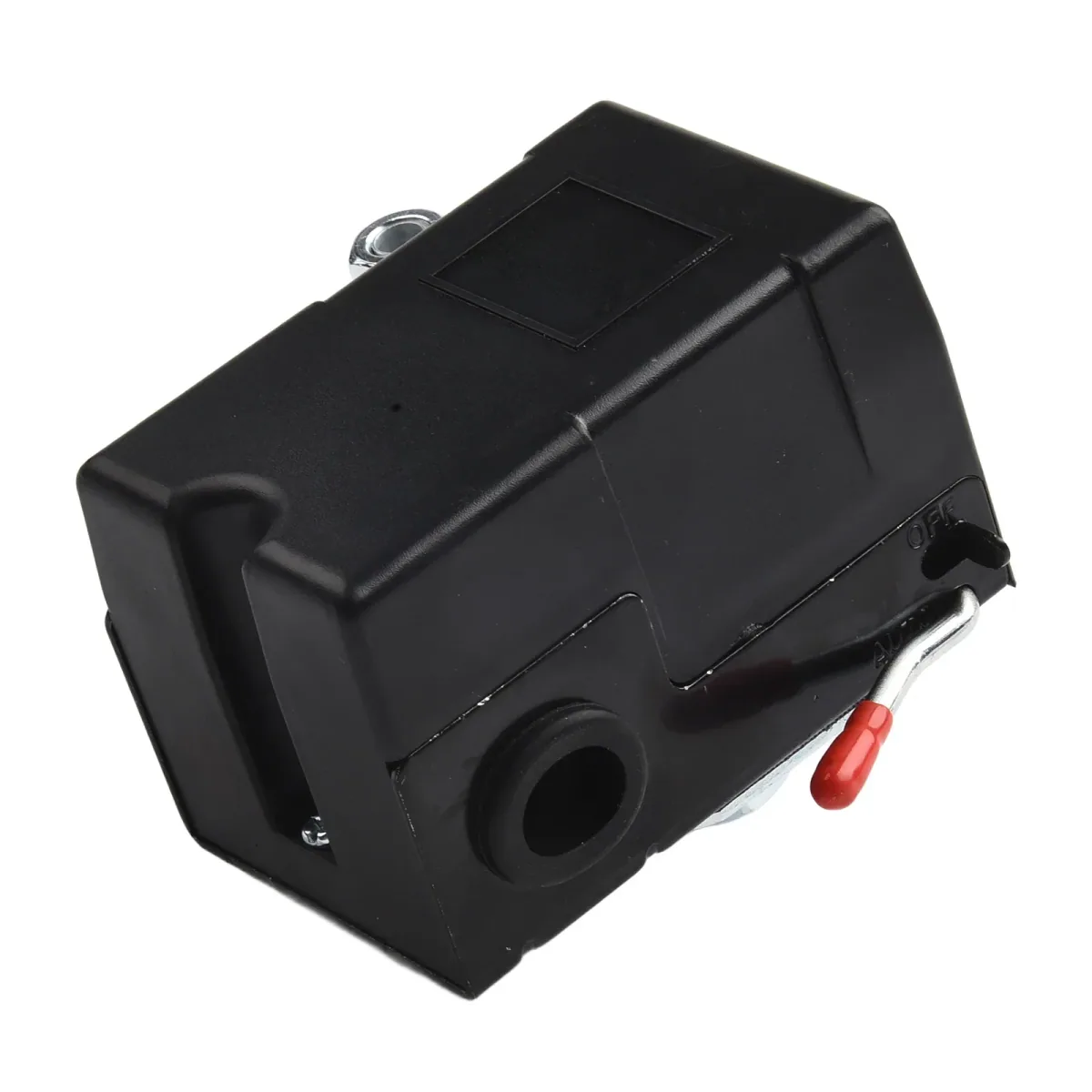
Air compressor components endure vibration and continuous cycling, so I inspect the internal switch points during regular servicing. A heavy-duty pressure switch for air compressor applications often includes a dedicated Thermal Protection Relay or a Manual Control Lever and Emergency Cut-off. The thermal relay disconnects the motor circuit if prolonged run times cause overheating. This protects the windings from damage when an airline rupture causes the pump to run without stopping.
I also check the pressure regulator assembly and relief valves on combined units. High output models handle a Maximum Flow Rate: 3000 L/min and include a Pressure Control Valve with Gauge to regulate airline output down from tank pressure. When switch contacts show pitting or black charring, I replace the switch rather than filing down the metal faces. Fresh contacts prevent voltage drops that cause motor hum and sluggish starting.