Ohms law calculator
Choose which two values you know and enter them. The other two are calculated. Works for DC and for AC resistive loads.
- Voltage
- 12.00 V
- Current
- 2.000 A
- Resistance
- 6.00 Ω
- Power
- 24.00 W
Ohms law and Watts law formulas
Ohms law relates voltage, current and resistance: V = I x R. Rearranged, I = V / R and R = V / I.
Watts law relates power to the same quantities: P = V x I. Substituting one into the other gives P = I² x R and P = V² / R.
The twelve combinations people search for are all these two laws rearranged. The wheel below covers every one.
| Want | From V and I | From V and R | From V and P | From I and R | From I and P | From R and P |
|---|---|---|---|---|---|---|
| V | - | I x R | - | I x R | P / I | sqrt(P x R) |
| I | - | V / R | P / V | - | - | sqrt(P / R) |
| R | V / I | - | V² / P | - | P / I² | - |
| P | V x I | V² / R | - | I² x R | - | - |
How to find resistance in practice
On a live circuit, measure voltage across the load and current through it, then divide. A heater running at 230 volts and drawing 8.7 amps is about 26 ohms.
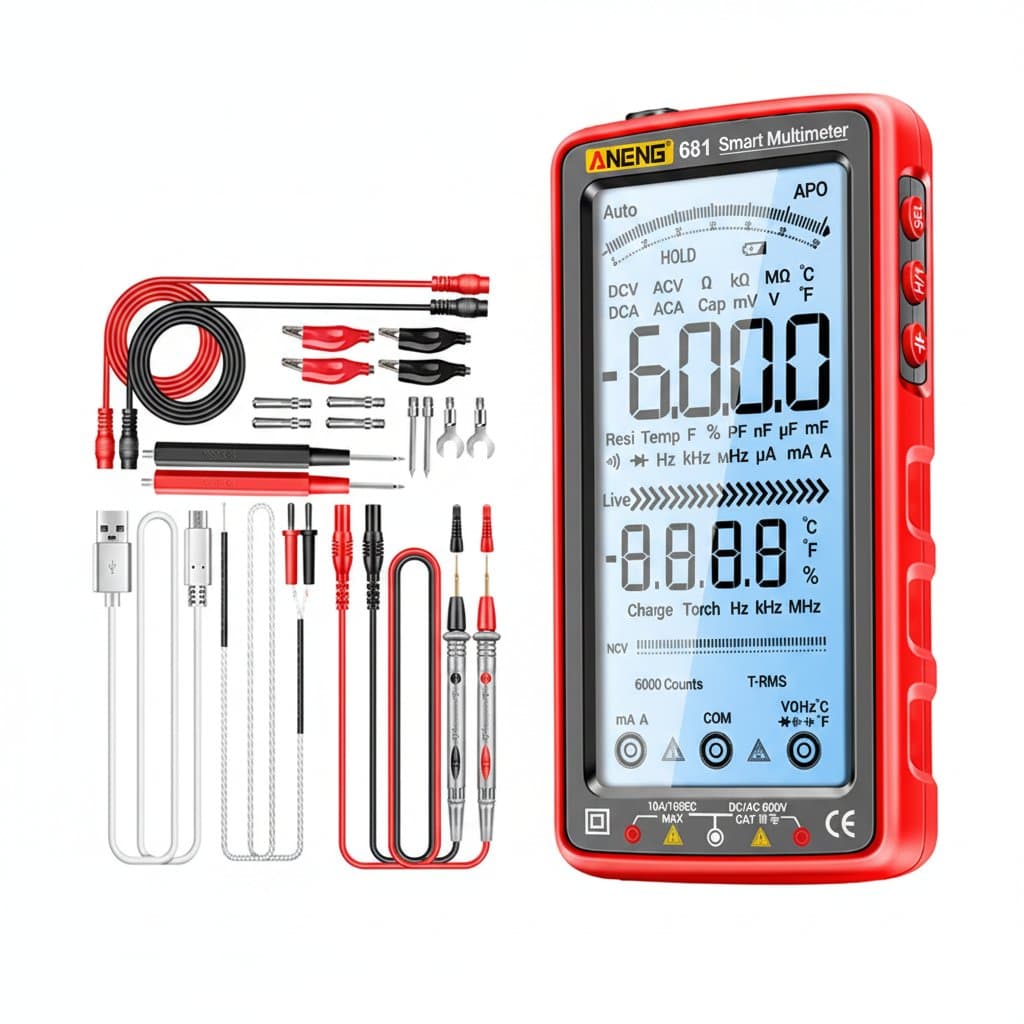
On a dead circuit, measure resistance directly with a multimeter on the ohms range, with the component isolated so you are not reading a parallel path through the rest of the circuit.
From a rating plate, use the power: a 2,000 watt heater at 230 volts is 230² / 2,000, so 26.5 ohms. Note that this is the hot resistance; a cold heater element reads lower.