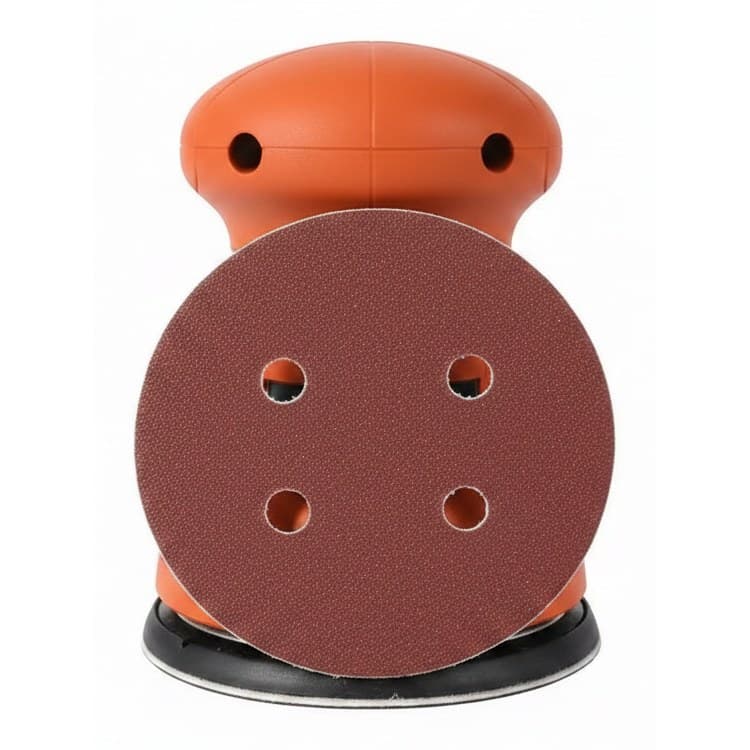
This 5-inch, 8-hole interface pad adds a soft layer to your orbital or drywall sander. It goes between the sander's backing plate and the sanding disc. This helps the disc follow curves and uneven surfaces without making flat spots or gouges while you sand.
Features and Benefits
- Soft foam build - The 12mm thick foam bends. This lets the sanding disc follow contours on furniture, car body panels, or moldings.
- 8-hole dust removal design - The holes line up with most 5-inch orbital sanders. This helps the vacuum system pull away dust for a cleaner work area and longer disc life.
- Two hook-and-loop sides - It sticks firmly to your sander's backing pad on one side. It holds the sanding disc tightly on the other for a connection that won't slip.
- Cuts down aggressive sanding - The cushion softens how the sander works. This is good for fine-finish sanding and helps stop damage to delicate surfaces.
Applications
- Car Sanding - Use this car polishing interface pad when sanding primer or clear coat on curved body panels. You get an even finish without sanding through.
- Woodworking - This is good for sanding rounded table edges, chair spindles, or turned bowls. The foam sanding interface pad makes sure you keep the curves.
- Drywall Finishing - When you use a random orbital sander as a drywall sander, this pad helps smooth joint compound on slightly uneven walls.
The Risks (Why pros usually avoid it)
Using a soft interface pad with an orbital sander on drywall is generally not recommended for professional finishers. The foam material, while offering flexibility, can mask the true surface contour, leading to an uneven finish. This is particularly true when using coarser grits like 100 or 150. Orbital sanders, whether electric or palm sanders, are designed for flatter surfaces and can easily create swirl marks or gouges on the softer drywall compound if not handled with extreme care. The extra give from the foam makes it harder to maintain consistent pressure, increasing these risks.
When it Actually Makes Sense
Despite the drawbacks, a sander interface pad can be useful in specific situations. For very light feathering of joint compound on curved or irregular surfaces, where a rigid sanding block would be impractical, the flexibility of the 5-inch soft foam pad can be an advantage. It's also suitable for delicate finish sanding with very fine grits (220 grit or higher) on areas that require a softer touch, helping to reduce the risk of scratching once the main bulk of sanding is complete. This is not for initial shaping or heavy material removal.
Best Practices If You Use One
If you opt to use a 5-inch 8-hole soft foam interface pad with your orbital sander on drywall, always start with a very light touch and a variable speed setting. Use fine grits, ideally 220 grit, for final smoothing. Avoid excessive pressure, as this will only exacerbate swirl marks and unevenness. Keep the sander moving constantly to prevent it from dwelling in one spot. Regularly inspect the surface for imperfections. This approach is for refining, not for aggressive sanding.
The Big Risks & How to Avoid Them
The main risks are creating an uneven surface and leaving swirl marks, especially with coarser grits. An orbital sander, even a palm sander, can quickly damage drywall if misused. To avoid these, only use the soft foam pad for the final, lightest passes. Never use grits coarser than 150, and preferably stick to 220 grit. Maintain a variable speed at a lower setting. Focus on feathering the edges of the compound. The 6-piece set allows for frequent replacement, which can help maintain consistent performance.
Destroying the Drywall Paper ("Fuzzing")
A significant risk when using any electric sander on drywall, including an orbital sander with an interface pad, is "fuzzing" the drywall paper. This occurs when the sanding action tears the paper face of the drywall, creating a fuzzy texture that is difficult to paint over smoothly. To prevent this, avoid aggressive sanding, especially with grits coarser than 150. Use a light hand and ensure the joint compound is fully dry. The soft foam pad provides some cushioning, but it does not eliminate the risk if too much pressure is applied or if the grit is too aggressive.
Material: Sponge Foam, Nylon. Compatibility: Orbital Sander. Attachment Type: Hook and Loop. Diameter: 125mm. Hole Pattern: 8-Hole. Quantity: 6 pieces. Diameter: 5 inch. Thickness: 10-12mm (typical for interface pads). Base Material: Nylon (as per provided spec, likely for the hook and loop backing). Material: Soft Sponge Foam. Compatibility: 5-inch Hook and Loop Sanding Discs and Orbital Sanders. Application: Orbital Sander, Automotive Polishing. Attachment Type: Hook and Loop. Density: Medium Soft. Durability: High-density foam for extended use. Function: Cushioning, Conformity to Contours, Reduced Sanding Marks. Hole Pattern: 8-Hole. Product Type: Interface Pads. Quantity: 6 pieces. Ventilation: 8-Hole pattern for dust extraction. Q: How thick is the foam cushion on these interface pads? A: Each of the six pads in the set has a soft foam layer that is 1/2-inch (12.7mm) thick. This gives it enough cushion to conform to curves and irregular surfaces without digging in.. Q: How thick is the foam cushion on these interface pads? A: Each of the six pads in the set has a soft foam layer that is 1/2-inch (12.7mm) thick. This gives it enough cushion to conform to curves and irregular surfaces without digging in.. Q: How thick is the foam cushion on these interface pads? A: Each of the six pads in the set has a soft foam layer that is 1/2-inch (12.7mm) thick. This gives it enough cushion to conform to curves and irregular surfaces without digging in.. Q: How thick is the foam cushion on these interface pads? A: Each of the six pads in the set has a soft foam layer that is 1/2-inch (12.7mm) thick. This gives it enough cushion to conform to curves and irregular surfaces without digging in.. Q: How well does the hook and loop system hold up? A: The pads are made with a strong hook-and-loop fastener. The hook face attaches firmly to your sander, and the loop face provides a secure grip for your sanding discs so they won't fly off during use.. Q: How well does the hook and loop system hold up? A: The pads are made with a strong hook-and-loop fastener. The hook face attaches firmly to your sander, and the loop face provides a secure grip for your sanding discs so they won't fly off during use.. Q: How well does the hook and loop system hold up? A: The pads are made with a strong hook-and-loop fastener. The hook face attaches firmly to your sander, and the loop face provides a secure grip for your sanding discs so they won't fly off during use.. Q: How well does the hook and loop system hold up? A: The pads are made with a strong hook-and-loop fastener. The hook face attaches firmly to your sander, and the loop face provides a secure grip for your sanding discs so they won't fly off during use.. Q: Can I use these pads on my 5-inch orbital drywall sander? A: Yes, these are made for that exact purpose. They fit any 5-inch orbital sander with an 8-hole hook-and-loop base, and the soft foam is ideal for a smooth finish on a drywall sander.. Q: Can I use these pads on my 5-inch orbital drywall sander? A: Yes, these are made for that exact purpose. They fit any 5-inch orbital sander with an 8-hole hook-and-loop base, and the soft foam is ideal for a smooth finish on a drywall sander.. Q: Can I use these pads on my 5-inch orbital drywall sander? A: Yes, these are made for that exact purpose. They fit any 5-inch orbital sander with an 8-hole hook-and-loop base, and the soft foam is ideal for a smooth finish on a drywall sander.. Q: Can I use these pads on my 5-inch orbital drywall sander? A: Yes, these are made for that exact purpose. They fit any 5-inch orbital sander with an 8-hole hook-and-loop base, and the soft foam is ideal for a smooth finish on a drywall sander.. Q: What's the warranty if the foam separates from the backing? A: These pads are bonded to withstand regular sanding pressures. If you have a problem with separation shortly after purchase, please contact us and we can arrange for a replacement.. Q: What's the warranty if the foam separates from the backing? A: These pads are bonded to withstand regular sanding pressures. If you have a problem with separation shortly after purchase, please contact us and we can arrange for a replacement.. Q: What's the warranty if the foam separates from the backing? A: These pads are bonded to withstand regular sanding pressures. If you have a problem with separation shortly after purchase, please contact us and we can arrange for a replacement.. Q: What's the warranty if the foam separates from the backing? A: These pads are bonded to withstand regular sanding pressures. If you have a problem with separation shortly after purchase, please contact us and we can arrange for a replacement.. Q: Why does this come in a pack of six? A: Interface pads are a consumable item that will eventually wear out from use. Buying a 6-pack ensures you have spares ready, so you don't have to stop a project midway through to get more.. Q: Why does this come in a pack of six? A: Interface pads are a consumable item that will eventually wear out from use. Buying a 6-pack ensures you have spares ready, so you don't have to stop a project midway through to get more.. Q: Why does this come in a pack of six? A: Interface pads are a consumable item that will eventually wear out from use. Buying a 6-pack ensures you have spares ready, so you don't have to stop a project midway through to get more.. Q: Why does this come in a pack of six? A: Interface pads are a consumable item that will eventually wear out from use. Buying a 6-pack ensures you have spares ready, so you don't have to stop a project midway through to get more..