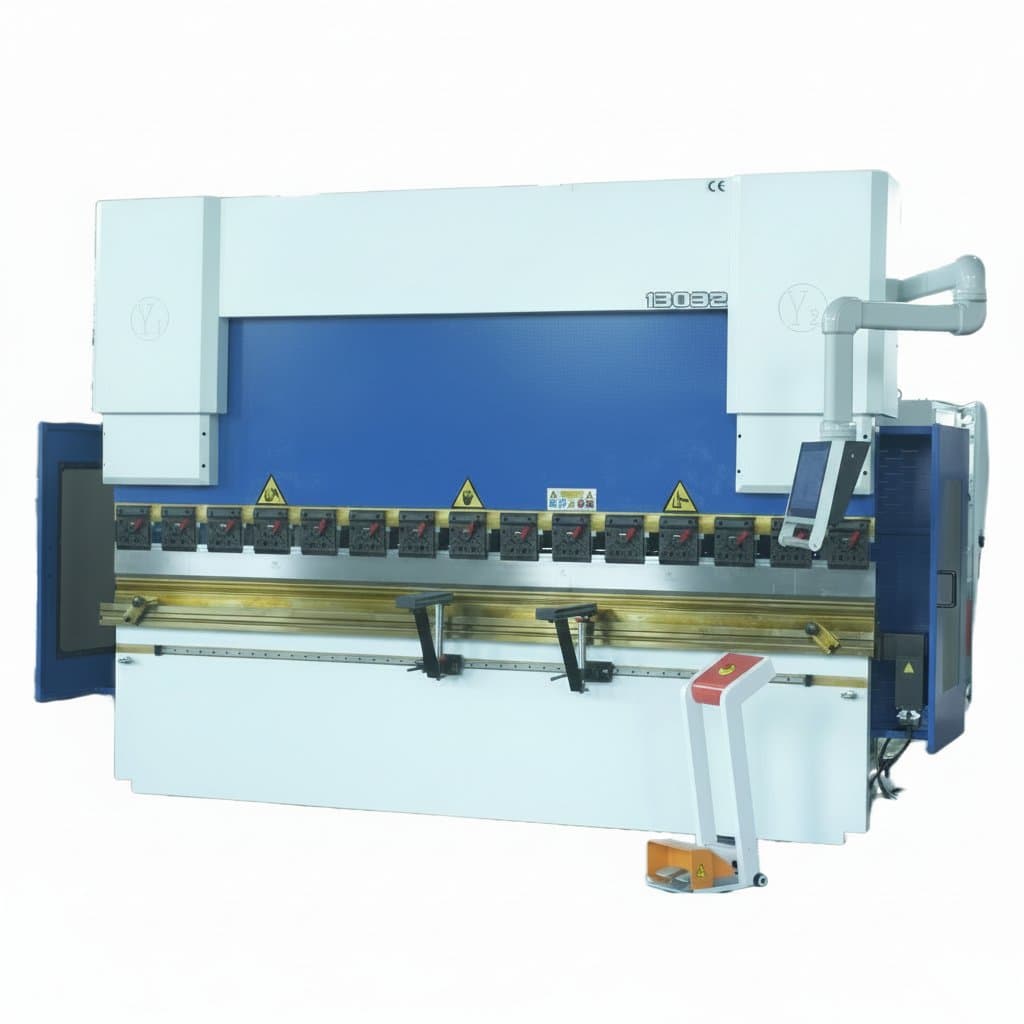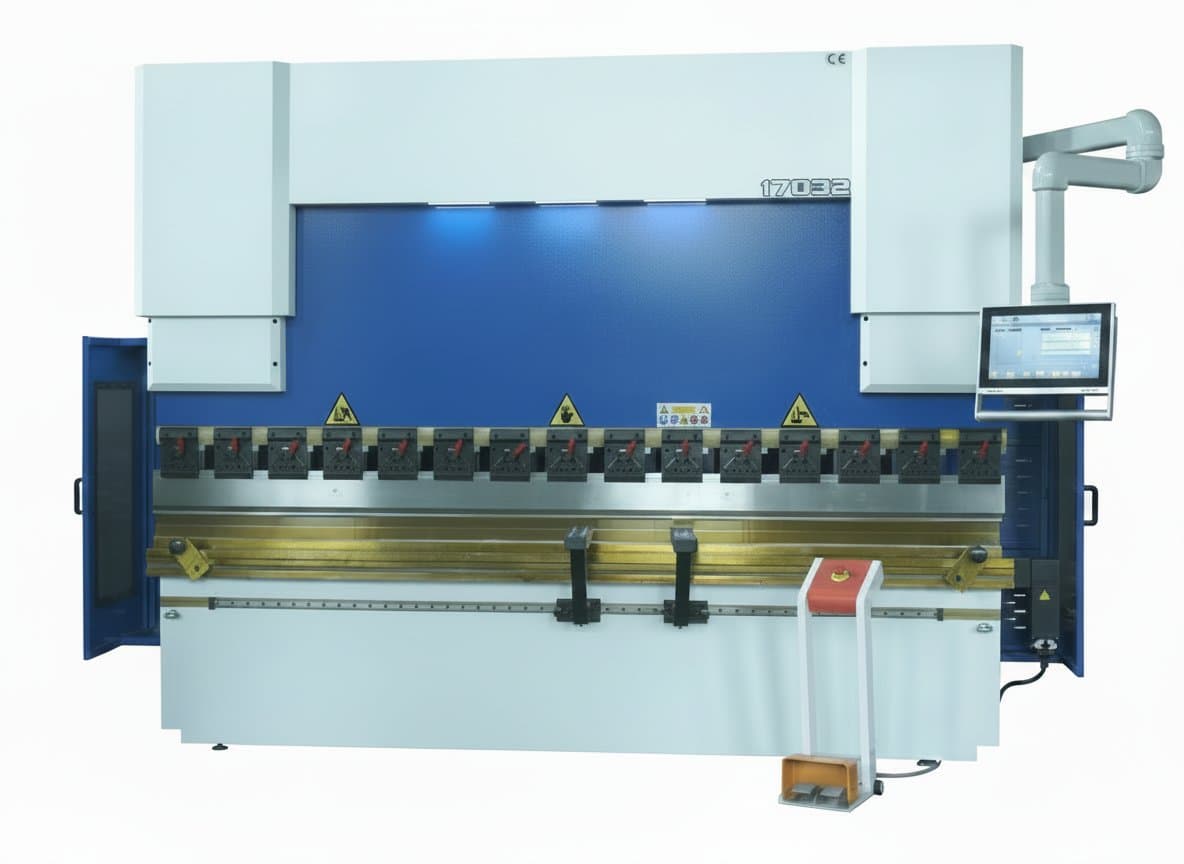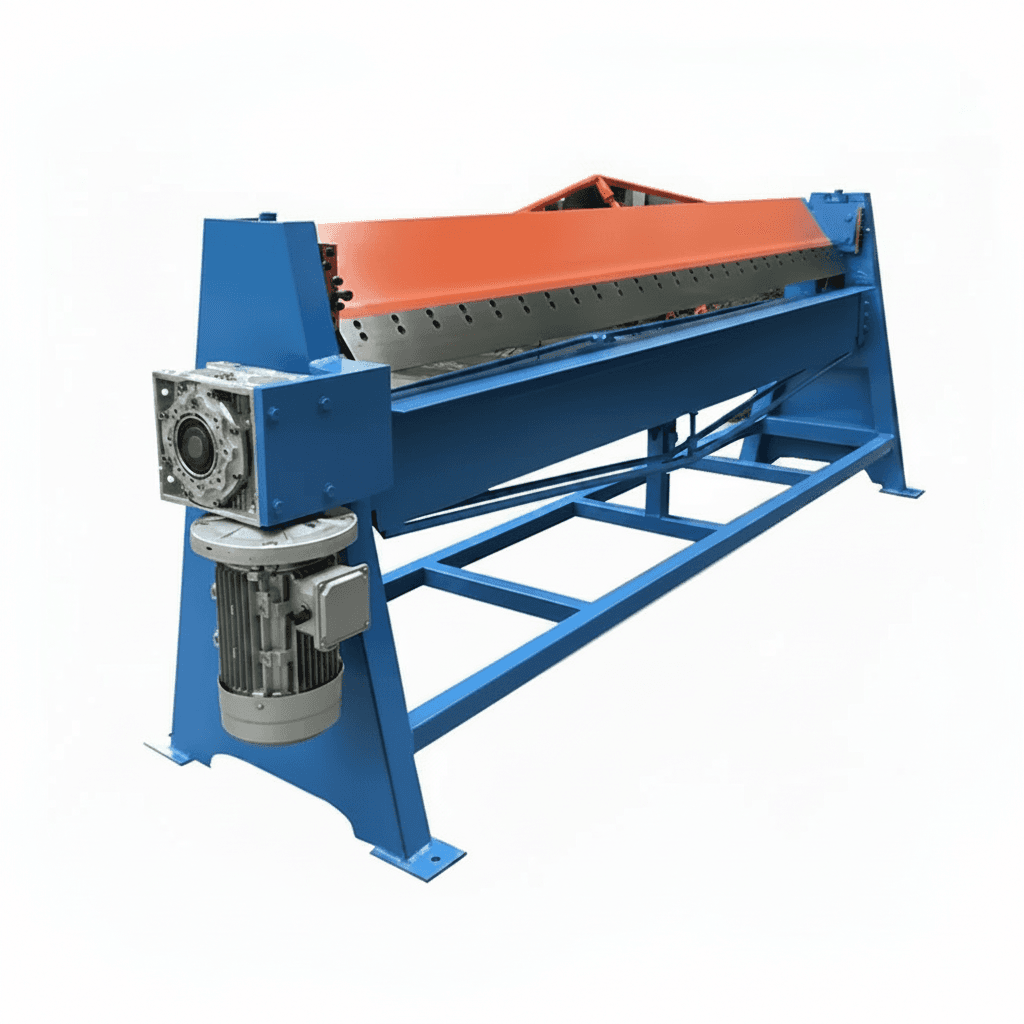
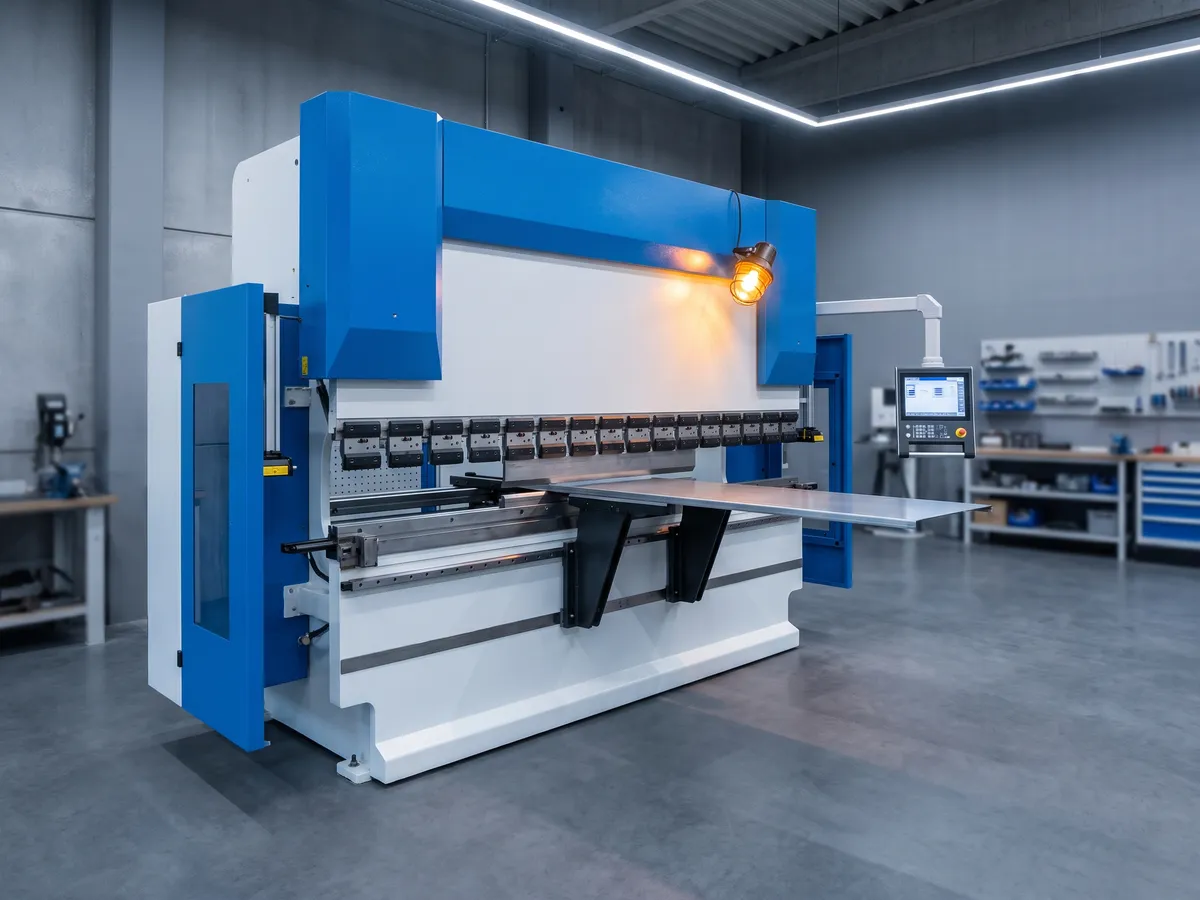
What a press brake is
A press brake clamps sheet metal between a punch on the moving ram and a die in the bed, then drives the ram down to form a bend. Air bending, where the material never touches the bottom of the die, is what almost all modern machines do, because it needs far less force than bottoming and one die set covers a range of angles.
Hydraulic machines dominate above small capacities. The ram is driven by two cylinders and the control system keeps them synchronised, which is what holds the bend angle consistent along the whole length.
CNC means the machine positions the back gauge and controls ram depth from a program rather than by hand. On a job with six bends in sequence that is the difference between a setup per bend and a single setup.
Working out the tonnage you need
Air bending force rises with the square of thickness, falls as the die opening widens, and scales directly with bend length. A rule of thumb for mild steel is 1.42 times thickness squared, times length in metres, times 1,000, divided by die opening, giving kilonewtons.
Die opening is normally eight times material thickness, which is where the table below comes from. Using a wider die drops the force needed but increases the inside radius of the bend.
Stainless needs about 1.5 times the force of mild steel for the same bend; aluminium about half.
| Thickness | 1 m bend | 2 m bend | 3 m bend |
|---|---|---|---|
| 1 mm | 5 t | 9 t | 14 t |
| 2 mm | 18 t | 36 t | 54 t |
| 3 mm | 30 t | 60 t | 90 t |
| 4 mm | 43 t | 86 t | 130 t |
| 5 mm | 58 t | 116 t | 174 t |
| 6 mm | 72 t | 145 t | 217 t |
| 8 mm | 104 t | 208 t | 312 t |
How many axes you actually need
The axis count describes what the machine positions automatically. X is the back gauge distance from the die, R is its height, and Y1 and Y2 are the two ram cylinders.
A 2-axis machine (X and R) covers most straightforward fabrication. It sets the flange length and gauge height from the program and that is enough for boxes, brackets and panels.
A 4-axis machine adds independent Z axes so the two gauge fingers move apart, which matters on tapered parts and on parts where the fingers would otherwise foul a previous bend.
A 6-axis machine adds crowning and further gauge movement, and starts to pay only in high-mix production or on long beds where deflection along the length has to be compensated automatically.
Controller matters as much as axis count. A Delem DA-53T or similar with graphical programming and bend sequence calculation saves more setup time than an extra axis on most work.
What to check before buying
Bed length has to exceed the longest part by a comfortable margin, and tonnage has to be available across that length. A 130-tonne machine with a 3,200mm bed cannot apply 130 tonnes to a 200mm section without risking the frame.
Check the tooling standard. European (Amada Promecam) and American style tooling are not interchangeable, and tooling for a large machine is a significant cost in its own right.
Confirm the daylight and ram stroke suit deep boxes. A part with tall flanges needs the gap to lift out.
Backgauge speed and repeatability decide cycle time on production work more than ram speed does.