Types of concrete screed machine
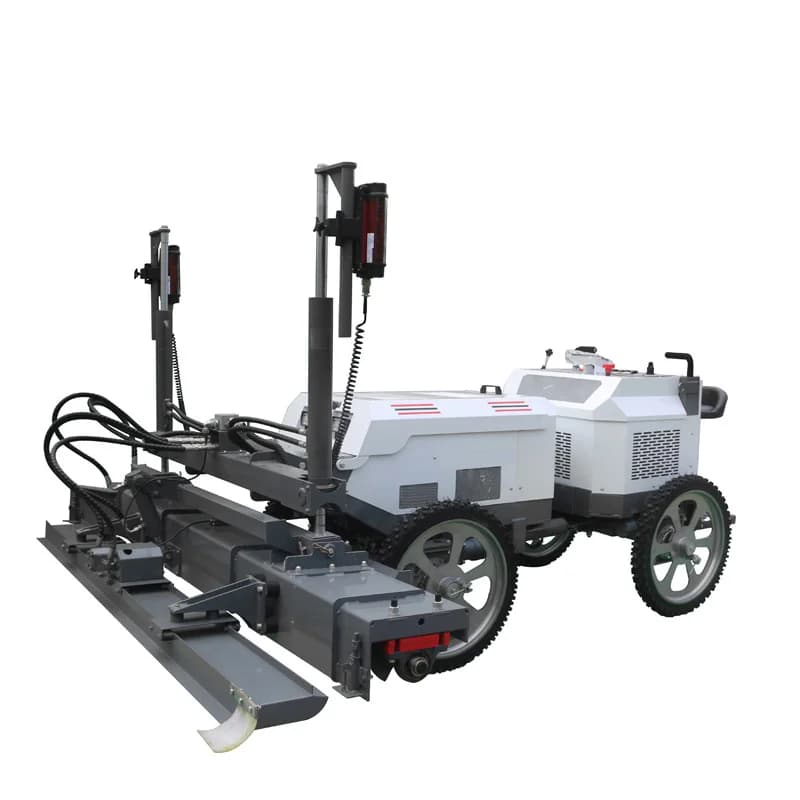
Boom-type machines carry the screed head on a telescopic arm, so the machine parks and the head sweeps across the pour. They cover the most ground per setup and are the choice for warehouse and industrial floor slabs.
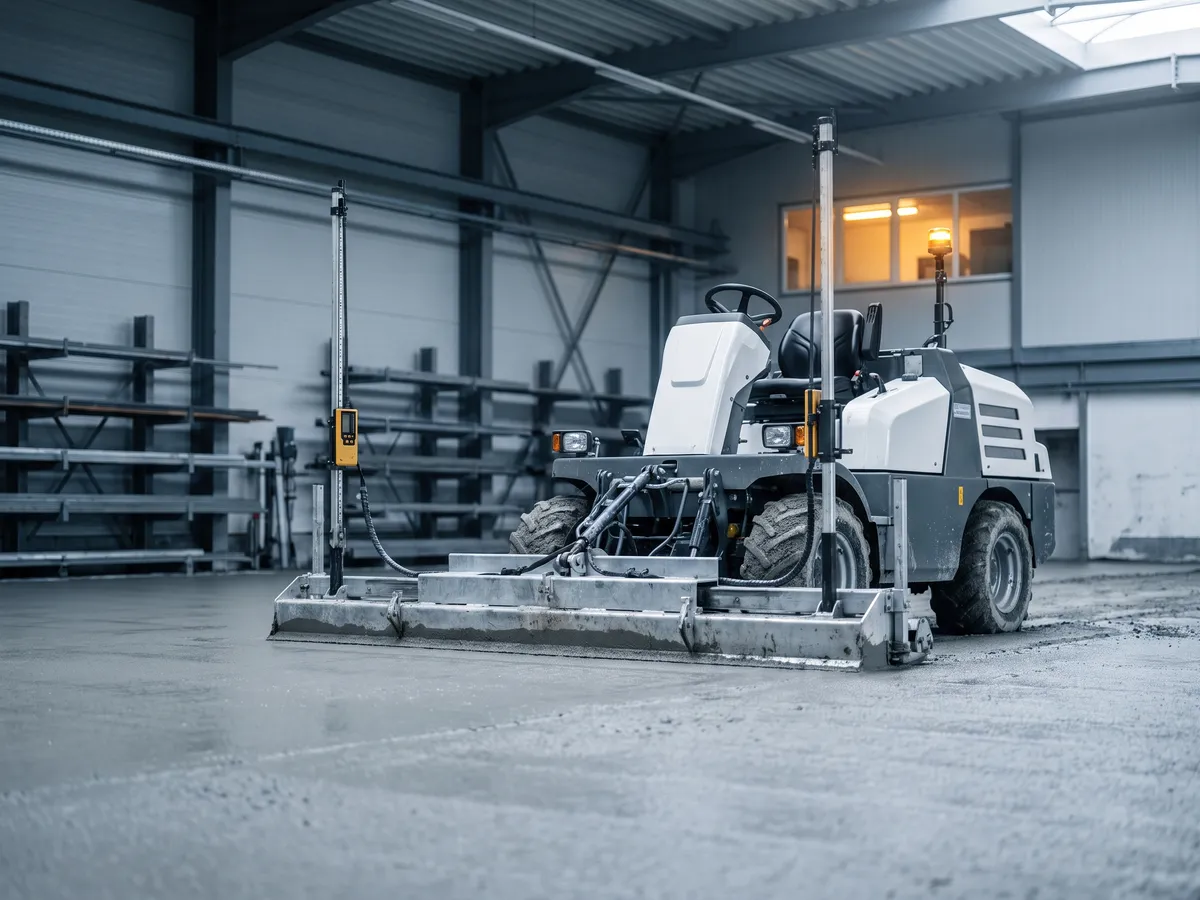
Ride-on four-wheel-drive machines move with the head, which suits slabs with obstructions, columns and changes in level where a fixed boom cannot reach cleanly.
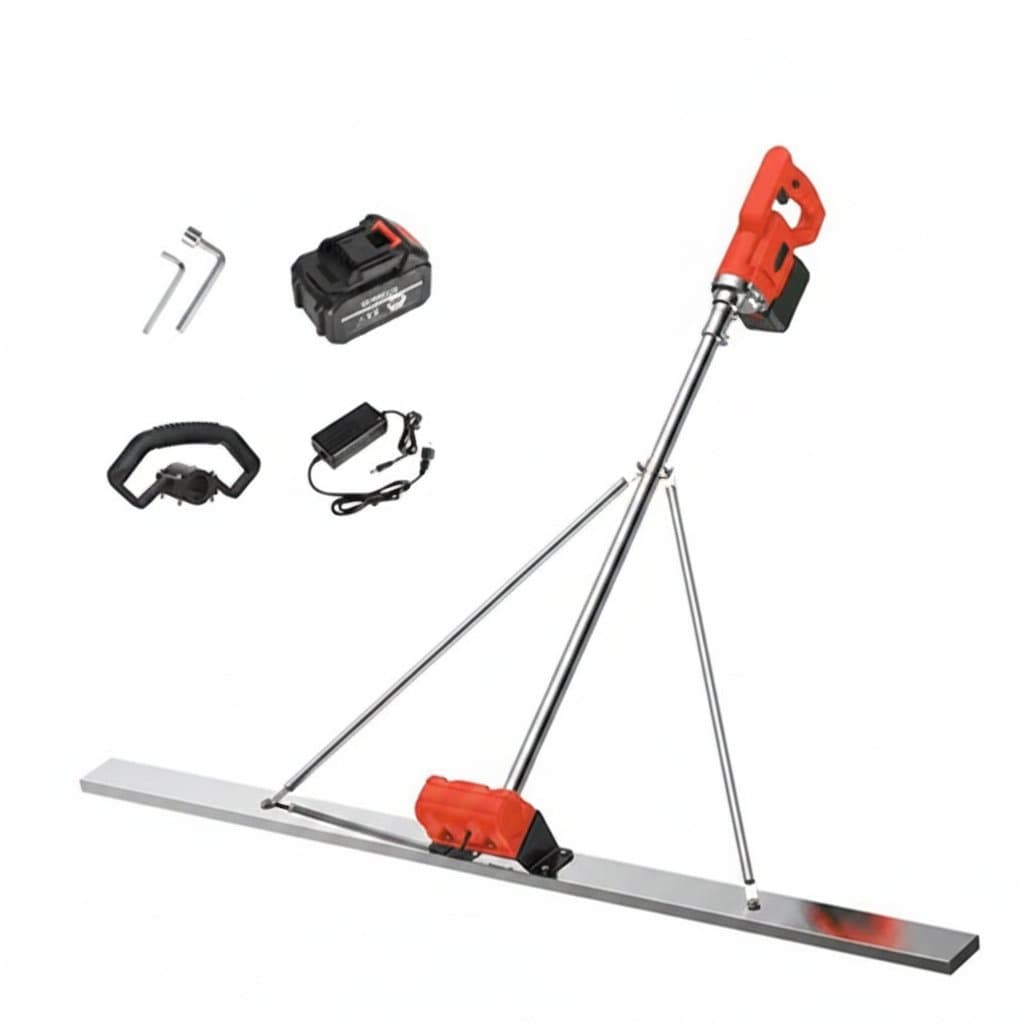
Towable and walk-behind units trade coverage for access. They get through a standard doorway, work on smaller commercial pours and cost a fraction of a boom machine, but the day rate in square metres is far lower.
| Machine type | Typical pour | Access needed | Crew |
|---|---|---|---|
| Walk-behind / towable | Under 1,000 m² per day | Standard door width | 2 |
| Ride-on 4WD | 1,000 to 2,500 m² per day | Open slab, some obstructions | 2 to 3 |
| Boom type | 2,500 m² and above per day | Clear span, few obstructions | 3 |
What accuracy to expect
Laser guidance holds the screed head to a plane rather than to the ground the machine is standing on, which is the whole point. Published leveling accuracy on the machines here runs from plus or minus 2mm to plus or minus 5mm.
That is the machine tolerance, not the finished floor tolerance. Slab flatness also depends on mix consistency, subgrade preparation, how the concrete is placed ahead of the screed, and the power float work that follows. A machine holding 3mm on a badly placed pour will not give you a 3mm floor.
Grade slope capability matters where the slab has to fall to drains. Most of these machines will hold a slope up to about 5 percent while still working to the laser plane.
What to check before buying
Screed head width sets your productivity more than anything else on the spec sheet. A wider head covers more per pass but needs more power behind it and is harder to work around obstructions.
Check whether the laser receiver and transmitter are included. On some machines the laser package is a separate line item and adds a meaningful amount to the delivered cost.
Confirm the power source suits the site. Diesel is standard for external work; an electric machine is the only option for enclosed pours where exhaust is a problem.
Transport dimensions and weight decide how the machine reaches site. A boom machine at 3,000 kg needs a low-loader and a way in; a towable unit goes behind a pickup.