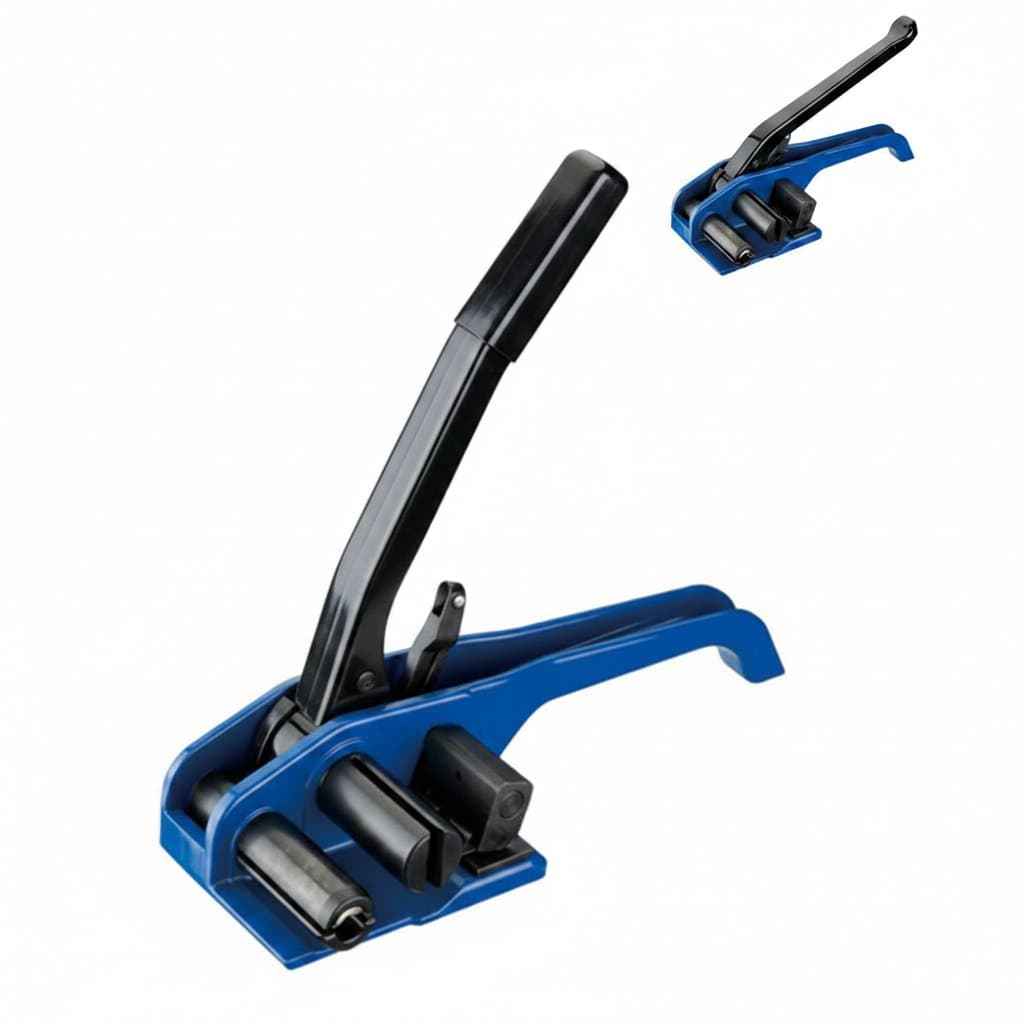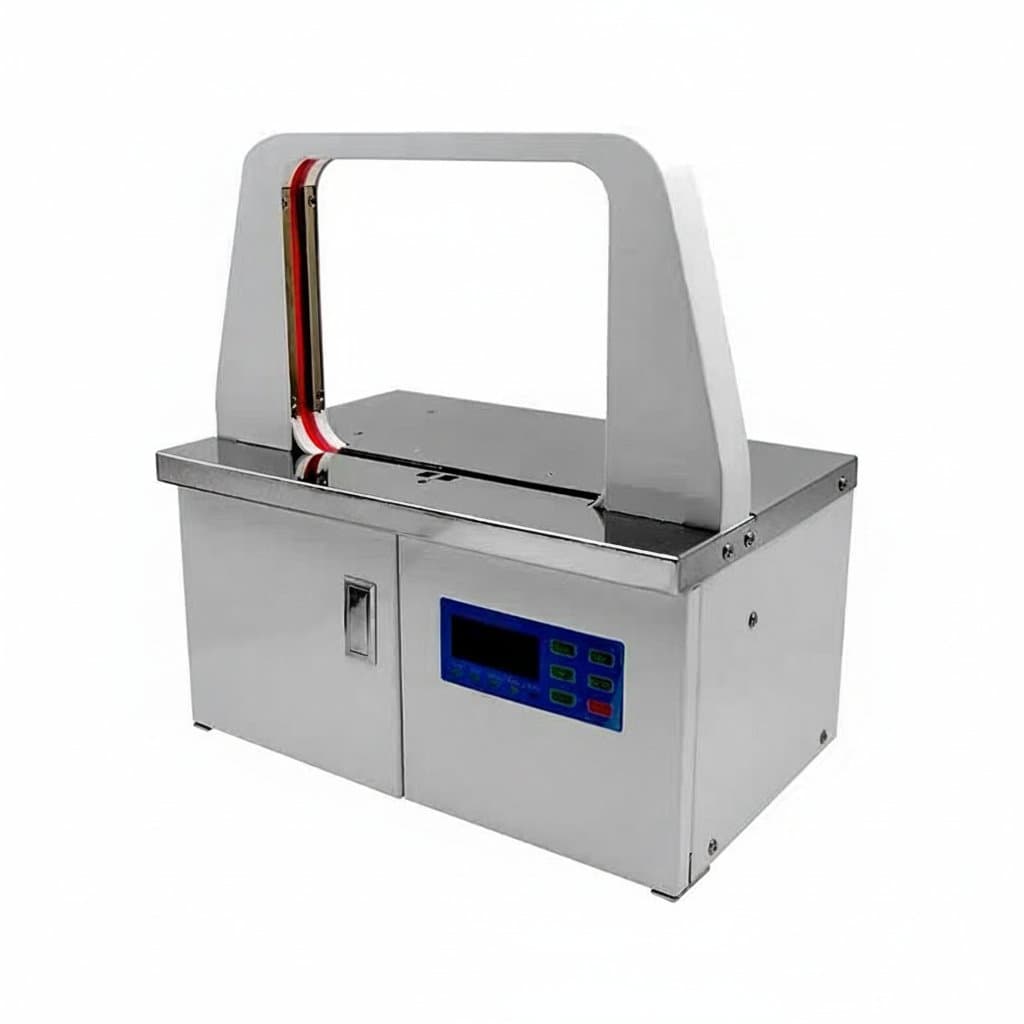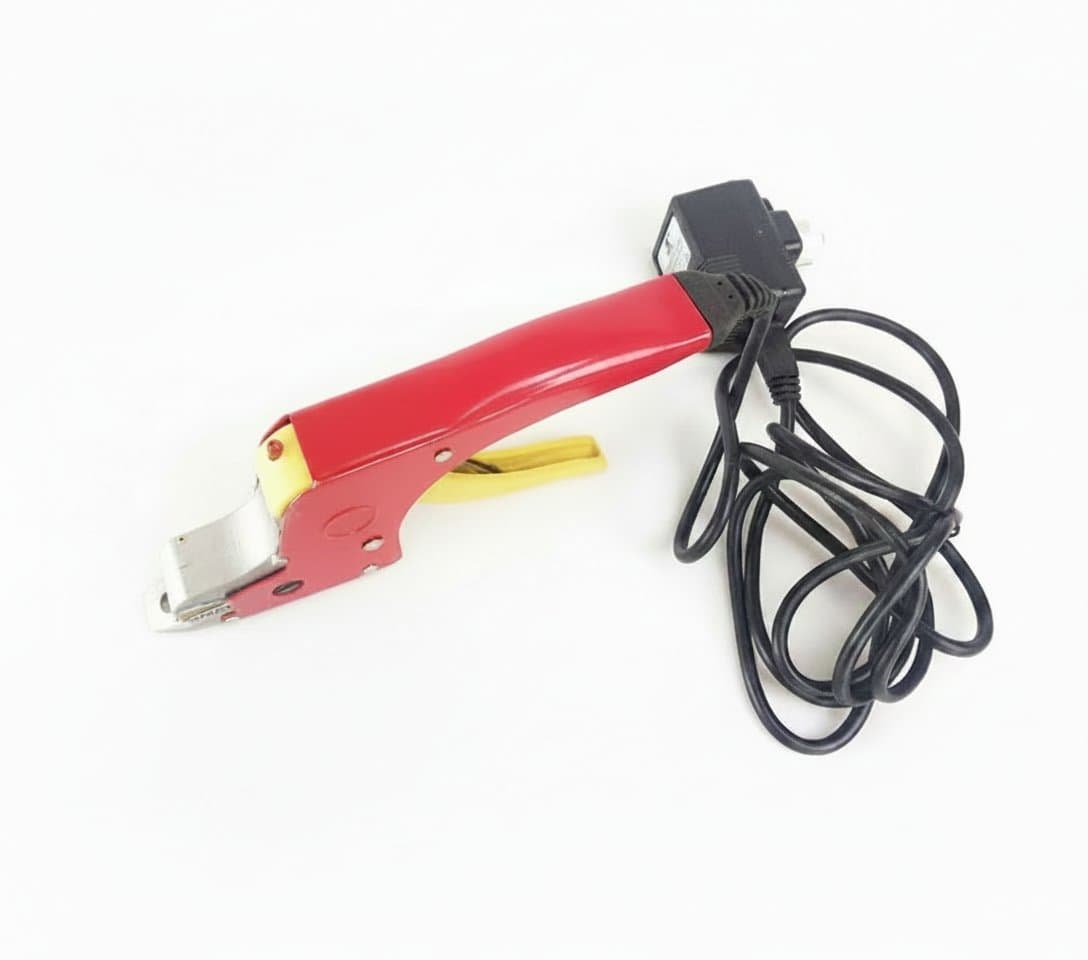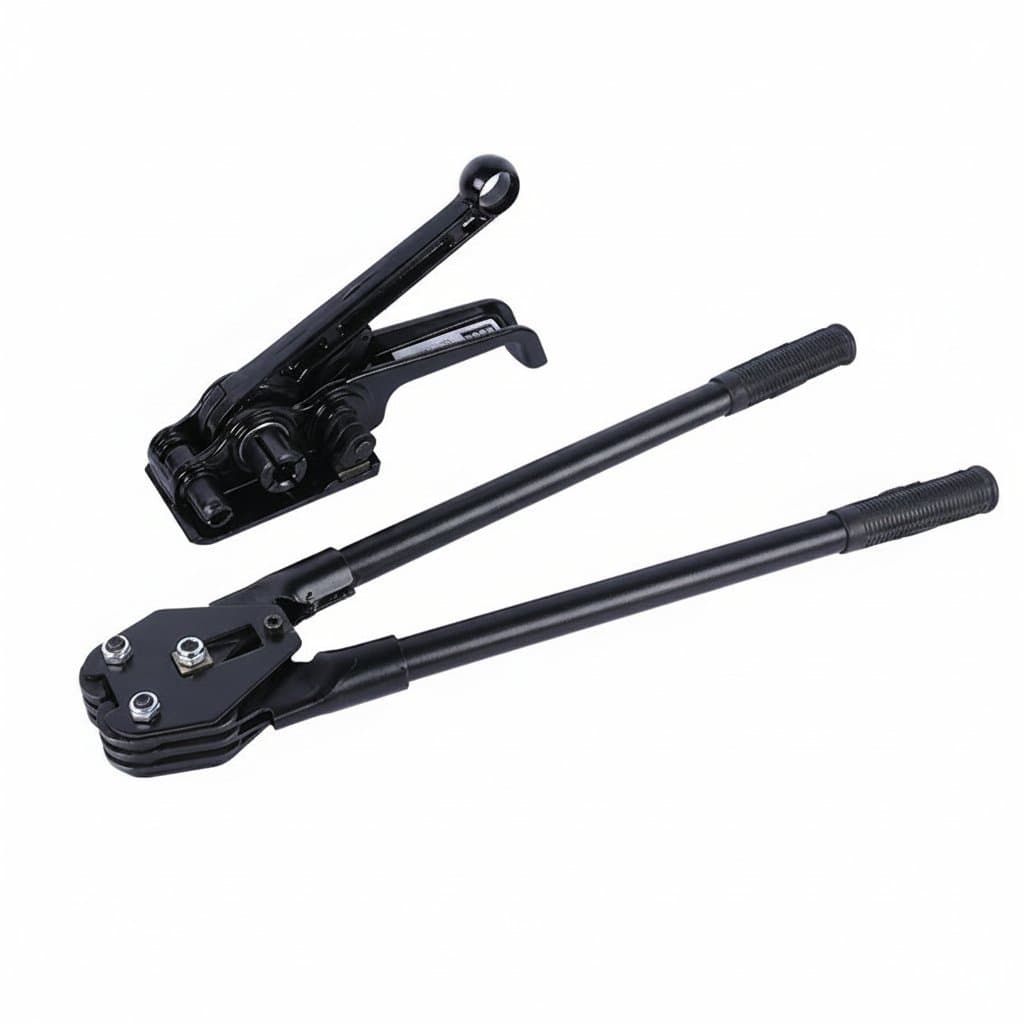
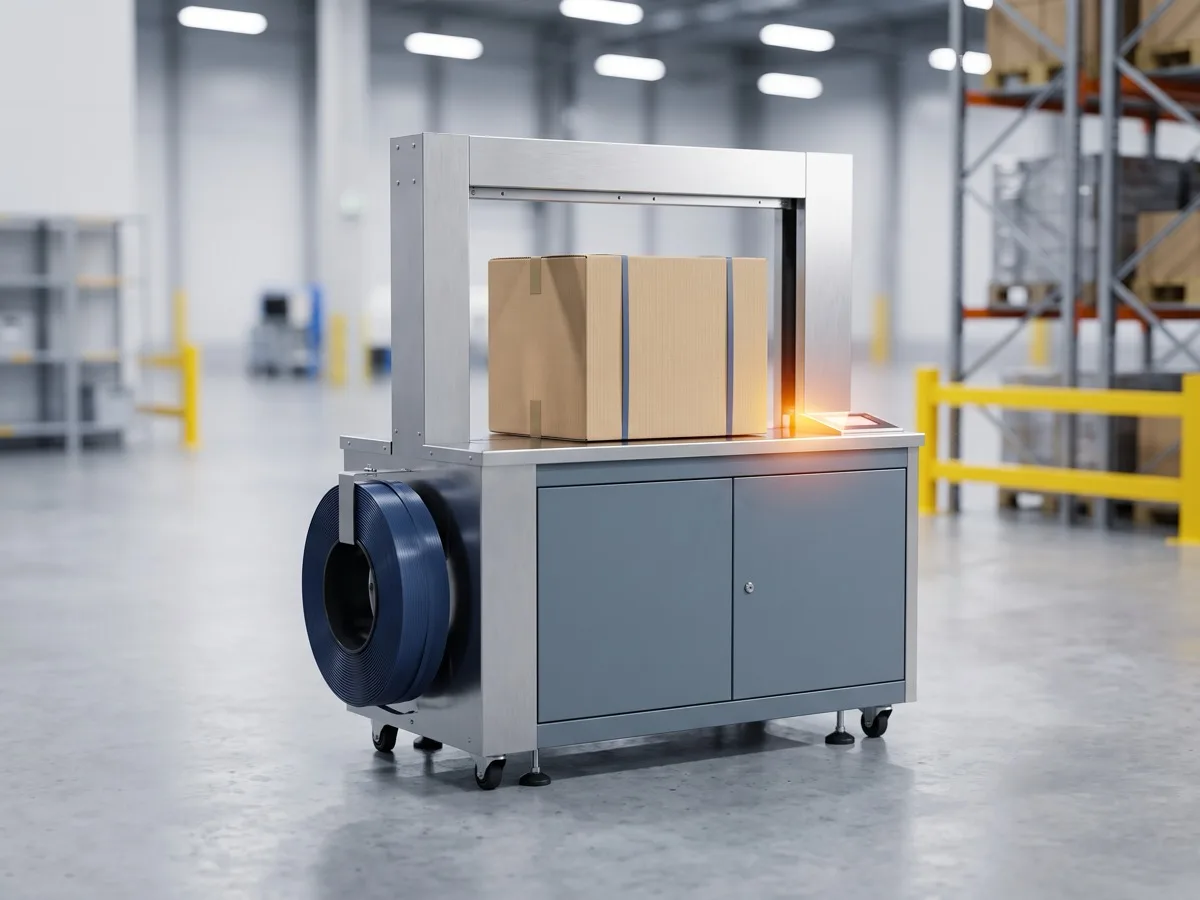
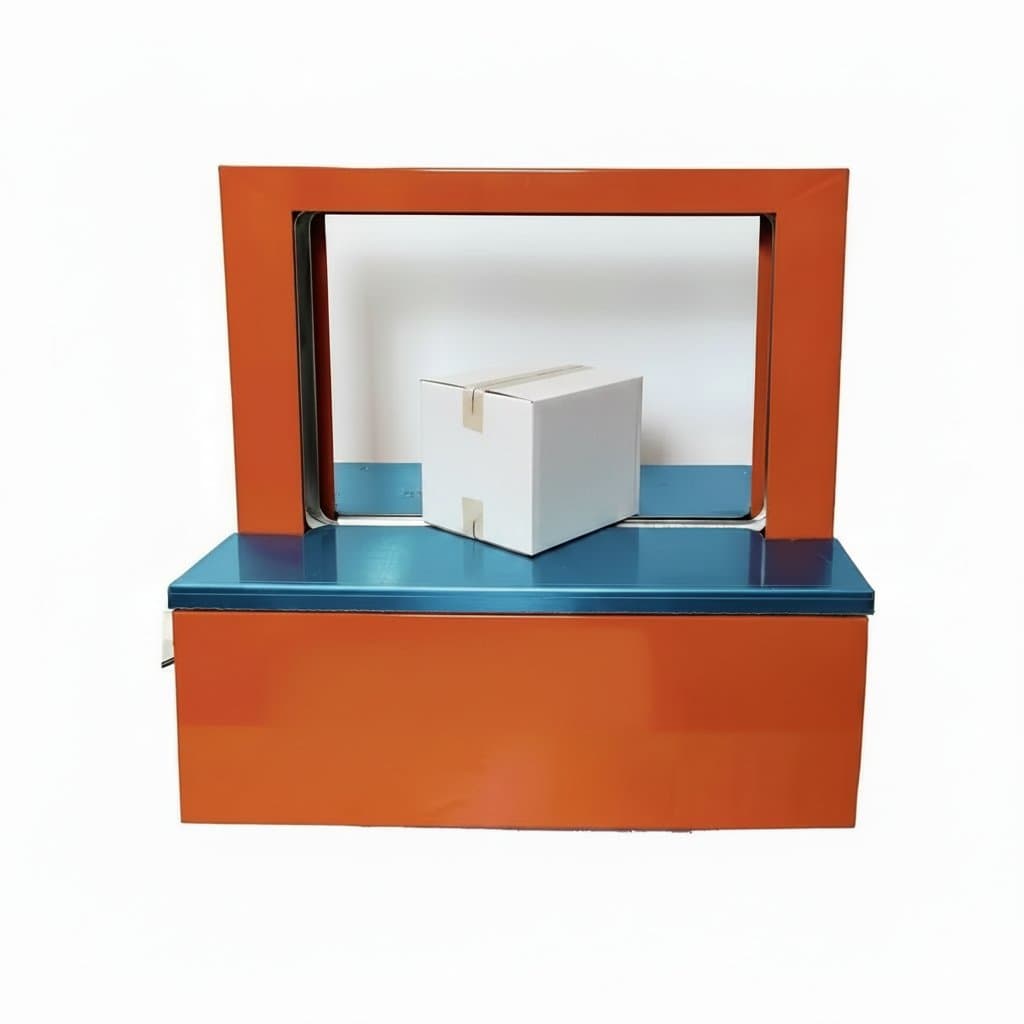
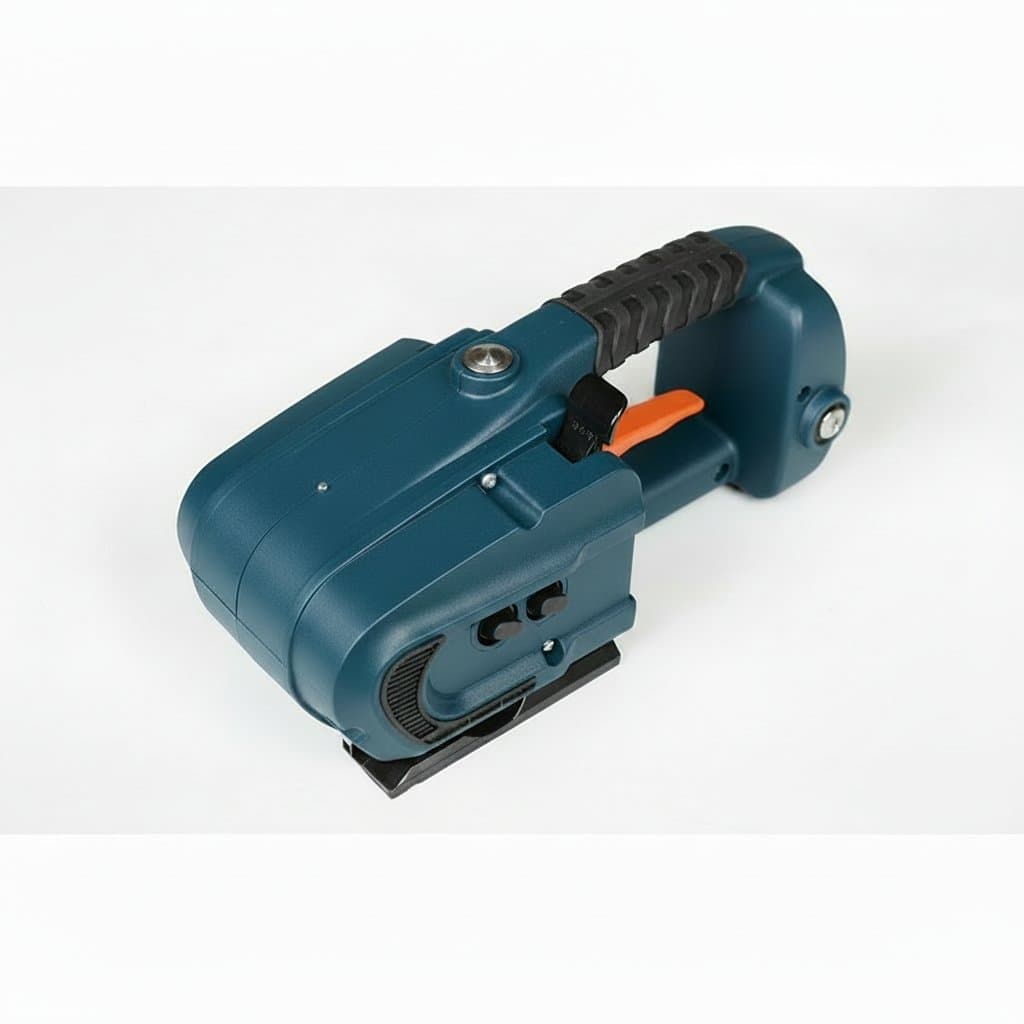
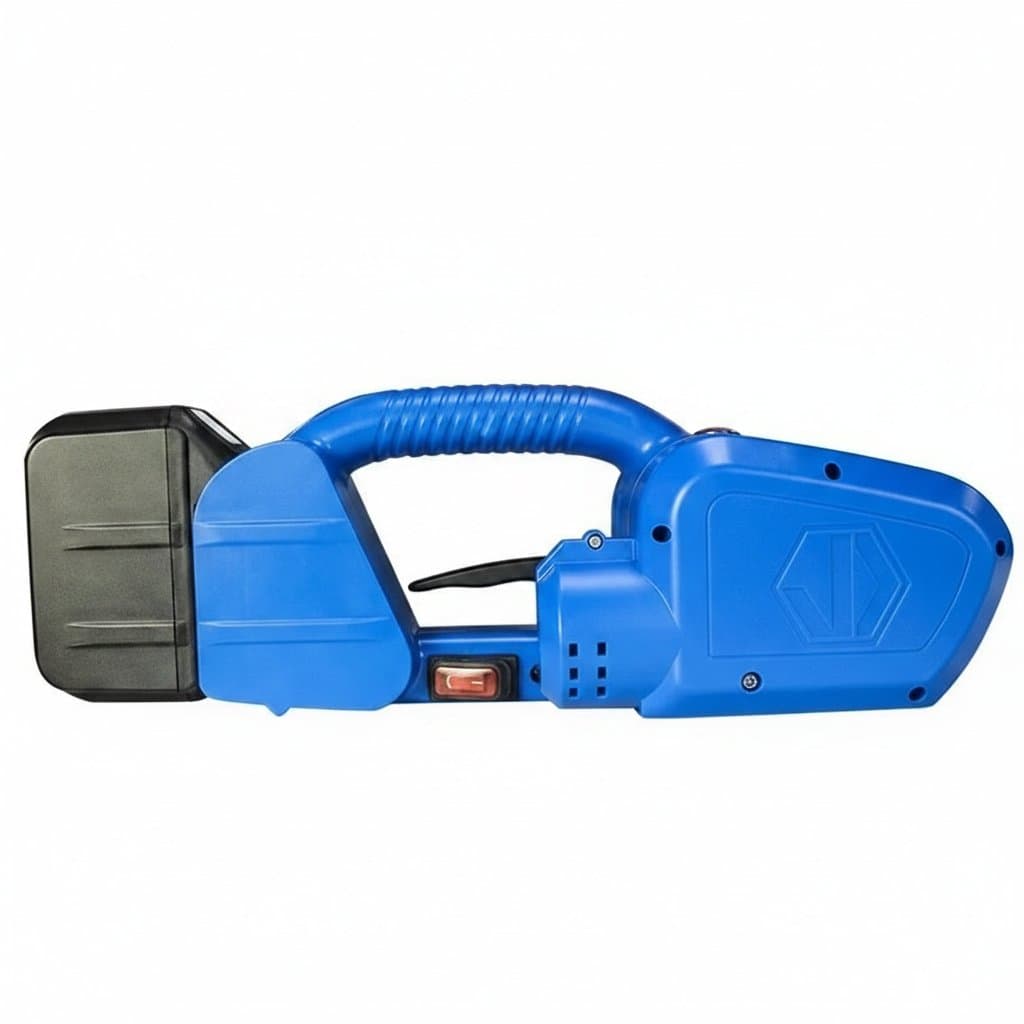
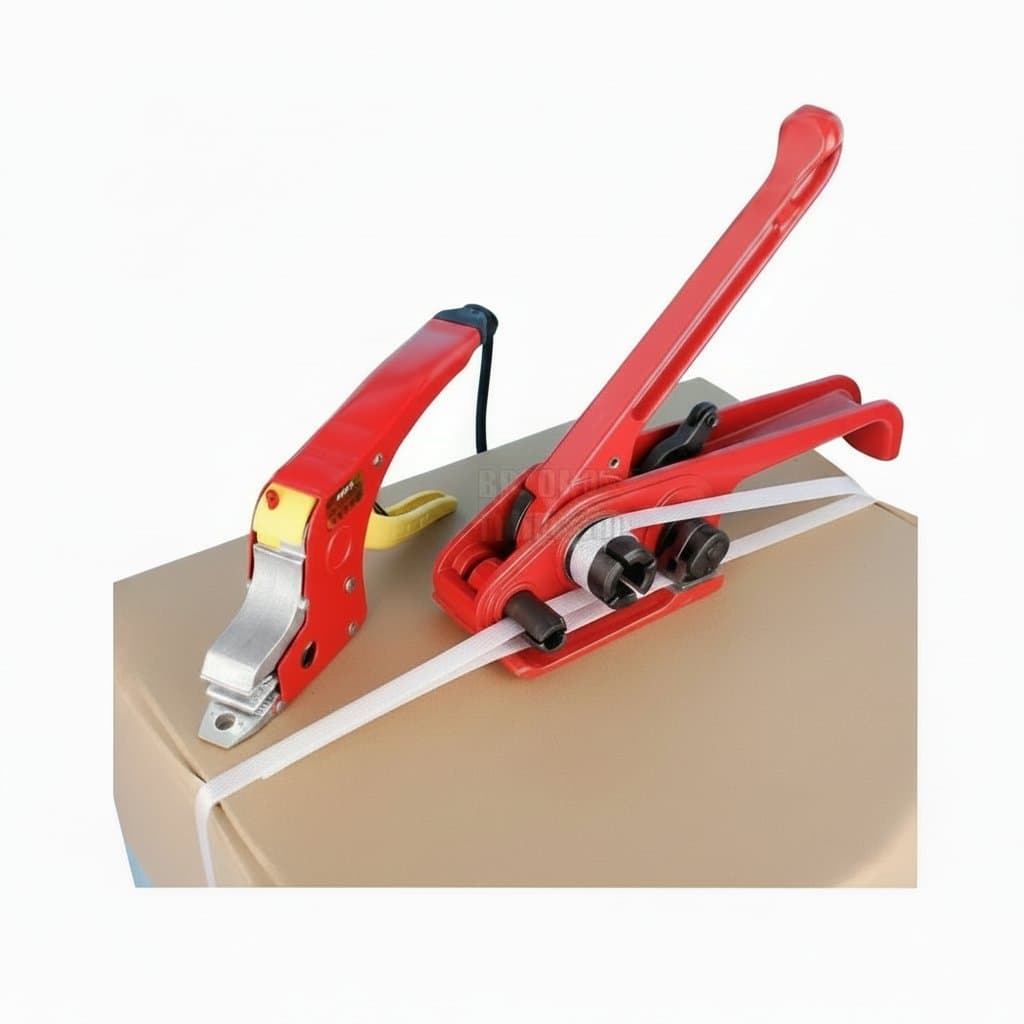
Hand tools, semi-automatic and automatic
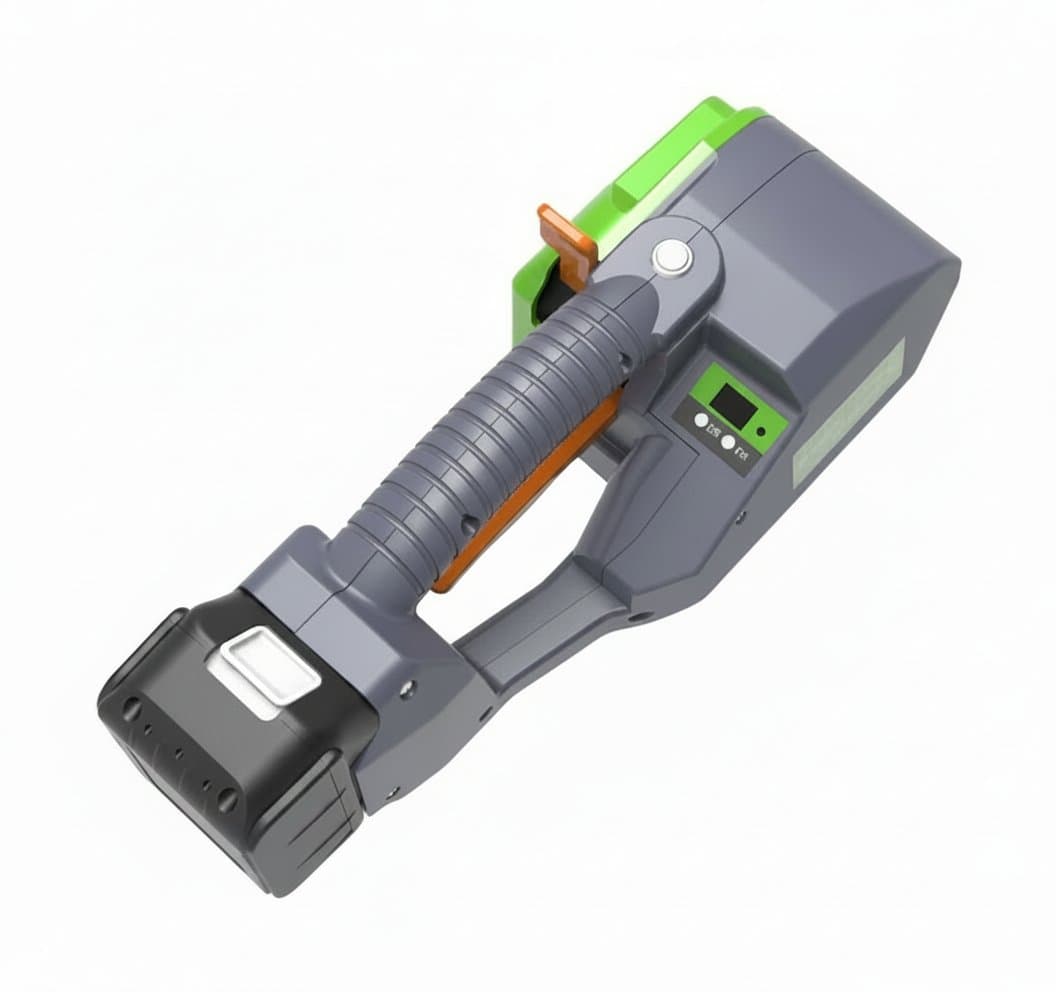
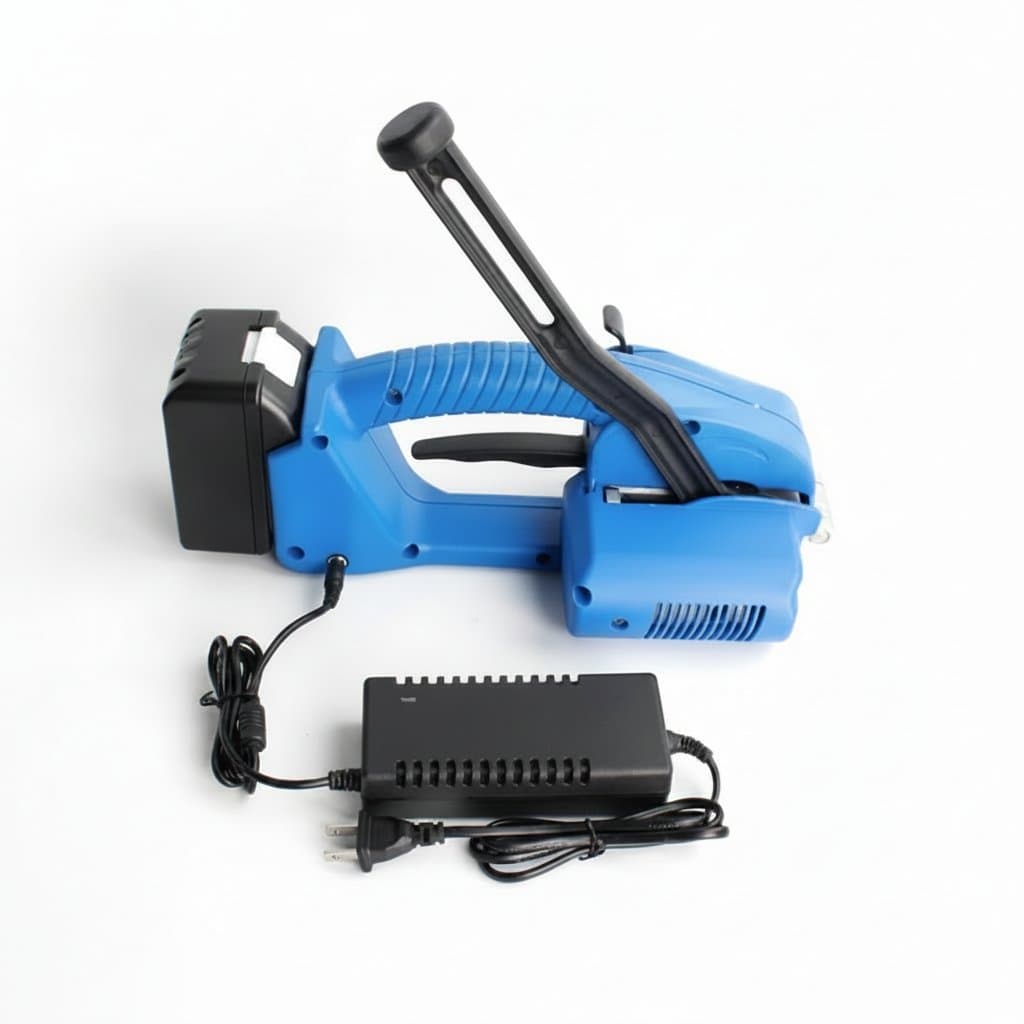
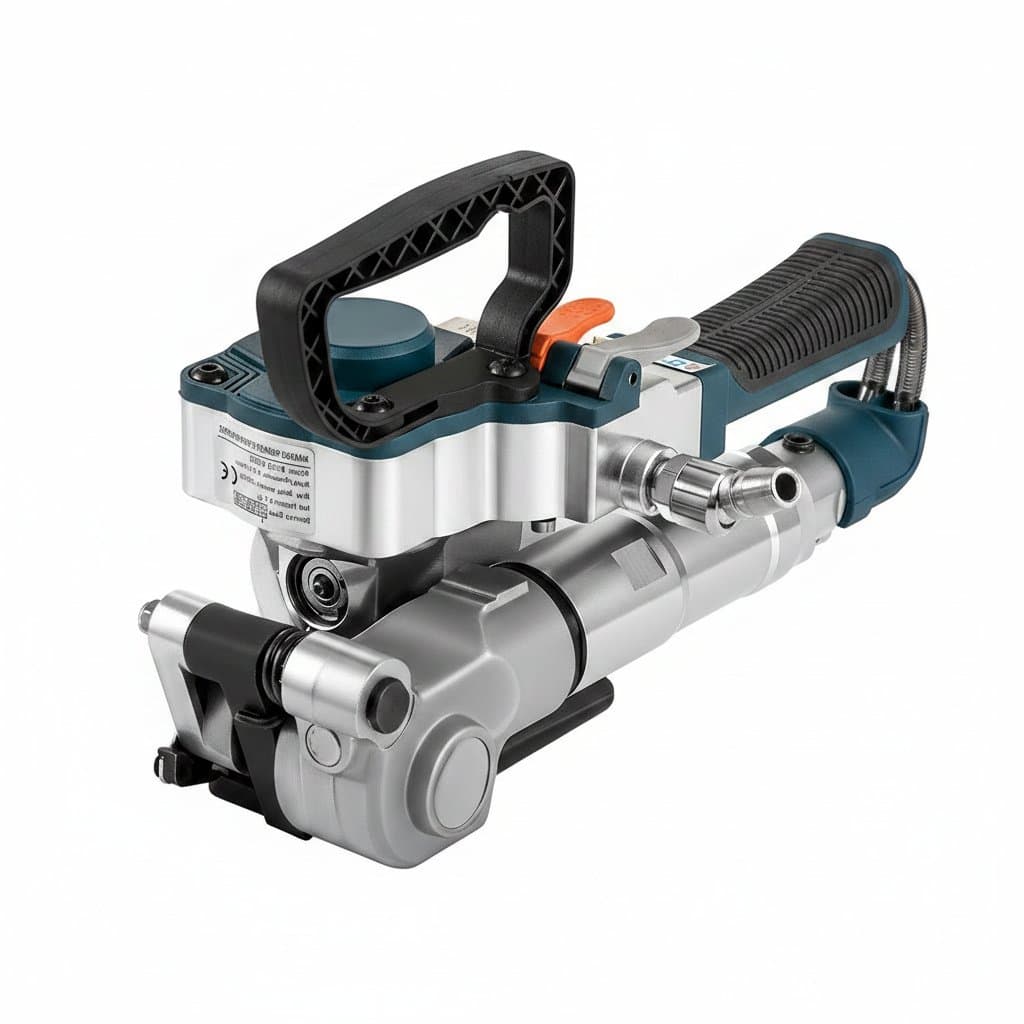
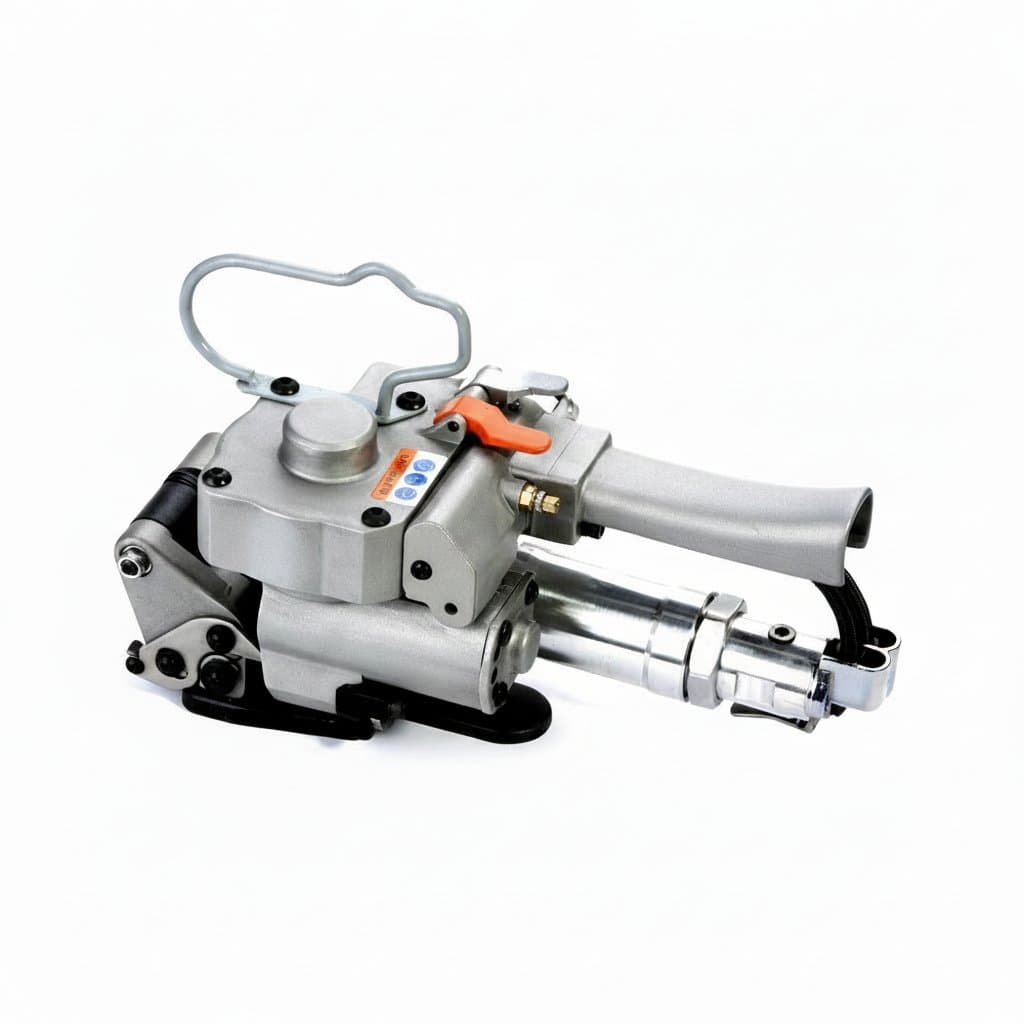
Three classes cover almost every packing bench. A hand tool is a separate tensioner and sealer, or a combination tool that does both, and it costs the least of anything here. A battery-powered combination tool tensions, welds and cuts in one trigger pull, which turns a two-handed job into a one-handed one and is the usual answer for pallets that are already built and standing on the floor.
A semi-automatic machine is a table with the strap coil underneath. The operator passes the strap around the load and feeds the end back into the slot, and the machine tensions, welds and cuts it. A fully automatic machine adds an arch that the strap is already threaded through, so the operator only positions the load. Automatics are the only class that keeps up with a conveyor, and they are the only class where strap path and arch size have to match the boxes you actually run.
| Class | Typical throughput | Strap | Where it fits |
|---|---|---|---|
| Hand tensioner and sealer | A few loads an hour | PP, PET, steel | Occasional heavy loads, yards, steel stock |
| Battery combination tool | Dozens of loads a shift | PP, PET | Pallets built away from a bench, mobile packing |
| Semi-automatic table | A steady flow of cartons | PP, PET | Packing benches, mail order, small production |
| Fully automatic arch | Continuous line work | PP, PET | Conveyor lines, high volume despatch |
Pallet strapping machines and what they need
Strapping a pallet is a different job from strapping a carton. The strap has to go under the pallet deck, around the load and back, which either means a lance to push it through the gap between the boards or a machine with a bottom-feed arch. For most warehouses the practical answer is a battery combination tool: the operator threads the strap by hand, then the tool does the tensioning, welding and cutting at the joint.
Two things decide whether the strap does its job. The first is edge protection, because a tensioned band will cut into a cardboard corner and lose all its tension the moment it does. The second is where the strap sits: bands placed over the top of the load and down the sides hold the load to the pallet, while bands around the middle only hold the load to itself.
Polypropylene, polyester and steel strapping
Polypropylene is the cheapest strap and the most common on cartons. It stretches a long way under tension and it does not fully recover, so a PP band tensioned this morning is looser this afternoon. That is fine for a box that is going out today and wrong for a pallet sitting in a yard for a fortnight.
Polyester holds its tension far better and recovers as the load settles, which is why it has replaced steel on a lot of palletised loads. It will not rust, it will not cut a warehouse hand open, and it can be friction welded rather than sealed. Steel is still the answer where the load is rigid, heavy, sharp-edged or hot, because nothing else matches its break strength and it barely stretches at all. The trade-off is that steel gives nothing back: if the load settles, the band goes slack and stays slack.
| Strap | Break strength | Tension retention | Joint method | Best for |
|---|---|---|---|---|
| Polypropylene (PP) | Lowest | Poor, relaxes within hours | Friction weld, heat seal or metal seal | Cartons, light bundling, print and media |
| Polyester (PET) | High | Good, recovers as the load settles | Friction weld or metal seal | Pallets, timber, brick, most heavy loads |
| Steel | Highest | No stretch, but no recovery either | Metal seal or sealless notch joint | Steel stock, castings, rigid and sharp loads |
Strapping seals, friction welds and sealless joints
How the two strap ends are joined decides how much of the strap strength you actually keep. A friction weld rubs the overlapping ends together until they melt and fuse, and it works only on plastic strap. It needs no consumable at all, which is why every battery tool and every table machine uses it.
Metal seals are crimped over the overlap with a sealer and work on plastic and steel alike. A sealless joint punches interlocking notches through both layers of steel strap and needs no seal, which removes a consumable but gives up some joint strength. Whichever you use, the joint is the weakest point in the loop, so match the seal or the weld setting to the strap you are running rather than to the strap the machine came set for.
Strapping tensioners and hand tools
A tensioner grips the loose end and pulls the loop tight, either with a feed wheel you crank or a windlass you lever. It is the half of the job that decides whether the load arrives intact, and it is also the half people rush. Under-tensioned strap lets the load shift; over-tensioned strap crushes the box or snaps at the joint.
Strap width and thickness have to match the tool. Hand and battery tools on this page run 13 mm to 19 mm plastic strap, and the steel tools take 12.7 mm to 19 mm bands. Coil core size matters too, because machine-grade strap is usually wound on a small core to sit inside a machine while hand-grade strap comes on a large core for a dispenser. A coil that will not fit the machine is a common and avoidable mistake.