
Manual tri-star against powered track
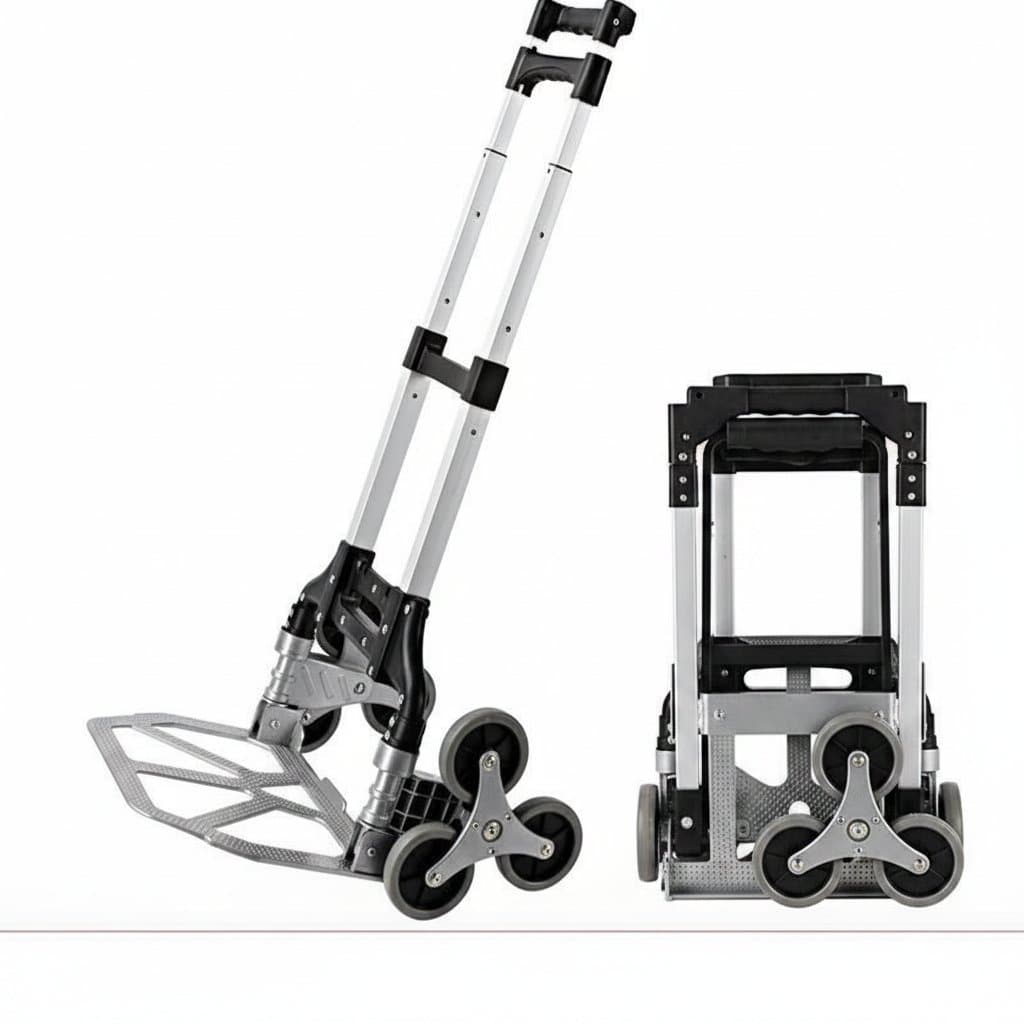
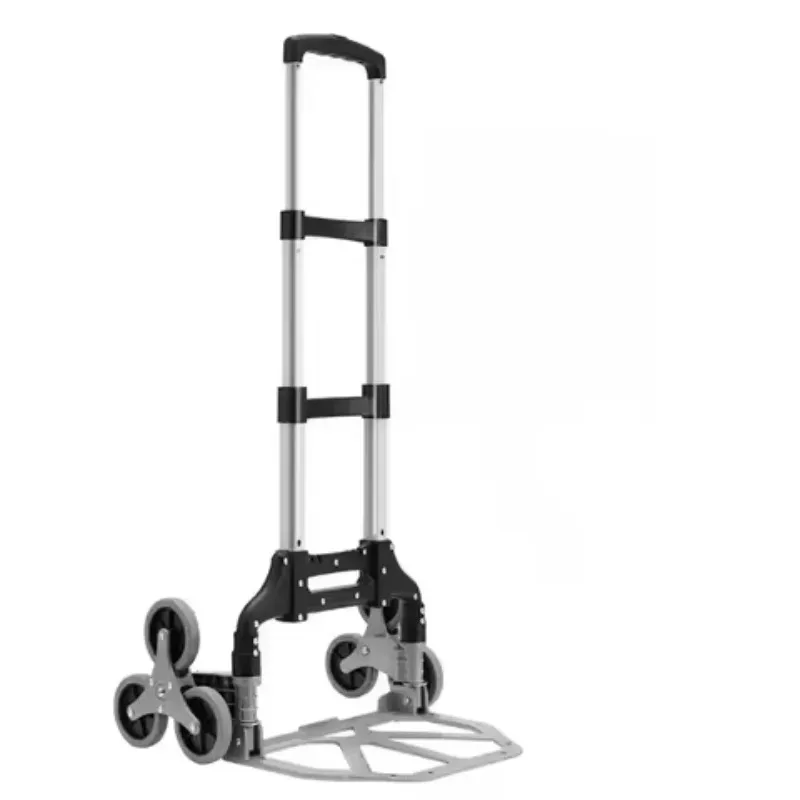
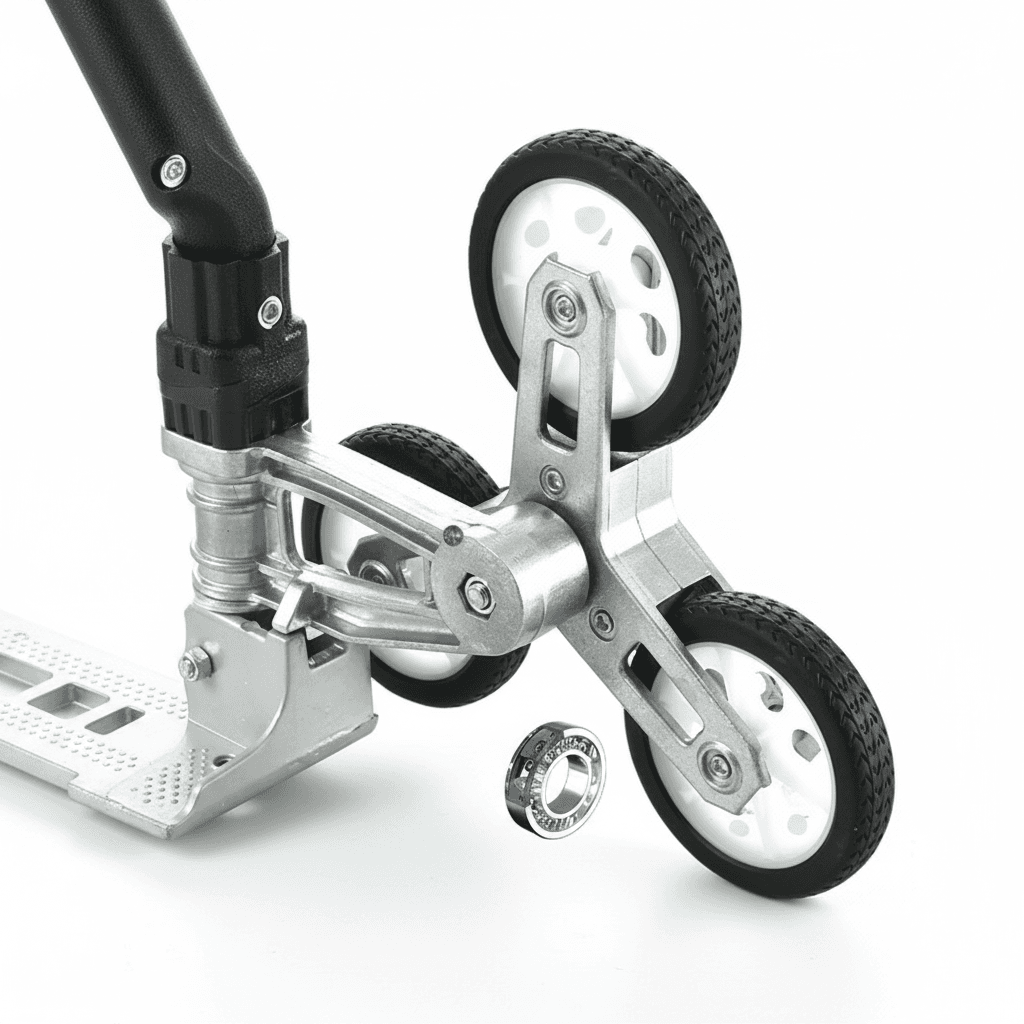
A manual stair climber uses a tri-star wheel: three wheels on a rotating hub at each side. As you pull the trolley back against a step, the cluster rotates and the next wheel lands on the step above, so the load rolls up rather than being lifted. There is no battery, nothing to charge and very little to go wrong, and for a few flights with a moderate load it is all most people need.
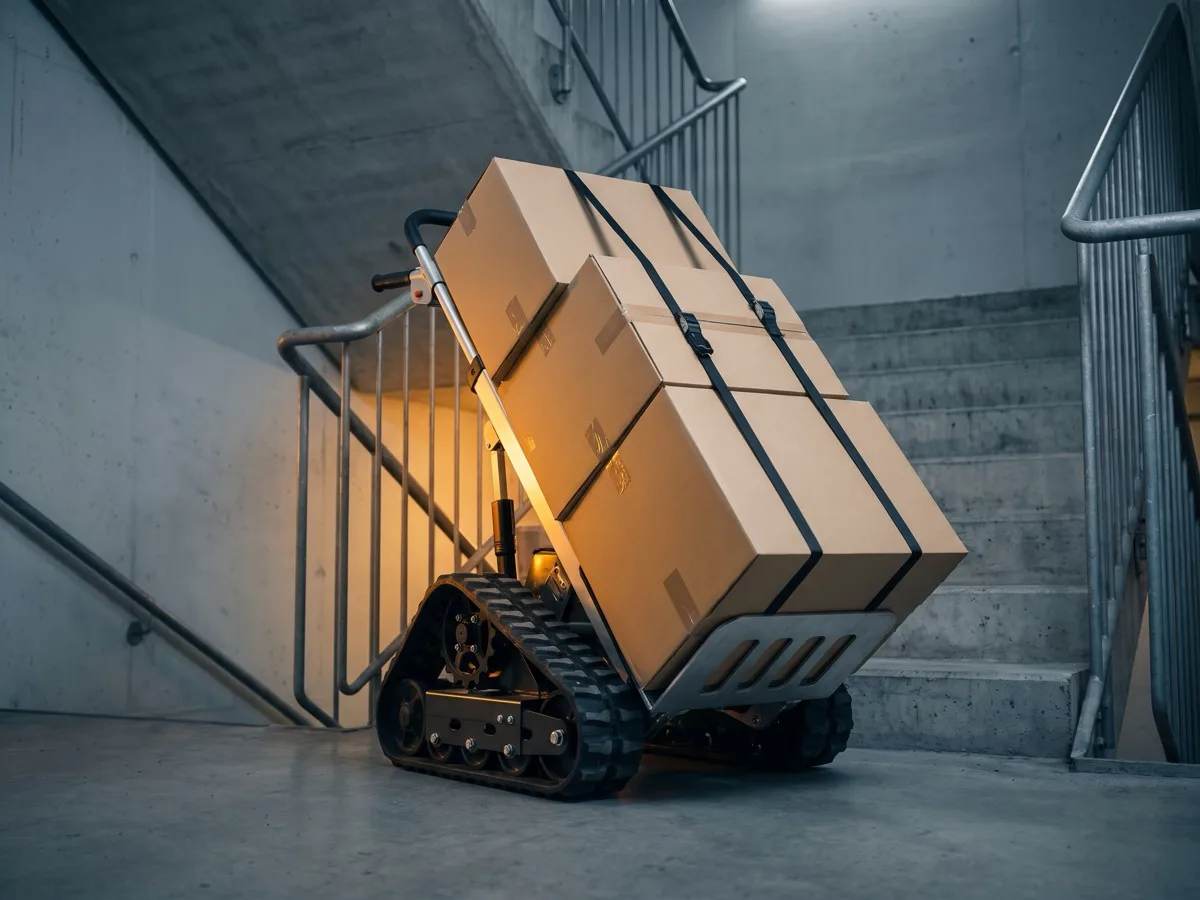
A powered climber replaces that with a motor. Some drive a rubber track that grips the nosings of the stairs, others use a mechanical leg that steps the trolley up one tread at a time. The operator balances and steers, and the machine takes the weight, which is what makes a 200 kg load up four floors a one-person job instead of a two-person injury risk. The cost is weight, charging and a machine that has to be maintained.
| Type | How it climbs | Suits | Watch out for |
|---|---|---|---|
| Manual tri-star | Three-wheel cluster rotates over each step | Occasional use, moderate loads, deliveries | Operator still takes much of the weight |
| Powered track | Motor drives a rubber track over the nosings | Frequent use, heavy or awkward loads | Heavy itself, needs charging, needs sound nosings |
| Powered climbing leg | A driven leg steps up one tread at a time | Very heavy single items, safes, machinery | Slower per step, more mechanism to service |
Powered stair climbers and battery range
On a powered machine the figure that decides your day is not top speed but how many steps or flights it manages on a charge, and whether the battery comes off for swapping. A removable battery turns a machine that stops at lunchtime into one that runs all day for the price of a second pack, and it also means the trolley can charge while it is in the van.
Stair condition matters more than the brochure suggests. Track machines need consistent, sound nosings to grip; open risers, badly worn stone and spiral flights are all cases where a powered climber is the wrong tool. Walk the route before committing to one, especially in older buildings where no two flights are the same.
Load capacity, and why the stair figure is lower
Read the two capacity figures separately. Almost every one of these trolleys is rated higher on level ground than on stairs, because on a flight the load is cantilevered off the frame and the operator is holding it at an angle rather than letting the wheels carry it. A trolley described as 300 kg may be rated at appreciably less on a staircase, and that lower number is the one that matters.
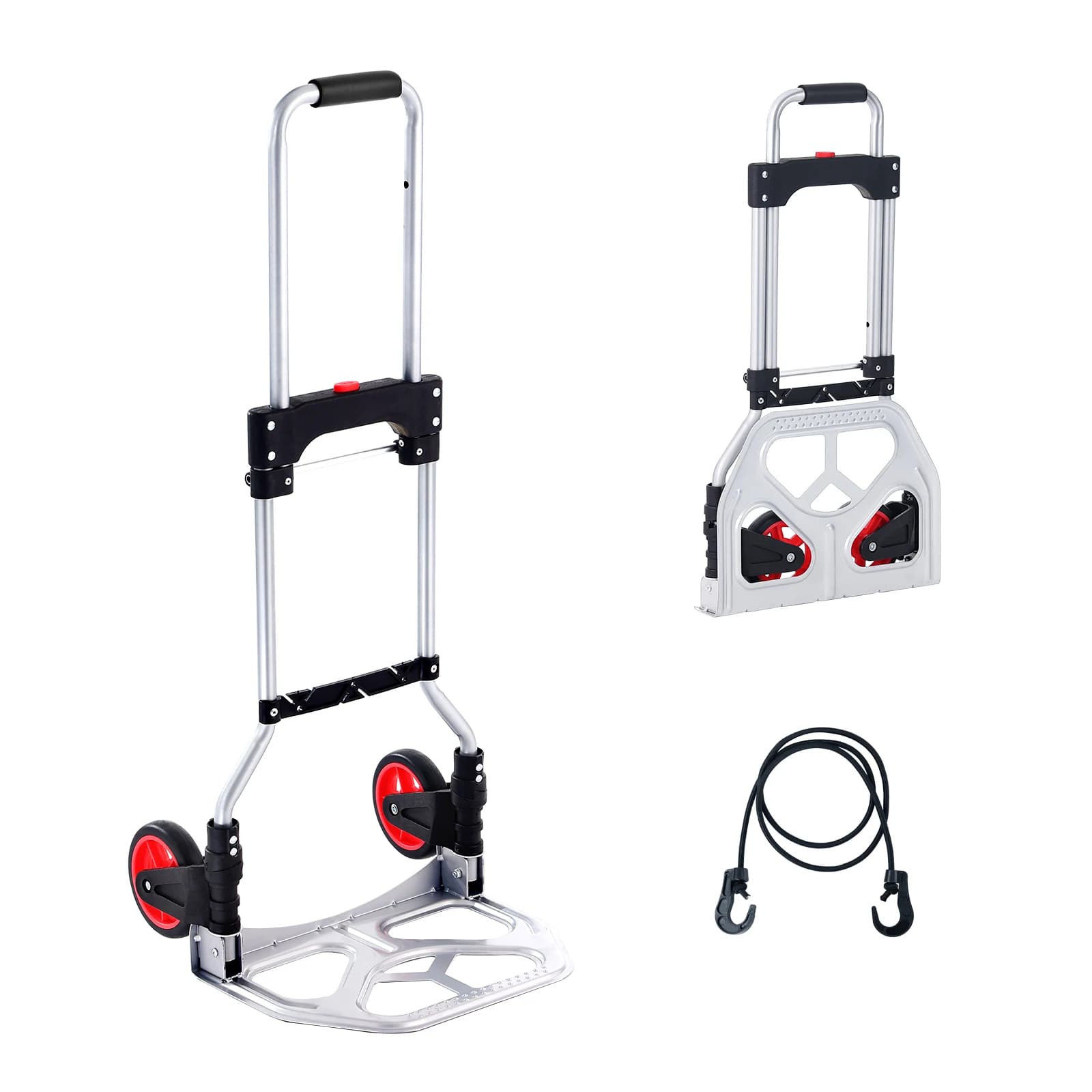
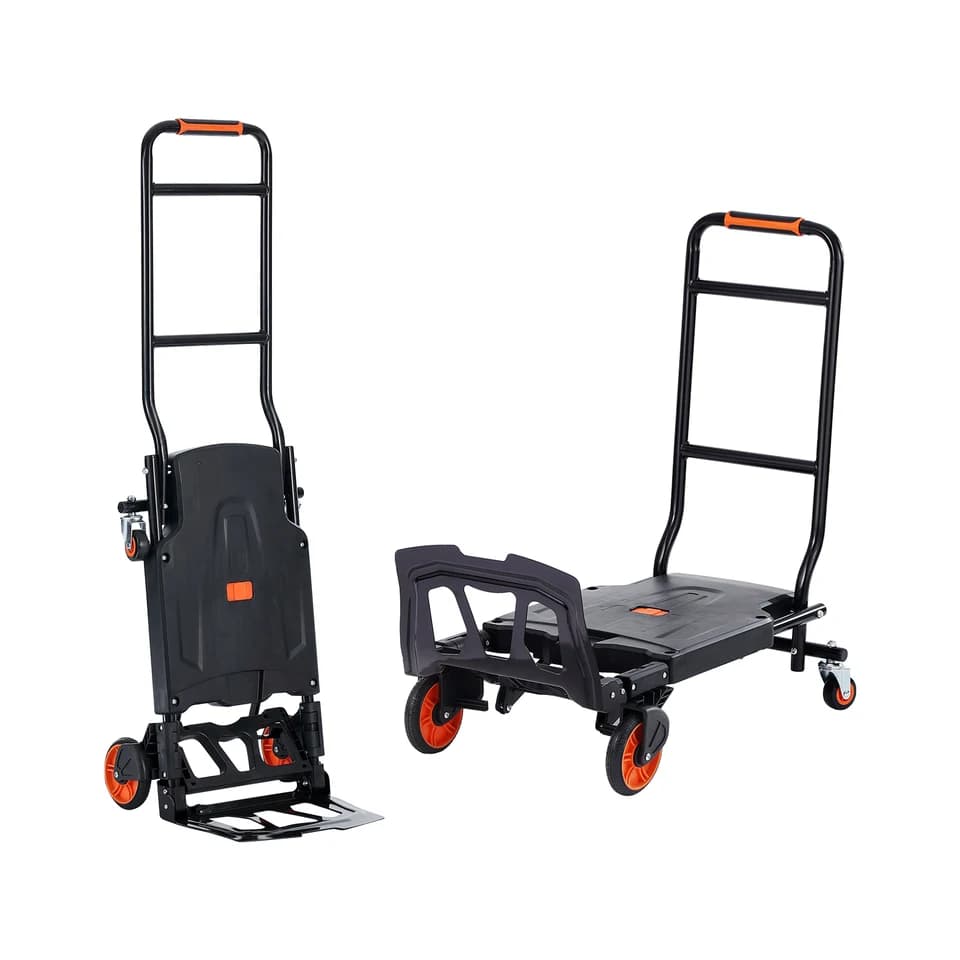
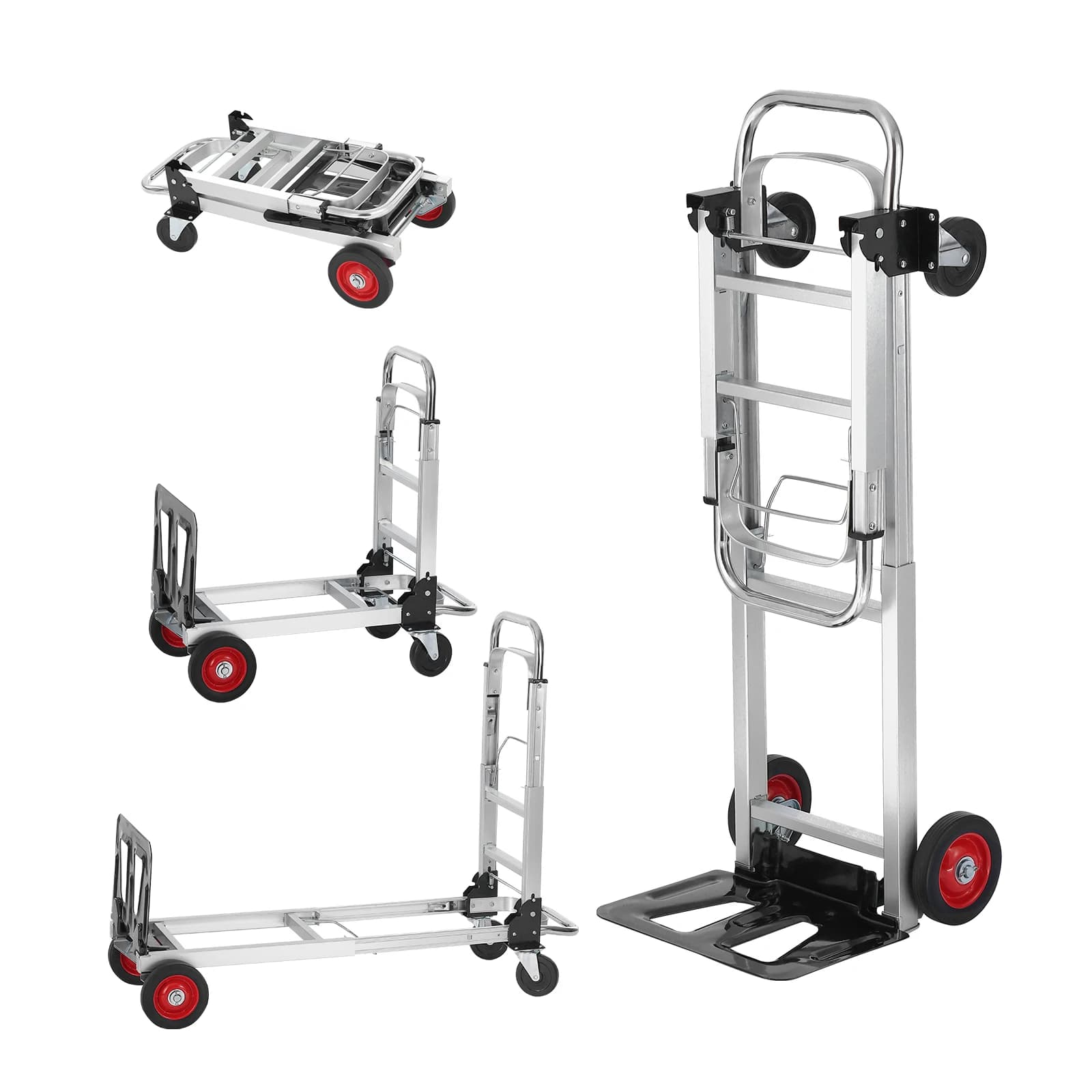
Shape counts as much as mass. A tall, narrow load such as a water heater or a safe sits badly on a small toe plate and wants to twist, so a wider plate and a second strap are worth more than another 50 kg of rating. Check the toe plate size and the strap arrangement against the thing you actually move most often.
Electric sack trucks on the flat
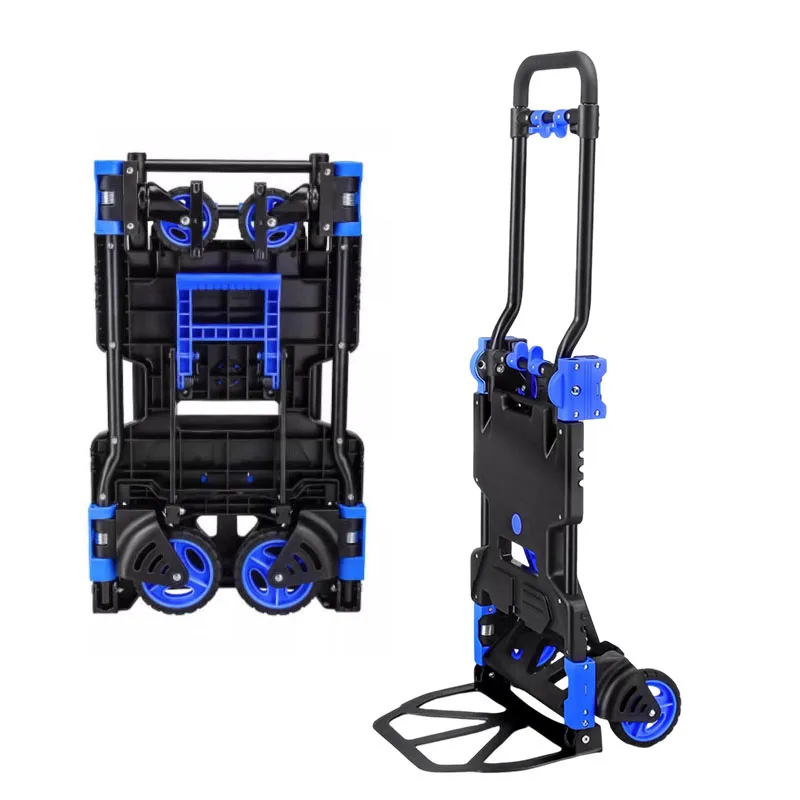
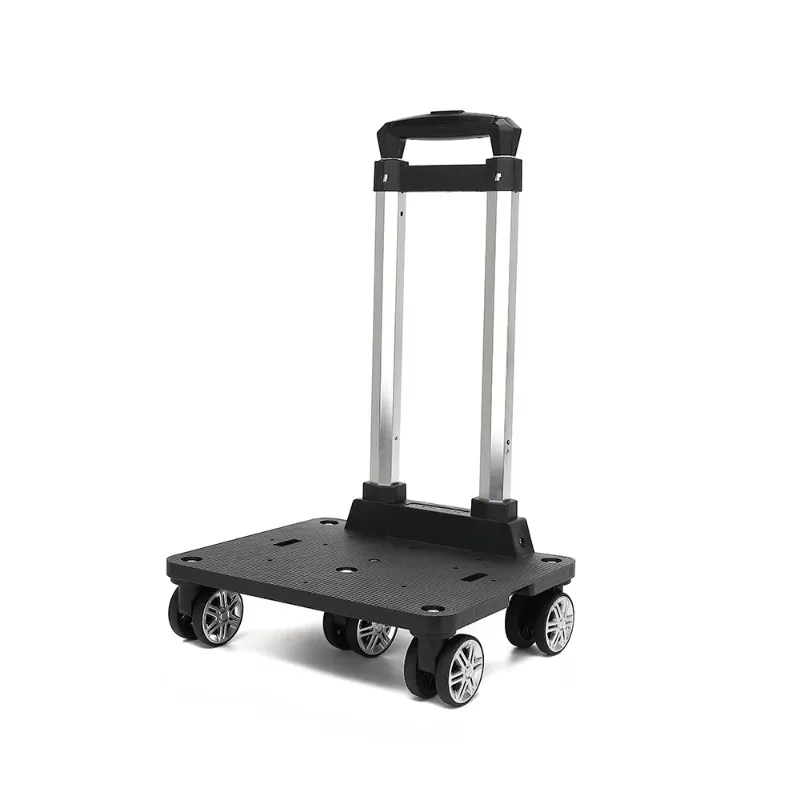
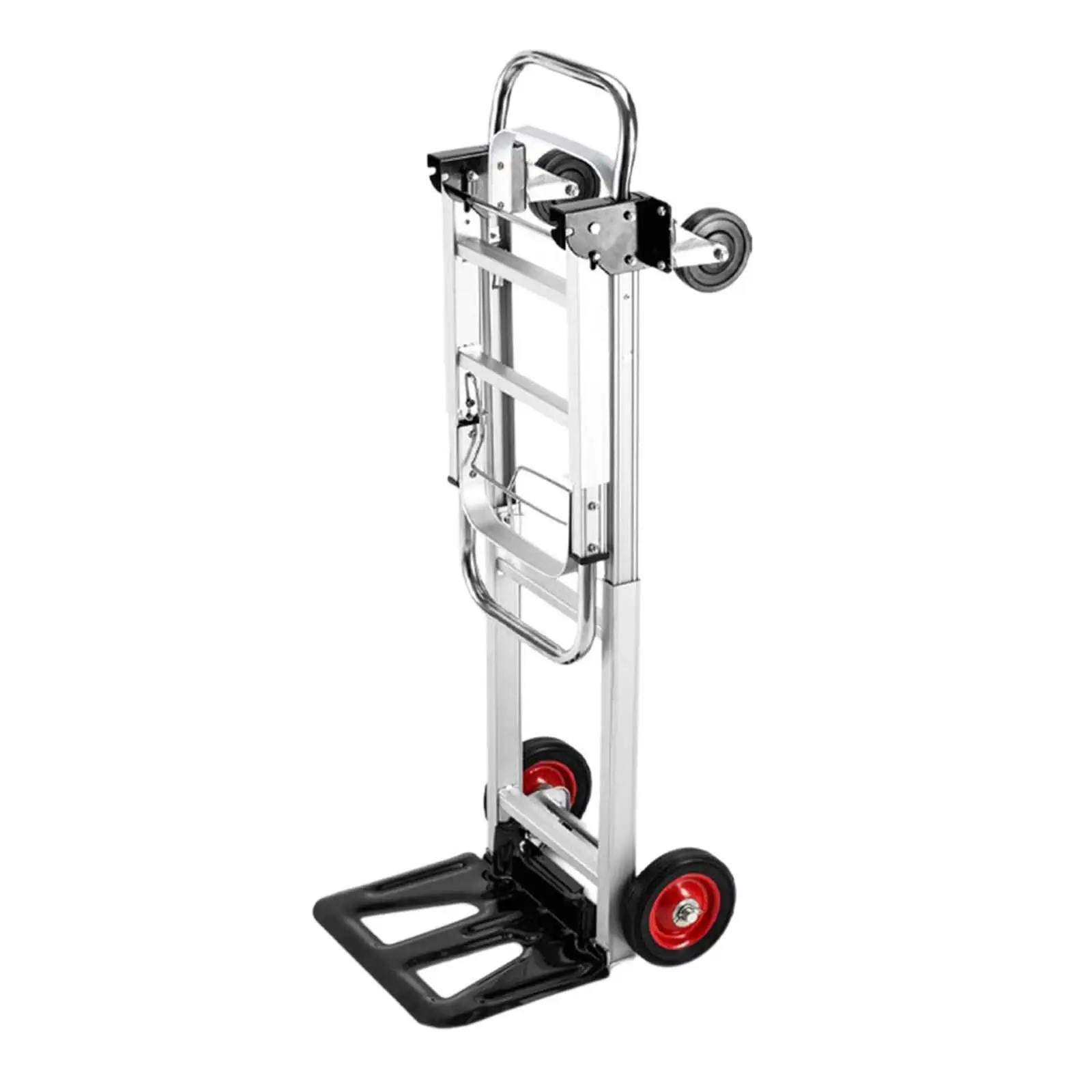
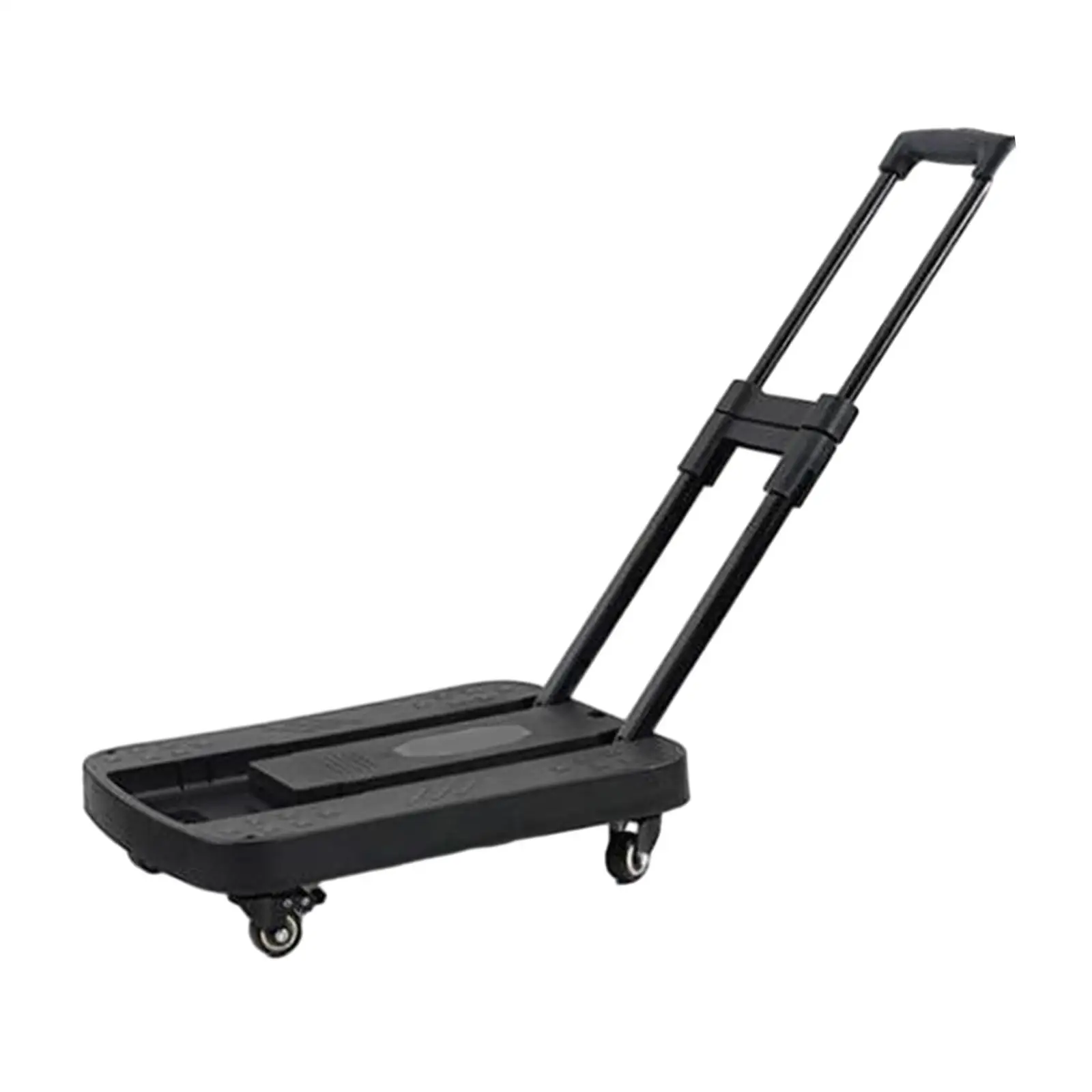
Not every powered trolley is for stairs. An electric sack truck is a powered barrow for level ground, and it earns its place where the distance is long, the floor slopes, or the same person moves loads all day. On a flat warehouse run it is often the better buy, because it solves fatigue rather than a staircase you use twice a week.
Where both problems exist, the stair climbers here handle the flat as well, just less comfortably than a machine built for it. If most of the work is corridors with occasional steps, a powered stair climber covers both. If it is genuinely all flat, do not pay for the climbing mechanism.
Straps, descent and working alone
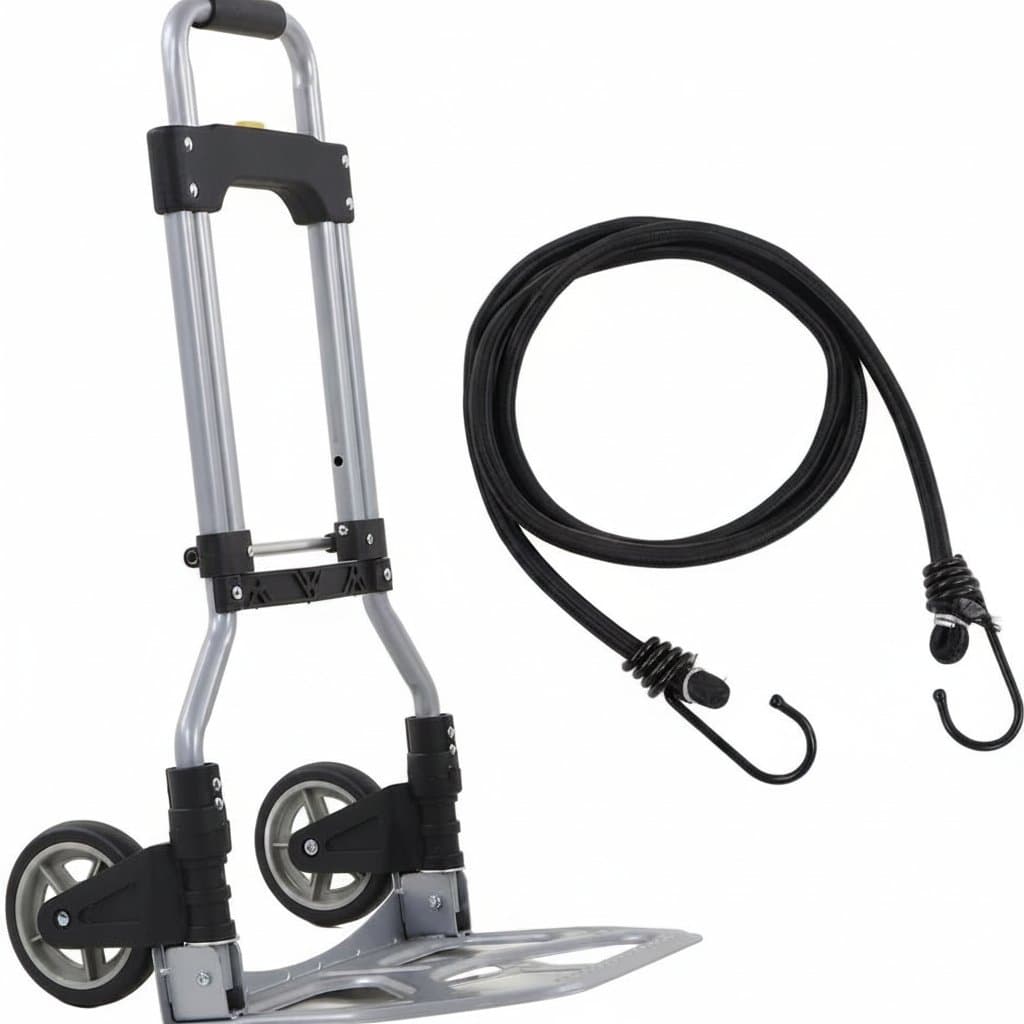
Going down is the part that hurts people. Gravity is helping the load and the operator is below it, so a powered machine should be driven down under motor control rather than allowed to run, and a manual tri-star wants the operator above the load taking the weight through the frame rather than the back. Strap anything that can shift before the first step, every time.
In the UK the Manual Handling Operations Regulations 1992 require employers to avoid hazardous manual handling where it is reasonably practicable, and to assess and reduce the risk where it is not. Moving a heavy load up a staircase by hand is exactly the activity those regulations have in mind, and a stair climbing trolley is one of the standard answers to that assessment.