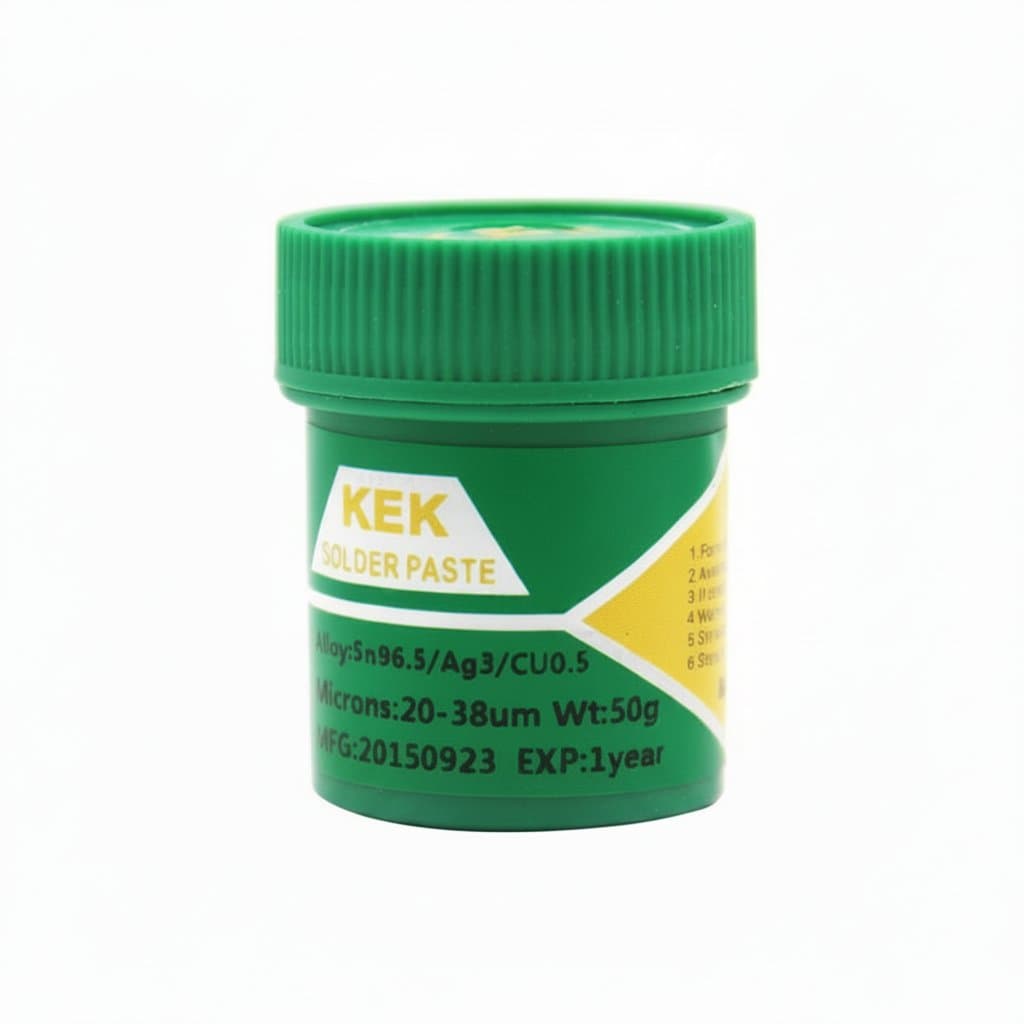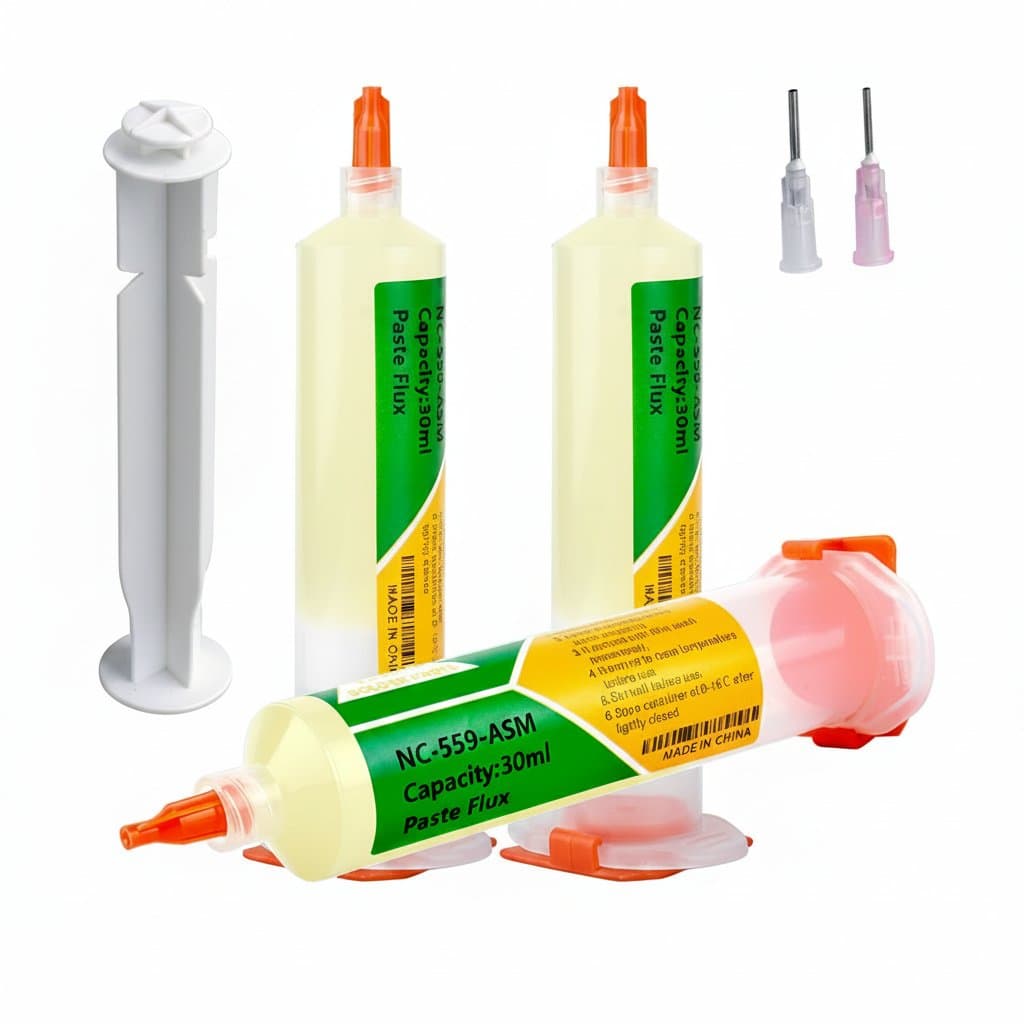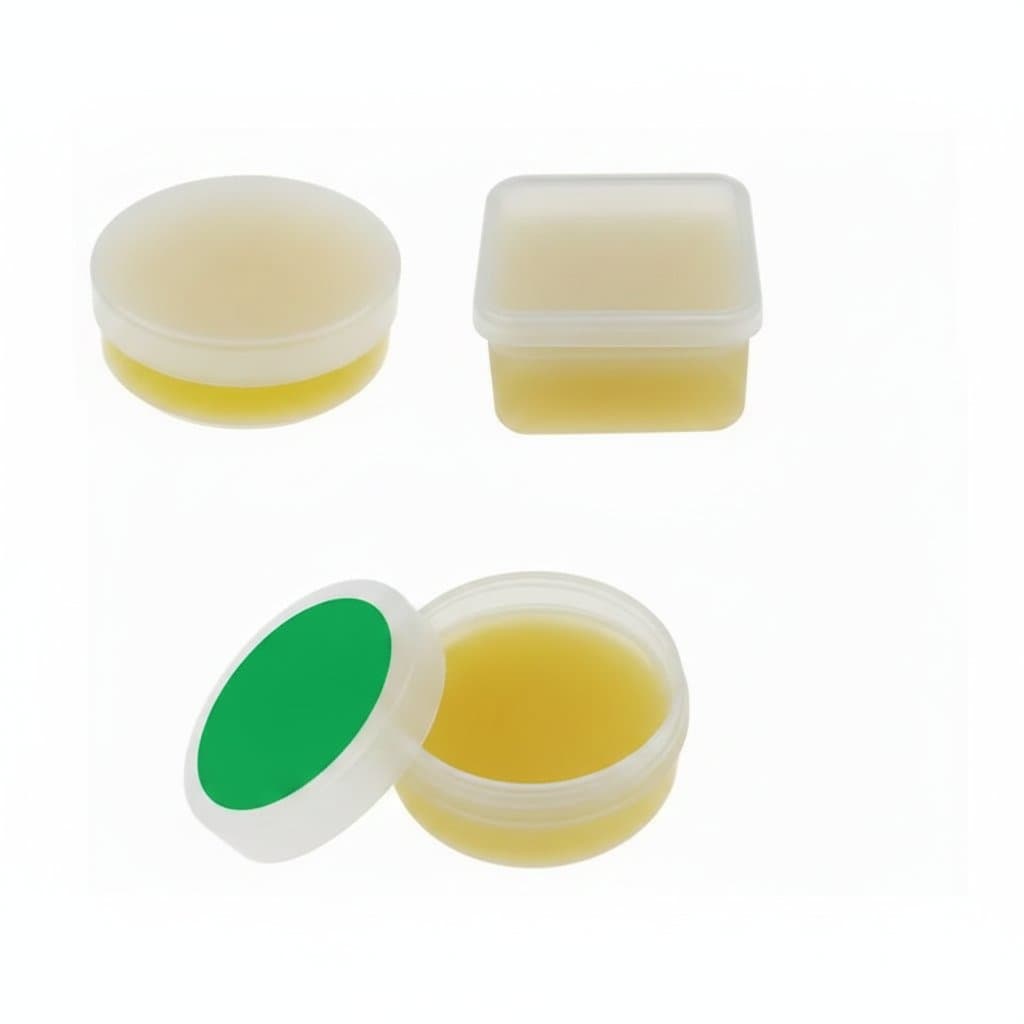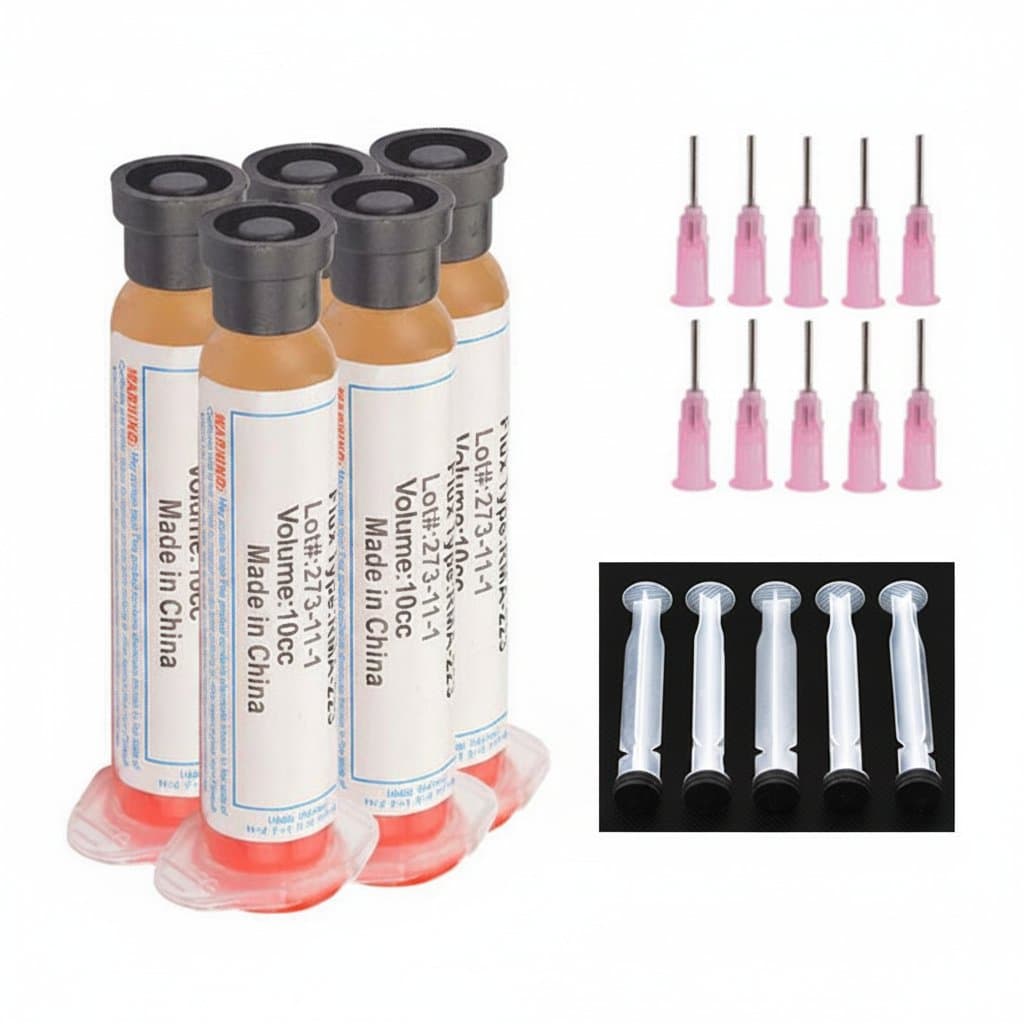
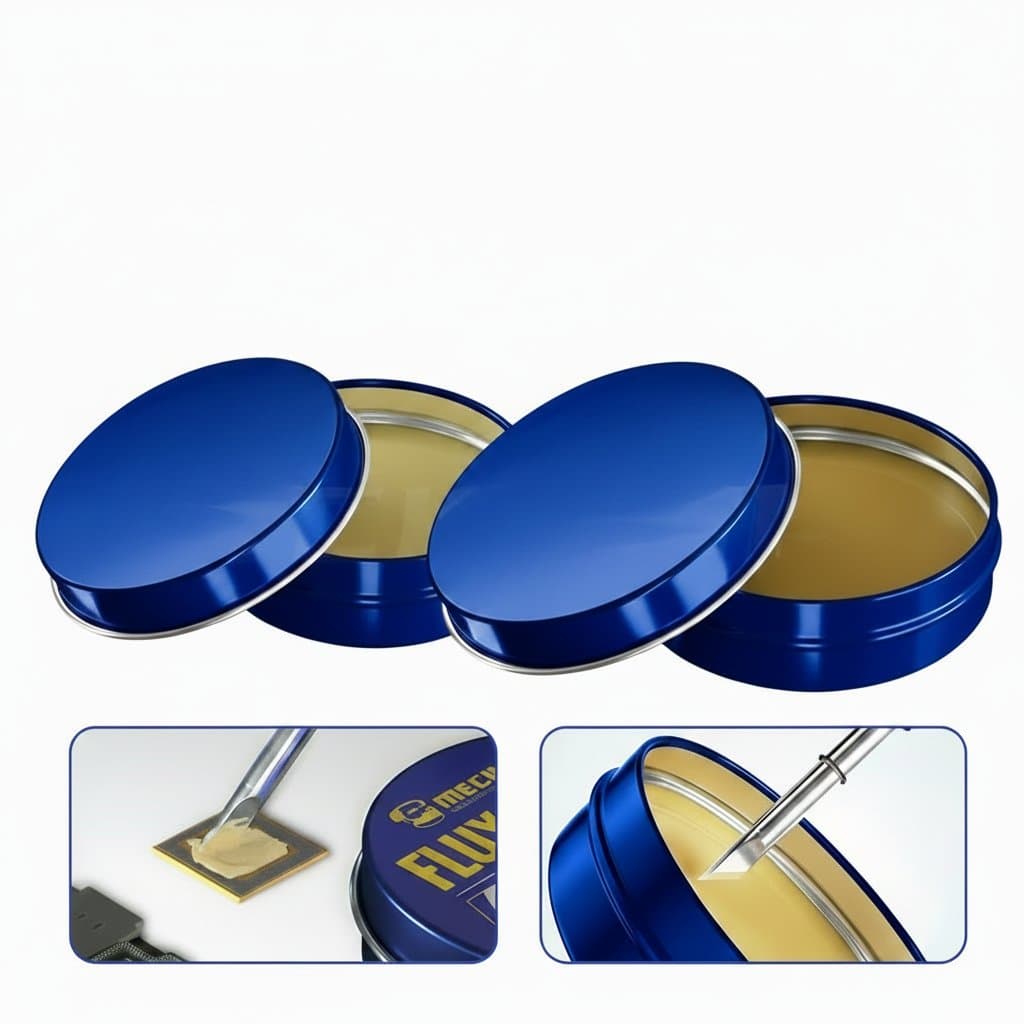
No-clean, rosin and water-soluble
No-clean flux leaves a residue designed to be benign and is what most repair work uses, because there is no wash step. The caveat is that benign is not the same as invisible or inert: on high-impedance circuits, RF work and anything with very fine pitch, that residue can matter and it should still come off.
Rosin fluxes are the traditional family, from mildly activated to fully activated, with more activation meaning better cleaning of tarnished surfaces and more corrosive residue. Water-soluble flux is the most aggressive and gives the best wetting, and its residue is genuinely corrosive, so it must be washed off completely. Choosing water-soluble and then not washing is the worst of both worlds.
| Type | Residue | Best for |
|---|---|---|
| No-clean | Benign, usually left in place | General repair and rework |
| Rosin, mildly activated | Mild, cleaning optional | General electronics assembly |
| Rosin, fully activated | More corrosive, clean it | Tarnished or difficult surfaces |
| Water-soluble | Corrosive, must be washed off | Production with a wash stage |
Alloy, melting point and why lead-free is harder
Sn63/Pb37 is eutectic: it goes straight from solid to liquid at 183 degrees C with no plastic range, which is why it produces such reliable joints and why anyone allowed to use it still does. Lead-free SAC alloys melt around 217 degrees, so every process runs hotter, closer to component limits and less forgiving of a slow hand.
A joint made below the melting point of the alloy is a cold joint: it looks dull and grainy, it may hold mechanically, and it will fail. The fix is heat transfer rather than a hotter iron, meaning a bigger tip and good contact. Never mix leaded and lead-free on the same joint without understanding what alloy results, because the mixture can have a lower melting point and worse mechanical properties than either.
Paste particle size and fine pitch
Solder paste is graded by the size of its powder particles, quoted as a type number. Type 3 is the general-purpose grade and handles most stencil work. Finer pitch and smaller apertures need Type 4 or Type 5, because the rule of thumb is that several particles must fit across the narrowest aperture or the paste will not release from the stencil cleanly.
Finer powder has more surface area, which means more oxide, shorter working life and more slump. Do not buy finer than the job needs. For BGA reballing, the paste type follows the ball pitch, and the same principle applies: fine enough to print, no finer.
Storage is where most paste is ruined
Solder paste is refrigerated, typically between 2 and 10 degrees C, and it has a real shelf life measured in months. The critical step is bringing it back: a cold jar opened in a warm room draws condensation straight into the paste, and water in solder paste causes spitting and voids that are impossible to diagnose afterwards.
Let a sealed jar reach room temperature before opening it, which takes hours rather than minutes, then stir it gently to redistribute the flux. Never warm it quickly, never refreeze it, and write the date on the jar when it is opened. Flux pens and syringes are less fussy but still have a shelf life, and old flux that has thickened or separated should be replaced rather than thinned.