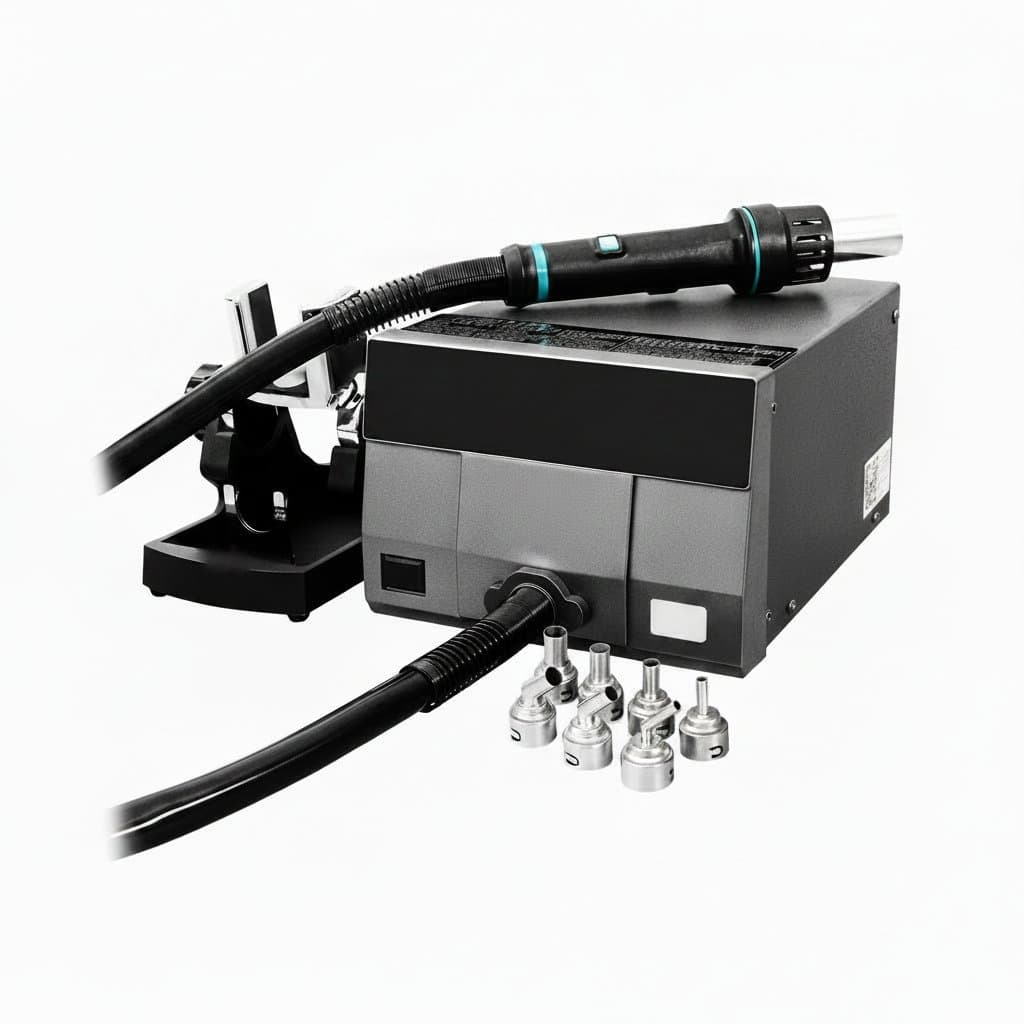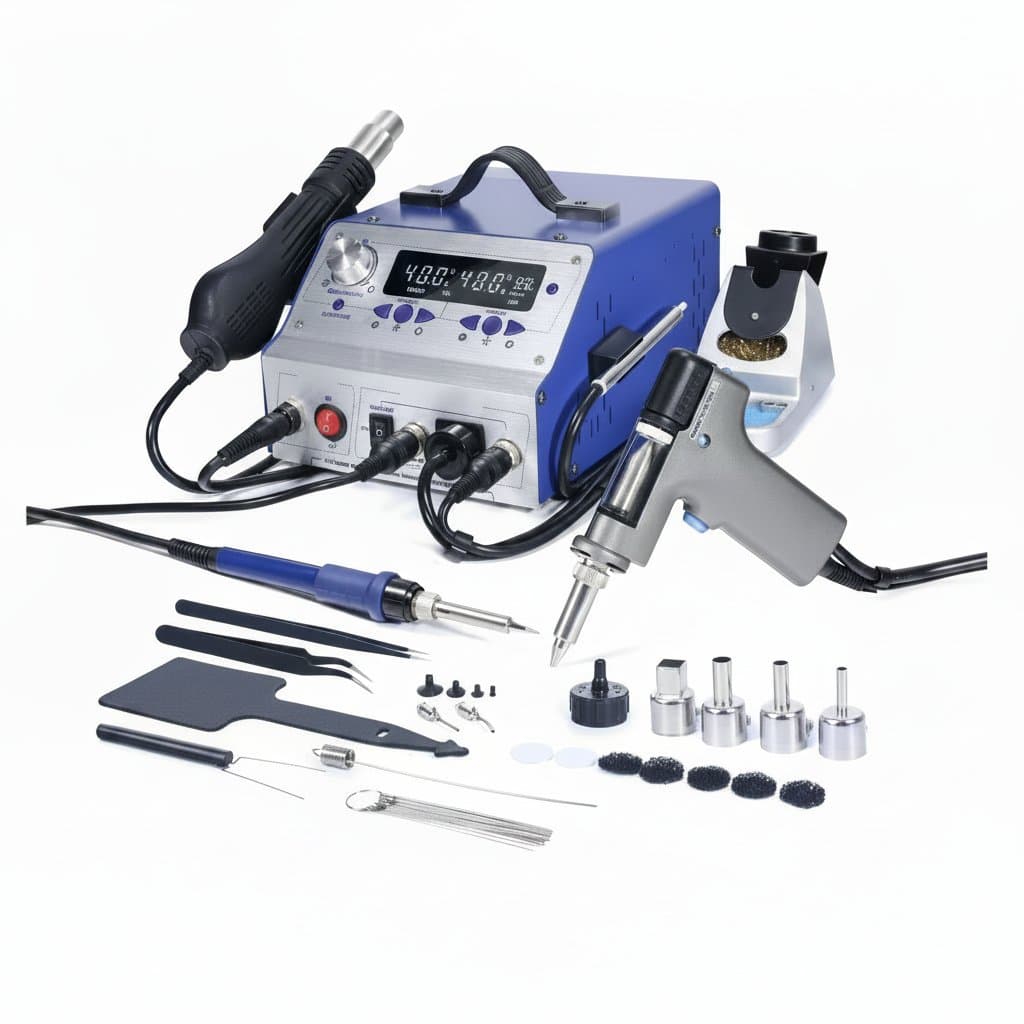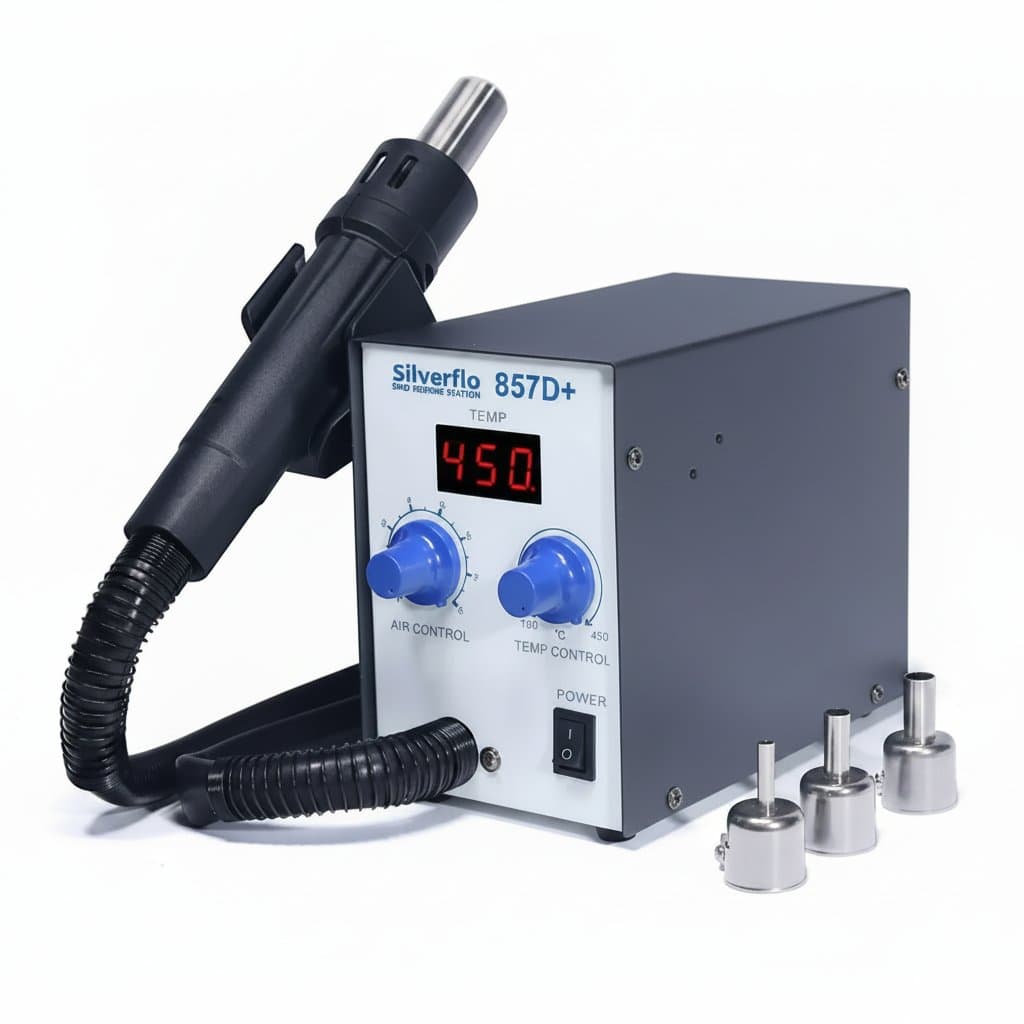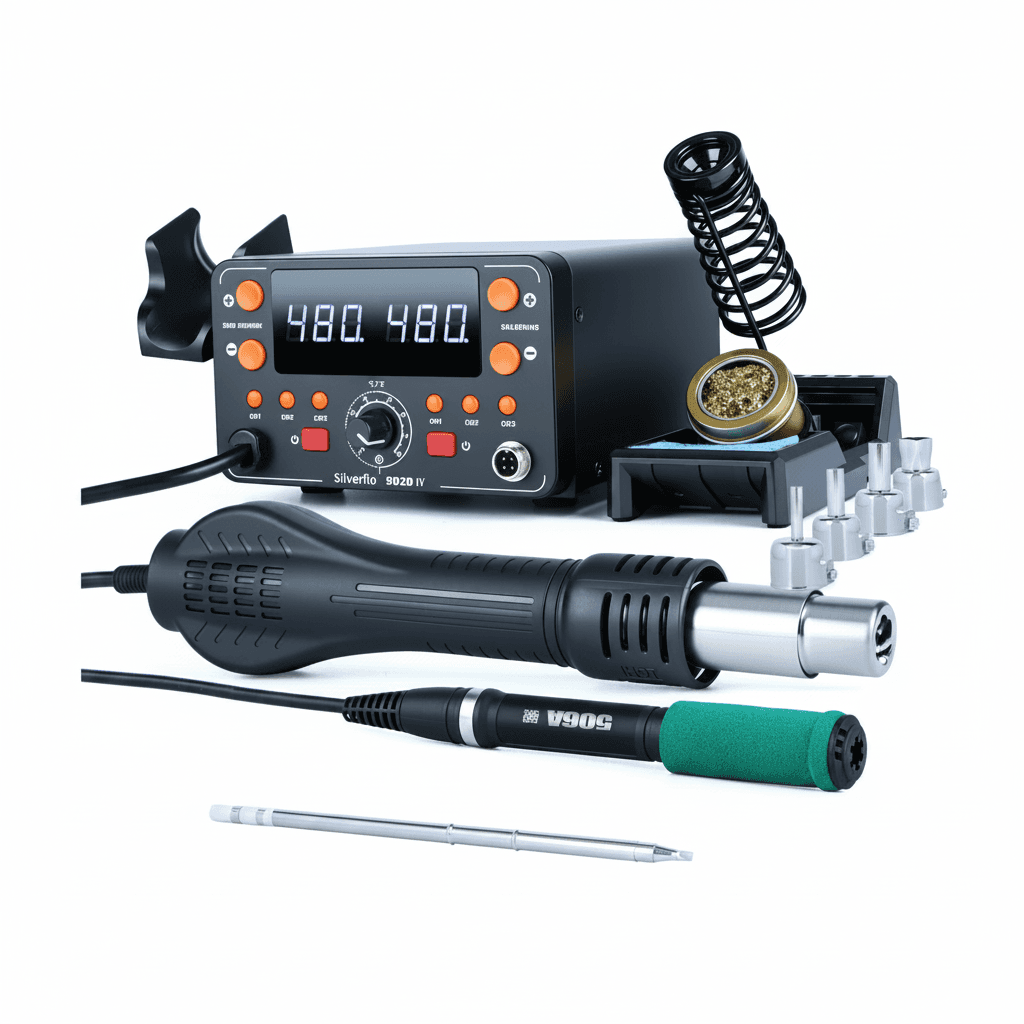

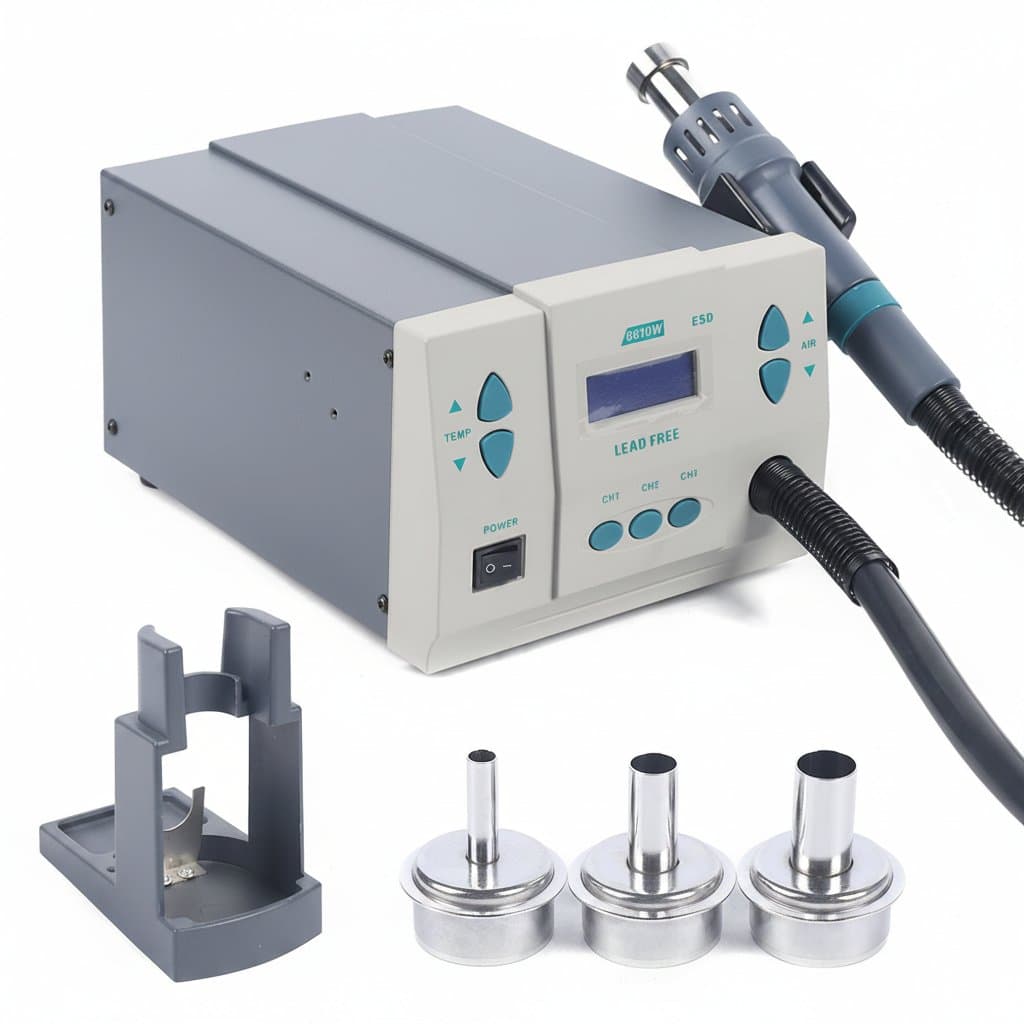
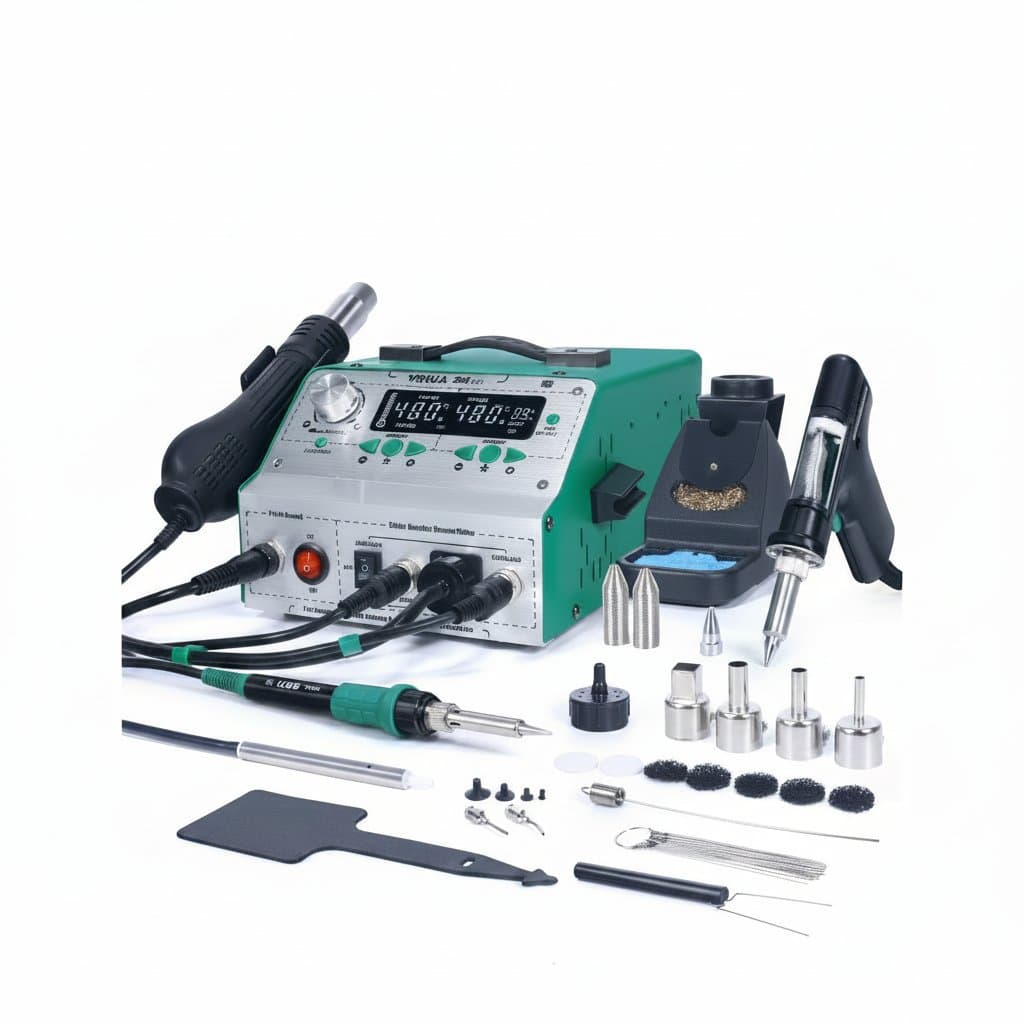
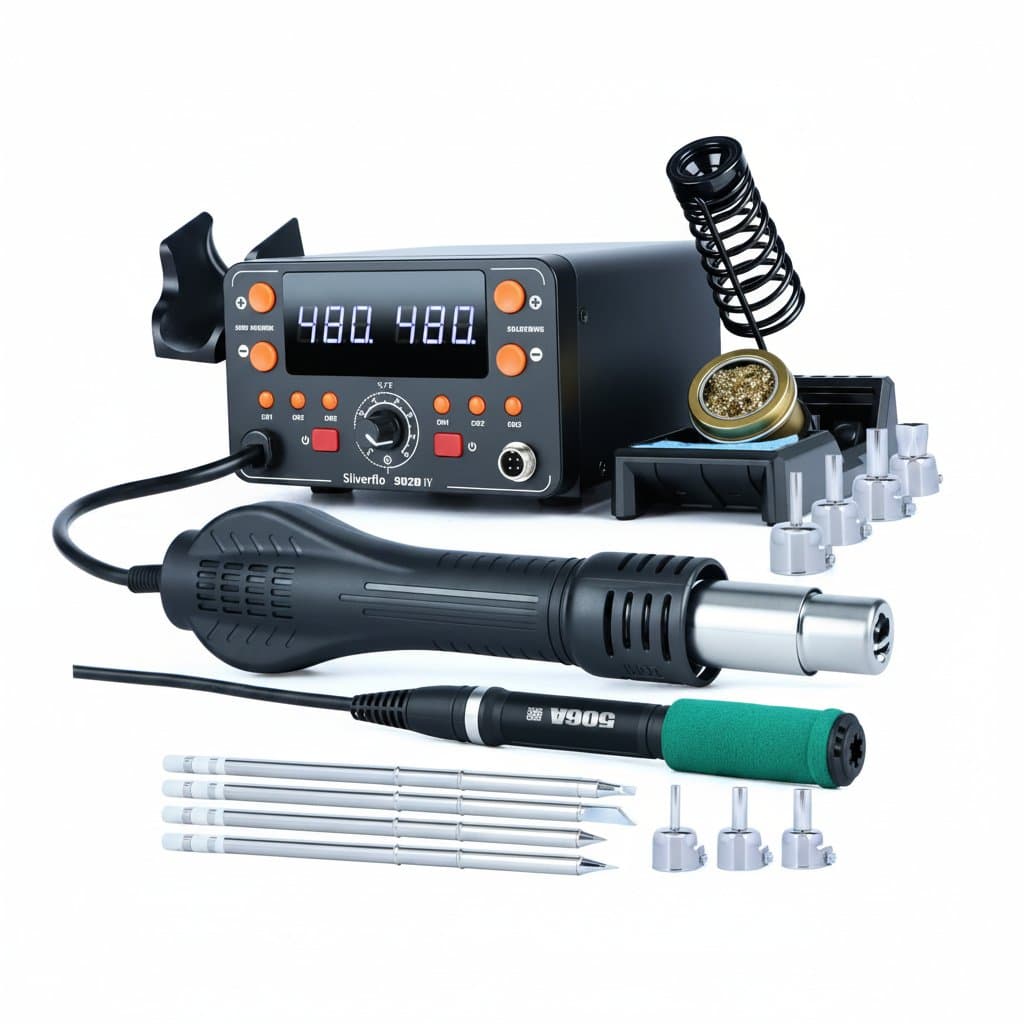
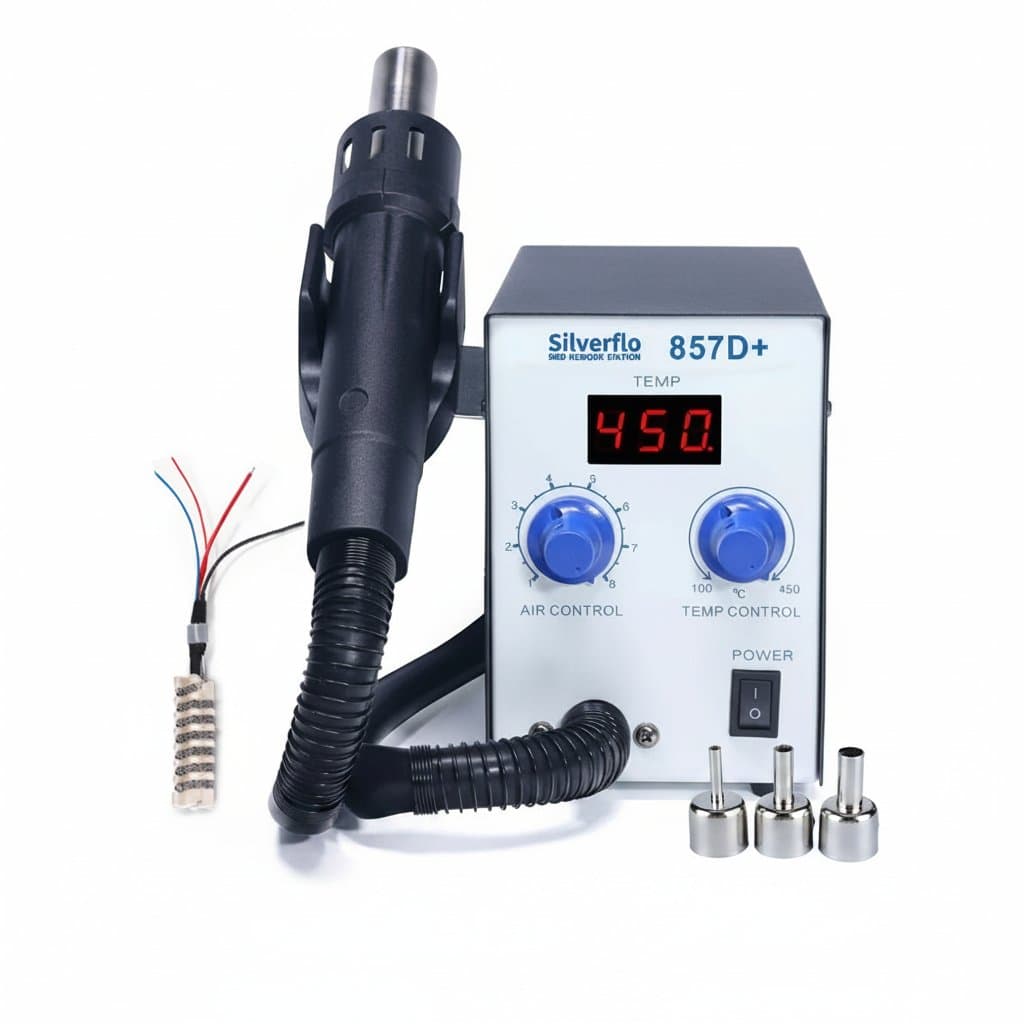
What the hot air side is actually for
The iron does joints one at a time. Hot air heats a whole component and every one of its joints at once, which is the only practical way to remove a surface-mount chip with dozens of leads or a BGA with none you can reach. It is a removal and reflow tool rather than a faster soldering iron.
Airflow is the control that matters. Enough heat with gentle air lifts a part cleanly; the same heat with the air wound up blows neighbouring components off the board and pushes hot air where you did not want it. Start low, give the joint time, and raise the temperature before you raise the flow. A station without independent airflow control is a much blunter instrument whatever its temperature range says.
Temperature, lead-free and why the tip reads low
Traditional 63/37 tin-lead solder is eutectic and melts at 183 degrees C. Lead-free SAC alloys melt around 217 degrees C, so everything about the job runs hotter and less forgiving. Working tip temperatures are well above the melting point because heat has to travel through the tip into the joint faster than the board conducts it away, which is why most stations top out around 450 degrees C.
A big ground plane or a heavy copper pour will pull heat out of a joint faster than a small iron can supply it, and the answer is a bigger tip and better thermal recovery rather than simply a higher number on the display. Recovery, quoted as heating time and temperature stability in the table below, is what separates a station that solders a ground pin cleanly from one that sits there oxidising the joint.
| Job | Alloy | Rough tip temperature | Note |
|---|---|---|---|
| General through-hole | Tin-lead 63/37 | 320 to 350 C | Melts at 183 C; the rest is heat transfer |
| General through-hole | Lead-free SAC | 350 to 380 C | Melts around 217 C, less forgiving |
| Heavy ground plane | Either | Same, larger tip | Fix it with tip mass, not temperature |
| SMD removal, hot air | Either | 300 to 380 C air | Lowest airflow that does the job |
Cartridge handles and why they heat so fast
On an older station the heating element sits in the handle and the tip slides over it, so heat has to cross an air gap and a mechanical joint before it reaches the work. On a cartridge system the element and the sensor are inside the tip itself. The sensor is millimetres from the joint, so the station sees the temperature drop the instant the tip touches the board and puts the power back immediately.
That is why cartridge stations reach temperature in seconds and hold it under load. The trade-off is that tips cost more, because each one contains the element. C210 and C245 are the two common cartridge families and they are not interchangeable, so check which handle a station takes before buying a set of tips for it.
ESD safety and the practical extras
An ESD-safe station has a grounded tip and a dissipative housing, which matters the moment you work on anything with a semiconductor in it. Static damage is frequently latent: the board works when you hand it back and fails weeks later, so the absence of an immediate failure is not evidence that the handling was fine.
Beyond that, the extras that earn their place are a desoldering gun with a vacuum pump for clearing through-holes properly, a stand that holds the iron safely and cleans the tip, and a sleep function that drops the temperature when the handle is racked. Tips oxidise fastest when a station is left hot and idle, so sleep is a consumables saving rather than an energy one.