
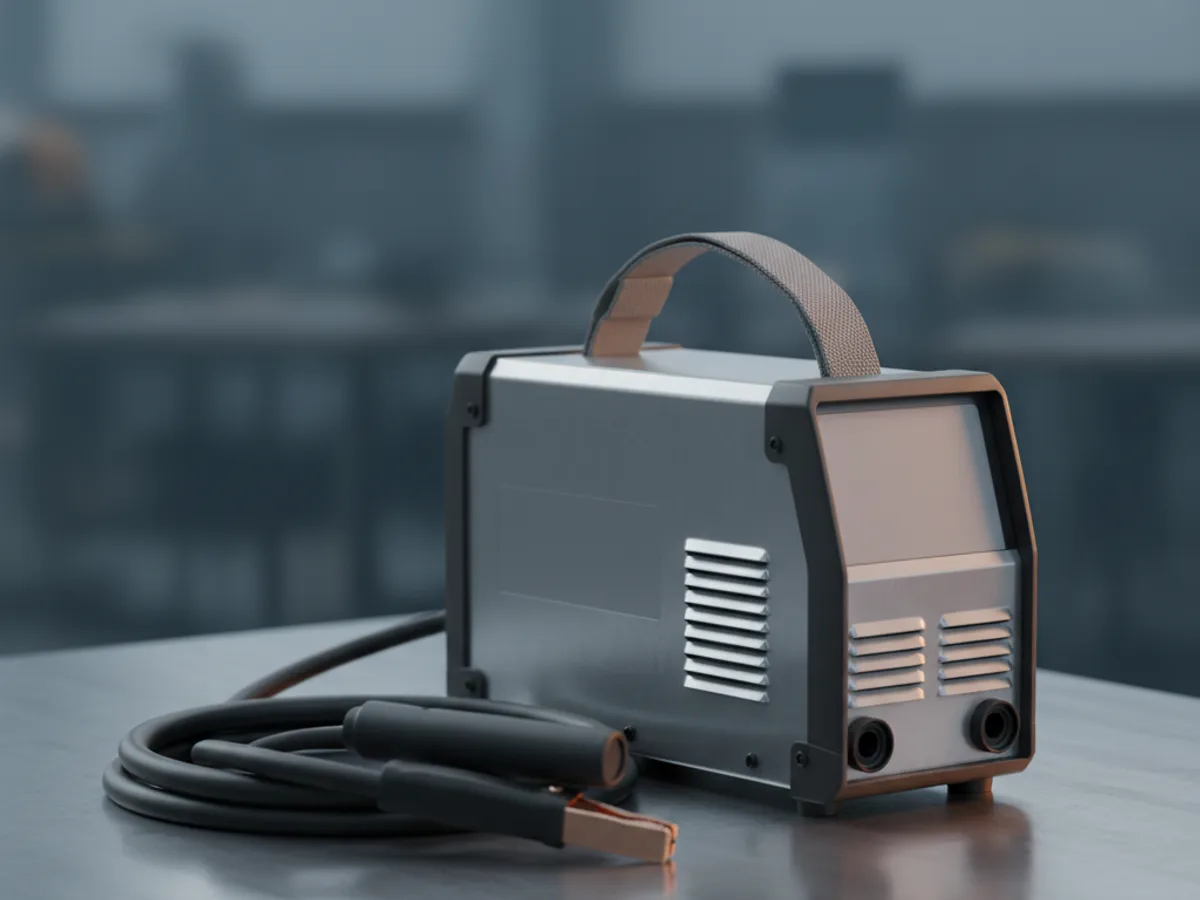


Duty cycle, and the temperature it assumes
The duty cycle is a percentage of a ten minute period at a stated output current. Thirty per cent at 200 amps means three minutes of arc time and seven minutes of cooling, and exceeding it repeatedly trips the thermal cutout at best and cooks the machine at worst.
The figure is quoted at an ambient temperature, commonly forty degrees for machines tested to the international standard. Ratings measured at a lower temperature look better on paper and deliver less in a hot workshop, so a duty cycle quoted without its test conditions is not comparable with one that states them.
Duty cycle also rises sharply as the current falls. The same machine might manage a hundred per cent at a much lower output, which is why a welder that struggles on heavy plate can run all day on thin sheet. Match the rating to the current you actually weld at rather than to the machine maximum.
| Process | Strength | Limitation |
|---|---|---|
| MMA, stick | Works outdoors, on rusty or painted steel | Slag to chip, slower, less tidy |
| MIG with gas | Fast, easy to learn, clean welds | Gas blows away outdoors |
| Gasless flux cored | Works in wind, portable | More spatter and smoke |
| TIG | The most control and the cleanest result | Slow, needs clean metal and skill |
| AC TIG | Required for aluminium | More expensive machines |
Which process suits the work
Stick welding needs nothing but the machine, an electrode and a return clamp, and it tolerates conditions that stop other processes: wind, rust, paint, awkward positions and outdoor work. The price is slag to chip off and a slower, less tidy result.
MIG lays metal down quickly and is the easiest process to become useful at, which is why it dominates fabrication and bodywork. The shielding gas is also its weakness, because any breeze blows it away and the weld becomes porous. Gasless flux cored wire solves that outdoors at the cost of more spatter and smoke.
TIG gives the most control and the cleanest result and demands clean metal, steady hands and time. It is the process for thin material, stainless and anything visible. Aluminium specifically needs alternating current TIG to break the oxide layer, so a direct current only machine cannot weld it however good it is on steel.
The supply is what limits the machine
A welder is only as capable as its supply. A machine on a standard thirteen amp plug cannot draw enough to produce high output for long, whatever the badge says, and the first sign of trouble is usually a tripping breaker rather than a poor weld.
Higher currents need a sixteen or thirty two amp supply, or a three phase connection for the largest machines. Establishing what supply exists in the workshop or the van before choosing a machine avoids buying capability that cannot be used.
Running from a generator needs care as well. The machine has to tolerate the waveform a generator produces, and the generator has to have enough headroom, since welders present a hard, fluctuating load. Manufacturers state a minimum generator size and whether the machine is generator safe, and ignoring that damages the welder rather than the generator.
Return path, arc starting and consumables
Welding current returns through whatever path exists between the work and the clamp. Clamp directly to the workpiece, close to the weld, on clean metal. Clamping to a bench and letting current find its own way through a machine can route it through bearings, and current through a bearing pits the races and destroys it silently.
High frequency arc starting strikes a TIG arc without touching the tungsten to the work, which keeps the electrode clean and the start tidy. It also radiates interference, and it will upset nearby electronics, which is why lift arc starting exists as the quieter alternative.
Consumables are the ongoing cost that surprises people. Tips, nozzles, liners, tungstens, gas and wire add up, and a multi process machine needs the set for each process it runs. Factor that in when comparing a single process machine against one that does everything.