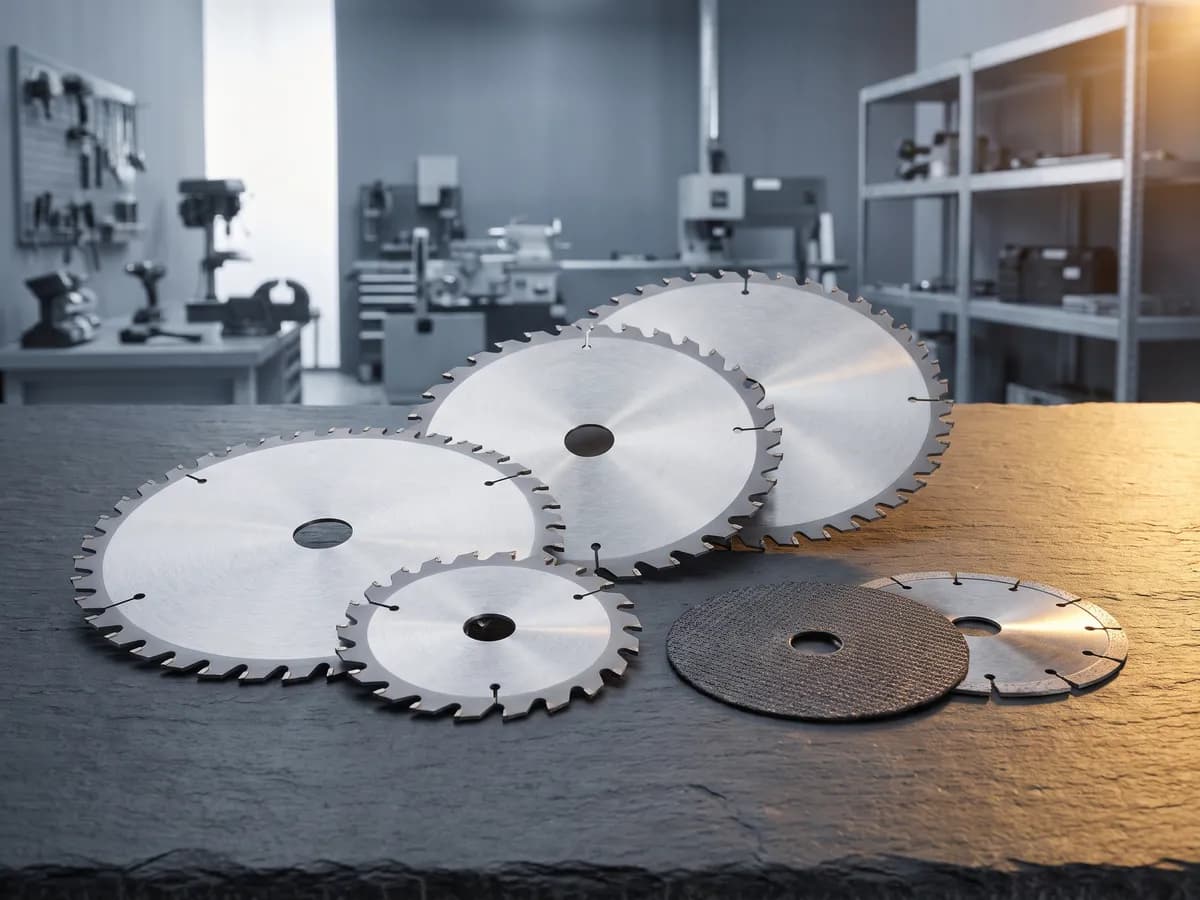
Circular saw blade sizes by machine
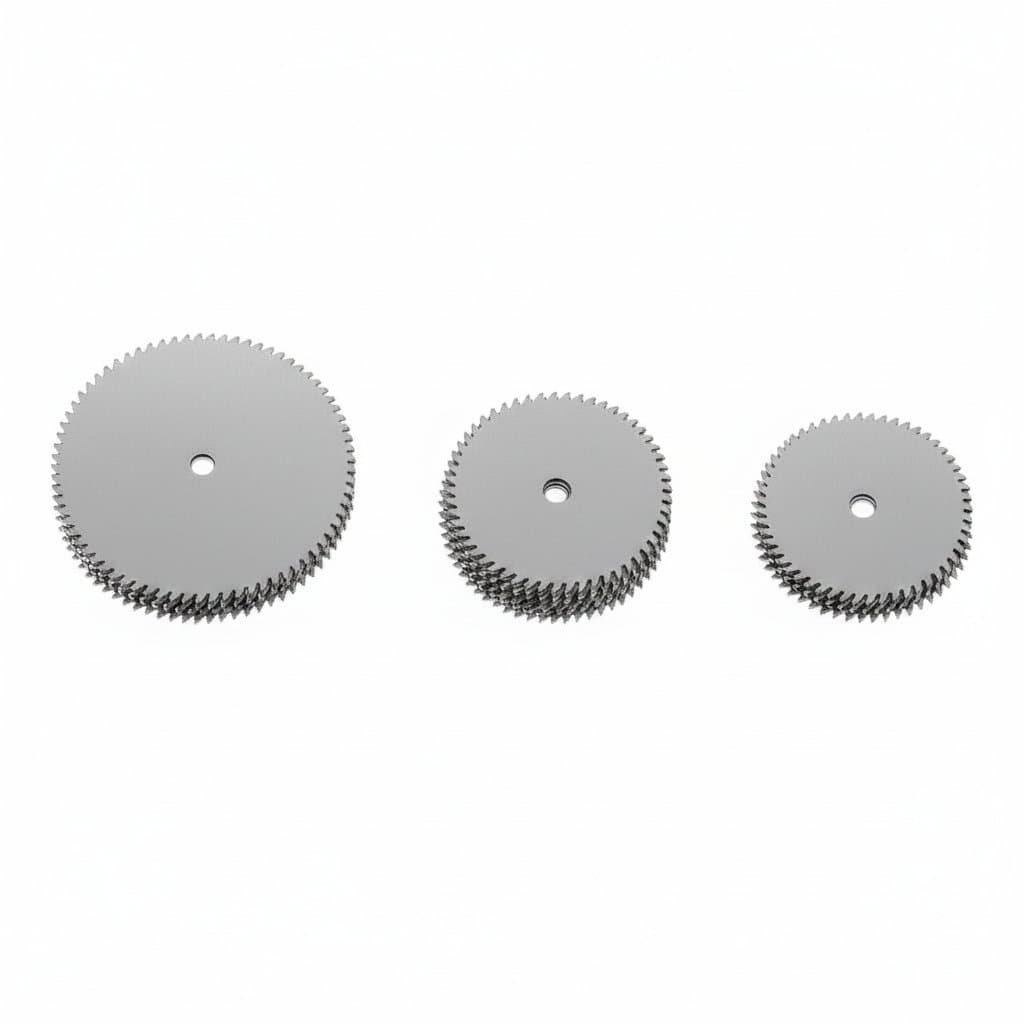
Blade diameter follows the saw it fits. Cordless mini saws take 85mm to 136mm, corded hand saws 165mm to 235mm, and mitre and table saws 210mm to 350mm. The bore is the hole in the middle and it must match the arbor exactly. Most European hand saws use 20mm or 30mm, small saws and angle grinders use 22.23mm, and US saws use 5/8 inch, which is 15.88mm. A reducing ring lets a 30mm bore fit a 25.4mm or 20mm arbor, but never the other way round.
EN 847-1 requires every blade to carry its maximum rpm, and the saw must not spin faster than that figure. The rpm column below is the speed that gives an 80 metres per second rim speed, which is the design basis most TCT blade makers use. It is a guide for checking a blade against a saw. The number stamped on the blade is the one that counts.
| Diameter | Common bores | Typical saw | Rpm at 80 m/s rim speed |
|---|---|---|---|
| 85 mm | 10, 15 mm | Cordless mini saw | 18,000 |
| 115 mm | 22.23 mm | Angle grinder, mini circular saw | 13,300 |
| 125 mm | 22.23 mm | Angle grinder, mini circular saw | 12,200 |
| 136 mm | 10, 20 mm | Compact cordless saw | 11,200 |
| 150 mm | 20 mm | Compact cordless saw | 10,200 |
| 165 mm | 20 mm | 18V cordless circular saw | 9,300 |
| 185 mm | 30, 16, 20 mm | Corded circular saw | 8,300 |
| 190 mm | 30 mm | Corded circular saw | 8,000 |
| 210 mm | 30 mm | Sliding mitre saw, small table saw | 7,300 |
| 216 mm | 30 mm | Sliding mitre saw | 7,100 |
| 235 mm | 30, 25.4 mm | Large hand saw | 6,500 |
| 250 mm | 30 mm | Table saw, mitre saw | 6,100 |
| 254 mm | 30, 25.4 mm | Table saw, mitre saw | 6,000 |
| 300 mm | 30 mm | Table saw, radial arm saw | 5,100 |
| 305 mm | 30 mm | Mitre saw | 5,000 |
| 350 mm | 30 mm | Table saw, beam saw | 4,400 |
Tooth count and grind by material
Fewer teeth cut faster and clear chips better, more teeth leave a cleaner edge and load the motor more. A 185mm blade with 24 teeth is a ripping blade for framing timber. The same blade with 40 teeth is the general purpose choice that most site saws ship with. At 60 to 80 teeth it becomes a finishing blade for skirting, flooring and veneered board.
The grind on the tooth matters as much as the count. ATB, alternate top bevel, is the wood grind. TCG, triple chip grind, has a flat raker tooth between chamfered teeth and is used for laminate, aluminium and plastics because it does not chip the edge. Metal cutting blades for mild steel use a cermet or TCT tooth with a negative hook angle and run on a slow dry-cut saw, never on a wood saw.
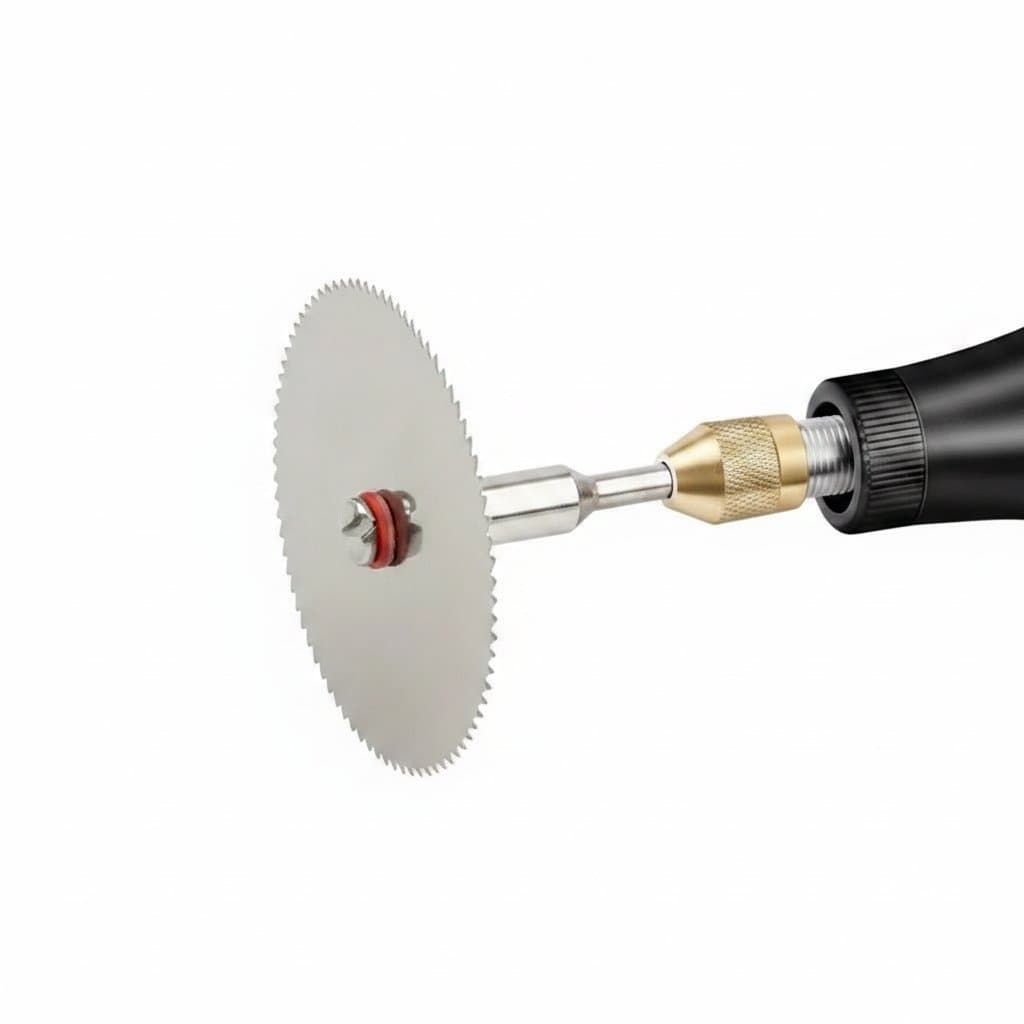
Carbide cutting discs sold for wood on angle grinders are TCT blades of 115mm or 125mm with 30 to 40 teeth. They cut fast but the grinder has no riving knife, no blade guard designed for a toothed blade and spins at 11,000 rpm or more, so the blade grabs on any knot. See the safety section below before fitting one.
| Material | Teeth | Grind | Notes |
|---|---|---|---|
| Softwood, ripping | 18 to 24 | ATB or FTG | Fast, rough edge |
| Softwood and hardwood, general | 36 to 48 | ATB | The blade on most saws |
| Hardwood, clean crosscut | 60 to 80 | ATB | Slow feed, fine finish |
| Plywood, MDF, veneered board | 60 to 80 | ATB or hi-ATB | Score the cut line first on melamine |
| Laminate flooring, worktop | 80 to 100 | TCG | Negative hook on a mitre saw |
| Aluminium, brass, copper | 80 to 100 | TCG | Negative hook, wax lubricant, clamp the work |
| PVC, acrylic, plastics | 60 to 80 | TCG | Slow feed to avoid melting |
| Mild steel, dry-cut saw only | 40 to 70 | Cermet or TCT, negative | Max 1,500 to 2,500 rpm |
Kerf and plate thickness
Kerf is the width of the cut, set by the carbide tip. Plate thickness is the steel body behind it and is around 0.5 to 0.7mm less than the kerf. A standard blade cuts a 2.2mm to 3.2mm kerf. Thin kerf blades at 1.5mm to 1.8mm need less power, which is why they come fitted to cordless saws and why a 165mm cordless blade lasts longer on a battery than a full kerf 185mm blade does.
On a table saw the riving knife thickness must sit between the plate thickness and the kerf. A knife thicker than the kerf jams the cut and a knife thinner than the plate lets the timber close on the blade. Check both figures when you change from a full kerf to a thin kerf blade.
| Blade type | Kerf | Plate | Where used |
|---|---|---|---|
| Thin kerf cordless | 1.5 to 1.8 mm | 1.0 to 1.2 mm | 136 to 165 mm cordless saws |
| Standard TCT | 2.2 to 2.8 mm | 1.6 to 2.0 mm | 185 to 250 mm hand and mitre saws |
| Heavy TCT | 3.0 to 3.2 mm | 2.2 to 2.4 mm | 300 to 350 mm table saws |
| Diamond continuous rim | 1.2 to 2.0 mm | 1.0 to 1.6 mm | Tile and porcelain |
| Diamond segmented | 2.0 to 3.0 mm | 1.6 to 2.2 mm | Concrete, brick, stone |
Angle grinder cutting disc sizes
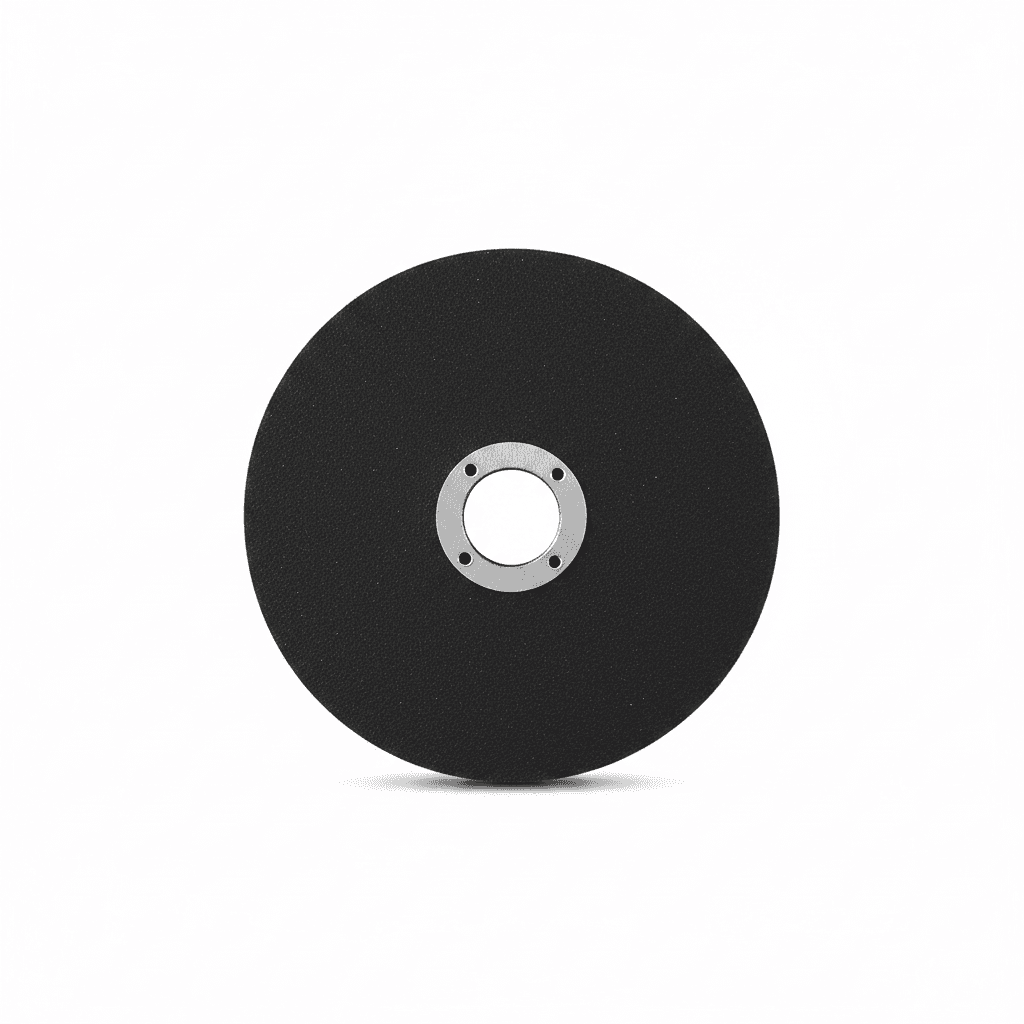
Angle grinder discs come in 115mm and 125mm for the common 4.5 and 5 inch grinders and 230mm for the 9 inch machine, all with a 22.23mm bore. Metal cutting discs are 1.0mm to 1.6mm thick for clean fast cuts and 2.5mm to 3.2mm for heavy section and rebar. Diamond blades for tile, stone and concrete use the same sizes and bores, with a continuous rim for tile and a segmented rim for masonry.
Abrasive discs are made to EN 12413 and diamond blades to EN 13236. Both carry a maximum rpm and an expiry date on the label, and both must be run with the guard fitted and the disc matched to the machine speed. A 115mm grinder runs at 11,000 to 12,000 rpm, which is why a 115mm disc is rated to 13,300 rpm and a 230mm disc is rated to 6,600 rpm. A small disc on a big grinder is fine, a big disc on a small grinder is not.
| Disc | Bore | Thickness | Max rpm | Grinder |
|---|---|---|---|---|
| 75 mm | 10 mm | 1.0 to 2.0 mm | 20,000 | Air and mini grinders |
| 115 mm | 22.23 mm | 1.0 to 3.2 mm | 13,300 | 4.5 inch grinder |
| 125 mm | 22.23 mm | 1.0 to 3.2 mm | 12,200 | 5 inch grinder |
| 150 mm | 22.23 mm | 1.6 to 3.2 mm | 10,200 | 6 inch grinder |
| 180 mm | 22.23 mm | 2.5 to 3.2 mm | 8,500 | 7 inch grinder |
| 230 mm | 22.23 mm | 2.5 to 3.2 mm | 6,600 | 9 inch grinder |
| 300 and 350 mm | 20, 25.4 mm | 2.8 to 3.5 mm | 5,100 and 4,400 | Cut-off saw, petrol disc cutter |
Which blades are safe on which machine
A toothed blade belongs on a saw with a guard and a riving knife or a base plate. HSE guidance in HSG17 on abrasive wheels and the manufacturer instructions for every mainstream grinder say the same thing: fit only discs the machine is designed for. Woodcarving discs and chainsaw discs on angle grinders have caused enough serious injuries that many hire firms and sites ban them outright. If you need to cut timber with a small blade, use a 115mm or 125mm mini circular saw, which has a plunge base, a guard and a speed that matches the blade.
Before fitting any blade check four things. The bore matches the arbor with no play. The marked rpm is above the machine speed. The arrow on the blade points the same way as the arrow on the guard. The flange nut is tight and the blade sits flat against the inner flange with no swarf trapped behind it.