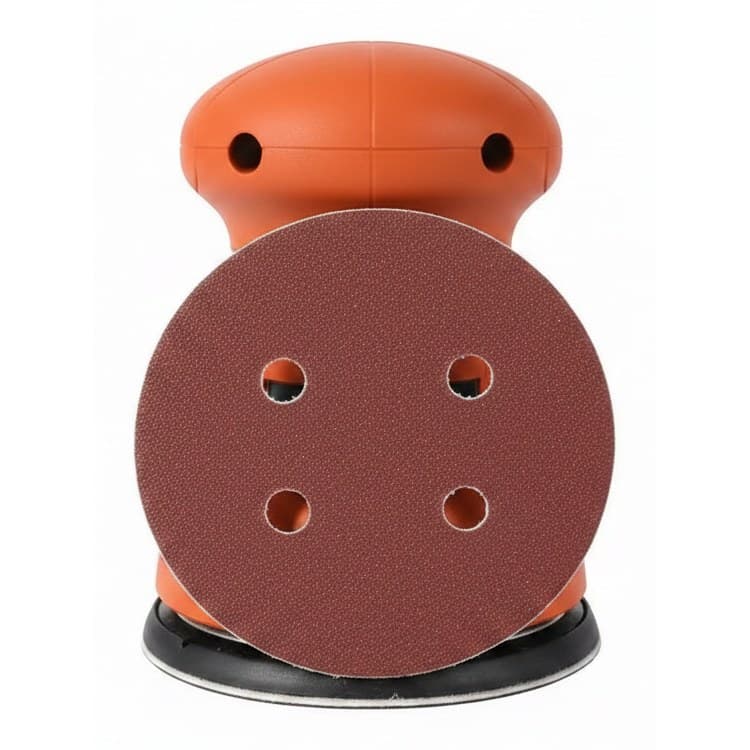
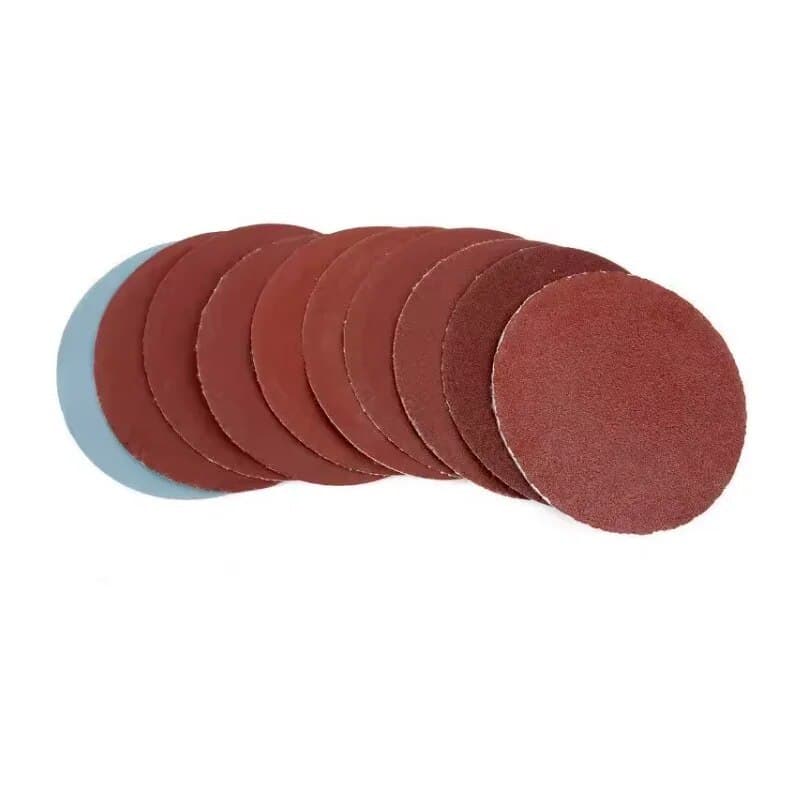
These 5-inch, 8-hole sanding discs are made for random orbital sanders. The aluminum oxide grit gives a consistent finish on many materials. Unlike stiff fiber sanding discs for heavy grinding, these flexible discs work for surface prep and finishing. Features and Benefits
- 8-hole dust extraction pattern - It lines up with most 5-inch orbital sanders, including DeWalt. This pulls dust away and helps prevent clogging.
- Aluminum oxide abrasive - It cuts cleanly and wears evenly on wood, metal, and composites. This makes a uniform scratch pattern.
- Hook and loop backing - Discs attach firmly to your sander's pad. They peel off easily for fast grit changes.
- Assorted grit options - Grits from 60 to 2000 are available. They handle everything from removing material to fine polishing. Applications
- Wood Furniture - Start with 80-120 grit to remove old finishes. Move to 180-220 grit to prepare wood for stain.
- Metal Fabrication - Smooths welds, removes rust, and prepares steel or aluminum surfaces for painting.
- Automotive Refinishing - A good choice for feathering body filler, scuffing primer, and smoothing clear coats.
Step 1: Mount the Sanding Disc to the Mandrel
These 125mm 8-hole hook and loop sanding discs are designed for use with random orbital sanders. The hook and loop attachment system allows for quick and easy disc changes. Simply align the 8 holes on the sanding disc with the corresponding holes on your sander's backing pad and press firmly. Ensure the disc is centred for balanced operation and effective dust extraction. The durability of a sanding disc depends on the grit used and the material being sanded. Finer grits generally wear slower than coarser grits like 80 grit.
Option A: Standard Screw Mandrel (402)
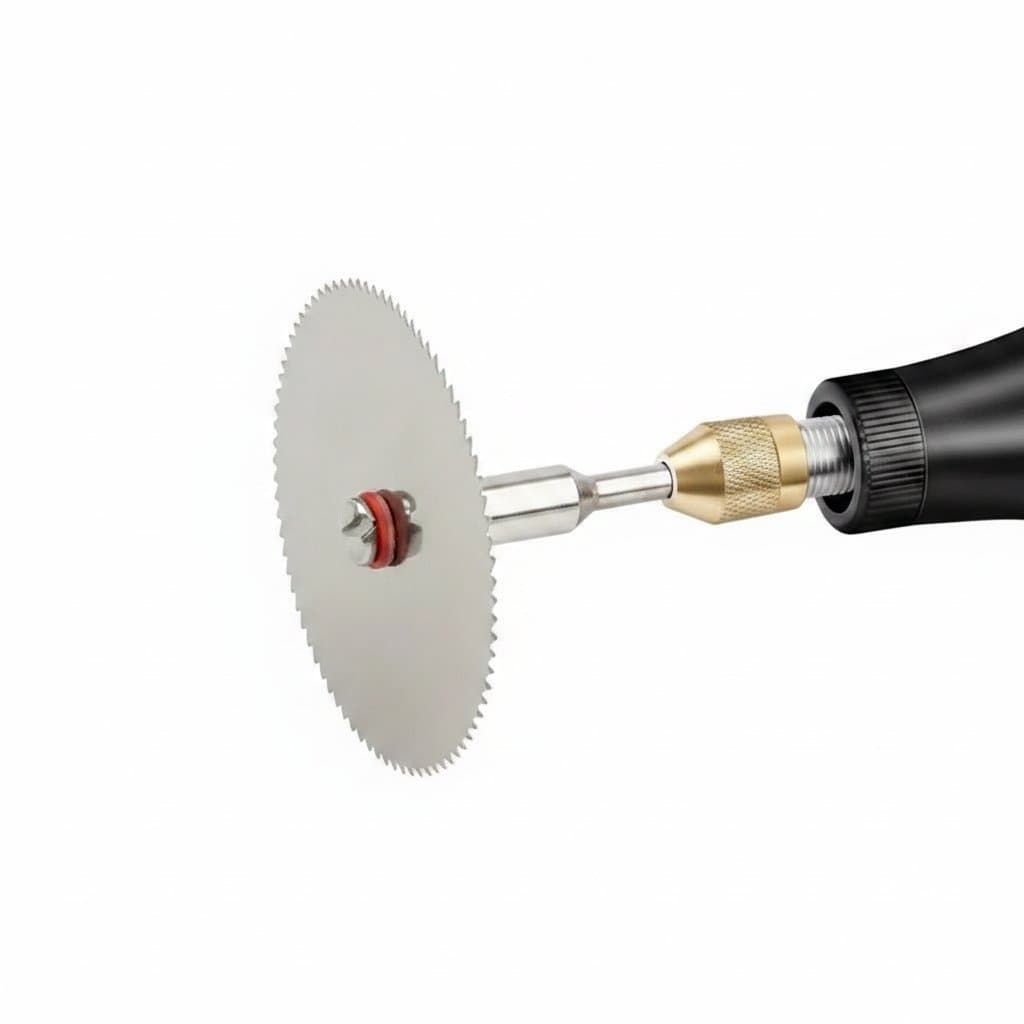
While these 125mm discs are primarily for random orbital sanders, smaller versions of hook and loop sanding discs are available for rotary tools. For those, a standard screw mandrel would be used. The disc is secured to the mandrel via a screw, providing a firm attachment. This method is common for smaller diameter sanding accessories where a robust connection is needed for high RPM applications. Ensure the screw is tightened securely to prevent the disc from detaching during use.
Option B: EZ Lock Mandrel (EZ402)
The EZ Lock Mandrel offers a tool-free solution for attaching smaller sanding discs to rotary tools. It allows for rapid changes, beneficial when switching between various grits like 60-grit for aggressive material removal and 220-grit for finishing. This system prioritises speed and convenience over the traditional screw method. However, for these 125mm random orbital sanding discs, the hook and loop backing pad system is the primary method of attachment.
Step 2: Insert the Mandrel into Your Dremel
This section is not applicable as these 125mm 8-hole hook and loop sanding discs are designed for random orbital sanders, not Dremel rotary tools. Random orbital sanders do not use mandrels in the same way Dremel tools do. The sanding disc attaches directly to the sander's backing pad using its hook and loop system. Ensure your random orbital sander is unplugged before attaching or removing any sanding discs for safety.
Step 3: Best Practices for Sanding
For optimal results with 125mm 8-hole hook and loop sanding discs on a random orbital sander, always start with a coarser grit (e.g., 60-grit) for significant material removal, progressing to finer grits (e.g., 220-grit, up to 2000-grit) for a smooth finish. Apply light, even pressure and let the sander do the work. Over-sanding in one spot or applying too much pressure can lead to swirl marks. Utilise the 8-hole pattern for efficient dust extraction, extending disc life and improving visibility.
Abrasive Material: Aluminum Oxide. Compatibility: Random Orbital Sanders. Attachment Type: Hook and Loop. Disc Diameter: 125 mm. Grit Range: 60-2000. Hole Pattern: 8-Hole. Diameter: 5 inches (125 mm). Backing Material: Adhesive Sandpaper. Material: Diamond Abrasive. Grit Range: 60 to 2000 Grits. Compatibility: Random Orbital Sanders. Abrasive Type: Coated Abrasive. Application: Woodworking, Metal Polishing, Automotive Finishing. Attachment Method: Hook and Loop. Cutting Action: Aggressive for material removal, fine for finishing. Durability: High wear resistance due to diamond abrasive. Hole Pattern: 8-Hole. Product Type: Sanding Discs. Quantity: Varies per pack (e.g., 10, 25, 50). Q: What are the 8 holes on these 125mm discs for? A: The holes are for dust extraction. They align with the ports on most 5-inch random orbital sanders, which lets the tool's vacuum pull sanding dust away for a cleaner job and better disc performance.. Q: What are the 8 holes on these 125mm discs for? A: The holes are for dust extraction. They align with the ports on most 5-inch random orbital sanders, which lets the tool's vacuum pull sanding dust away for a cleaner job and better disc performance.. Q: What are the 8 holes on these 125mm discs for? A: The holes are for dust extraction. They align with the ports on most 5-inch random orbital sanders, which lets the tool's vacuum pull sanding dust away for a cleaner job and better disc performance.. Q: What are the 8 holes on these 125mm discs for? A: The holes are for dust extraction. They align with the ports on most 5-inch random orbital sanders, which lets the tool's vacuum pull sanding dust away for a cleaner job and better disc performance.. Q: What kind of abrasive material is on these discs? A: These discs use an aluminum oxide abrasive. It's a very effective and common material for sanding wood, paint, and some metals because it cuts consistently and has good longevity.. Q: What kind of abrasive material is on these discs? A: These discs use an aluminum oxide abrasive. It's a very effective and common material for sanding wood, paint, and some metals because it cuts consistently and has good longevity.. Q: What kind of abrasive material is on these discs? A: These discs use an aluminum oxide abrasive. It's a very effective and common material for sanding wood, paint, and some metals because it cuts consistently and has good longevity.. Q: What kind of abrasive material is on these discs? A: These discs use an aluminum oxide abrasive. It's a very effective and common material for sanding wood, paint, and some metals because it cuts consistently and has good longevity.. Q: Will these 5-inch hook and loop discs fit my Makita sander? A: Yes, the 5-inch diameter with an 8-hole pattern is the standard configuration for most major brands. They are compatible with Makita, DeWalt, Bosch, and other random orbital sanders that use this size.. Q: Will these 5-inch hook and loop discs fit my Makita sander? A: Yes, the 5-inch diameter with an 8-hole pattern is the standard configuration for most major brands. They are compatible with Makita, DeWalt, Bosch, and other random orbital sanders that use this size.. Q: Will these 5-inch hook and loop discs fit my Makita sander? A: Yes, the 5-inch diameter with an 8-hole pattern is the standard configuration for most major brands. They are compatible with Makita, DeWalt, Bosch, and other random orbital sanders that use this size.. Q: Will these 5-inch hook and loop discs fit my Makita sander? A: Yes, the 5-inch diameter with an 8-hole pattern is the standard configuration for most major brands. They are compatible with Makita, DeWalt, Bosch, and other random orbital sanders that use this size.. Q: How do these hold up to heavy sanding? A: The abrasive grains are bonded to the backing with resin, which helps resist heat buildup during sanding. This design means they don't wear out as quickly as some basic discs, especially on tougher jobs.. Q: How do these hold up to heavy sanding? A: The abrasive grains are bonded to the backing with resin, which helps resist heat buildup during sanding. This design means they don't wear out as quickly as some basic discs, especially on tougher jobs.. Q: How do these hold up to heavy sanding? A: The abrasive grains are bonded to the backing with resin, which helps resist heat buildup during sanding. This design means they don't wear out as quickly as some basic discs, especially on tougher jobs.. Q: How do these hold up to heavy sanding? A: The abrasive grains are bonded to the backing with resin, which helps resist heat buildup during sanding. This design means they don't wear out as quickly as some basic discs, especially on tougher jobs.. Q: Are these similar to fibre sanding discs for removing material? A: While these have a paper backing, their performance with coarse grits is quite good for stock removal, similar to what you'd expect from general-purpose fibre sanding discs. They provide a reliable cut for shaping and stripping finishes.. Q: Are these similar to fibre sanding discs for removing material? A: While these have a paper backing, their performance with coarse grits is quite good for stock removal, similar to what you'd expect from general-purpose fibre sanding discs. They provide a reliable cut for shaping and stripping finishes.. Q: Are these similar to fibre sanding discs for removing material? A: While these have a paper backing, their performance with coarse grits is quite good for stock removal, similar to what you'd expect from general-purpose fibre sanding discs. They provide a reliable cut for shaping and stripping finishes.. Q: Are these similar to fibre sanding discs for removing material? A: While these have a paper backing, their performance with coarse grits is quite good for stock removal, similar to what you'd expect from general-purpose fibre sanding discs. They provide a reliable cut for shaping and stripping finishes..