Help
Compel Groupgroup

Wall Scanners and Stud Finders for Trade Use

Author: James Whitfield, Equipment Desk4 min read
Updated

A wall scanner finds what is behind a surface using two different sensors: a capacitive one that reads a change in density to locate timber studs, and an inductive one that reacts to metal. Multi-sensor tools add live AC detection. All of them report a signal rather than an image, so the reading tells you something is there, not exactly what.

12 products from £65.99 to £151.99

Specs and prices

Specifications as declared by the seller of each listing, not our own measurements. Prices update with the catalogue.

ProductPriceProduct TypeDisplay TypePower SourceApplicationMaterial
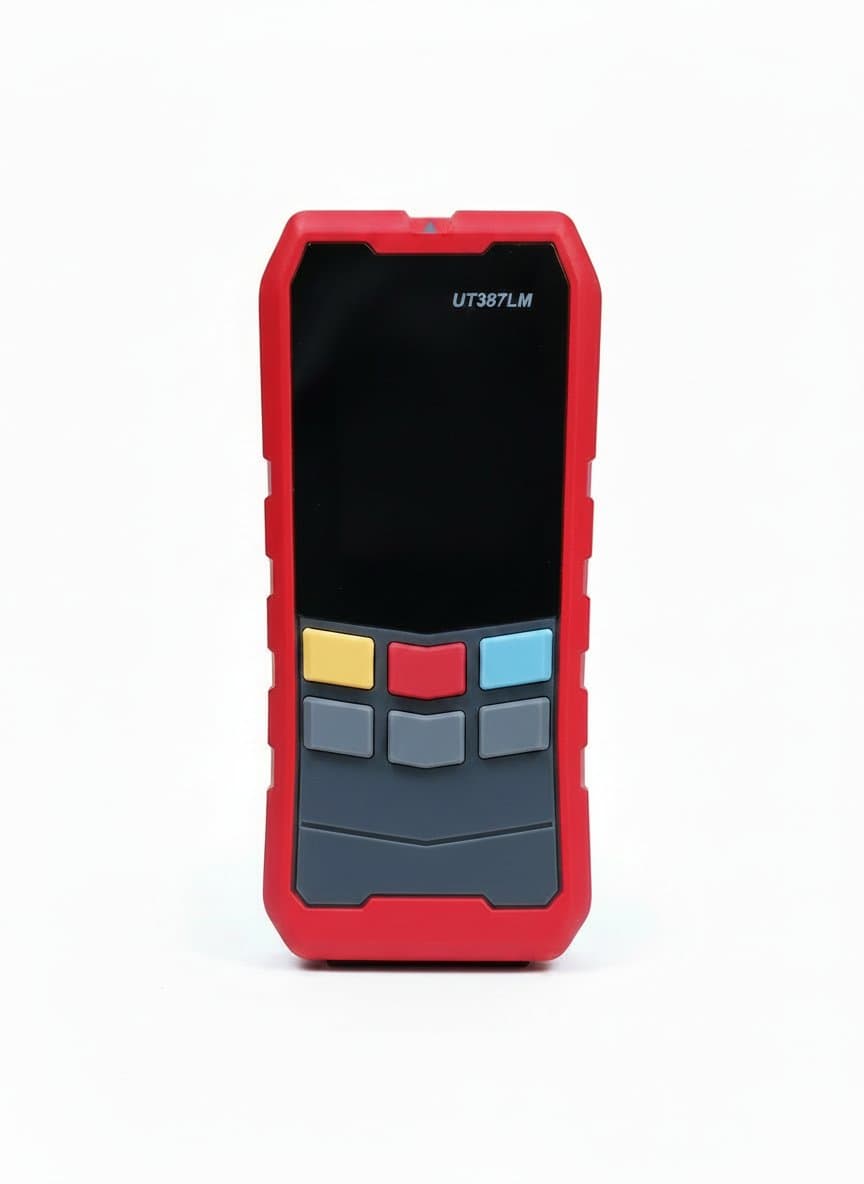
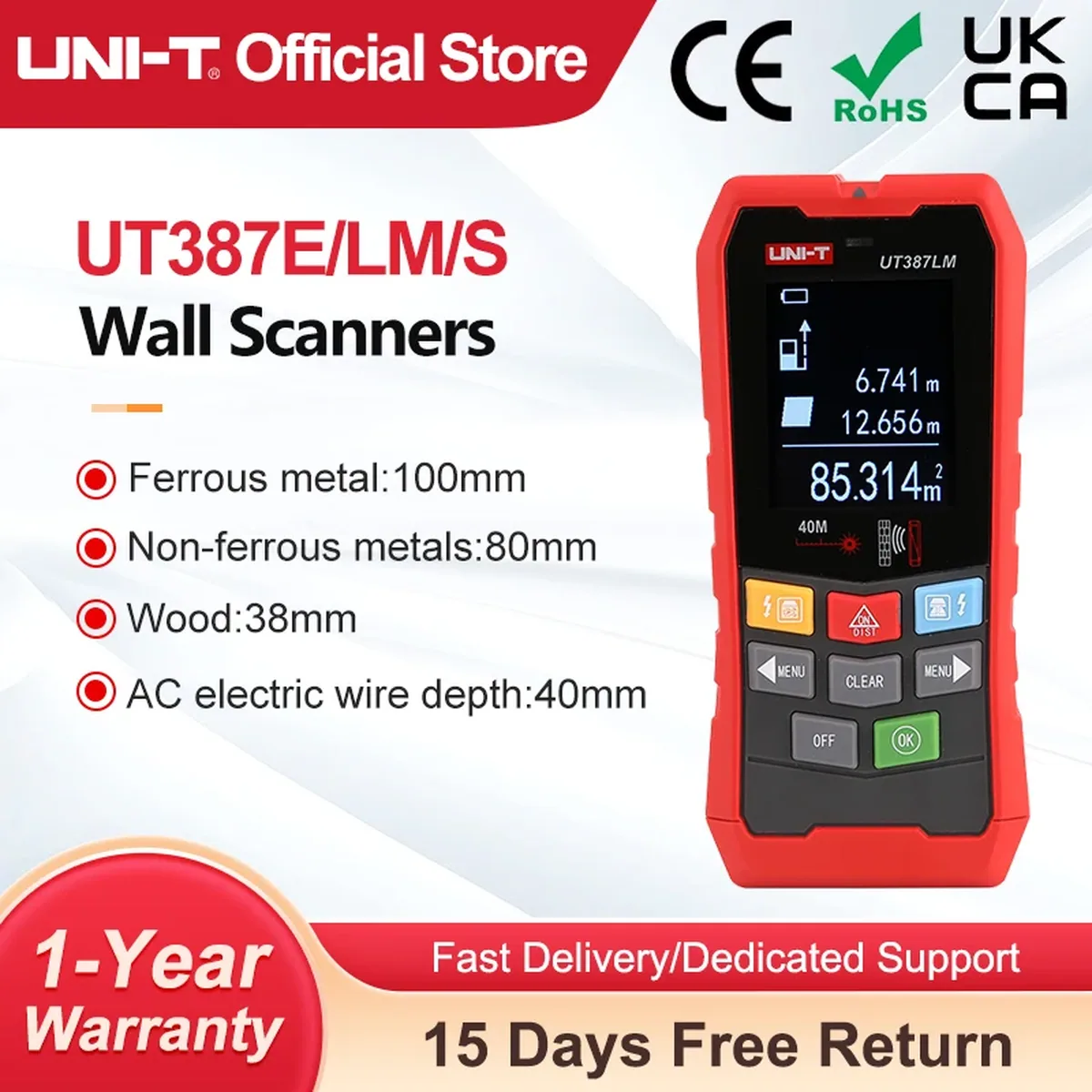
UNI-T UT387E UT387S UT387LM stud finder.UNI-T UT387E UT387S UT387LM Stud Finder£151.99----Metal
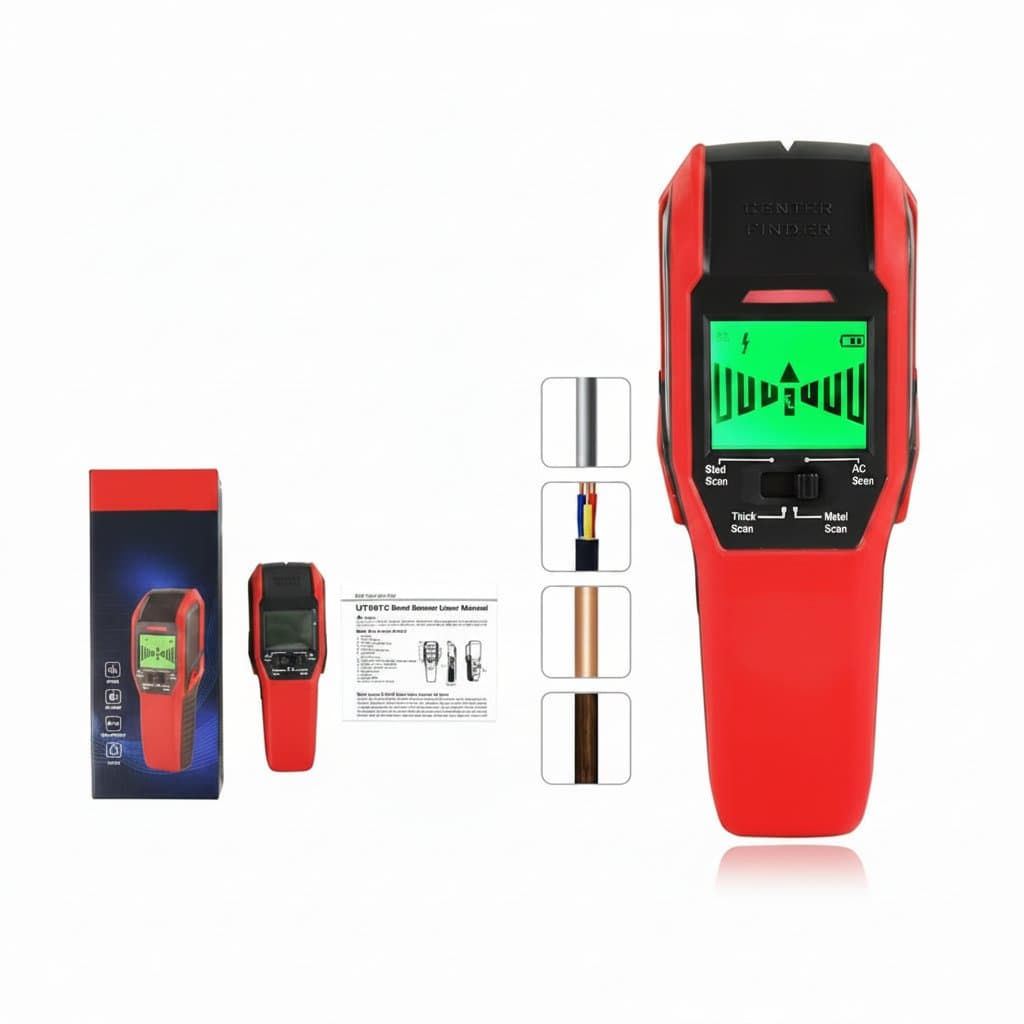
UNI-T UT387C Stud Finder collage with product shots, text, and certification logos.UNI-T UT387C Stud Finder£93.99--Rechargeable-Metal
A wall scanner for detecting studs, metal, and AC voltage, with a 38mm wood depth.Wall Scanner£92.99Wall ScannerDigitalBattery OperatedConstruction, Renovation, DIY-
Wall scanner detecting studs, metal, and AC voltage, with 38mm wood depth.Wall Scanner£92.99Wall ScannerDigitalBattery OperatedConstruction, Renovation, DIY-
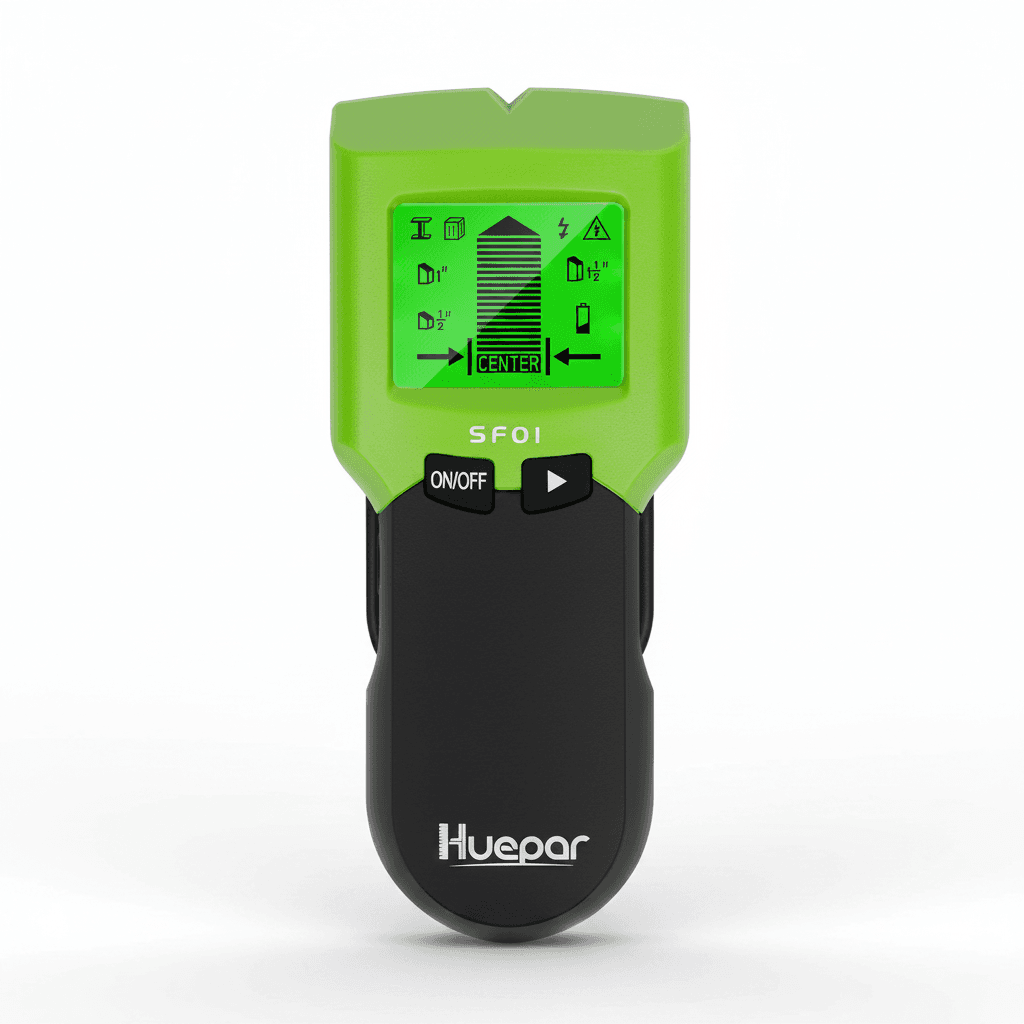
Huepar Stud Finder, front view.Huepar Stud Finder£87.99----Made of plastic
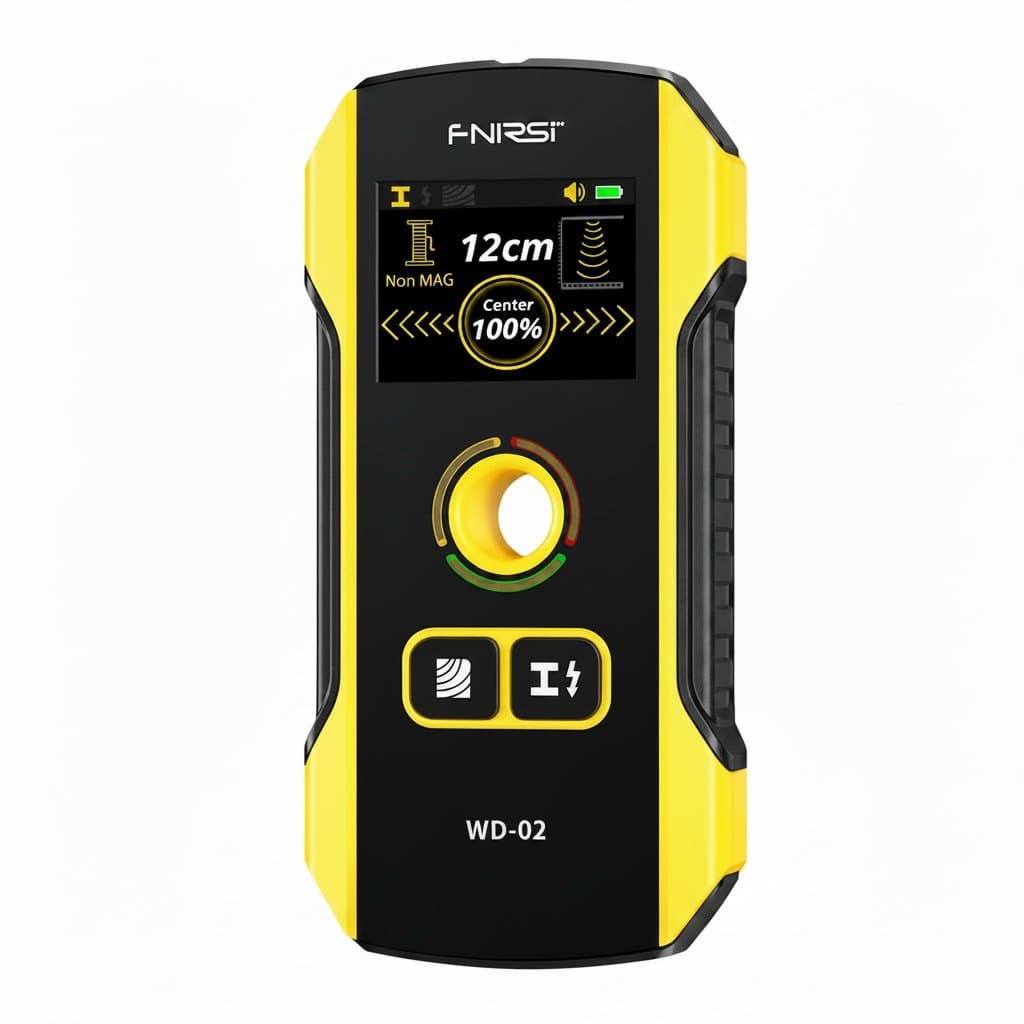
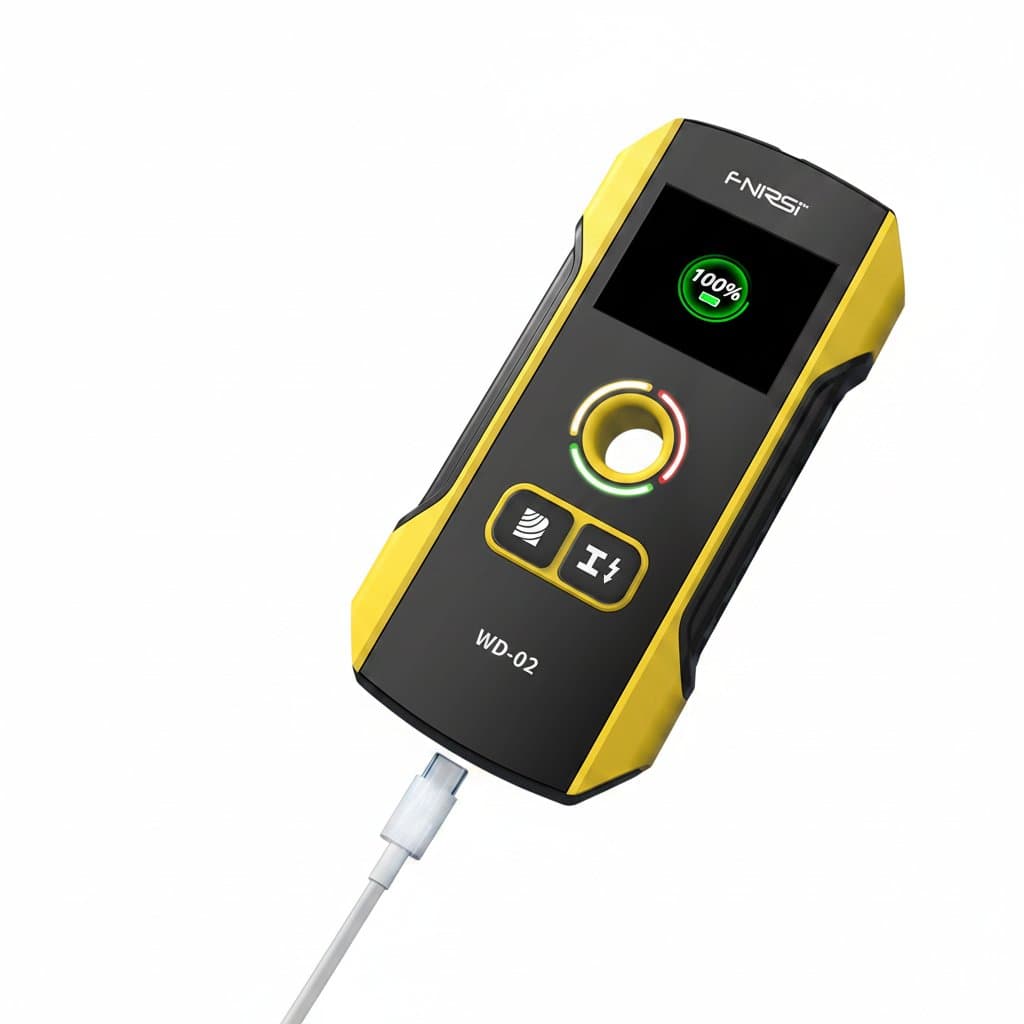
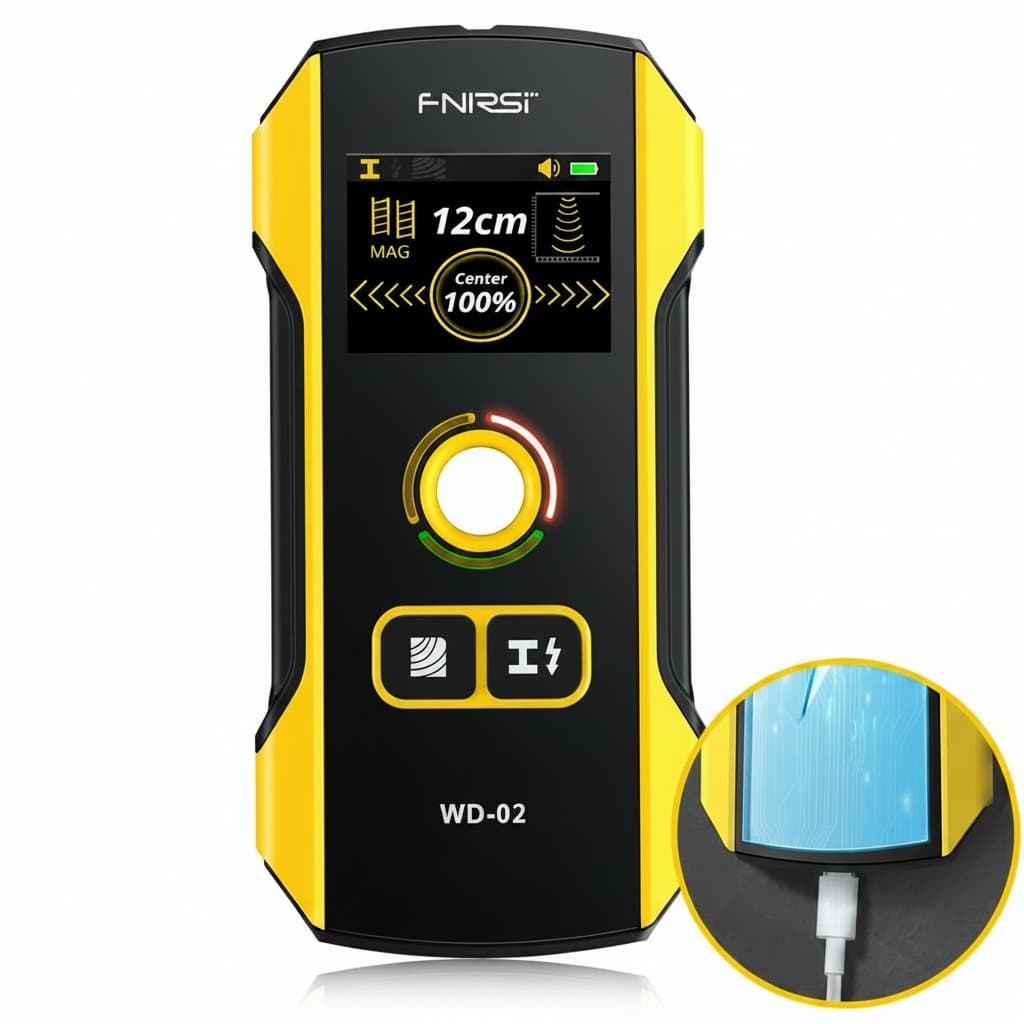
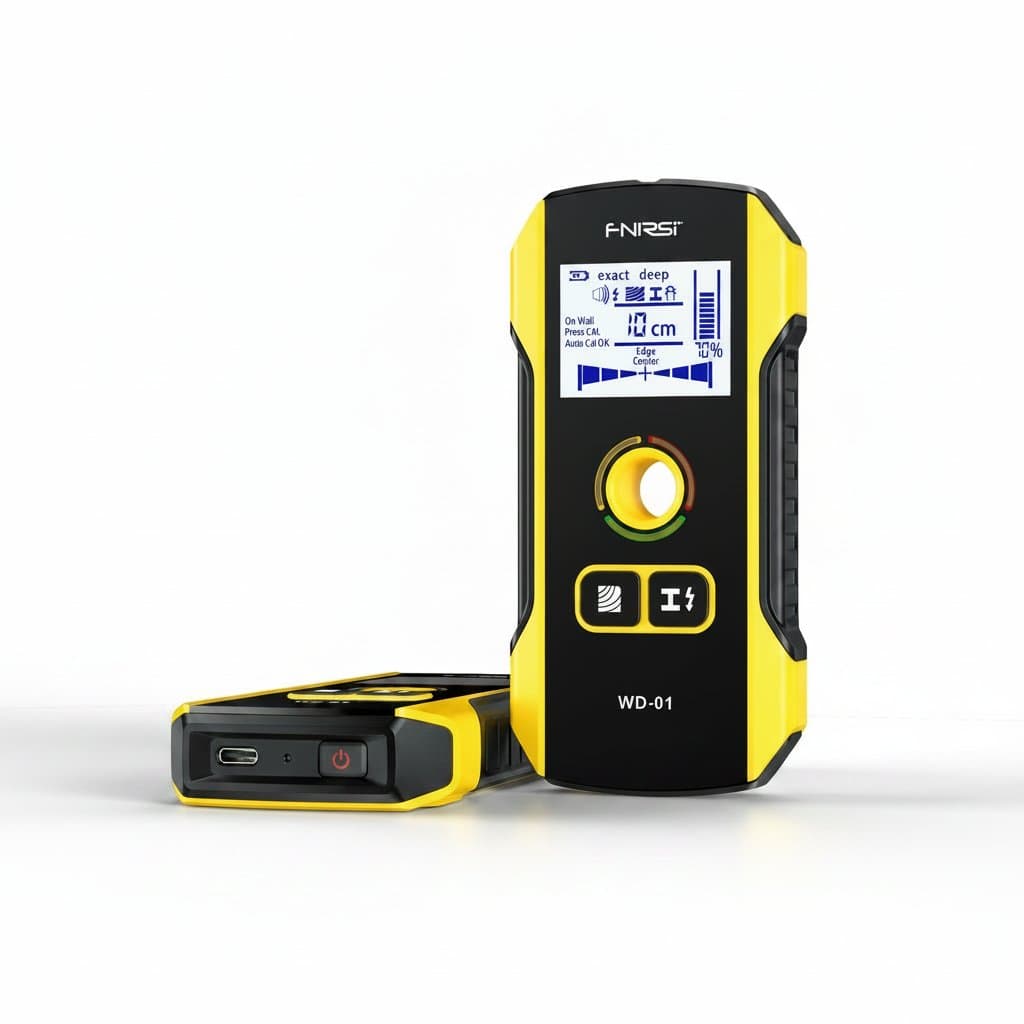
WD-01/WD-02 Stud Finder: The product itself.WD-01/WD-02 Stud Finder£85.99----Metal
Stud finder wall scanner with a TFT display and positioning hole.Stud Finder Wall Scanner£85.99Stud Finder Wall ScannerTFT Display-Wall Scanning-
NOYAFA NF-5102 Stud Finder, front view.NOYAFA NF-5102 Stud Finder£81.99--Rechargeable-Metal

Two sensors doing two different jobs

Capacitive sensing looks for a change in the dielectric behind the surface. Plasterboard with a timber stud behind it holds a different charge from plasterboard with a void behind it, and the tool reports the edge where that changes. It is what finds studs and joists, and it is why the tool has to be calibrated on a blank stretch of wall first: it is measuring a difference, so it needs to learn what nothing looks like.

Inductive sensing is a separate circuit that reacts to metal, and it does not care about density. That is what finds conduit, pipe, nails and steel framing. A multi-sensor scanner runs both and reports whichever fires, which is why it can distinguish a metal stud from a wooden one but cannot reliably tell you a copper pipe from a steel one.

Live AC detection and what it does not cover

Live cable detection senses the alternating field around a conductor carrying mains. It is genuinely valuable and it is also the function most often over-trusted. It finds live cable. It does not find a cable that is switched off, a cable in earthed metal conduit that screens the field, or a cable buried deeper than the tool can reach.

Treat a clear scan as one input rather than permission. The safe sequence is to scan, then look at where the sockets and switches are and assume the vertical and horizontal safe zones between them are occupied, then drill shallow and check. Anyone who has drilled a cable will tell you the scanner said nothing.

What each sensor mode finds
ModeFindsMisses
Capacitive (stud)Timber studs and joists, density changesMetal, anything behind foil or wet plaster
Inductive (metal)Conduit, pipe, nails, steel framingTimber, plastic pipe
Live ACEnergised mains cable near the surfaceCable that is switched off, screened or deep

Depth ratings and where they stop being true

Quoted depth is a best case on a co-operative wall: dry plasterboard, a clear target, a calibrated tool. On lath and plaster the laths themselves read as a repeating pattern of studs. Foil-backed insulation blocks capacitive sensing almost entirely. Fresh plaster and damp walls hold water, and water changes the dielectric enough to give false positives across an entire wall.

The honest workflow is to scan twice, once horizontally and once vertically, and to mark both edges of anything found rather than its centre. Two edges a stud-width apart is a stud. A single narrow reading that does not repeat at regular spacing is more likely a pipe, a cable or a fixing, and it deserves care rather than a drill.

What is worth paying for

A display that shows signal strength beats one that only beeps, because the useful information is where the reading peaks rather than whether it crossed a threshold. Auto-calibration on power-up removes the most common user error. A tool that reports what kind of target it thinks it has found is worth having, provided you treat it as a hint.

For trade use the deciding features are a case, a battery that is not a coin cell, and the ability to hold calibration while moved across a wall rather than needing a reset every 300 mm. Beyond that, extra modes add less than a careful second scan at right angles does.

James Whitfield, Equipment Desk editor at Compel GroupJames WhitfieldEquipment Desk

James edits the machine and equipment buying guides. The specifications on these pages are the declared figures from the live listings we hold, with a note wherever a number comes from a published standard instead. Pages are re-checked as the catalogue changes.

Share
Add Compel Group as a preferred source on Google

Wall scanners and stud finders

See the full range

Buying guide

Wall Scanners and Stud Finders for Trade Use questions

How does a stud finder work?
Capacitive models sense a change in density behind the surface, which is why they need calibrating on a blank area first. Inductive models react to metal instead. Multi-sensor tools run both, plus a separate circuit that detects the field around live mains cable.
Can a wall scanner find plastic pipe?
Not reliably. Inductive sensing only reacts to metal, and plastic pipe is close enough in density to a void that capacitive sensing often misses it. If the pipe is full of water, a scan may pick up the water rather than the pipe.
Is live cable detection safe to rely on?
No, treat it as one input. It finds energised cable near the surface. It will not find cable that is switched off, screened by earthed metal conduit, or buried deeper than the tool reaches. Scan, then assume the safe zones around sockets and switches are occupied, then drill shallow.
Why does my scanner show studs everywhere?
Usually lath and plaster, where the laths read as a repeating pattern, or a damp or freshly plastered wall, where the water changes the dielectric. Foil-backed insulation causes the opposite problem and blocks capacitive sensing almost completely.
How do I find the centre of a stud?
Mark both edges rather than trusting a single centre reading, then take the midpoint. Scan again at right angles to confirm. Two edges roughly a stud-width apart is a stud; one narrow reading that does not repeat at regular spacing is more likely a pipe or a cable.