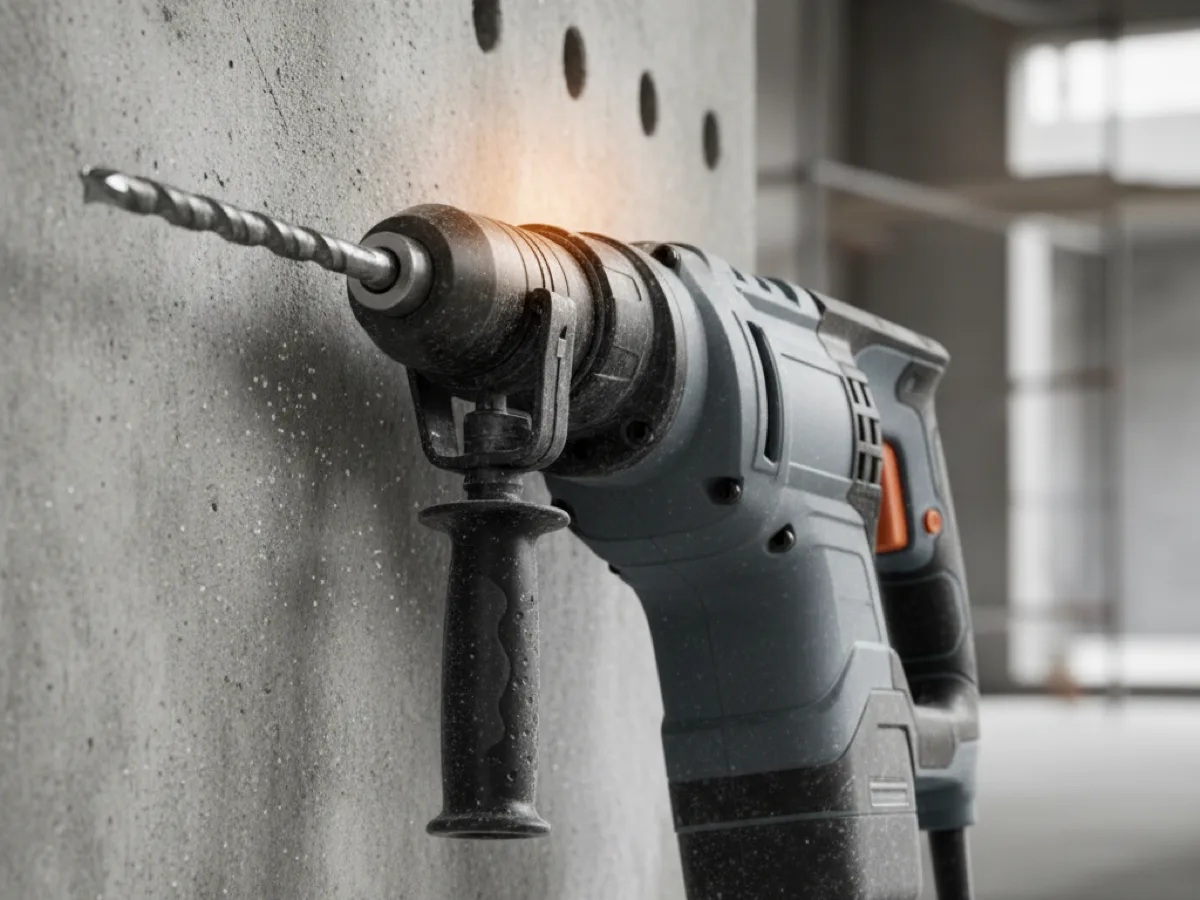
Why a rotary hammer is not a hammer drill
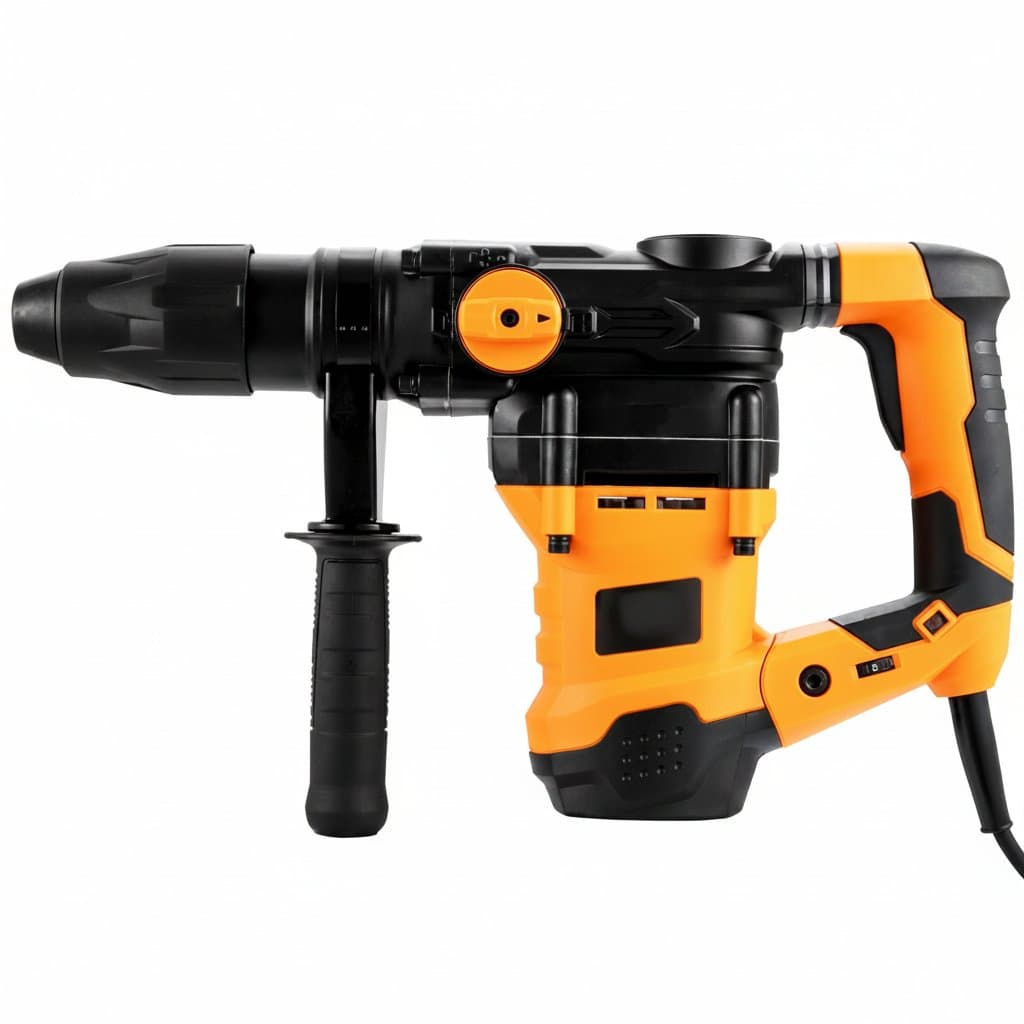
A percussion or hammer drill makes its blow by grinding two ridged plates together as the chuck turns, which produces a fast, shallow vibration. It will get through a wall to hang a shelf. A rotary hammer instead drives a piston against a sealed air cushion, and that cushion drives the striker into the end of the bit, so each blow carries real energy measured in joules.
The practical difference is enormous and it is not subtle. On reinforced concrete a hammer drill will polish a shallow hole and burn the bit while the operator leans on it. A rotary hammer of modest size cuts steadily under its own weight. If the work includes concrete rather than brick, this is the tool, and the joules figure is what to compare.
SDS-Plus against SDS-Max
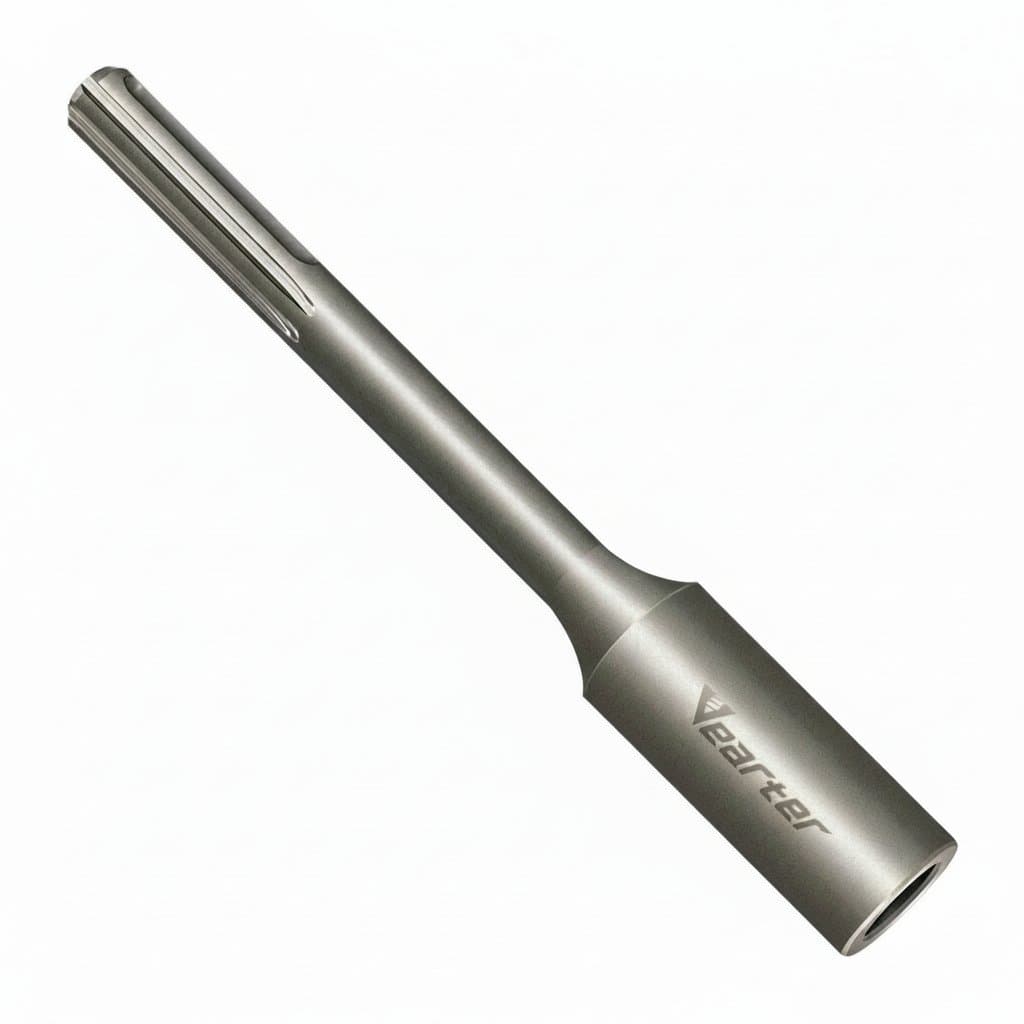
SDS stands for the German for insert, twist, stays, and it describes a shank that drops in and locks without a chuck key. SDS-Plus has a 10 mm shank with two open grooves that drive the rotation and two closed slots that the locking balls sit in, so the bit is held but free to move back and forth under the hammer action. That freedom is the point: the bit must be able to travel for the piston to strike it.
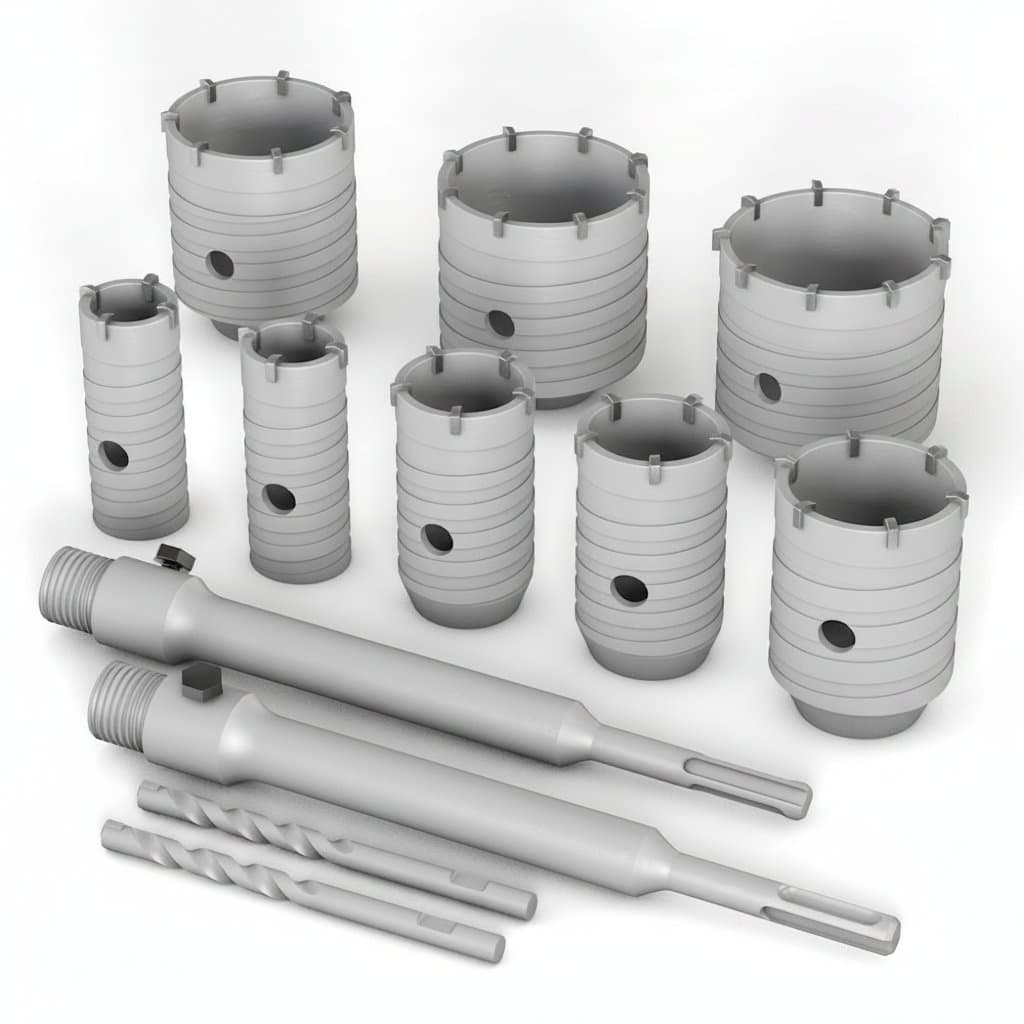
SDS-Max is the larger standard, an 18 mm shank for heavier machines. The two are not interchangeable and no adaptor makes a heavy machine safe with a light bit. Buy the machine for the hole size you actually drill most often rather than the largest you might ever need, because an SDS-Max machine is a tiring tool to hold up all day for 10 mm anchor holes.
| Shank | Shank size | Practical hole range | Typical use |
|---|---|---|---|
| SDS-Plus | 10 mm | Up to about 30 mm | Anchors, fixings, conduit, first fix, light chiselling |
| SDS-Max | 18 mm | About 30 mm and above | Large cores, through-holes, sustained breaking |
| SDS-Top | 14 mm | Between the two | Uncommon, check bit availability before buying |
Three modes and when to use each
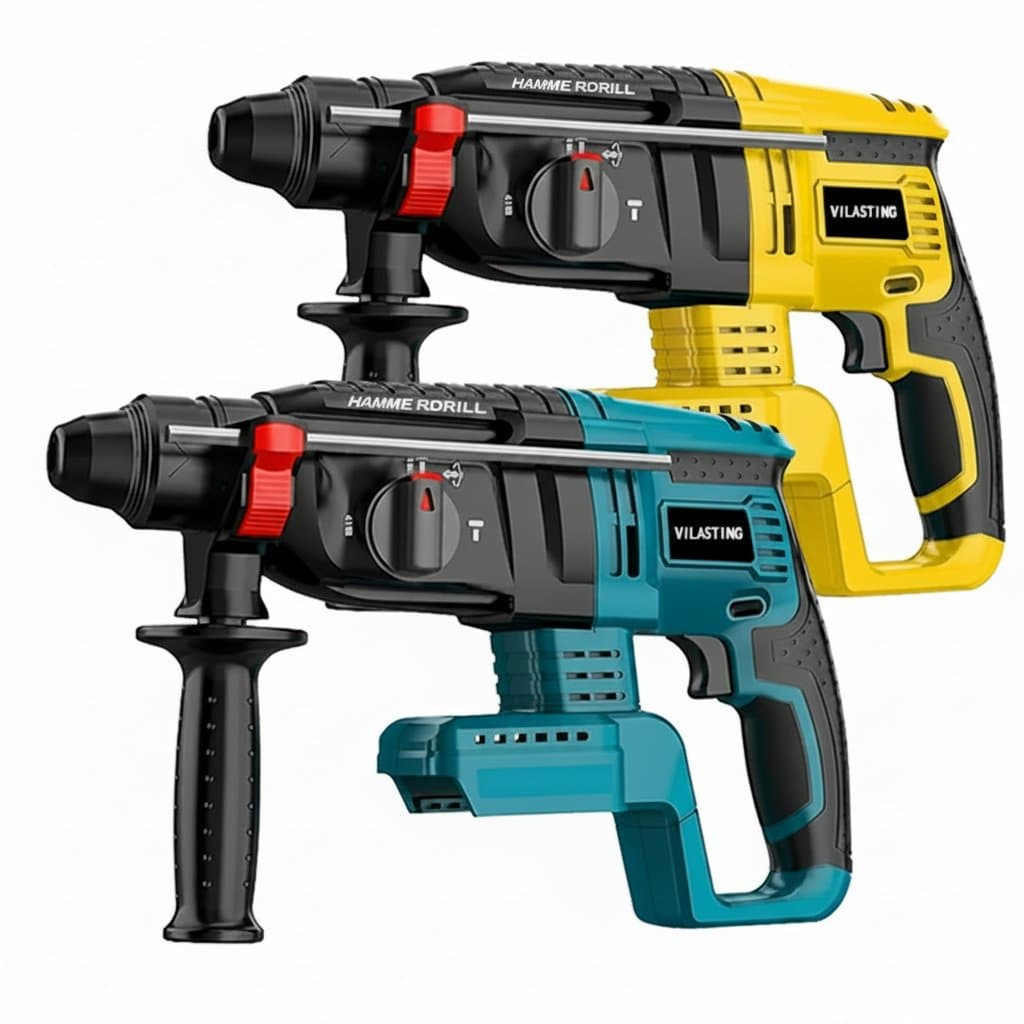
Most rotary hammers offer rotation only, rotation with hammer, and hammer only. Rotation only is for drilling wood or steel with a chuck adaptor, and is the mode people forget exists. Rotation with hammer is the concrete setting. Hammer only locks the rotation so the tool takes a chisel and becomes a light breaker, which is genuinely useful for tile, render and small chasing jobs.
Use rotation only for anything that is not masonry. Running the hammer action in a hole that is already cut, or in soft block, achieves nothing except widening the hole and shortening the life of the bit and the machine. A variable-speed trigger and a clutch that releases when the bit binds are the two features worth insisting on.
Corded or cordless, and brushless motors
Cordless rotary hammers have become genuinely capable, and for first fix, anchor holes and working off a ladder the absence of a lead is worth a great deal. The trade-off is runtime under sustained load and the cost of batteries, so the honest question is how many holes get drilled in a stretch rather than whether the tool is powerful enough.
Brushless motors matter more here than on lighter tools. There are no brushes to wear, the motor runs cooler under the stalling loads that concrete produces, and more of the battery reaches the bit. On a machine that is worked hard the difference shows up as runtime and service life rather than as raw speed.