
Vibration or impact, and why the soil decides
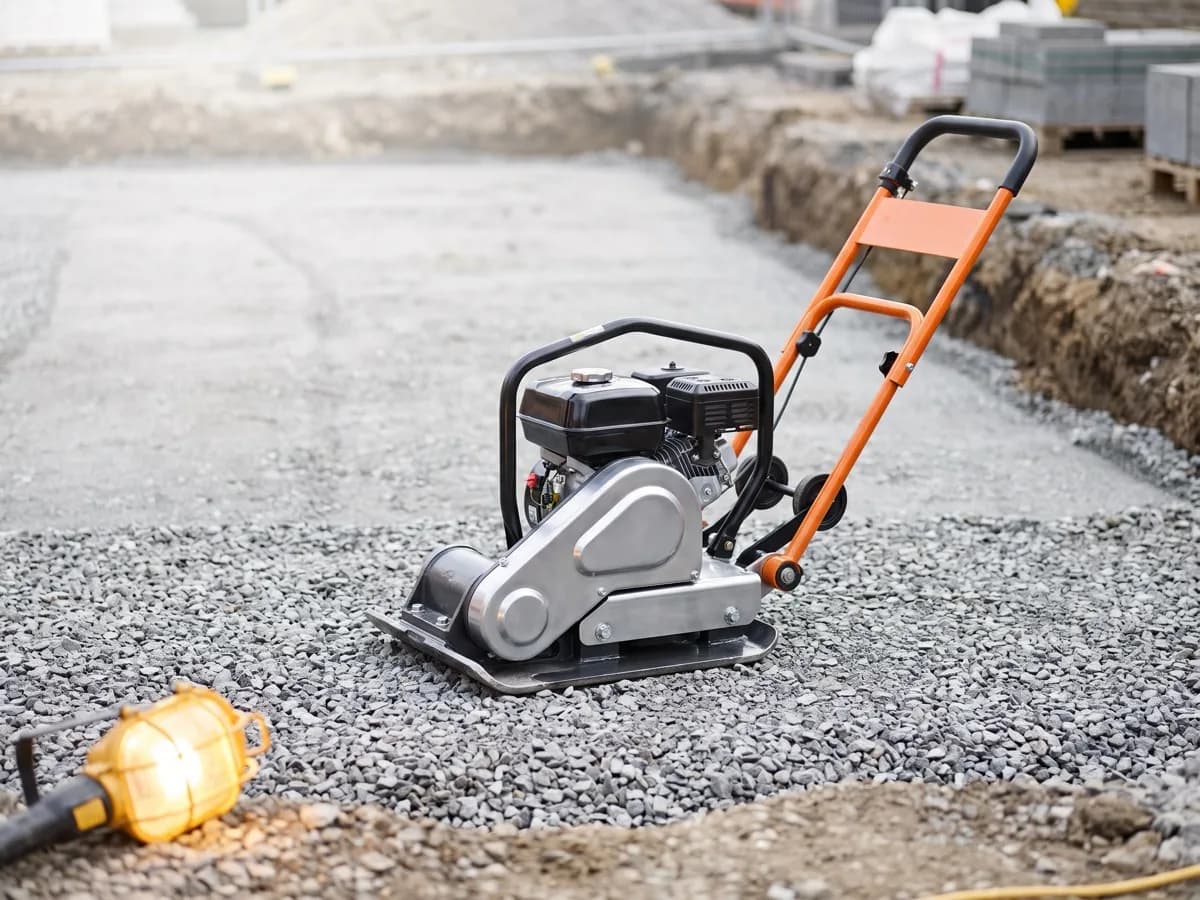
A plate compactor works by vibration. An eccentric weight spinning inside the housing shakes the base plate several thousand times a minute, and that shaking lets granular particles slip past each other and drop into the gaps. It is the right action for sand, gravel, crushed stone and MOT type 1, and it is why a plate is the machine on almost every paving and driveway job.
A rammer works by impact instead. A spring-loaded foot lifts and slams down a few hundred times a minute, driving a shock wave down through the layer. Cohesive soils like clay and silt hold together by suction between particles rather than by friction, so shaking does very little to them and a hard blow does a great deal. Put a plate on wet clay and it will ride on the surface; put a rammer on loose gravel and it will punch holes in it.
| Machine | Action | Suits | Typical use |
|---|---|---|---|
| Forward plate | Vibration, one direction | Sand, gravel, hardcore, asphalt | Paving, patios, driveways, footpaths |
| Reversible plate | Vibration, travels both ways | Deeper granular lifts | Trench backfill, larger sub-bases |
| Trench rammer | Impact, a few hundred blows a minute | Clay, silt, mixed cohesive fill | Narrow trenches, service runs, confined ground |
Trench rammers and confined ground
A trench rammer, also called a jumping jack or a tamping rammer, has a narrow foot, commonly around 280 mm to 330 mm wide, so it drops into a service trench where a plate simply will not fit. The narrow foot also concentrates the blow, which is what gives it the depth of compaction a plate cannot reach in cohesive ground.
It is harder work to run than a plate. The machine wants to walk away from you and it has to be steered rather than followed, so it is tiring over a long shift and it needs an operator who has used one. Blow rate is usually a few hundred a minute against the several thousand vibrations a minute of a plate, which is the clearest sign on a spec sheet of which machine you are looking at.
Sizing on plate size, weight and force
Three numbers matter and they are usually all on the plate. Plate size sets how much ground you cover in a pass and whether the machine fits the trench. Operating weight and centrifugal force together set how deep the compaction reaches. A light plate covers a patio quickly but will only compact a shallow layer properly, and no amount of extra passes fixes a lift that is too deep.
Work in layers rather than trying to compact the whole depth at once. Fill is placed and compacted in lifts, and a light forward plate handles a shallow lift while a heavy reversible plate handles a deeper one. If in doubt, thinner layers and the machine you already have will beat one thick layer and a bigger machine.
Engine, water tank and the vibration you absorb
Petrol is the usual engine on this class of machine and diesel appears on the heavier reversible plates. Engine power matters less than you would expect, because the engine is only there to spin the eccentric: weight and force do the compacting. A water tank is worth having if you compact asphalt, because it stops hot bitumen picking up on the plate.
Hand-arm vibration is a real constraint on this work, not a footnote. In the UK the Control of Vibration at Work Regulations 2005 set an exposure action value of 2.5 m/s squared A(8) and an exposure limit value of 5 m/s squared A(8), and compaction plant sits high on the scale. Check the declared vibration figure on the machine you are buying and plan how long one person will run it in a shift.
Buying against hiring
Compaction plant is the classic hire item, and for one driveway hiring is clearly right. The maths changes quickly once the machine is used most weeks. A forward plate is a simple machine with an engine, an eccentric and a plate, and there is very little on it to go wrong if the oil is changed and the belt is kept in one piece.
The practical argument for owning is availability rather than cost. A plate you own is on the van at seven in the morning, which is worth more on a groundworks job than the day rate saved. Machines that get used a few times a year, and anything you need a trailer to move, usually still make more sense hired.