What a plastering machine actually does
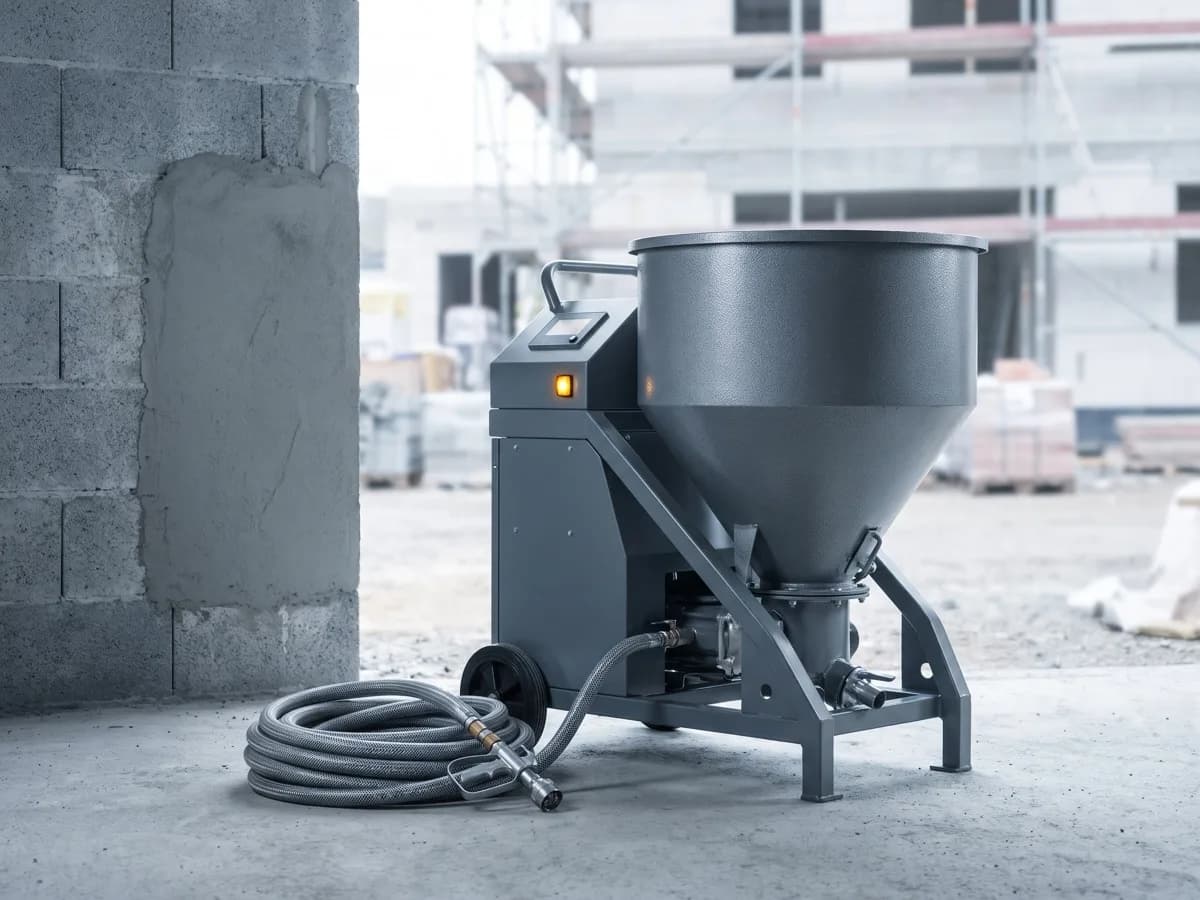
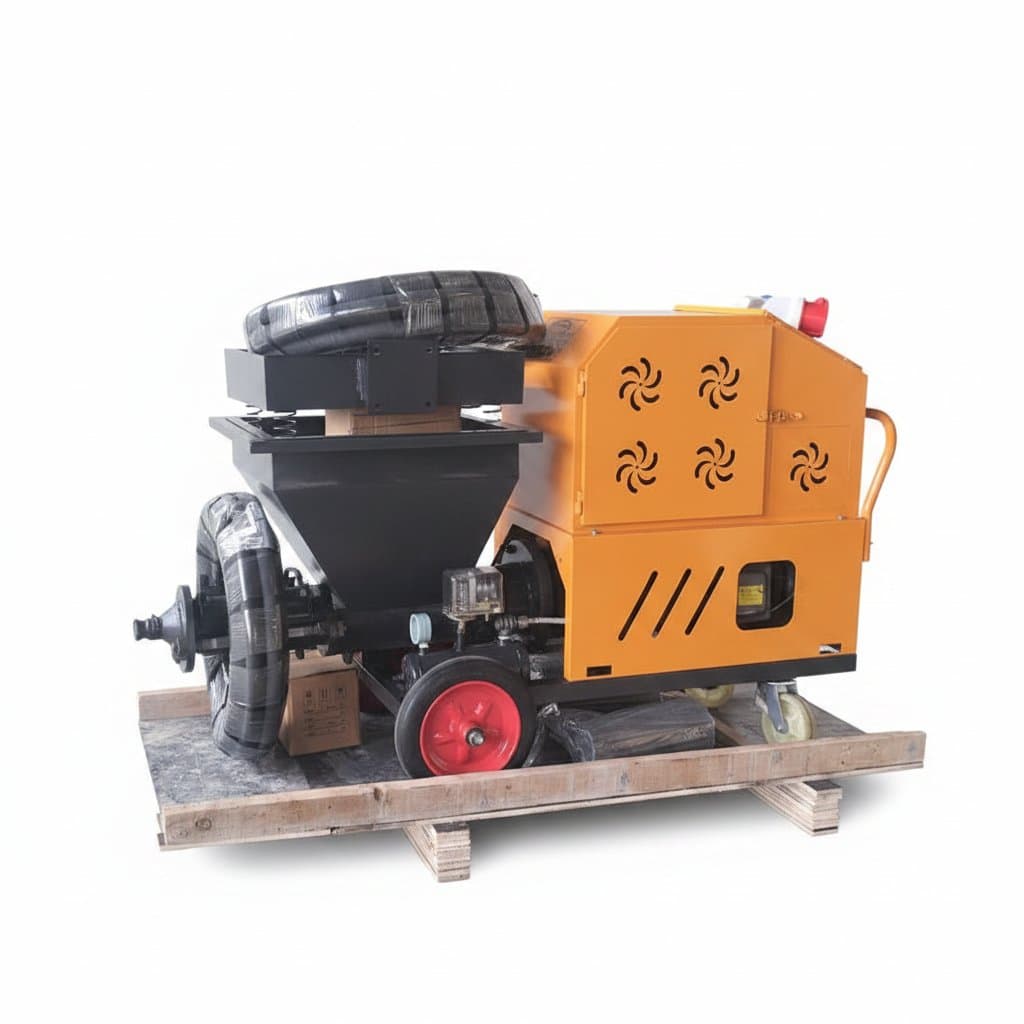
The machine does three jobs in one pass. It meters dry material and water together in a mixing tube, it pumps the wet mix down a hose, and it atomises that mix at the gun with compressed air so it lands on the wall as a spray rather than a sausage. Feed it bagged material and water and it will run continuously for as long as someone keeps loading the hopper.
The pump is almost always a worm pump, which is a helical steel rotor turning inside a rubber stator. It moves thick material without pulsing and it is the part that wears, so a rotor and stator are consumables rather than repairs. Running one dry, even briefly, will destroy the stator, which is why every machine has an interlock and why operators are told never to start the pump before the mix reaches it.
Rendering machines and external work
Render is coarser than internal plaster, and that changes the machine. Aggregate in the mix needs a bigger nozzle, a bigger stator and more pressure, so a machine sized for finish plaster will struggle or block on a monocouche render. Check the largest grain size the maker quotes before assuming a machine will handle a scratch coat.
External work also brings hose length into it. The pump has to push the mix the whole way to the gun, and every extra metre costs pressure and wears the stator faster. On a scaffold run, plan the machine position so the hose is as short as it can be rather than leaving the machine parked at the gate all day.
| Material | Nozzle | What the machine needs | Typical use |
|---|---|---|---|
| Finish plaster, gypsum | Small | Lower pressure, fine stator | Internal walls and ceilings |
| Cement render, monocouche | Large | Higher pressure, coarse stator | External walls, scratch and top coats |
| Insulation adhesive, basecoat | Large | High output, heavy duty pump | External wall insulation systems |
| Floor screed | Open end or lay-flat hose | Screed pump, no atomising air | Floor levelling and liquid screed |
Spray machines against hopper guns
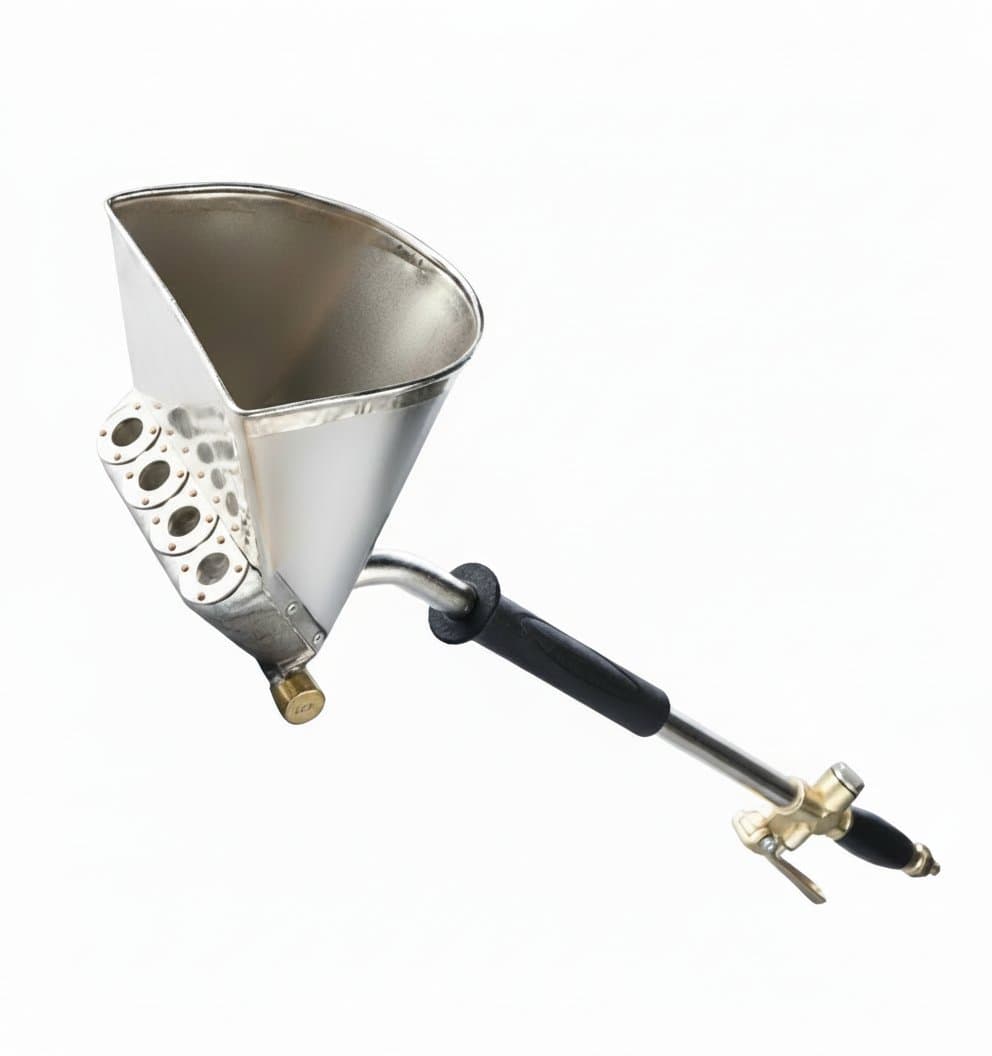
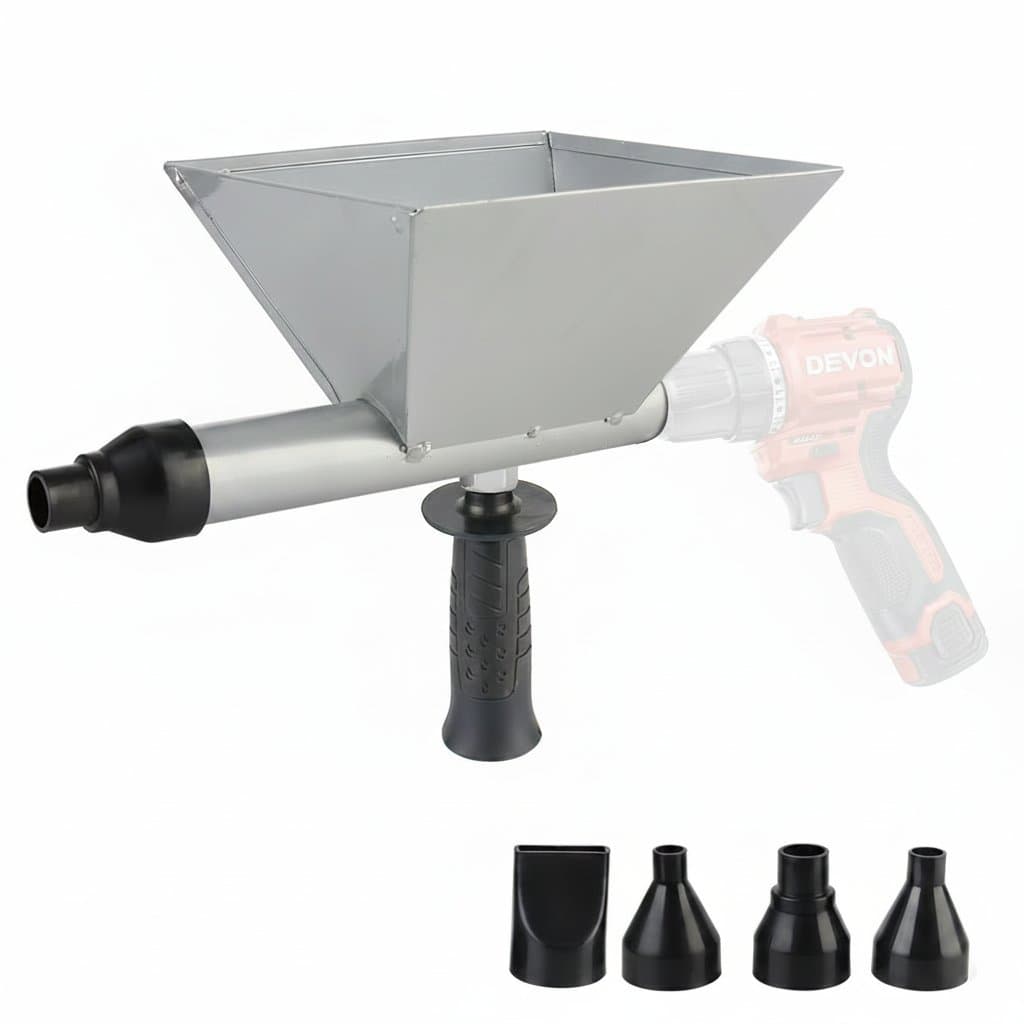
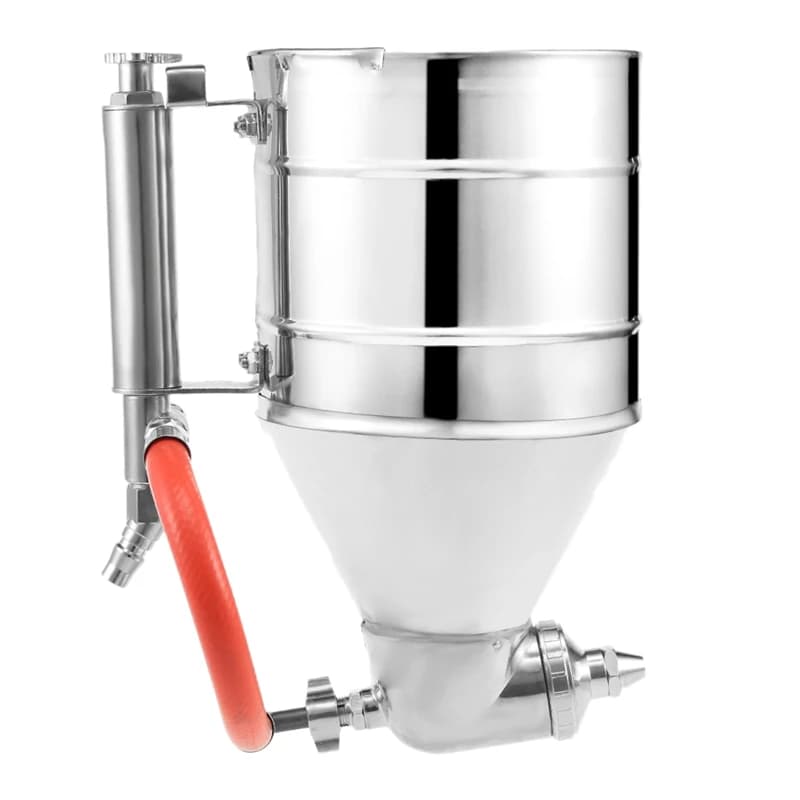
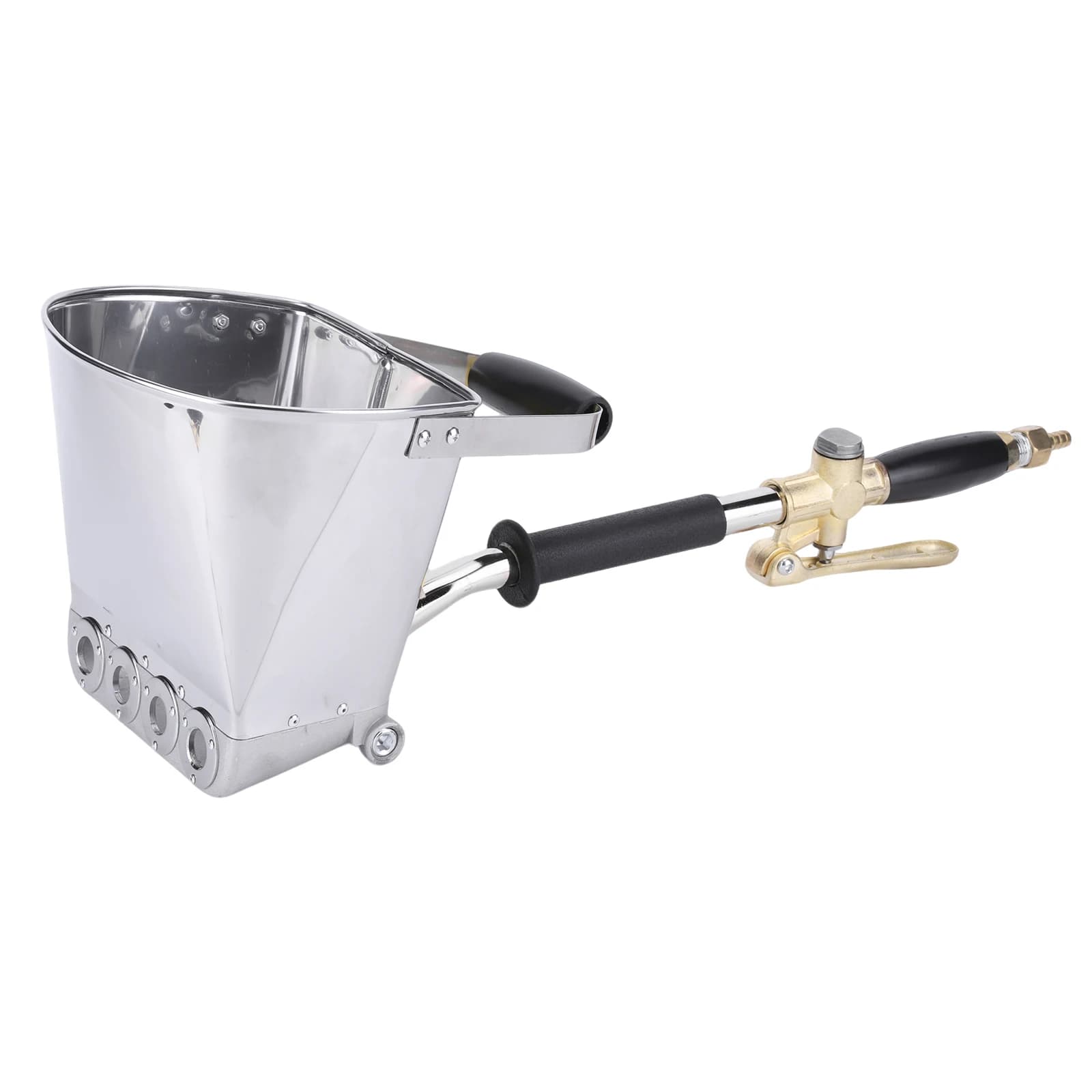
A hopper gun is the cheap way into spraying. It is a handheld pot with a nozzle, fed from a compressor, and you fill it by hand from a bucket. For a garage ceiling or a patch of textured coating it does the job for a fraction of the money. What it will not do is keep going, because you stop to refill every minute or so and the mix has to be made separately.
A continuous machine earns its money on area. Once the wall is bigger than a couple of rooms, the time saved by not mixing and not refilling is the whole argument, and the finish is more consistent because the mix ratio stays the same from the first bag to the last. Between the two sit small mixer-pump units that suit a one or two person plastering firm rather than a site.
Screed pumps and floor work
A screed pump is the same family of machine pointed at the floor. It mixes and moves sand and cement screed or a liquid flow screed to where it is laid, and it has no atomising air at the end because the material is placed rather than sprayed. On anything above a small room it replaces a line of people with wheelbarrows.
The figures to compare are output in litres or cubic metres an hour and the maximum pumping distance and height, because a screed pump on a fourth floor is doing very different work from one on a slab. Hose diameter matters more here than on a plaster machine, since a narrow hose and a coarse screed is how you block a line.
Cleaning, wear parts and power supply
Cleaning is not optional and it is not quick. Material left in the hose sets, and a set hose is usually scrap rather than a job for a rod. Every machine is cleaned through at the end of the pour and at any break long enough for the mix to go off, and that time has to be in the programme rather than squeezed into the last ten minutes of the day.
Power supply decides what you can actually run. The bigger continuous machines are three phase, which means a generator or a site supply rather than a domestic socket, while smaller mixer-pumps run single phase. Check the voltage and the phase on the spec table before buying, because a three phase machine on a domestic refurbishment is an expensive ornament.