


A start capacitor and a run capacitor do different jobs
The two look similar and are wired to the same winding, but they are built for opposite duty cycles. A start capacitor is in circuit for the second or two it takes the motor to come up to speed, then a centrifugal switch or a potential relay drops it out. Because it works only in short bursts it can be an electrolytic type with a very high capacitance in a small can, and it is rated for a limited number of starts per hour rather than continuous use.
A run capacitor never leaves the circuit. It has to sit at mains frequency all day without heating up, so it is a metallised polypropylene film type with a much lower capacitance and a continuous AC rating. Fitting a start capacitor where a run capacitor belongs destroys it quickly, because an electrolytic can was never designed to carry current continuously. Fitting a run capacitor in a start position usually means the motor will not start at all, because the capacitance is far too low to give the starting torque.
Some motors use both, and some hard-start kits add a start capacitor to a compressor that only has a run capacitor. A dual run capacitor, the kind with three terminals marked C, FAN and HERM, is two run capacitors in one can sharing a common terminal: one section for the compressor and one for the condenser fan.
| Start capacitor | Run capacitor | |
|---|---|---|
| Time in circuit | A second or two per start | Continuously while running |
| Construction | Electrolytic, often CD60 | Metallised film, often CBB60 or CBB65 |
| Typical capacitance | Tens to hundreds of microfarads | Single figures to around 60 microfarads |
| Limits | Rated starts per hour | Continuous AC duty, rated hours at temperature |
| If you fit the wrong one | Run position: fails within hours | Start position: motor will not start |
What CBB60, CBB65 and CD60 actually tell you
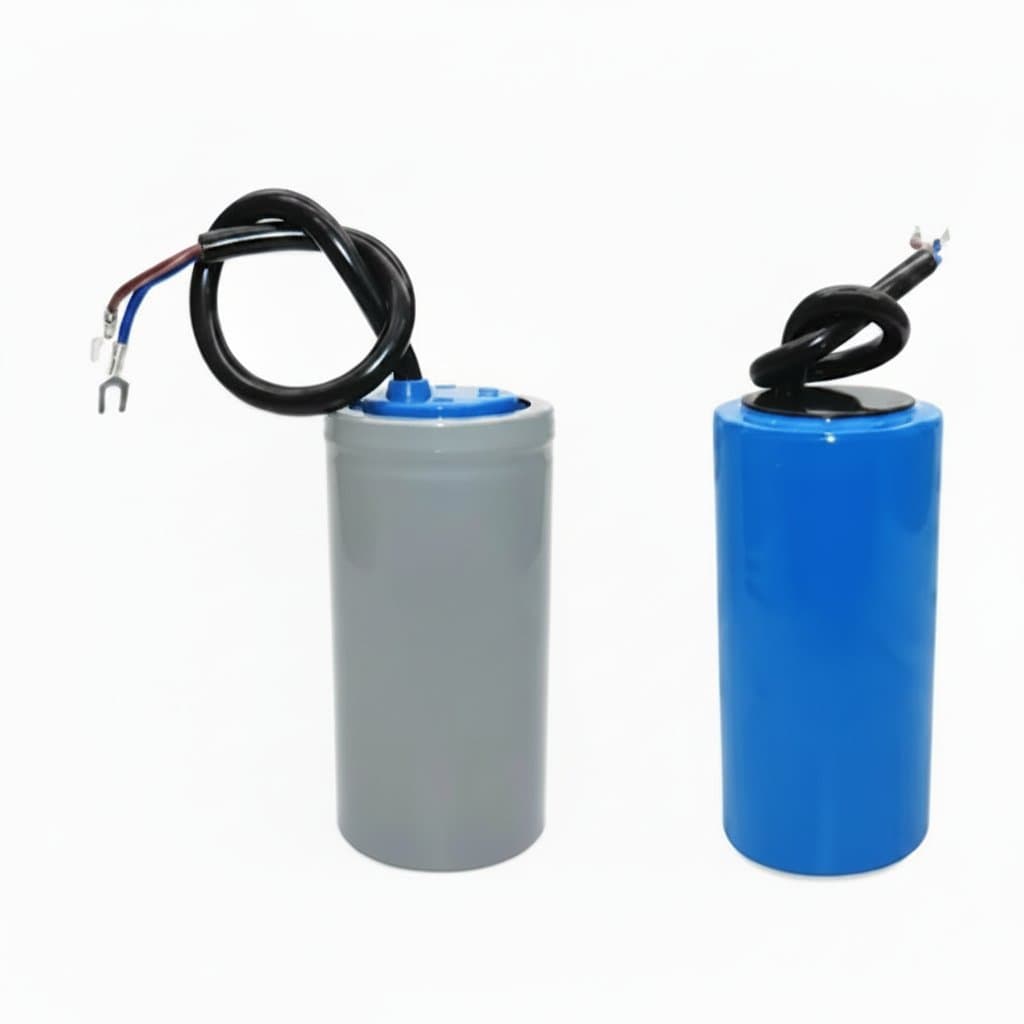
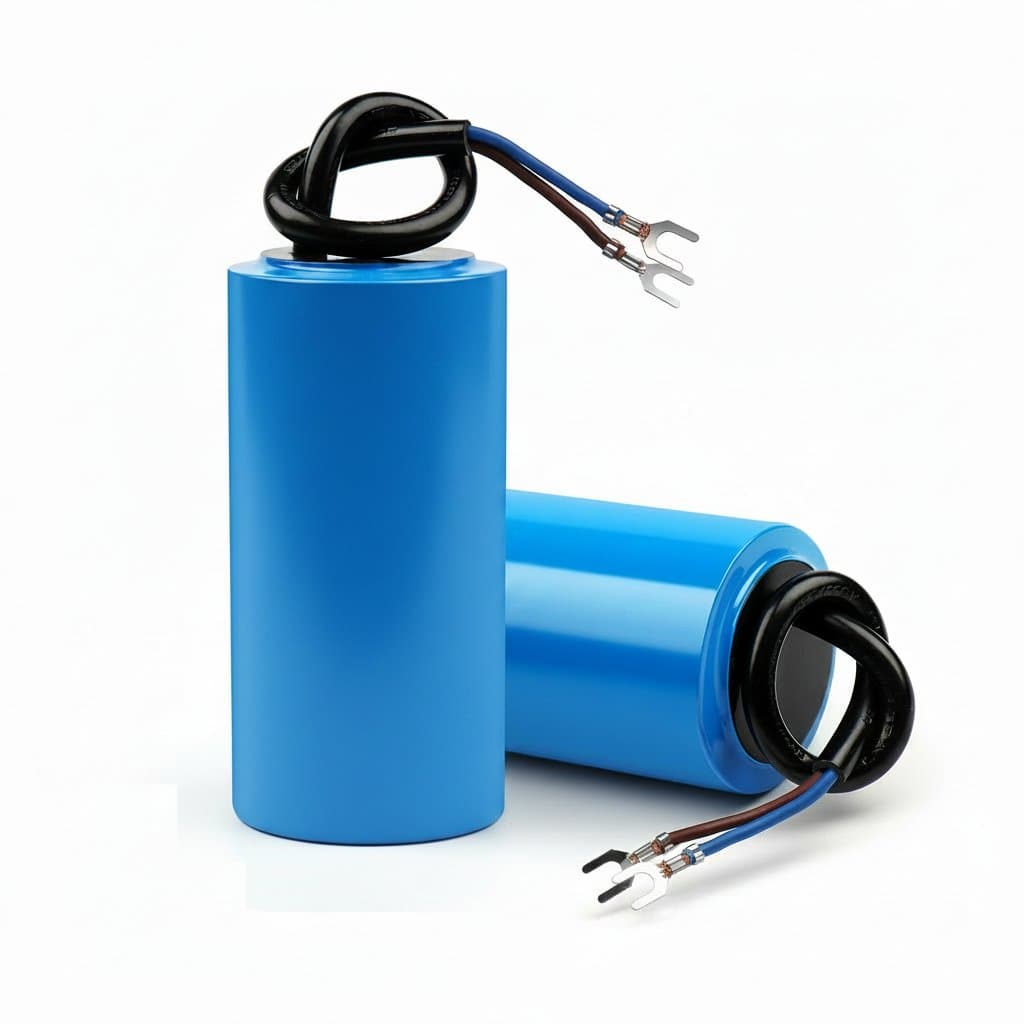
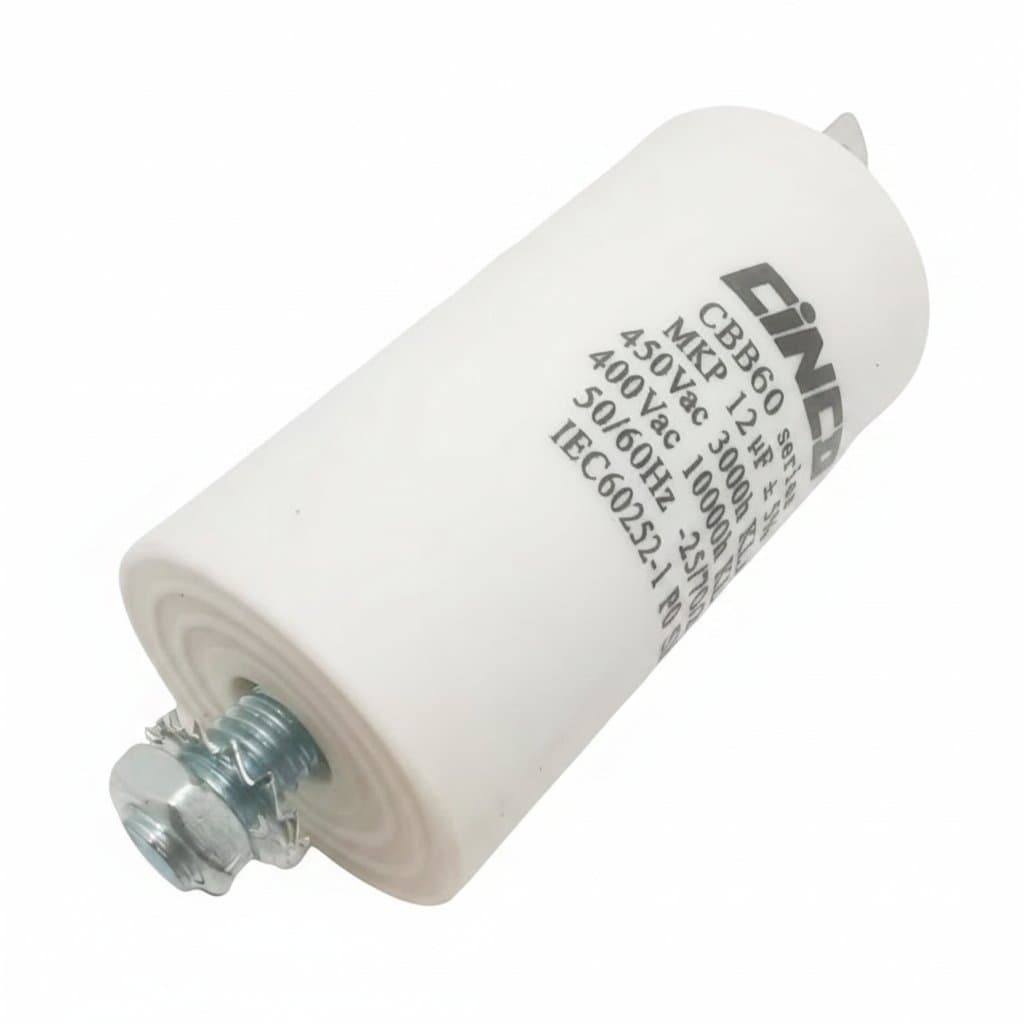
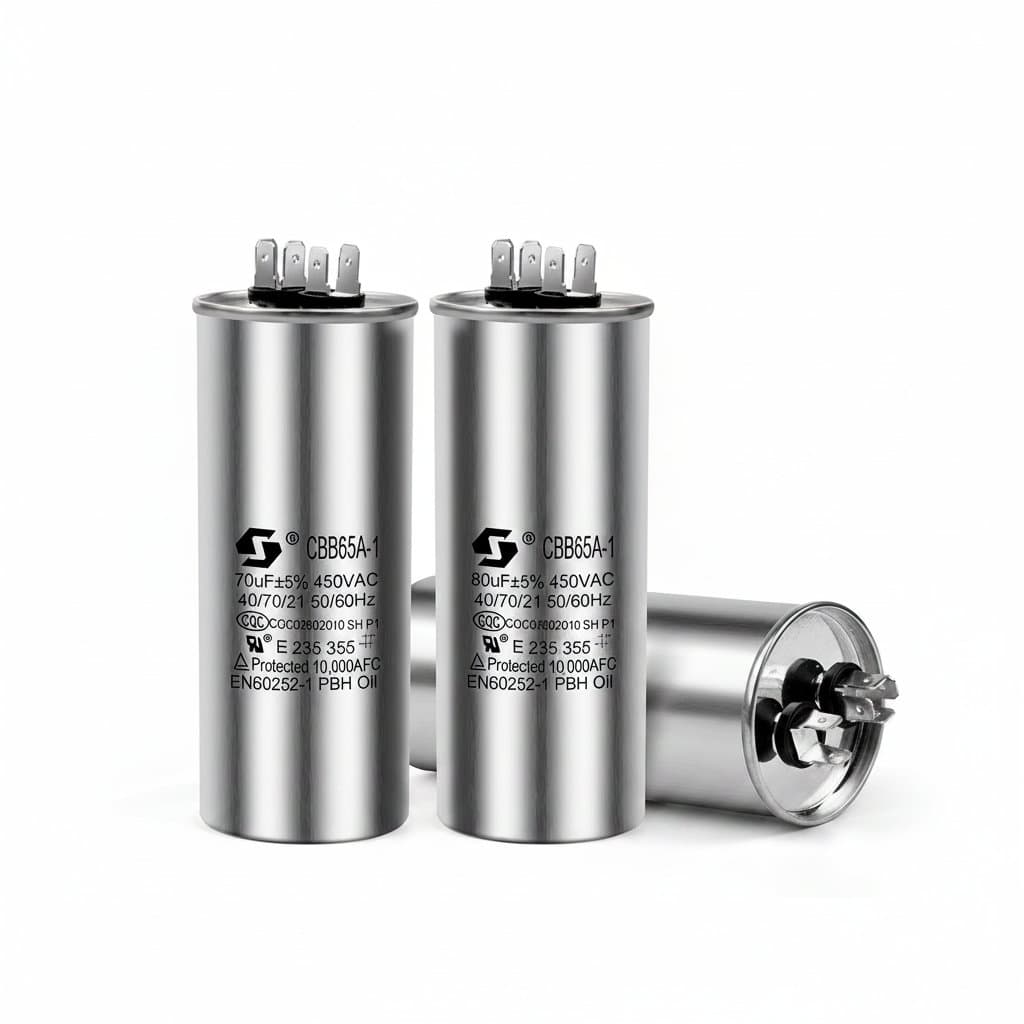
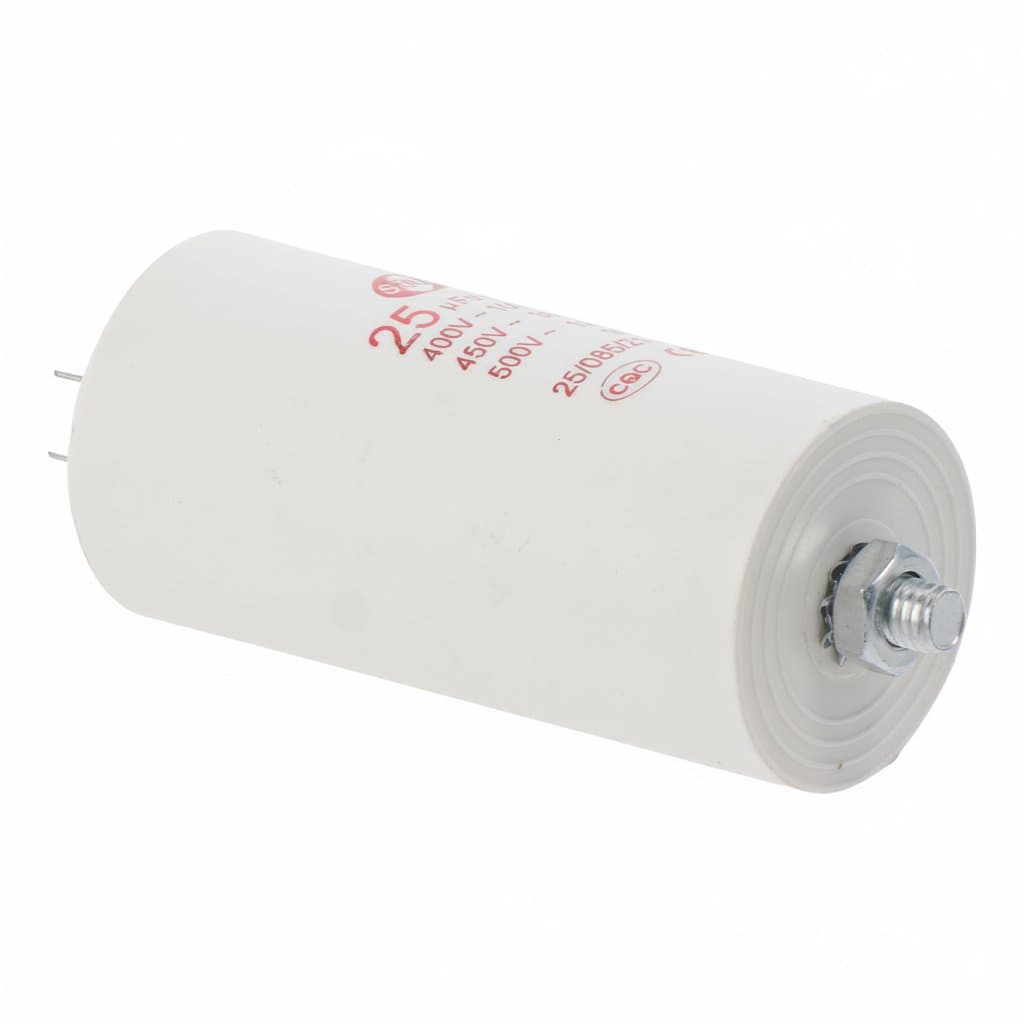
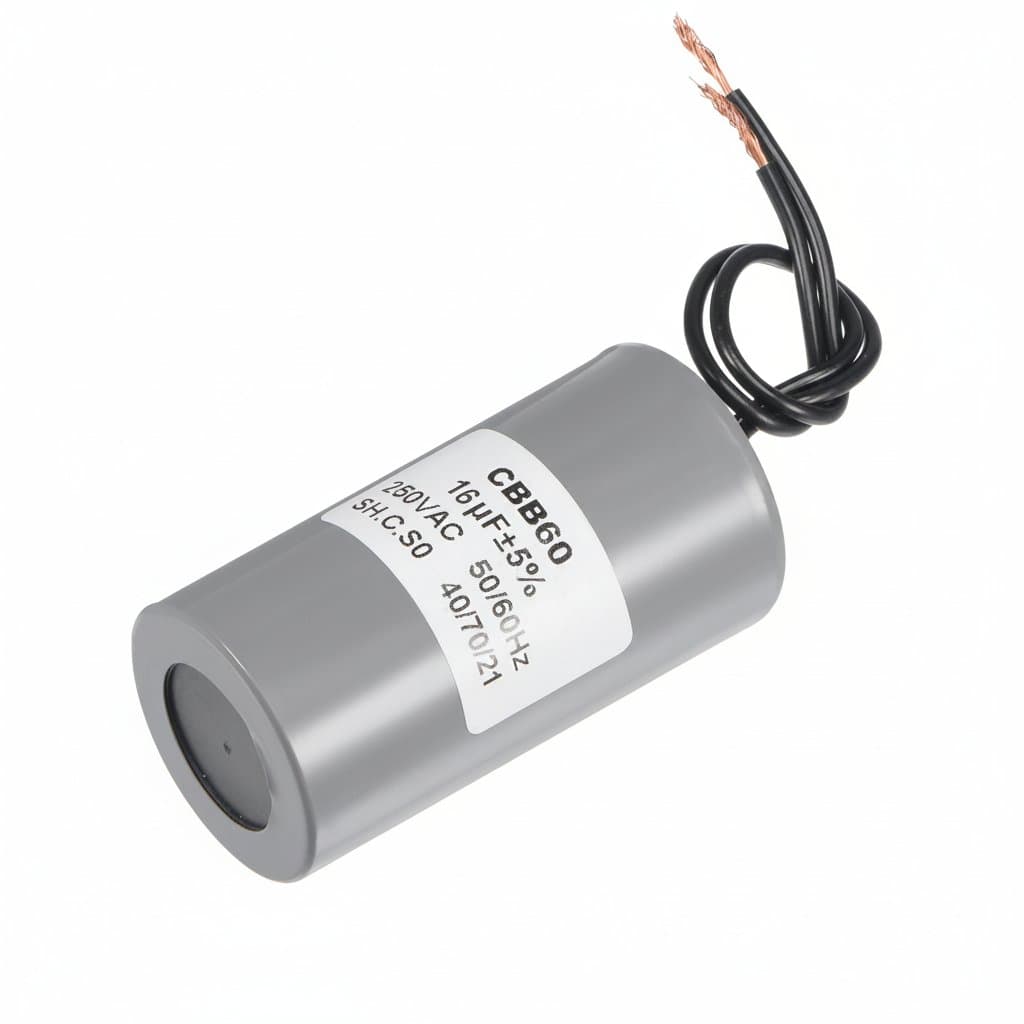
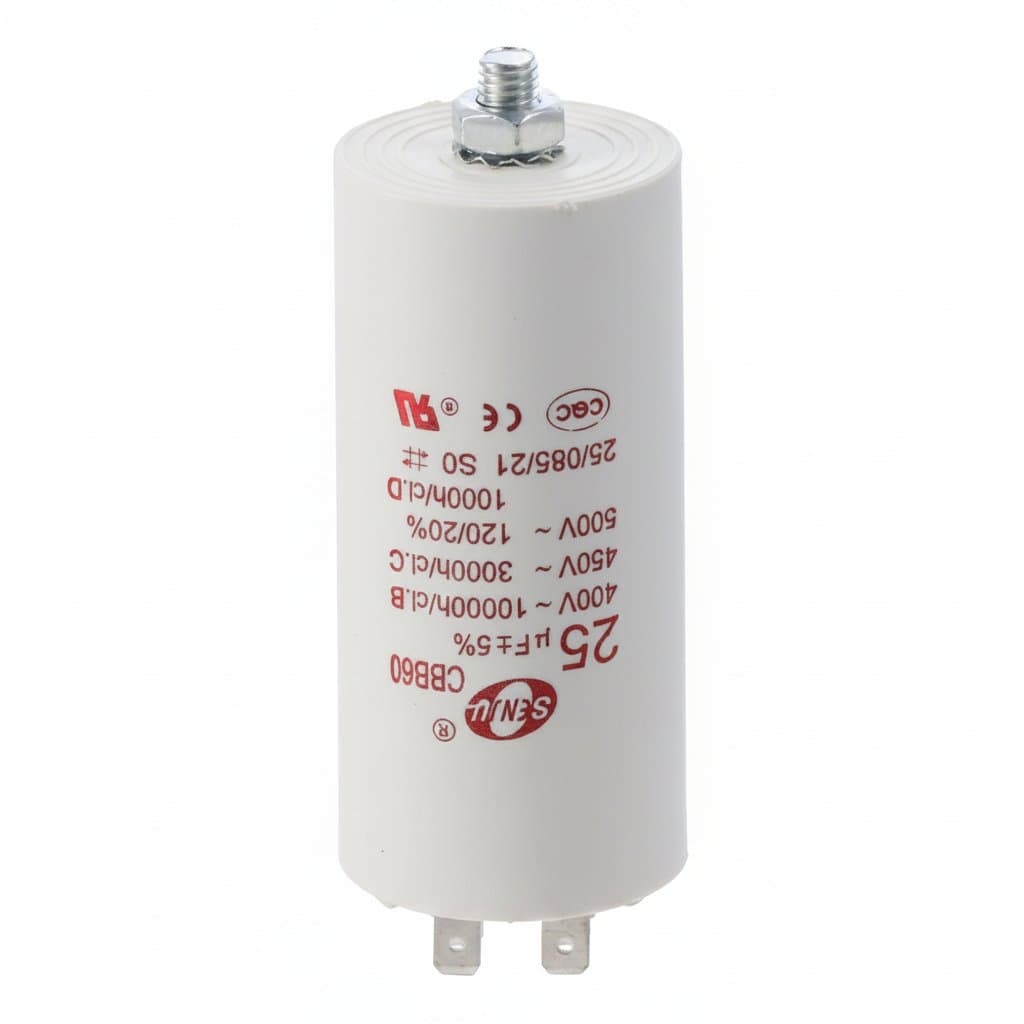
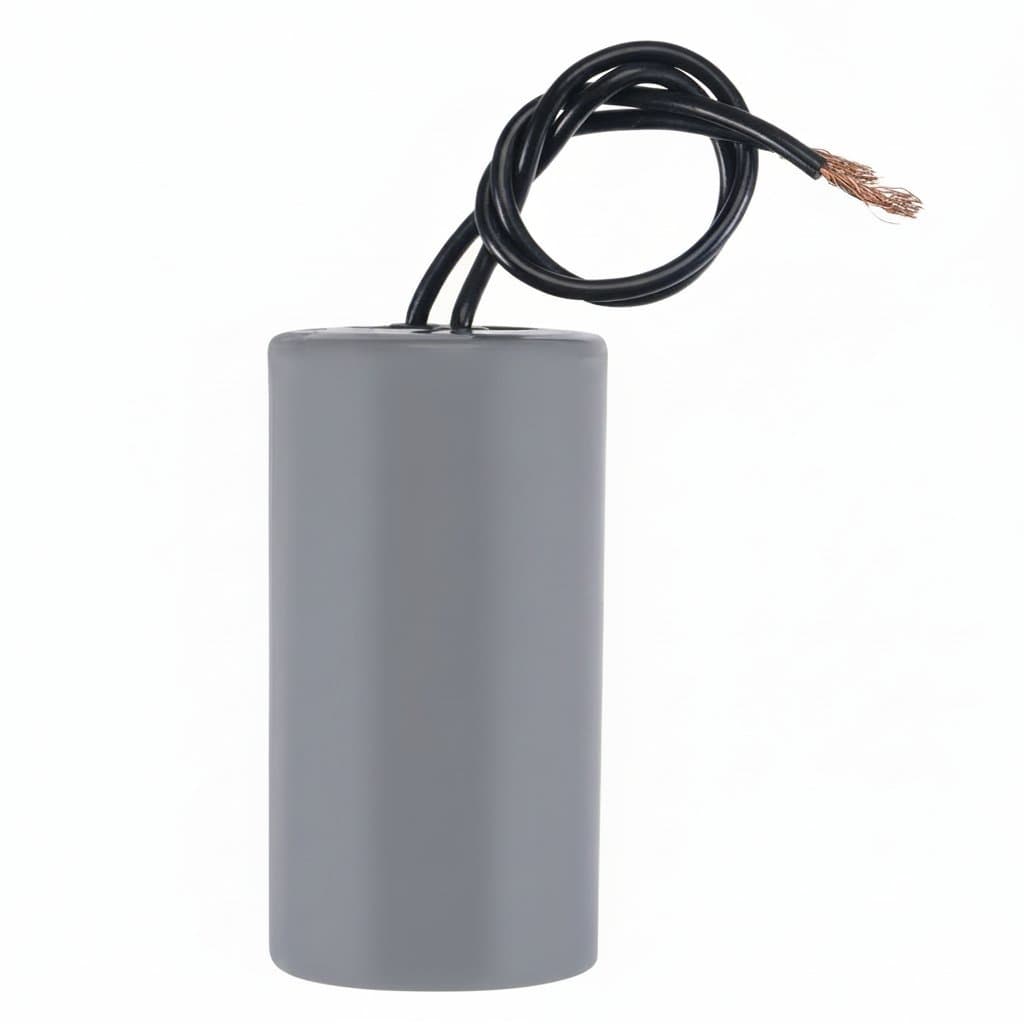
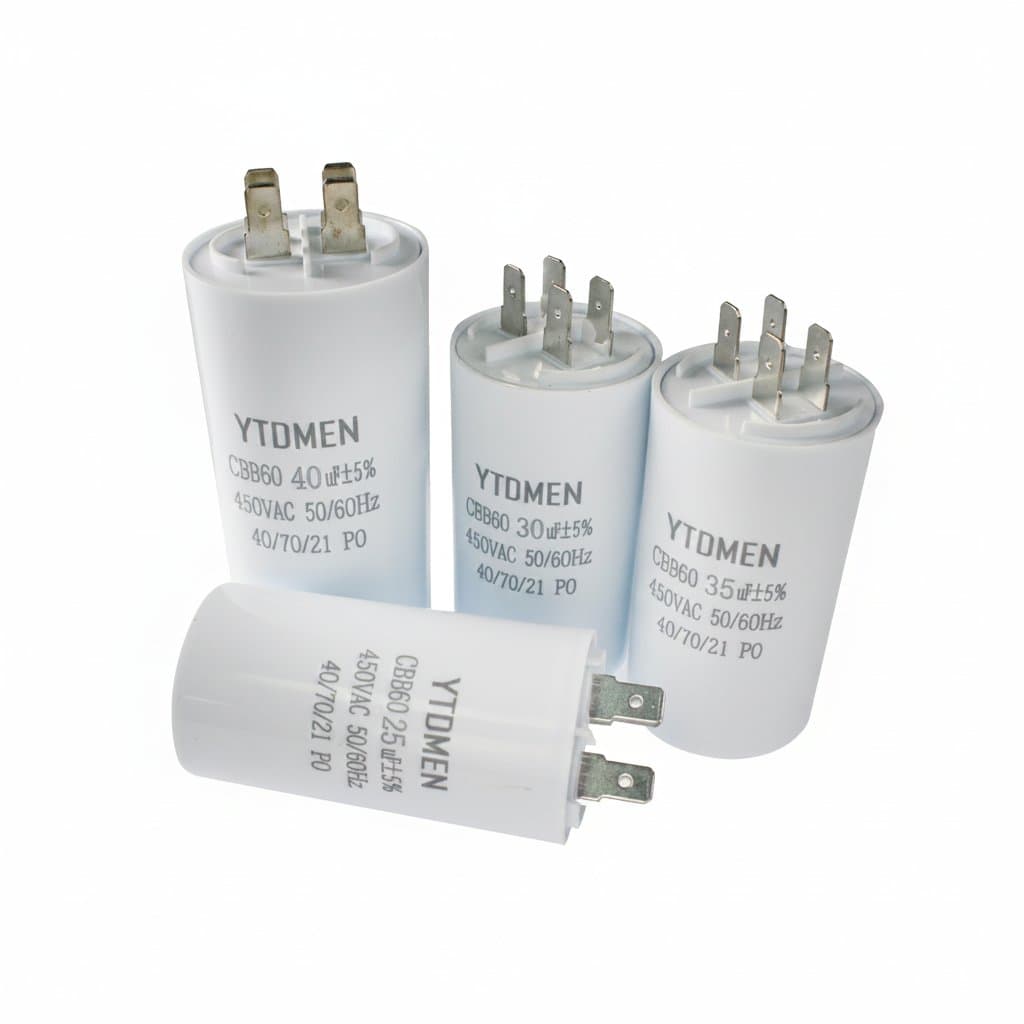
These are series designations, not brands, and they are the fastest way to know what you are holding. CBB60 is a metallised polypropylene film run capacitor, usually in a cylindrical plastic case with flying leads or spade terminals, and it is the type fitted to pumps, washing machines, air compressors and fan motors. CBB65 is the same film construction in an aluminium can with screw or spade terminals, which is what most air conditioning and refrigeration equipment uses. CD60 is the electrolytic start capacitor, normally a black plastic can.
So a listing that says CBB60 or CBB65 is offering you a run capacitor, and one that says CD60 is offering a start capacitor, whatever the rest of the title claims. If a motor plate calls for a run capacitor and the part on offer is a CD60, it is the wrong part regardless of the microfarad figure matching.
The other number that matters is on the body: capacitance in microfarads with a tolerance, usually plus or minus five per cent, and the AC voltage rating. Both are printed on the original, and the original is the specification to work from rather than a guess based on motor power.
Matching microfarads, voltage and terminals
Capacitance is not a preference. The value sets how far the auxiliary winding current is shifted, and therefore the torque and the current the motor draws. Too low and the motor is weak and may not start under load; too high and the winding runs hot. Read the value off the old capacitor or the motor plate and match it, within the stated tolerance.
Voltage is different: it is a ceiling, not a target. A 450 V AC capacitor is a valid replacement for a 370 V AC one, and it is the common choice on 230 V equipment because the voltage that appears across a run capacitor in a single-phase motor is higher than the supply voltage, not equal to it. Going the other way, fitting a lower rated capacitor than the original, is the reliable way to get a bulged can and a short service life.
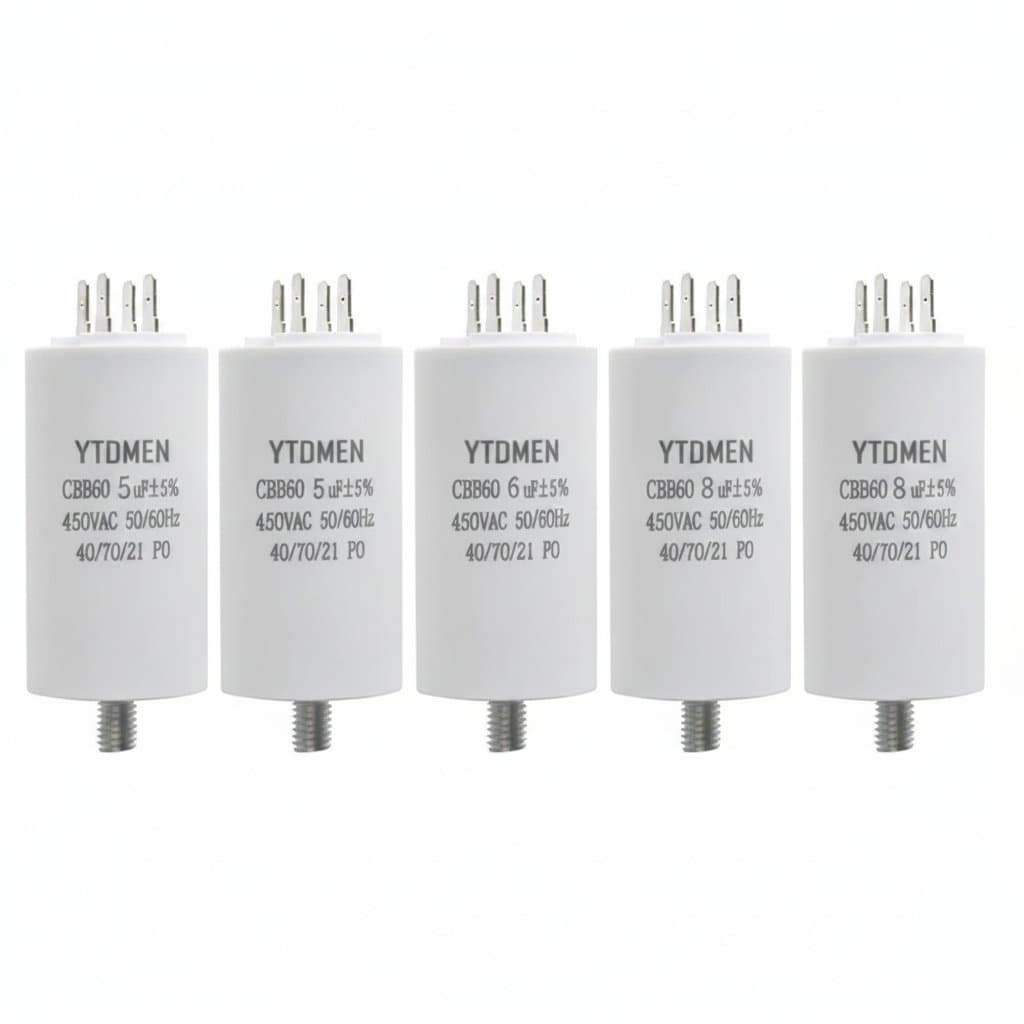
Terminals are the practical trap when ordering. The same capacitance and voltage is sold with flying leads, with two spade terminals, with four spades in two pairs, and with screw studs. Four spades in two pairs is still a single capacitor: the pairs are commoned so two wires can land on each side. Check the picture and the terminal spec against what is on the machine before ordering, because a physically correct capacitor with the wrong terminals means splicing where you did not plan to.
| Specification | Rule | Why |
|---|---|---|
| Capacitance in microfarads | Must match, within tolerance | Sets phase shift, torque and winding current |
| AC voltage rating | Equal or higher, never lower | It is a ceiling; the capacitor sees more than supply voltage |
| Terminal type | Match to the machine | Spade, screw and flying lead are not interchangeable |
| Case size | Must fit the clamp or pocket | Higher voltage ratings are often physically larger |
| Temperature class | Match or better | Enclosed motors and hot plant need the wider range |
How a failed capacitor behaves
The classic symptom is a motor that hums but will not turn, and that will start if you give the fan blade a push and then runs normally. That is a capacitor which has lost enough capacitance to be unable to produce starting torque. On air conditioning the same fault shows as a condenser fan that sits still while the compressor runs, or a compressor that trips the overload repeatedly.
Film capacitors lose capacitance gradually as the metallisation clears itself of faults, so a unit can read well below its marked value while looking perfect. A bulged top, a split seam or leaked potting compound is a certainty, but the absence of those signs proves nothing. The only reliable check is a meter that measures capacitance, comparing the reading against the marked value and its tolerance.
Treat every motor capacitor as charged until you have proved otherwise. A run capacitor disconnected from a motor can hold enough energy to give a serious shock long after the power is off, and discharging it through a resistor rather than shorting the terminals with a screwdriver is both safer for you and kinder to the capacitor you may be about to test.
Protection class and temperature rating
Motor capacitors are classified for what happens when they eventually fail. IEC 60252-1 defines protection classes, and the two you see quoted on listings are P0 and P2. P0 is the base class with no defined protection against a failure. P2 capacitors are constructed so that end of life is an open circuit rather than a rupture, which is what you want on anything running unattended or enclosed.
The temperature class is quoted as an operating range, typically minus twenty five to plus seventy degrees Celsius, sometimes minus forty at the low end. The upper figure is the one that shortens life if you ignore it, because a capacitor bolted next to a hot compressor or inside a sealed motor canopy is not living at room temperature. Where a machine has already eaten a capacitor or two, a wider temperature class is often the cheapest fix available.
The declared values in the table below are the sellers own figures for each listing, taken from their specification data. Compare them against the marked values on the part you are replacing rather than against motor power alone.