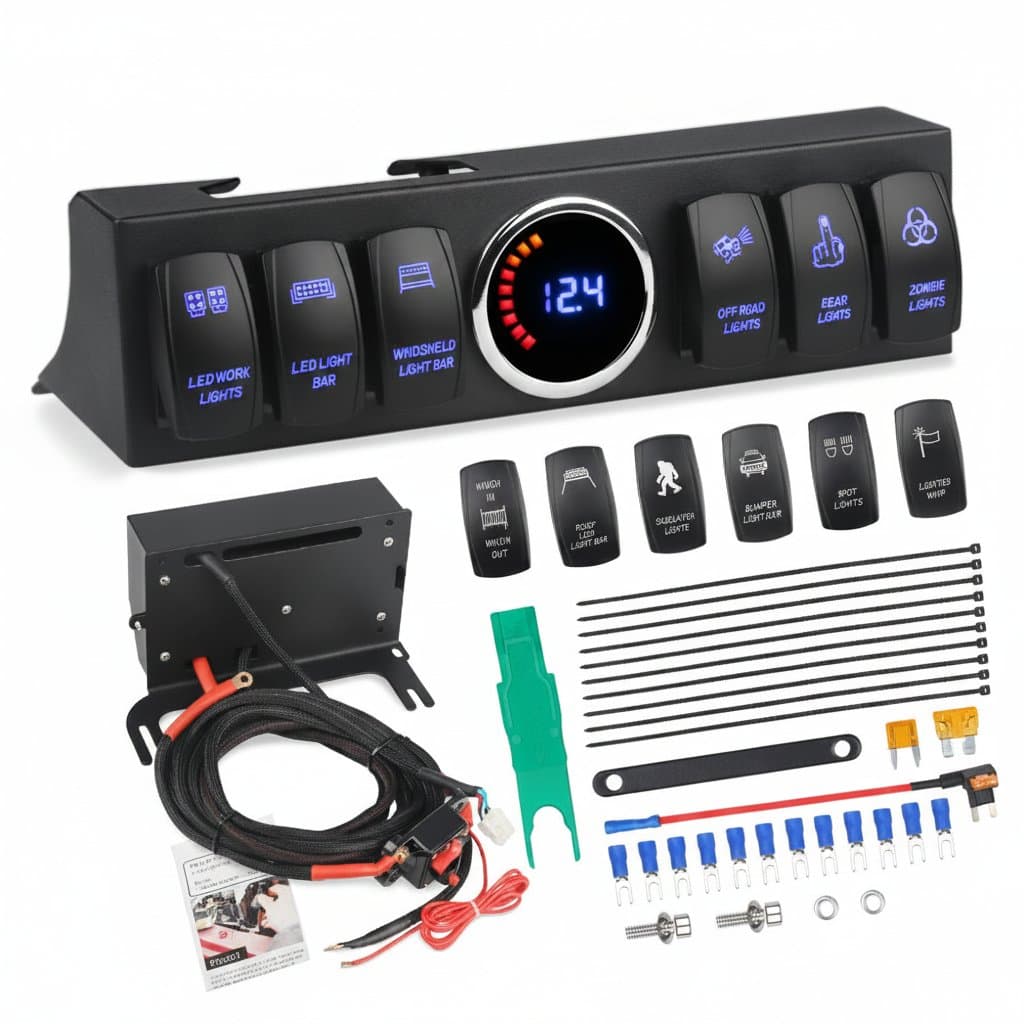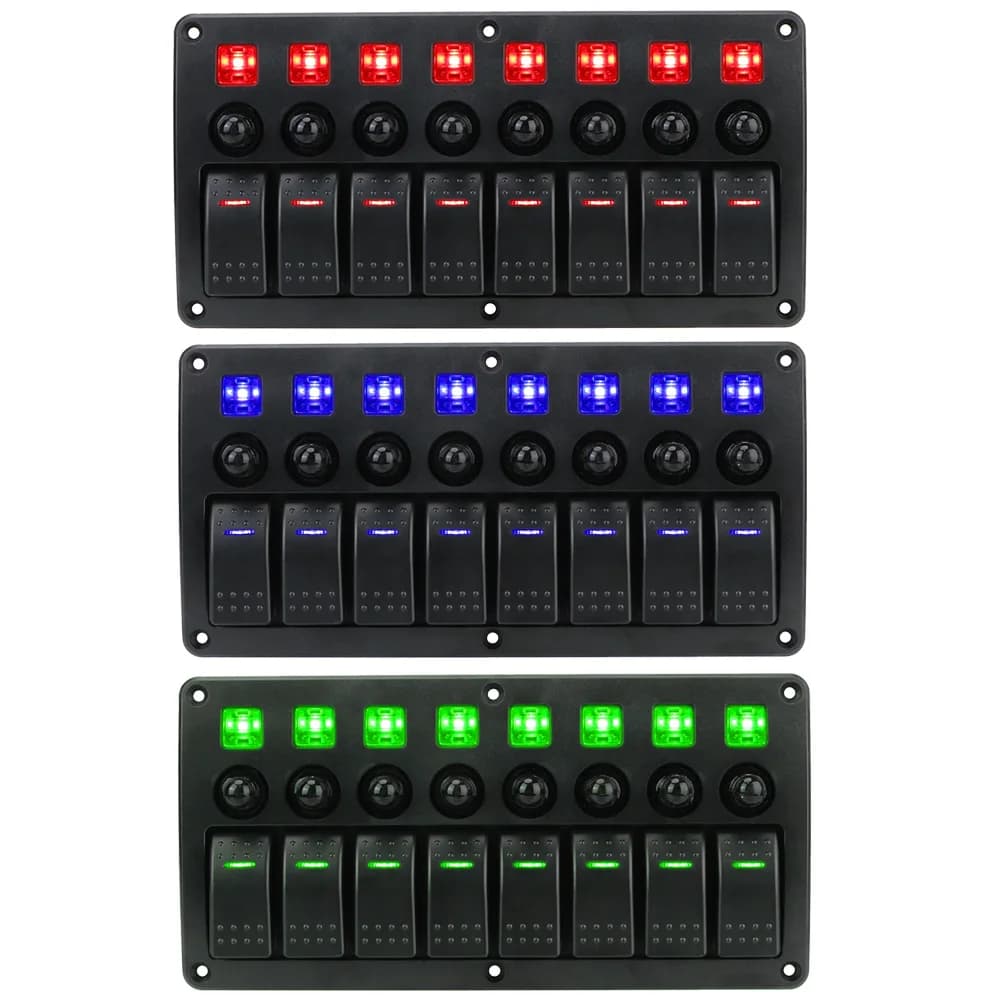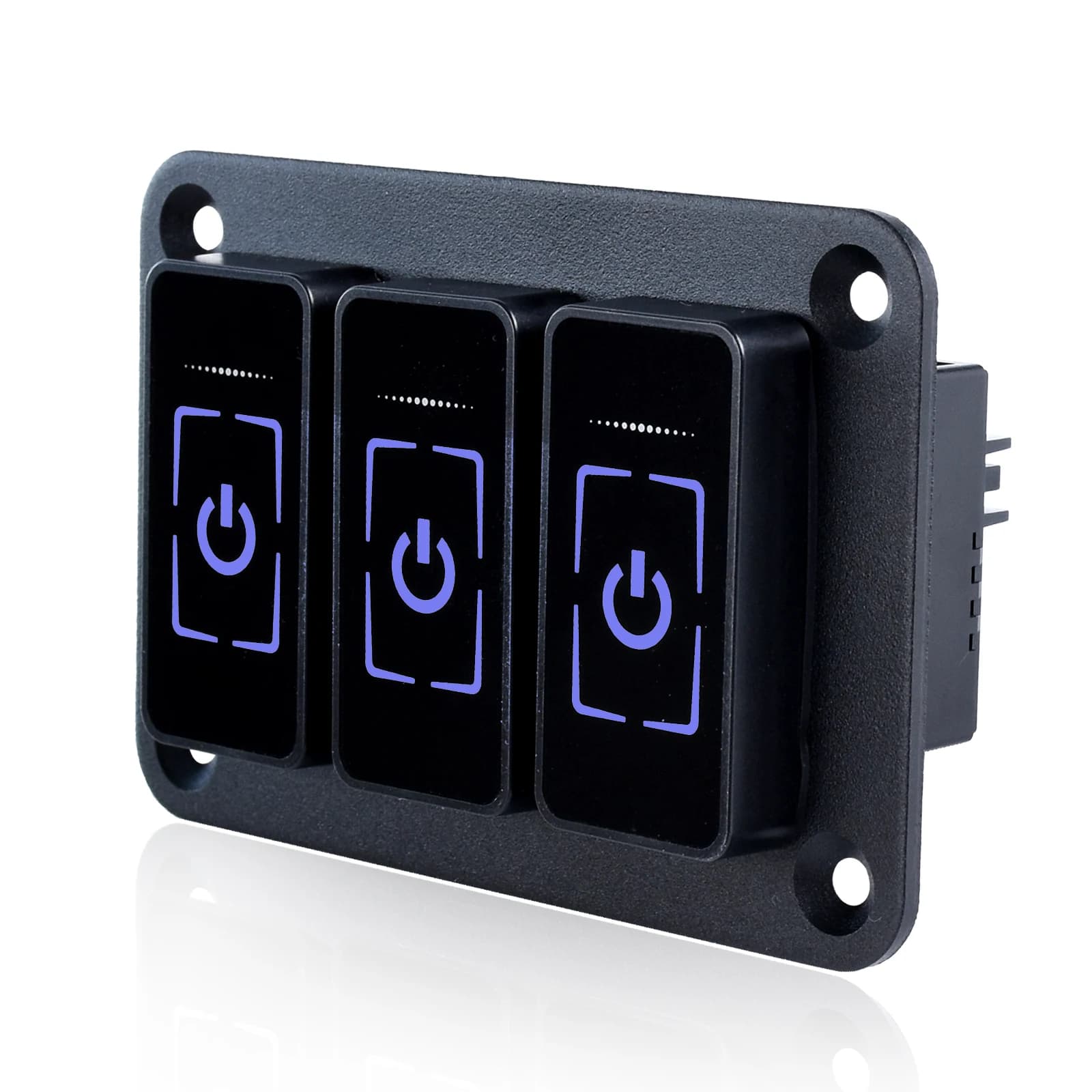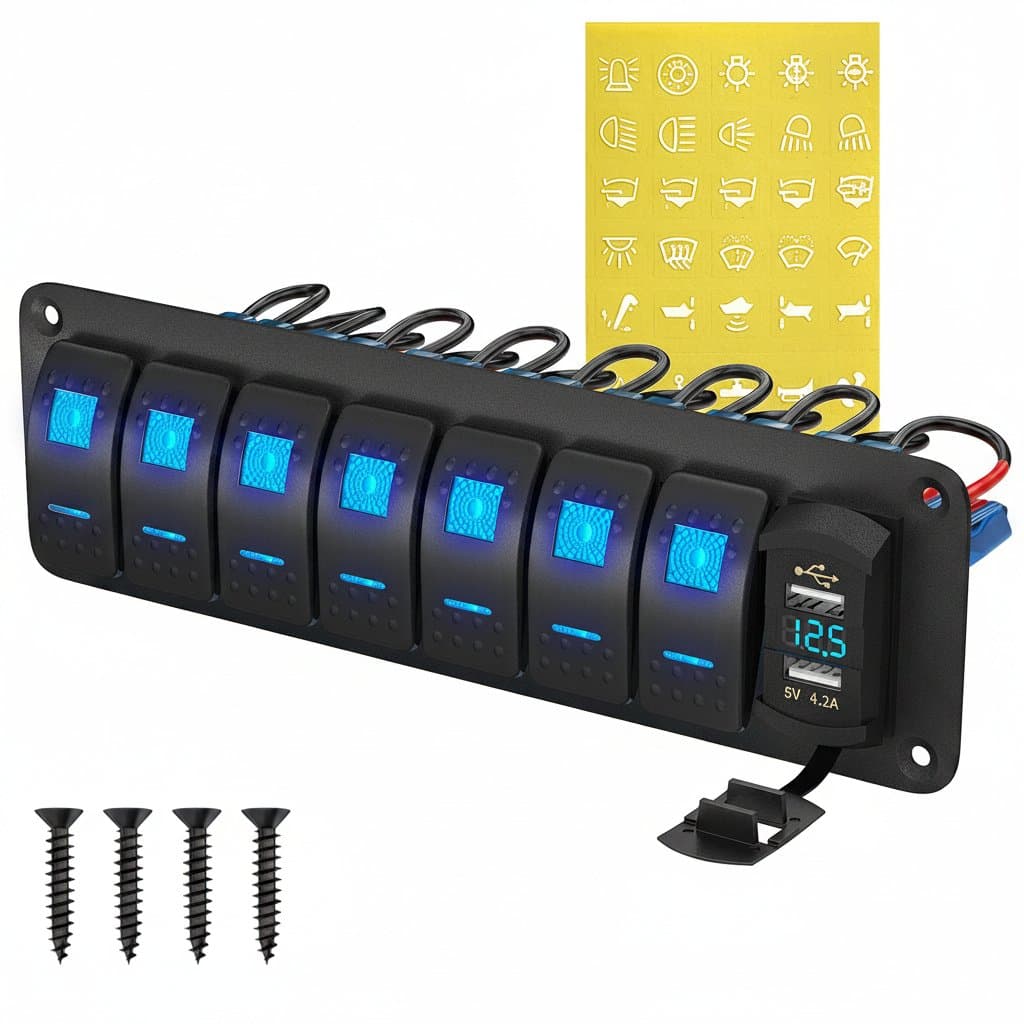
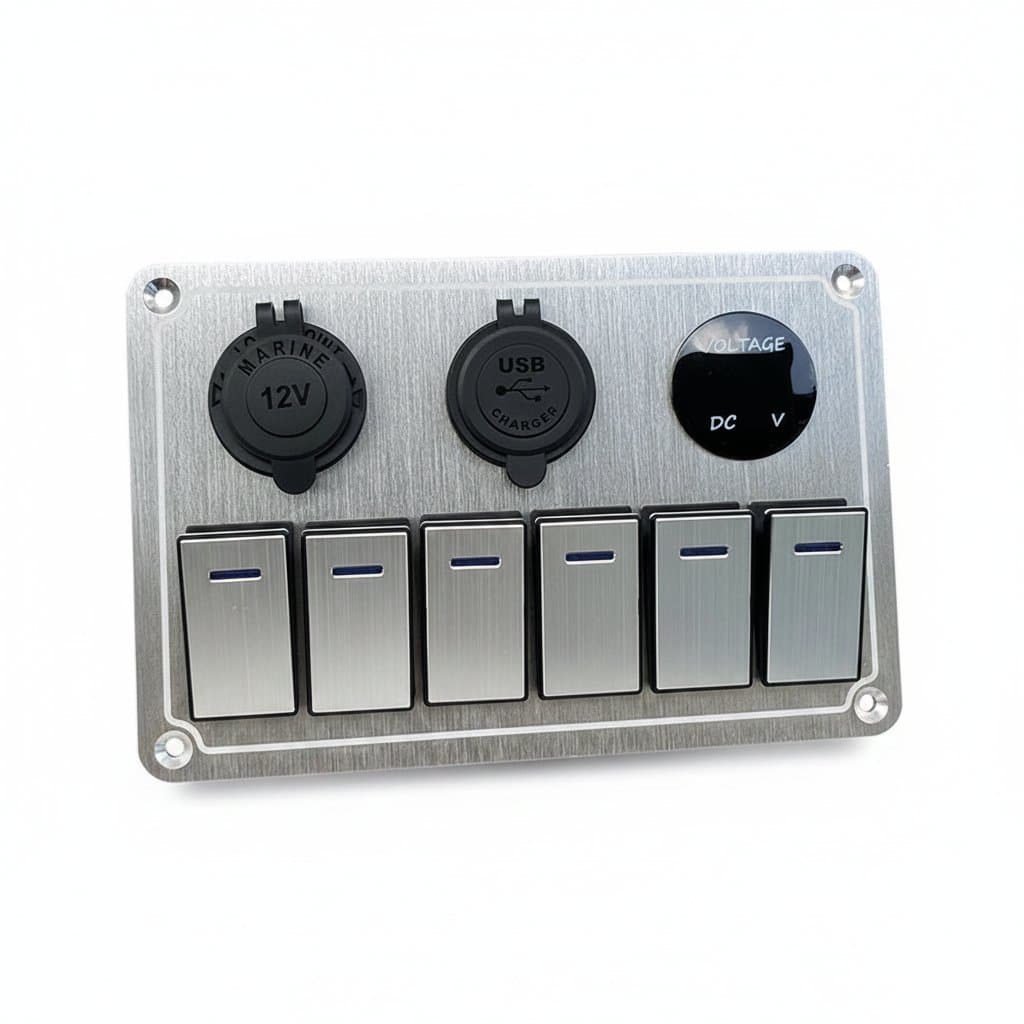
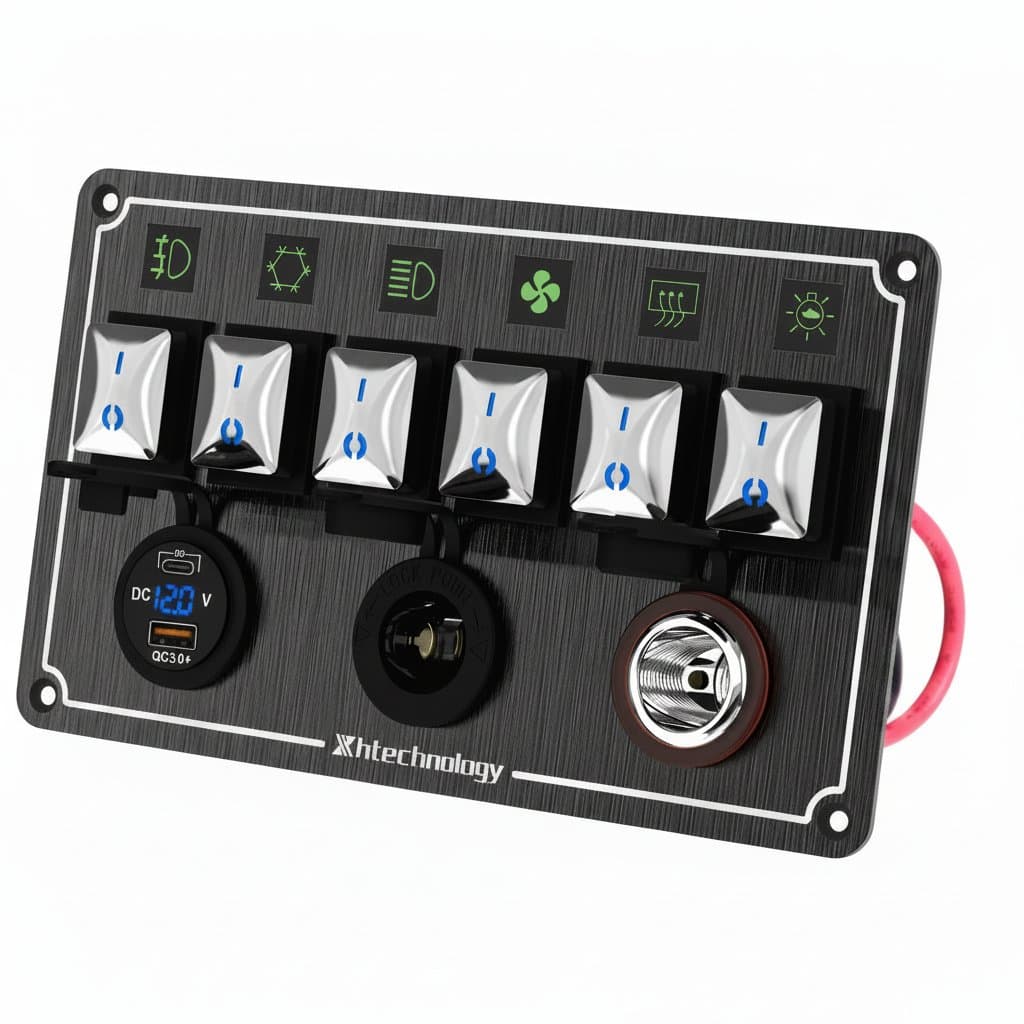
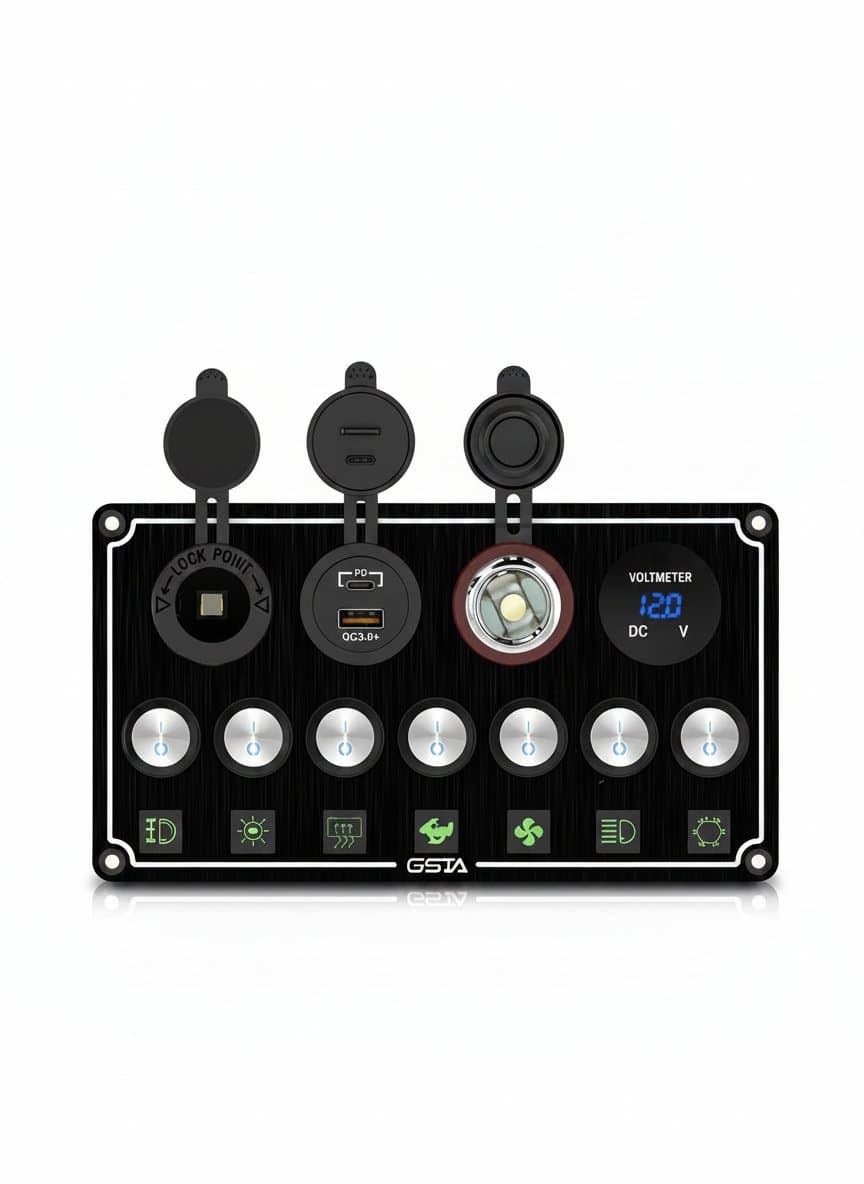
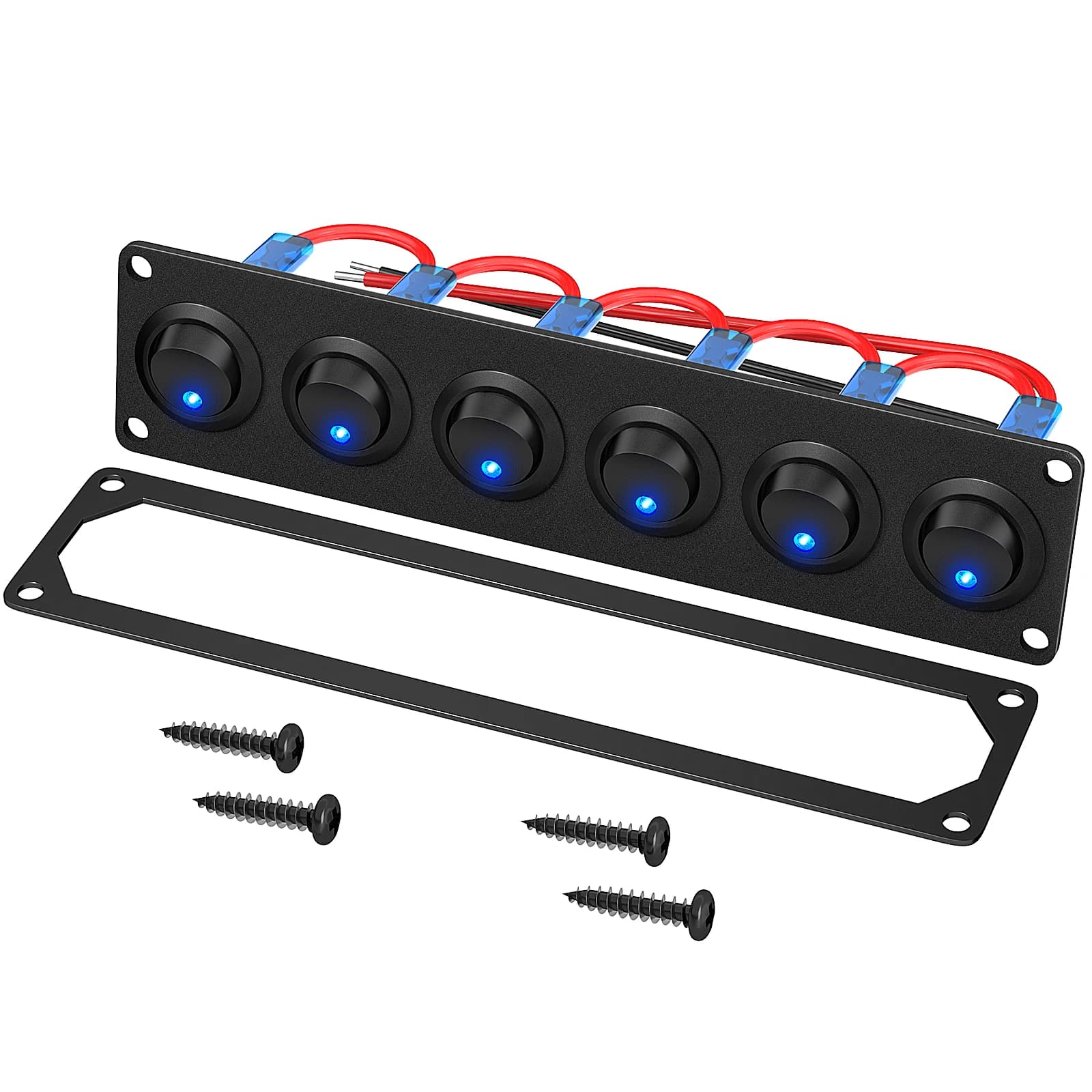
Per-circuit rating, not the panel total
Panels advertise a headline current, and it describes what the busbar and the main feed can carry in total. Each individual switch and its breaker have their own, much lower limit. Wiring a winch or a compressor through a switch rated for 10 amps because the panel says 60 is how switches weld shut, and a welded switch is a circuit you cannot turn off.
Work out the draw of each thing you intend to run, match it to the per-circuit rating, and give anything heavy its own relay. The panel switch then carries only the relay coil current, a fraction of an amp, while the load runs through cable sized for the job. That is standard practice for winches, lighting bars and fridges, and it is what stops panels burning.
Breakers, fuses and what to prefer
Most quality panels use resettable circuit breakers rather than blade fuses, and on a boat that is a meaningful advantage: a breaker that trips at sea is reset with a fingertip rather than by finding a spare fuse in a locker. Breakers also give a visible indication of which circuit went.
Fuses are not inferior in protection terms and they are cheaper and simpler. What matters far more than the choice is that the protection is sized to the cable rather than to the appliance. The fuse or breaker exists to stop the wire catching fire, so it must blow before the cable overheats, whatever the device on the end is doing.
| Load | Give it | Why |
|---|---|---|
| Lights, USB, instruments | Direct through the panel switch | Small, steady current well inside the switch rating |
| Fridge, pumps, fans | Check the surge draw, not just the running draw | Motors draw several times running current on start |
| Winch, compressor, light bar | A relay, switched by the panel | Keeps heavy current out of the panel entirely |
| Anything inductive | Protection sized to the cable | The fuse protects the wire, not the appliance |
Waterproofing and where panels actually fail
Marine panels quote an IP rating, and it describes the front face. Water that arrives from behind, through the cable entry or by running down the loom and into the terminals, is not covered by any front-face rating and is how most panels die. Dress the cables with a drip loop so water runs off before it reaches the connections.
Corrosion is the slower version of the same problem. Salt air reaches terminals through any gap, and the failure shows up as a circuit that works intermittently long before anything looks wrong. Tinned copper cable, heat-shrink terminals with adhesive lining, and dielectric grease on the spades are what keep a panel working in year five.
Gang count, labelling and the negative bus
Buy more gangs than you need today. Fitting a panel is a wiring job you do not want to repeat, and every installation grows. Two spare ways is the usual advice and it is rarely regretted.
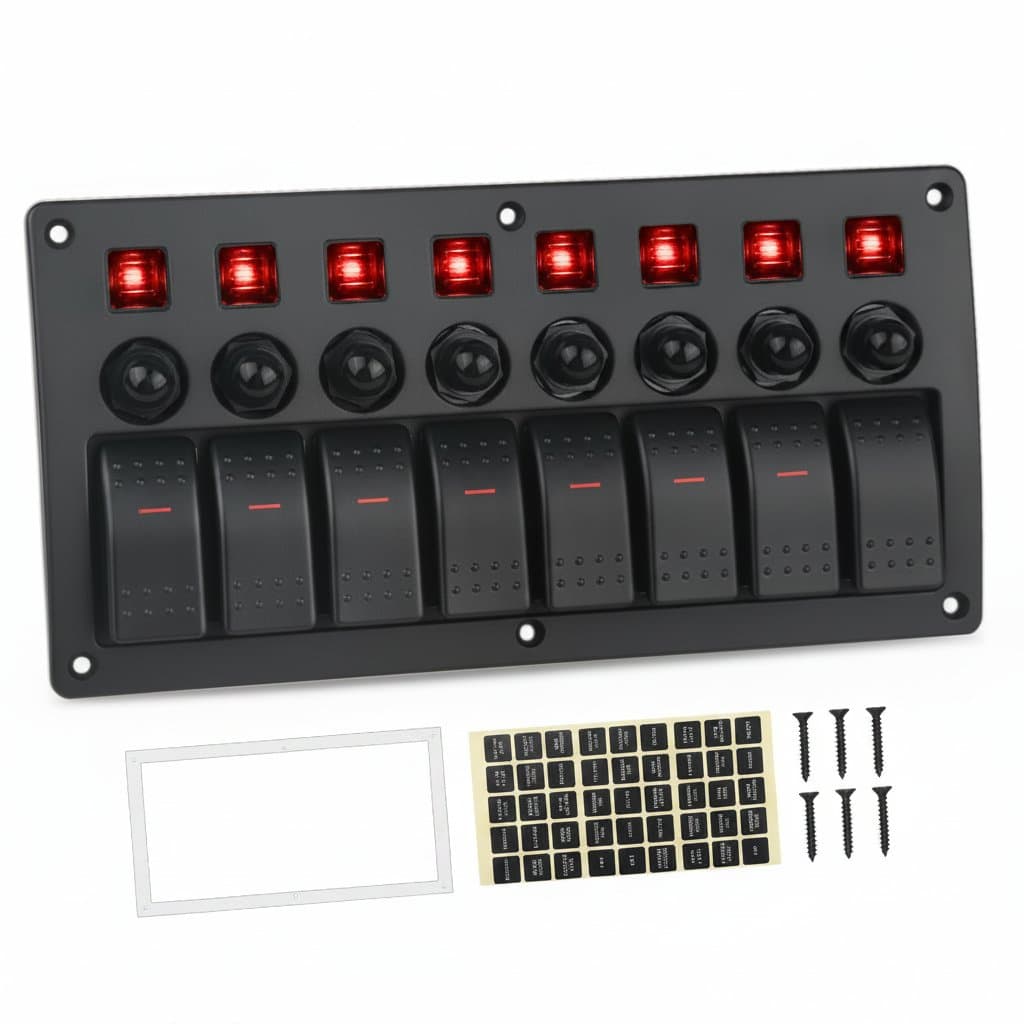
Label properly rather than relying on memory or on the tiny pre-printed legends, which never match what you actually fitted. The other thing worth getting right at install time is the negative side: a proper negative busbar close to the panel keeps return paths short and tidy, and it stops the slow accumulation of earth faults that come from chaining negatives to whatever screw was nearest.