


Four types, decided by what you are fixing into
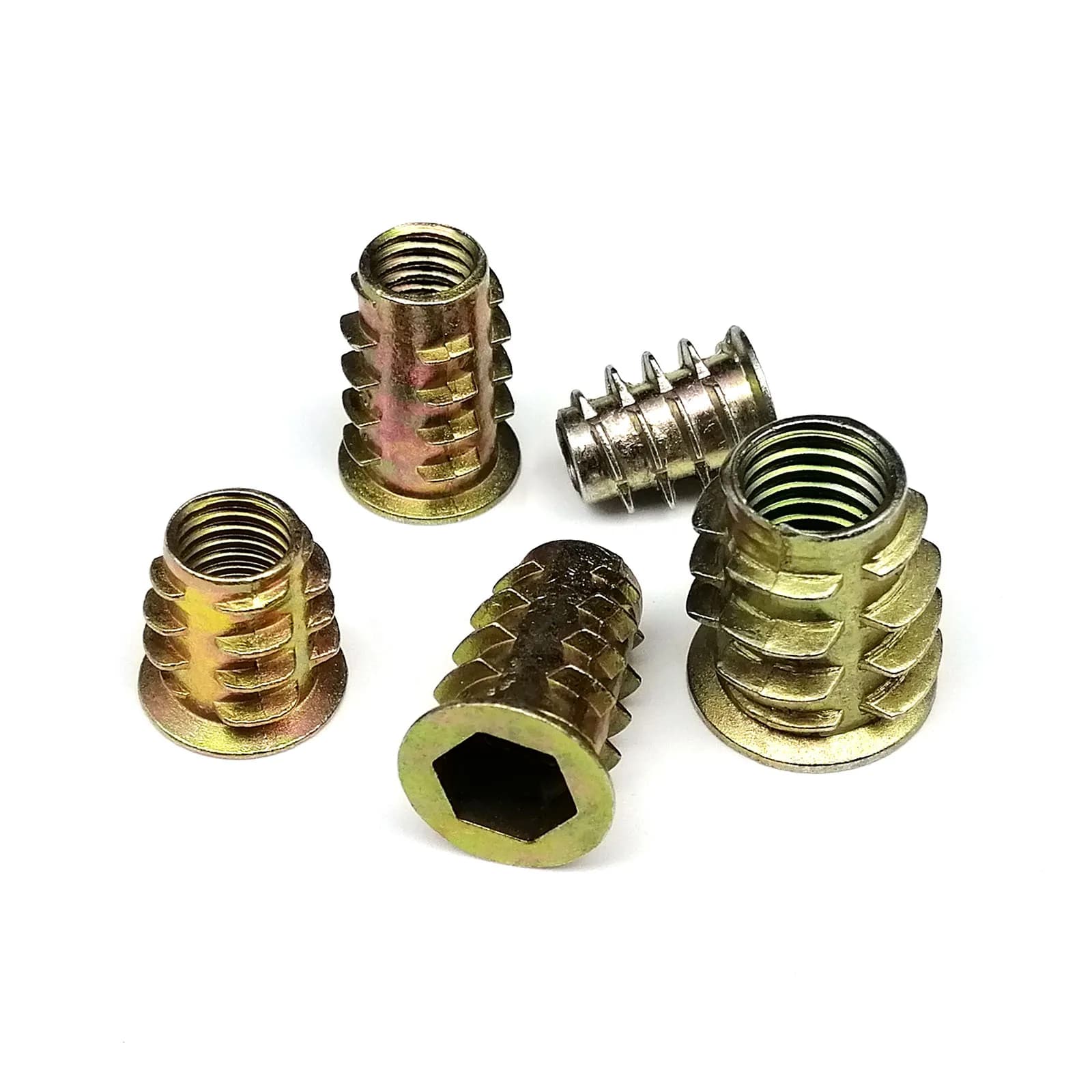
Screw-in insert nuts, often sold as E nuts or furniture connector nuts, have a coarse external wood thread and a hex socket or slot in the top. They go into a drilled pilot hole in timber or MDF and cut their own thread as they go. This is the type in flat pack furniture, jig building and anywhere a bolt has to come in and out of wood repeatedly.
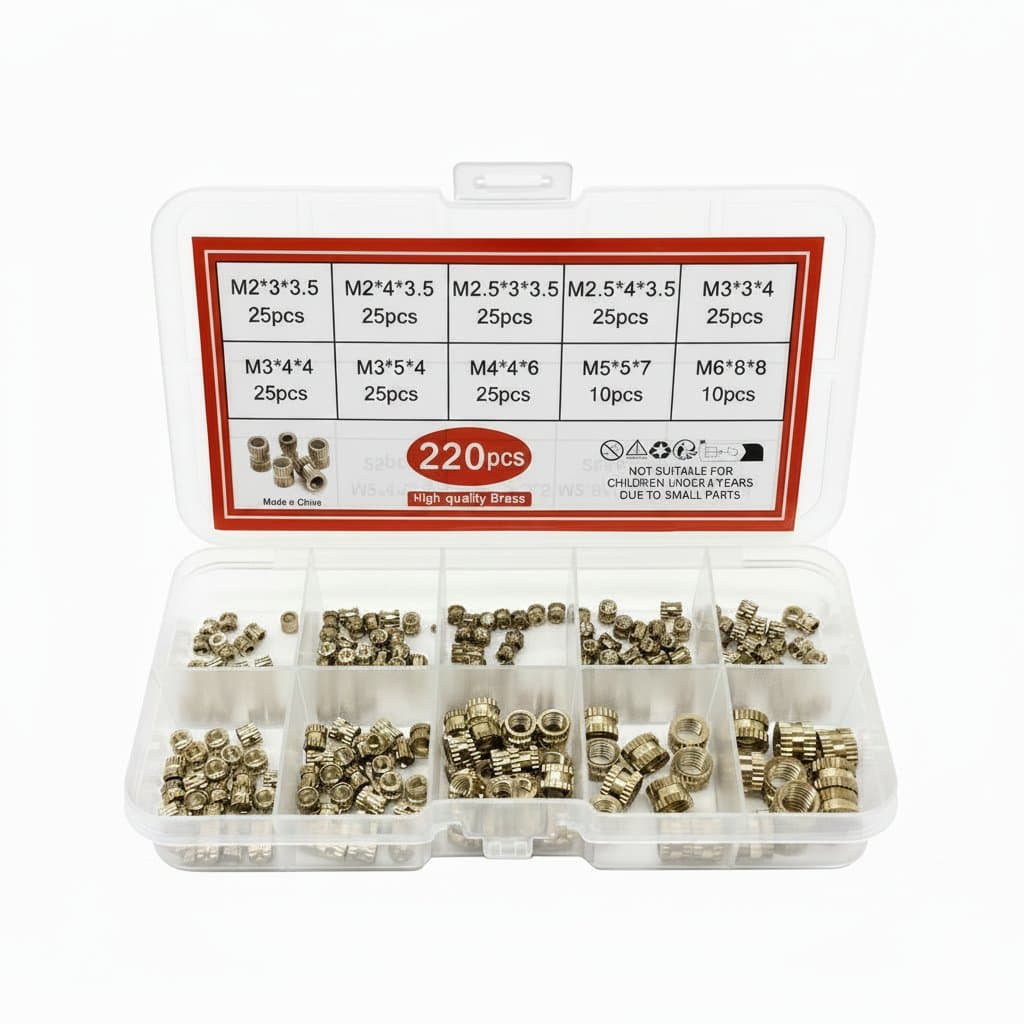
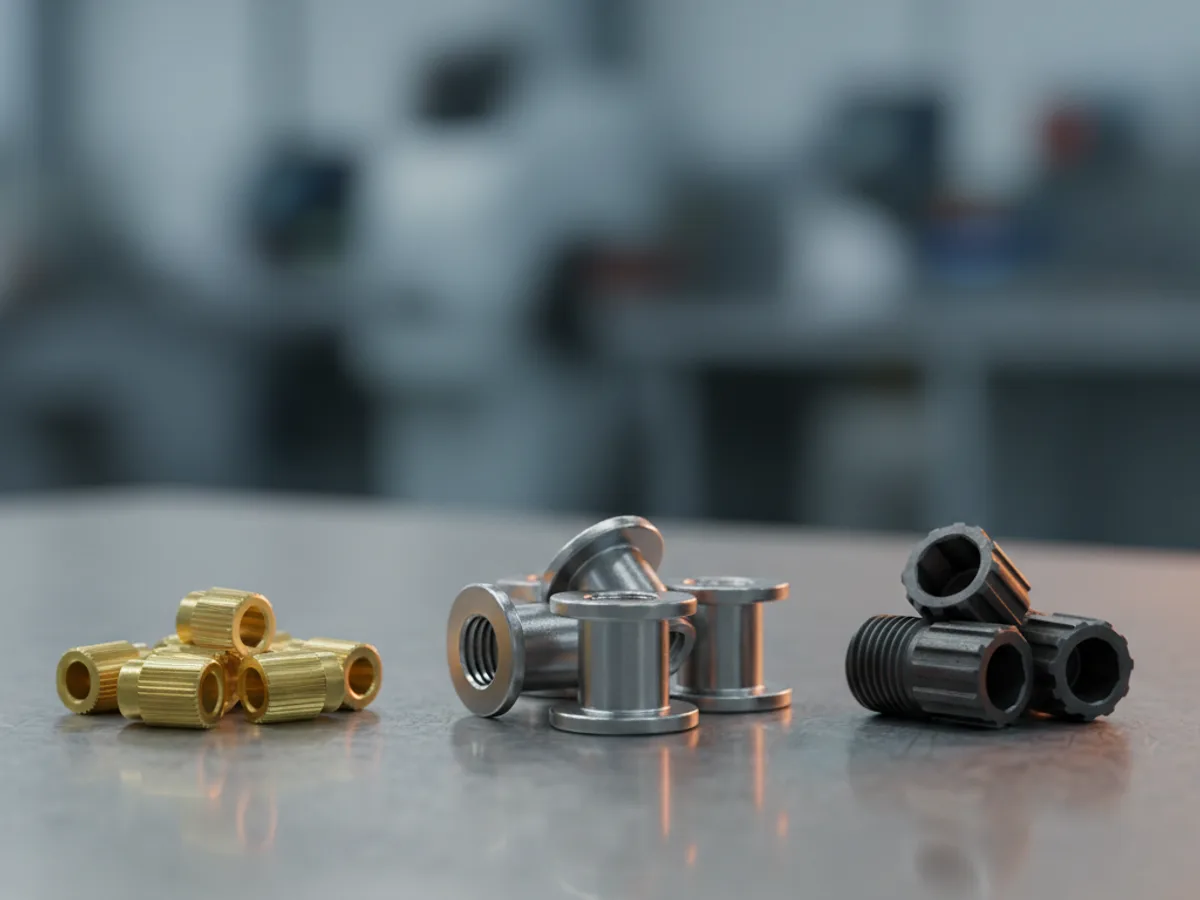
Heat set inserts are knurled brass sleeves pushed into thermoplastic with a hot soldering iron tip. The brass conducts heat into the plastic, the plastic melts and flows into the knurling, and when it cools the insert is locked in by the re-solidified material rather than by a thread. They are the standard fixing for 3D printed parts and injection moulded housings.
Rivet nuts, also called rivnuts or blind threaded inserts, are set into a hole in sheet metal or tube from one side only. Pulling a mandrel collapses the body into a bulge behind the panel, clamping it. This is how you get a machine thread into a chassis, a box section or a car panel where you cannot reach the back.
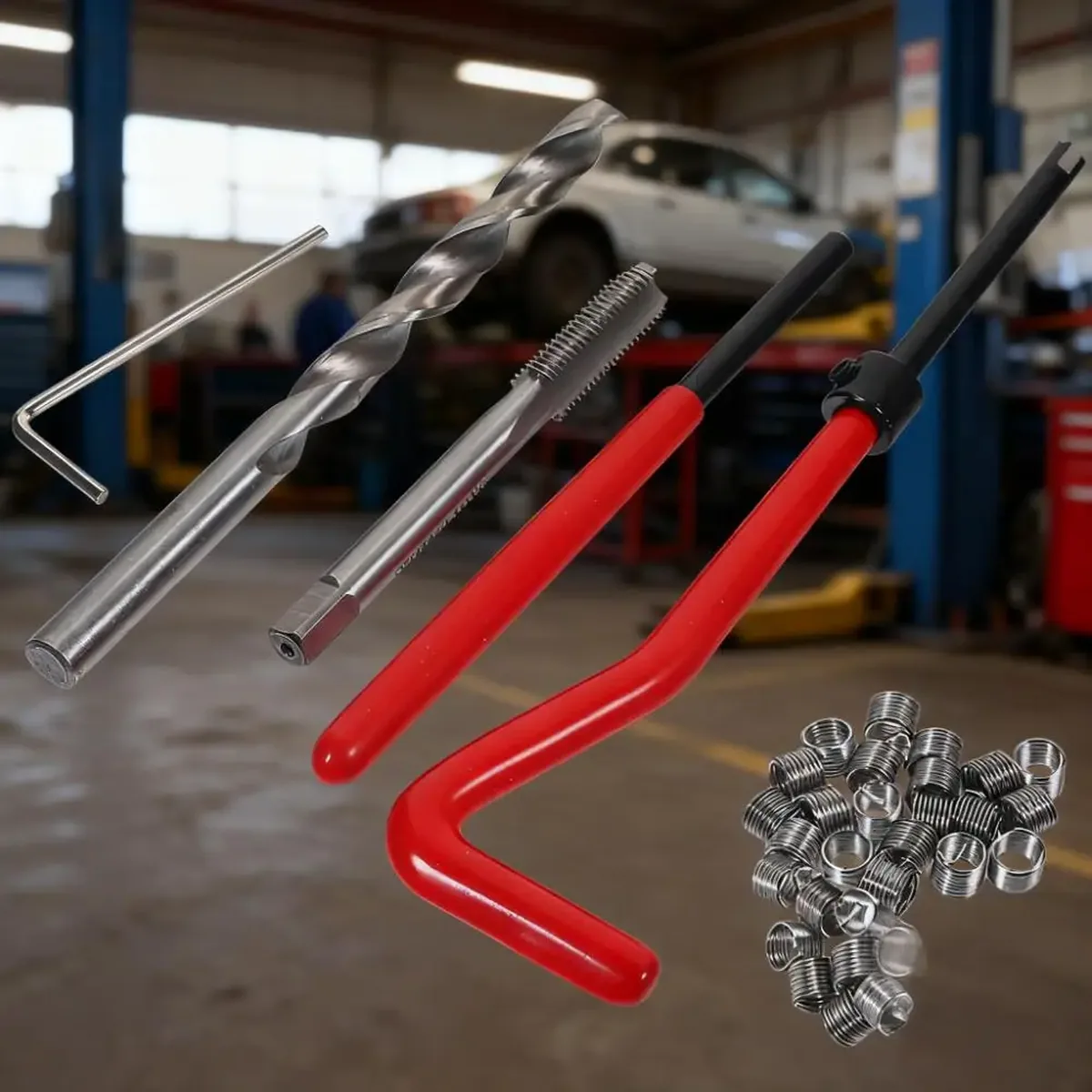
Helical wire inserts are a coil of diamond section wire wound into an oversized tapped hole. They are a repair rather than a design choice: a stripped thread in an aluminium casting or an engine block gets drilled out, tapped oversize and fitted with a coil that restores the original thread size in a harder material than the parent metal.
| Type | Goes into | Installed with | Fails by |
|---|---|---|---|
| Screw-in E nut | Timber, plywood, MDF | Hex key or slot, into a pilot hole | Spinning in an oversized hole, splitting the timber |
| Heat set insert | Thermoplastic, 3D prints | Soldering iron at controlled heat | Pulling out if pressed in too hot or too fast |
| Rivet nut | Sheet metal, tube, panels | Rivet nut tool pulling a mandrel | Spinning if the hole is oversized or the sheet too thin |
| Helical wire insert | Solid metal, stripped threads | Oversize tap and an installation tool | Backing out with the bolt if the tang is not broken off |
The pilot hole decides whether it holds
Every one of these fails the same way when the hole is wrong. Drill a screw-in insert nut too small and the timber splits as the coarse thread wedges it apart, which is why hardwoods and the edge of a sheet of MDF are the two places it goes wrong most often. Drill it too large and the external thread has nothing to bite, so the insert spins in place as soon as any torque is applied and there is no way to get it out cleanly.
The manufacturer figure for the pilot is the one to use, and it varies with material: the same M6 insert wants a different hole in pine, in oak and in MDF. Where no figure is given, the practical approach is to drill a test hole in offcut of the same material and step up until it screws in firmly but without the timber sounding like it is about to split. Drilling square matters as much as diameter, because an insert going in at an angle presents the bolt at that angle too.
For rivet nuts the tolerance is tighter still, and the sheet thickness range printed on the packet is not advisory. Too thin and the bulge forms in the wrong place and pulls through; too thick and the body never collapses properly. A rivet nut that spins in its hole after setting is usually a hole drilled a fraction oversize, and once it spins it cannot be gripped to remove it without drilling it out.
Heat set inserts and the temperature that ruins them
The knurling on a heat set insert is not decoration. The straight knurls resist rotation and the circumferential grooves resist pull-out, and both only work if the melted plastic has actually flowed into them. That needs the insert hot enough to melt the plastic locally and slow enough pressure for the material to move rather than being pushed ahead of the insert.
Too hot is a real failure mode and a common one. Excess heat degrades the plastic around the insert, leaving a weakened, sometimes discoloured zone that pulls out under a fraction of the load a properly set insert would take. Too cold is more obvious: the insert stops partway or sits proud, and forcing it cracks the boss. A temperature controlled iron with a purpose made insertion tip is worth having if you are setting more than a handful, because it removes the guesswork that ordinary irons leave.
Design matters too. The boss around the insert needs enough wall thickness to take the hoop stress of the insert being pressed in, and on a 3D print the layer lines are a plane of weakness, so a boss that is too thin splits along a layer as the insert goes in. Press the insert in straight and let it cool fully before loading it.
Material and finish, and what the grades mean
Brass is the standard for heat set inserts because it conducts heat well and does not corrode against most plastics. For screw-in and rivet types the choice is usually between zinc alloy, plated carbon steel and stainless. Zinc alloy is the cheapest and is adequate for light furniture work, but it is notably weaker than steel and the threads gall more easily. Plated carbon steel is the general purpose choice. Stainless is for anything damp or outdoors.
Where a listing quotes A2-70, that is a real designation and a useful one: A2 is the austenitic stainless group, equivalent to 304, and 70 is the property class, meaning a minimum tensile strength of 700 megapascals. It tells you the insert has actually been made to a mechanical grade rather than simply being described as stainless.
Thread engagement is the last thing worth checking. An insert only gives you as much usable thread as its own length, so a long bolt into a short insert is not stronger, it just bottoms out. As a rule of thumb the bolt wants at least one diameter of engagement in steel and rather more in aluminium or plastic, and the insert has to be chosen to provide it.