What the joule rating actually tells you
The energiser charges a capacitor and dumps it into the fence line as a pulse lasting a fraction of a millisecond, roughly once a second. Between pulses the wire is dead, which is why an electric fence stings rather than holds. The size of that pulse is measured in joules, and it is the only number that really describes what an energiser can do.
Two joule figures get quoted and they are not the same. Stored energy is what the capacitor holds; output energy is what actually reaches the fence. Output is always the smaller number and the honest one, so compare like with like. The kilometre rating on the box is a marketing figure calculated on a single clean wire with nothing touching it, and no real fence looks like that. Vegetation is the load, not distance: a hundred metres of wire buried in summer grass will flatten an energiser that would run several kilometres of clean line.
| Situation | Rough output | Why |
|---|---|---|
| Garden run, poultry netting, one small paddock | Under 1 joule | Short line, little vegetation, animals learn quickly |
| A few paddocks, horses on tape, fence kept clear | 1 to 2 joules | More wire and more insulators to drive |
| Cattle on several wires with some grass touching | 2 to 4 joules | The vegetation load matters more than the length |
| Long runs, sheep in wool, heavy undergrowth | 4 joules and up | Wool insulates and undergrowth drains the line |
Mains, 12V battery and solar
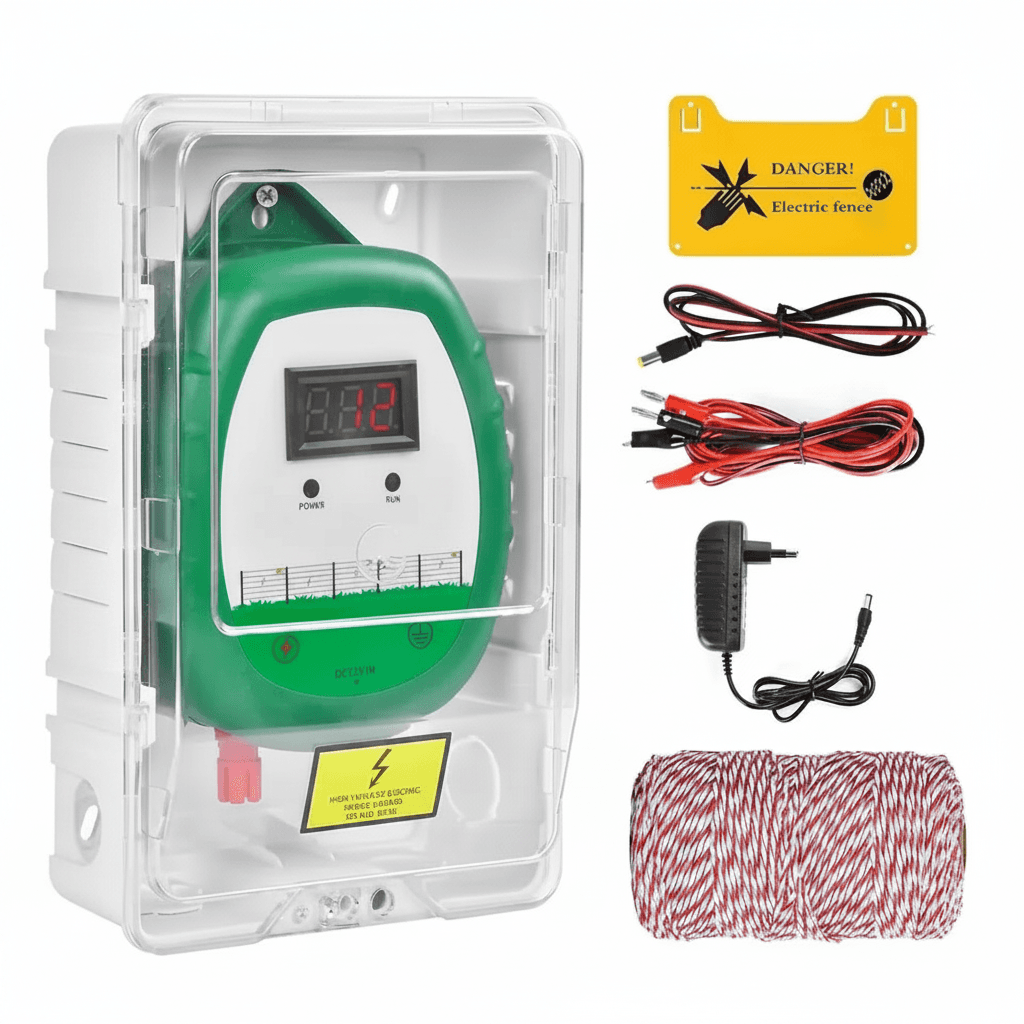
Power source is usually decided for you by where the fence is. A mains energiser gives the most output for the money and never needs charging, so it is the right answer wherever there is a supply within reach of the fence line. It needs a weatherproof housing and a lead out to the wire, and it stays put.
A 12V unit runs from a leisure battery and goes wherever the stock go. The catch is that somebody has to swap and recharge the battery, and how often depends entirely on the output setting and the load on the line. Small dry-battery units exist for short temporary runs and poultry netting, and they are the lowest output of the lot.
| Supply | Best for | Watch out for |
|---|---|---|
| Mains 230V | Permanent fences with a supply nearby | Needs weatherproof housing and a cable run to the fence |
| 12V leisure battery | Paddocks and strip grazing with no supply | Someone has to swap and recharge it on a routine |
| Solar with 12V battery | Remote runs and summer grazing | Size the panel for December daylight, not June |
| Dry battery | Short temporary runs and poultry netting | Lowest output, and batteries are replaced rather than charged |
Solar energisers and the winter problem
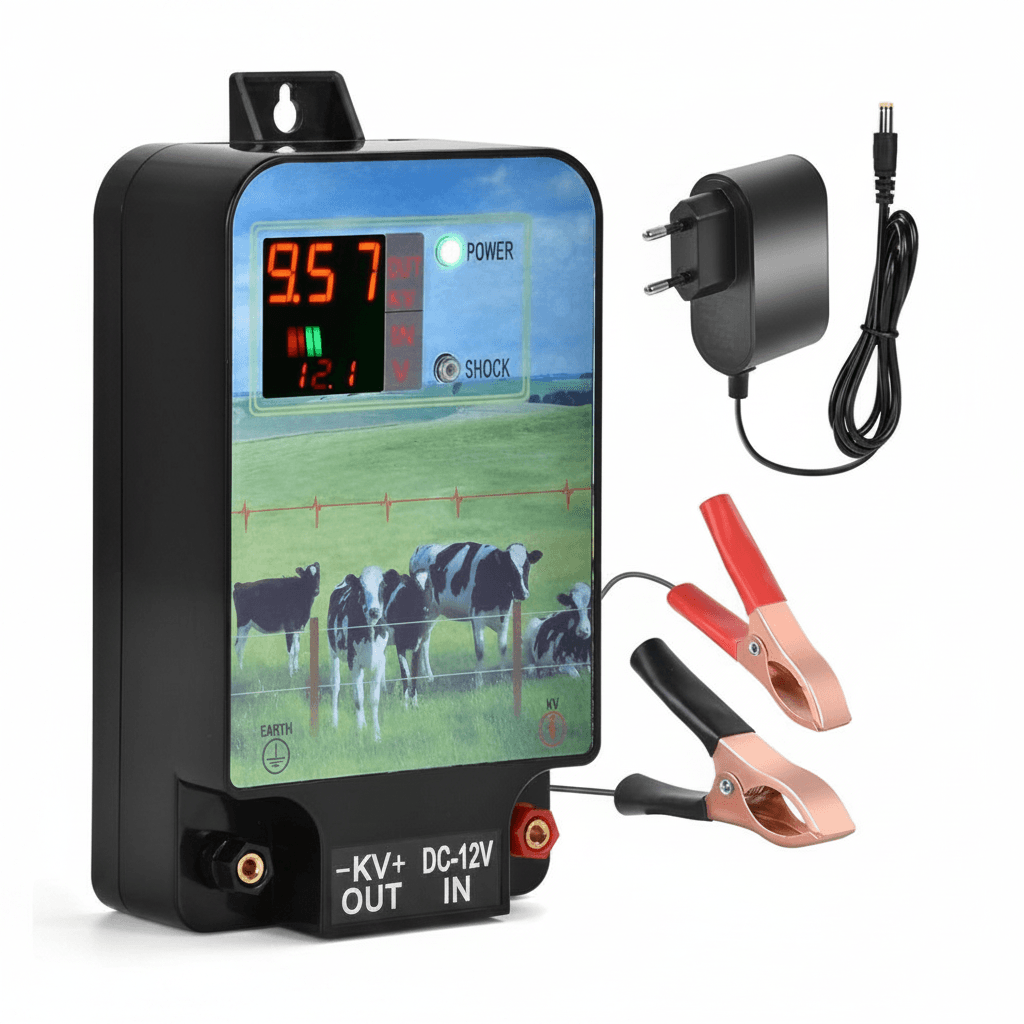
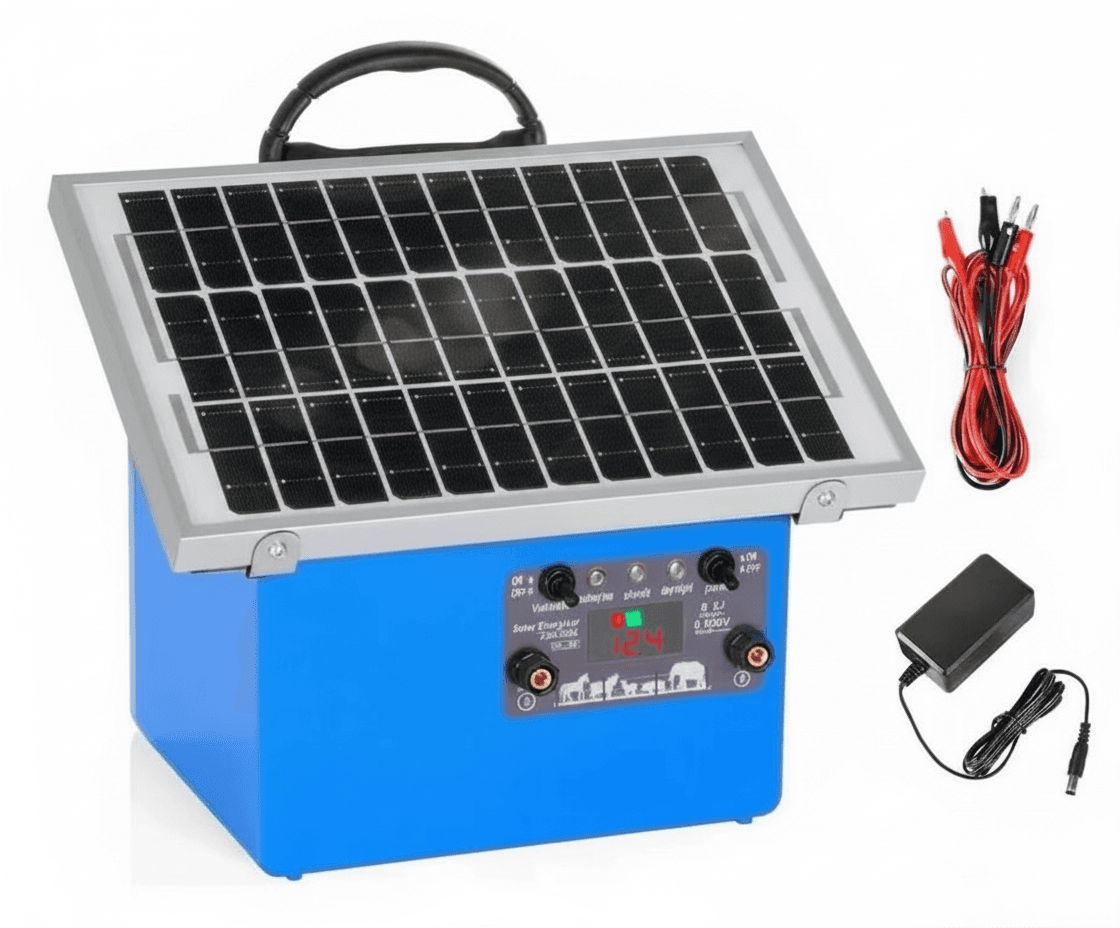
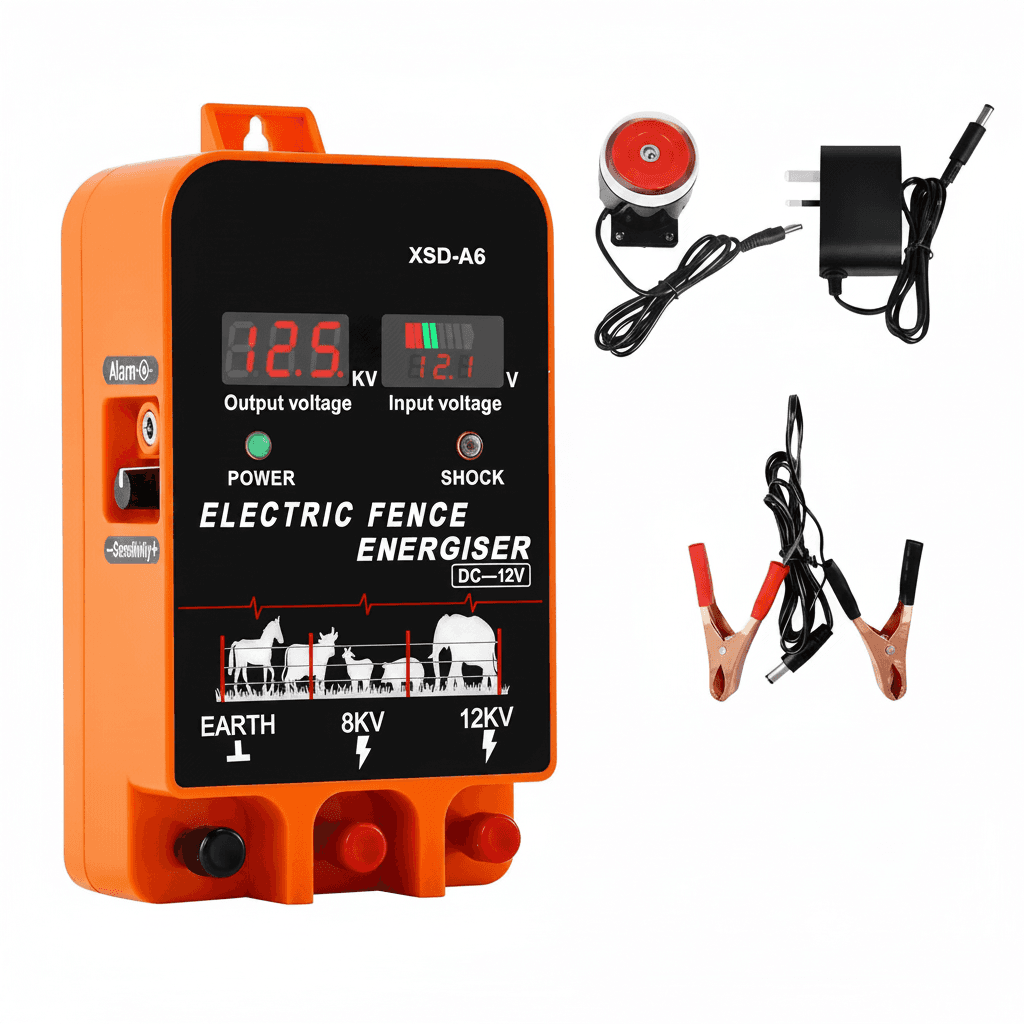
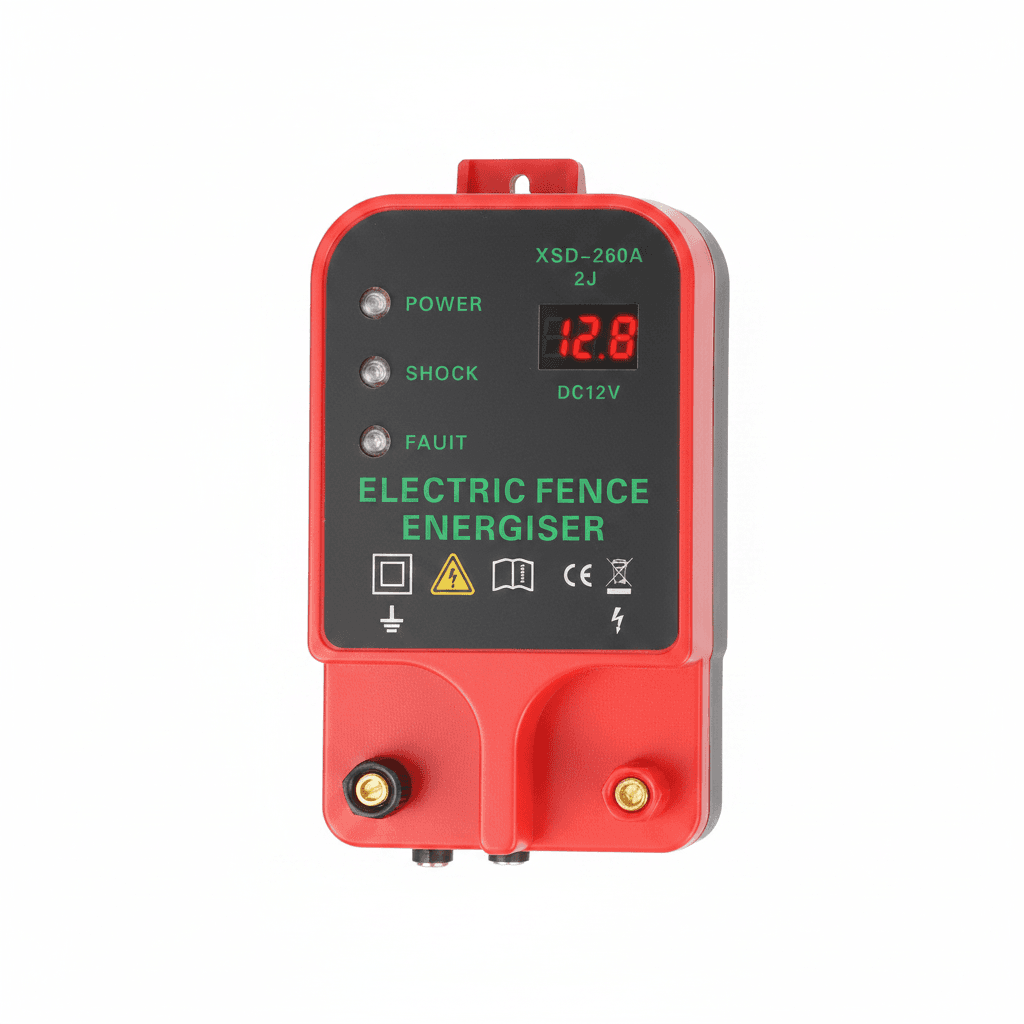
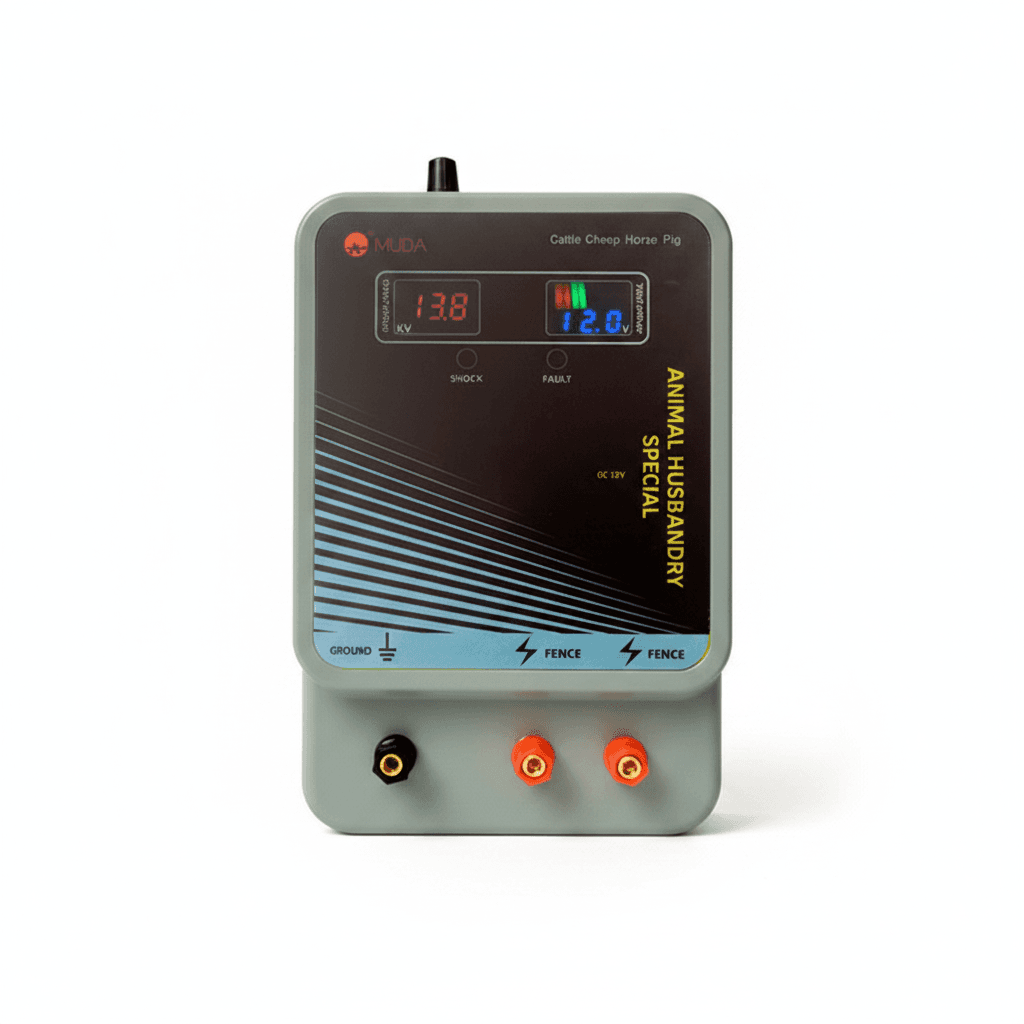
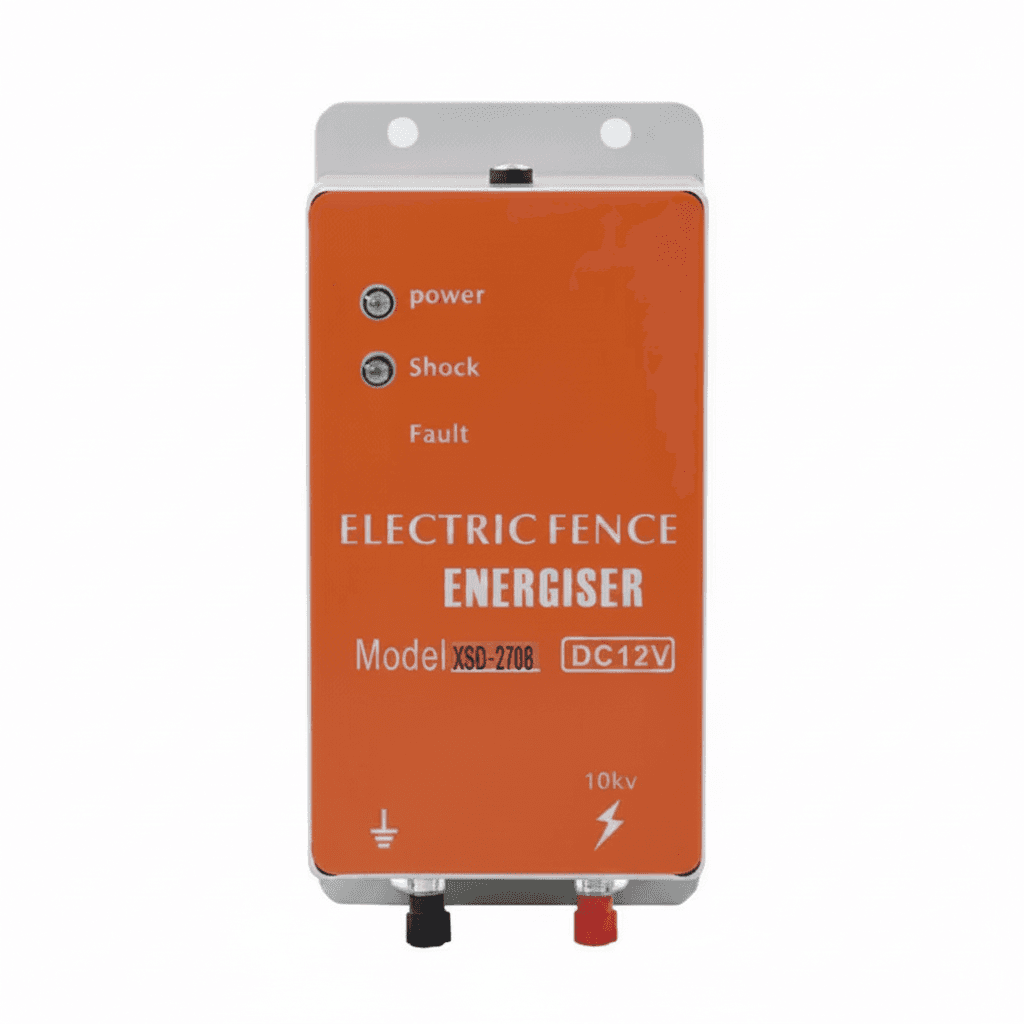
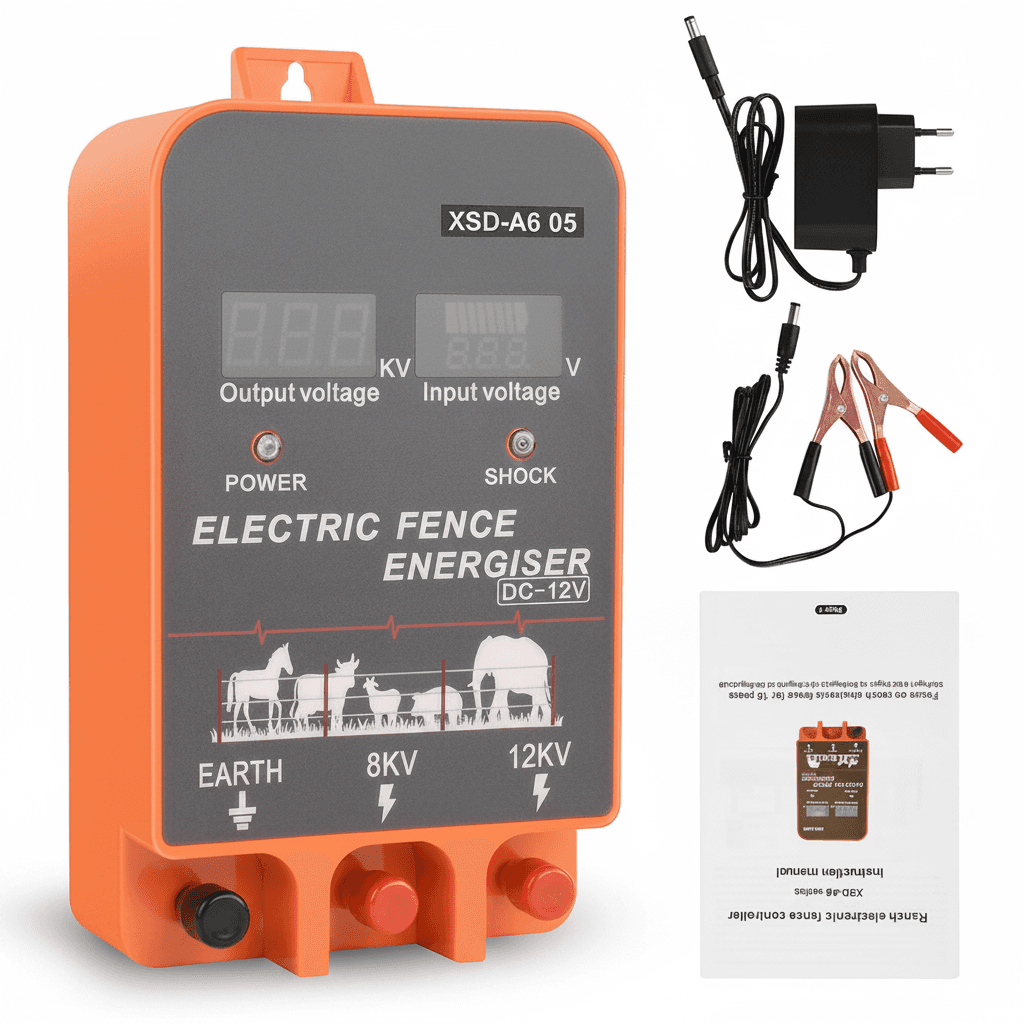
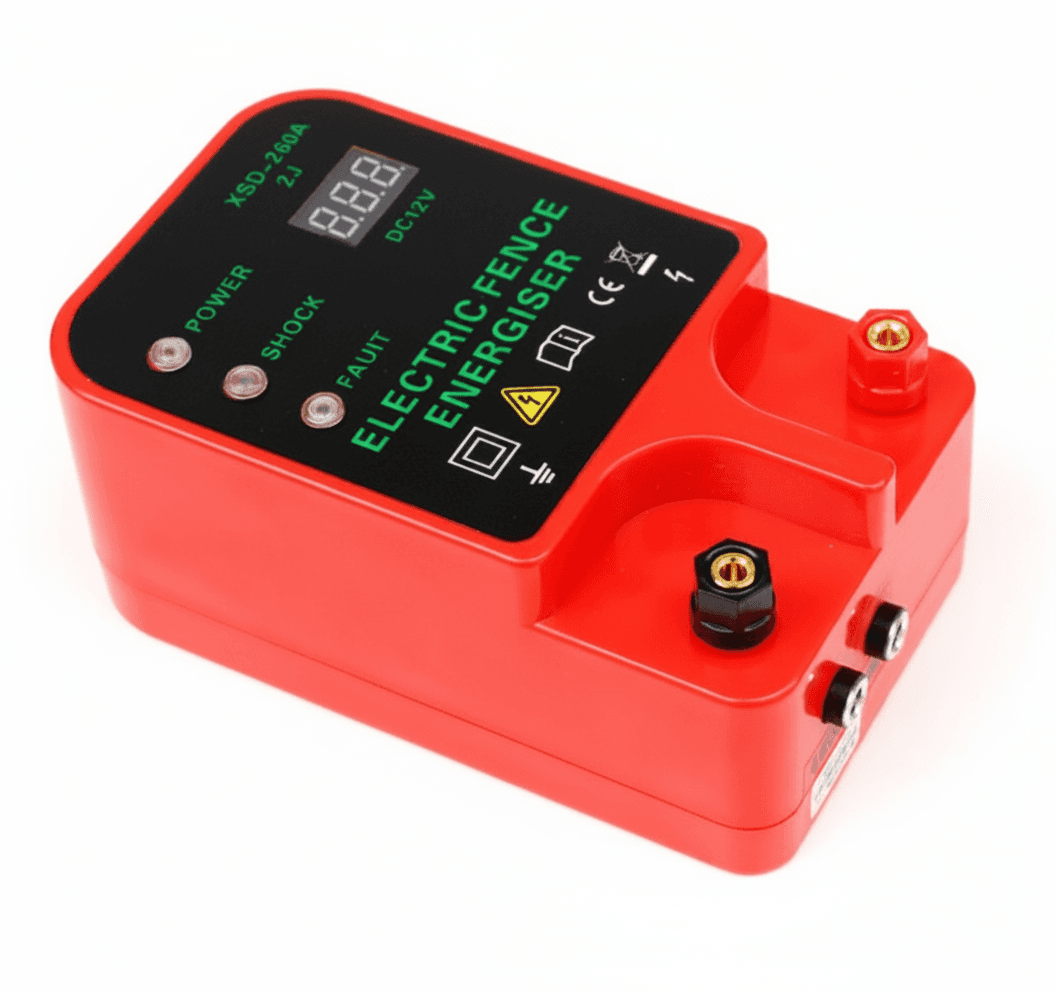
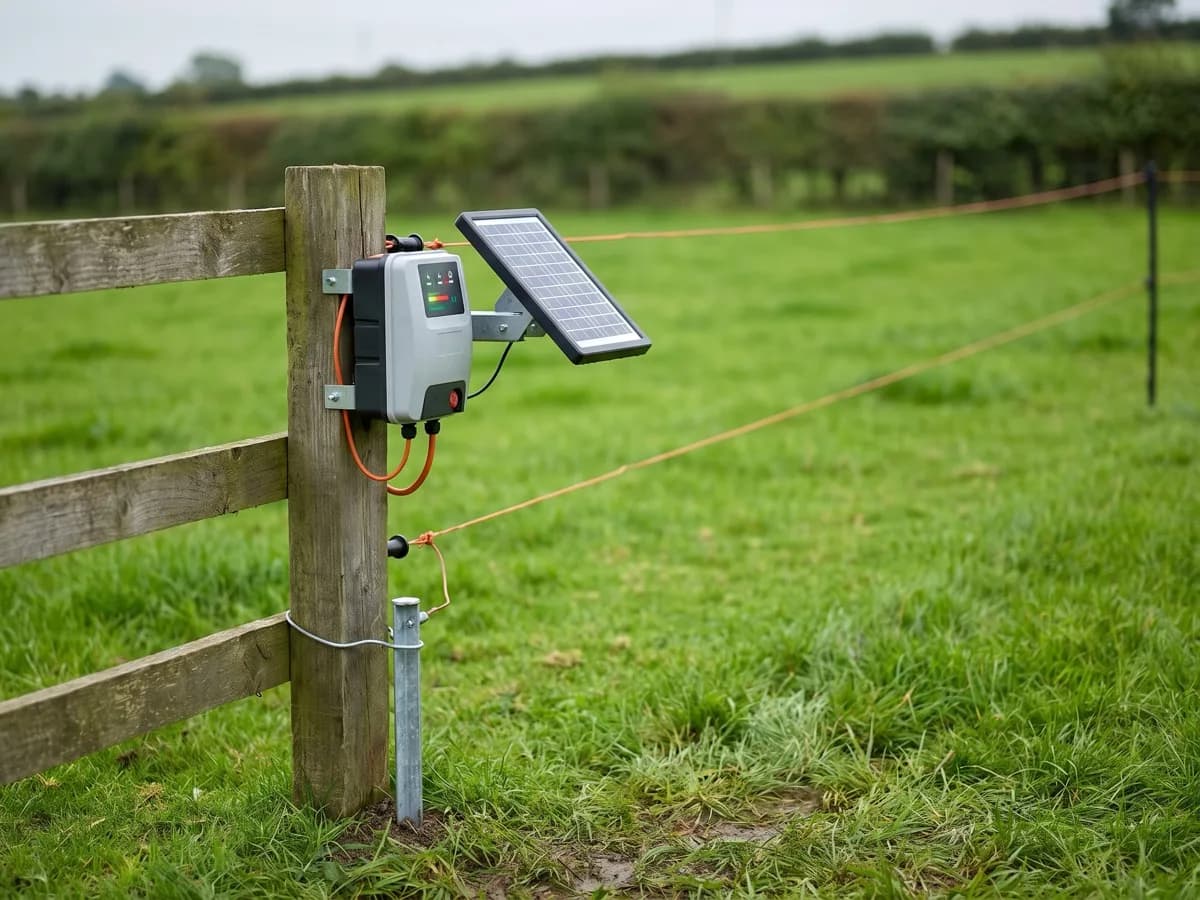
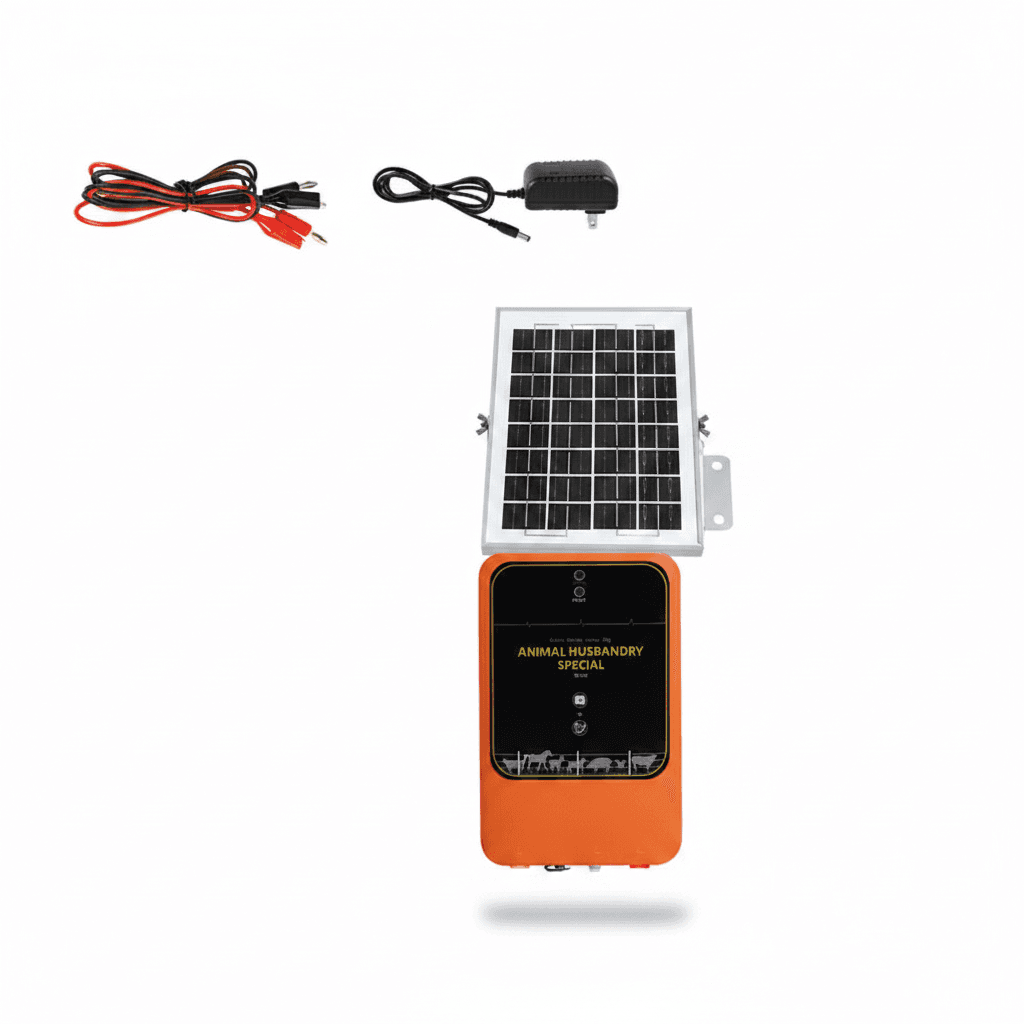
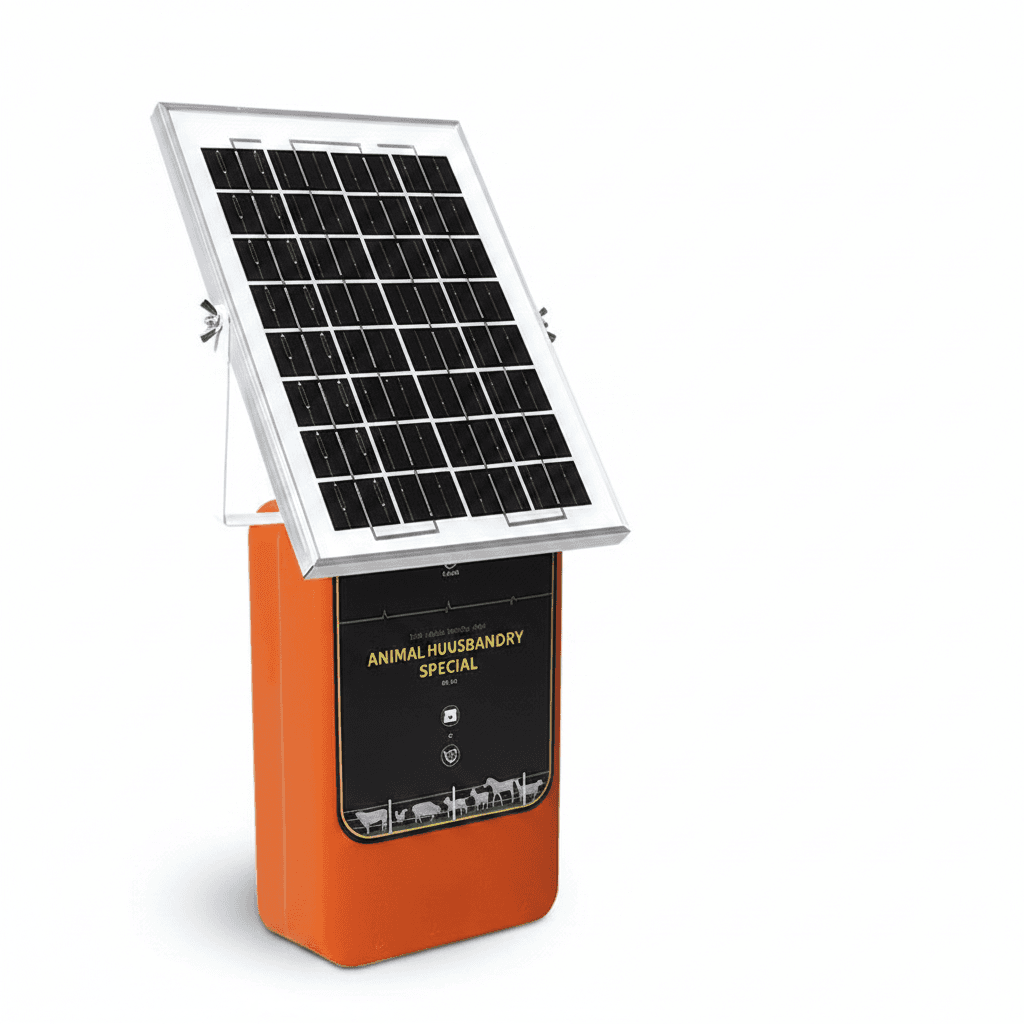
A solar energiser is a 12V unit with a panel and a battery, and on a remote boundary it removes the only real chore of battery fencing. Through a British summer almost any sensibly matched panel keeps up. The units on this page range from all-in-one solar chargers with the panel built into the lid to 12V energisers you pair with a separate panel.
Winter is where solar fences fail, and it is entirely predictable. Daylight hours and panel output both collapse between November and February, so a system sized on summer performance runs the battery flat in the dark months. Size the panel and battery for the shortest days you intend to fence through, keep the panel clear of shading and mud, and angle it steeply so low winter sun hits it square and rain washes it clean.
Horses, cattle, sheep and poultry ask for different things
Horses are the easy case electrically and the hard case visually. They respect a fence readily, so a modest output is enough, but they will run through wire they cannot see. Wide tape or rope matters more than joules here, and a horse fence is about visibility first.
Sheep are the opposite. Wool is an excellent insulator, so a fence that cattle treat with respect can be ignored by a sheep in full fleece, and sheep fencing wants a stronger energiser and more wires low down. Cattle sit in between and learn quickly. Poultry netting is short, low-load and usually fine on a small unit, though the netting itself sags into grass and shorts out more than any other fence type, so keep the line under it cut.
Earthing is why most fences underperform
The pulse has to return to the energiser through the ground, so the earth system is half the circuit and it is the half nearly everyone skimps. A fence that tests low, or that stock start to ignore, is far more often badly earthed than short of joules, and no amount of extra output will fix a poor earth.
The usual rule of thumb is around a metre of earth stake for every joule of output, with a minimum of three stakes spaced a few metres apart in ground that stays damp. Keep them well away from any building earth. Dry, sandy or frozen ground makes the problem worse, which is why a fence that worked in April can go weak in a hot July. Electric fence energisers sold in the UK are built to BS EN 60335-2-76, the standard covering pulse energy, duration and repetition rate for this equipment.