
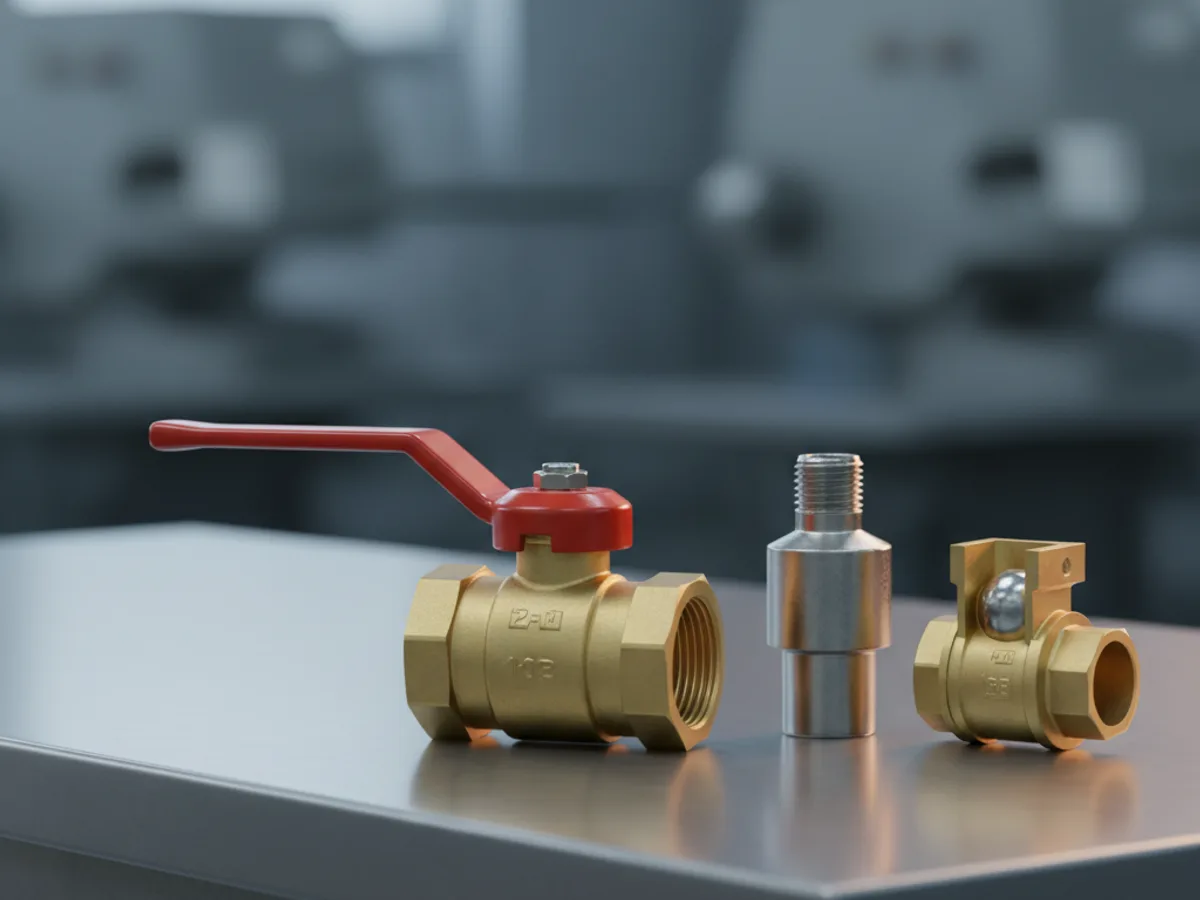


Full bore or reduced bore
The hole through the ball can match the pipe or it can be smaller. In a full bore valve the hole is the same diameter as the pipe, so an open valve is effectively a piece of pipe and adds almost no resistance. In a reduced bore valve the hole is a size down, which makes the valve smaller and cheaper and adds a restriction.
For most isolation duties the restriction is irrelevant and reduced bore is the sensible economy. It stops being irrelevant on a long run at the limit of its flow, on a pump suction where any restriction risks cavitation, and anywhere a pipeline pig or a brush has to pass, which needs full bore by definition.
The other reason to specify full bore is measurement. Turbulence from a restriction upsets flow meters downstream, so a valve immediately before a meter is one of the places where paying for full bore repays itself.
| Situation | Choose |
|---|---|
| General isolation, short runs | Reduced bore is fine |
| Pump suction lines | Full bore, to avoid restriction |
| Upstream of a flow meter | Full bore, to keep flow settled |
| Lines that must be pigged or brushed | Full bore, nothing else passes |
Why a ball valve should not be left half open
A partly open ball valve forces the whole flow through a crescent shaped gap between the ball and the seat. The velocity through that gap is very high, and it is aimed directly at the soft seat material.
The result is erosion of the seat, and once a seat is worn the valve no longer shuts fully. It fails, in other words, at the one job it was fitted to do, and the damage is done quietly over weeks of being left part open.
Where flow genuinely needs regulating, a globe valve, a needle valve or a proper control valve is the right tool, all of which are designed to sit at intermediate positions. Keep the ball valve for open and shut, and it will keep sealing for years.
Brass, stainless and the seats inside
Brass is the general purpose body material for water and air, and it is what most plumbing and compressed air valves are made from. It is not the choice for aggressive chemicals or for food and pharmaceutical work.
Stainless steel handles corrosive media, higher temperatures and washdown environments, and it is what hygienic and chemical installations specify. It costs more and it is worth it exactly where brass would not survive.
The seats are usually PTFE, and they are the real temperature and chemical limit of the valve rather than the body. A valve with a stainless body and a standard PTFE seat is still limited by that seat, which is why the temperature rating on the datasheet is a property of the assembly. Where a valve must meet a standard for drinking water or for a particular process, check the marking on the valve itself rather than a listing description.
Actuated valves and three way ports
An actuated ball valve replaces the handle with an electric or pneumatic drive, which is how a valve is operated from a control system. Electric actuators are simple to wire and slower; pneumatic ones are faster and need an air supply, which is why plant with compressed air tends to use them.
The behaviour on loss of power or air is the specification to decide deliberately. Spring return actuators drive the valve to a defined position when the signal fails, and which position that is should follow from what happens to the process if the valve is open or shut at the wrong moment.
Three way valves add a port and come in two internal forms. An L port connects one inlet to either of two outlets, which diverts flow. A T port can connect all three, which allows mixing as well as diverting. They look identical from outside, so the port type is worth confirming before fitting rather than after the pipework is up.