
Turning Inserts
Carbide Insert | Grooving & Parting Blade | For CNC Metal Lathe
CMP-04525TURN-00001
£52.99
3 products available
Turning inserts are the replaceable, indexable cutting tips used in lathes and turning centers for shaping metal components. For professional machining operations, selecting the correct insert is fundamental to achieving specified tolerances and surface finishes. Our range is focused on high-performance carbide turning inserts, designed for reliability in common industrial metalworking tasks.
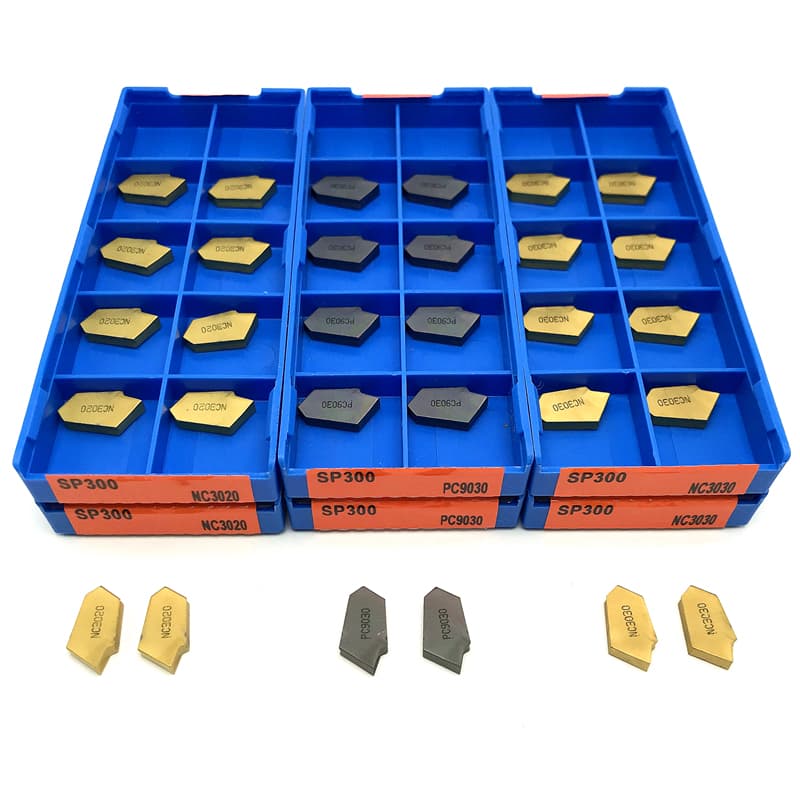
We supply a curated selection of lathe inserts for parting, grooving, and turning steel. This includes PVD and PC9030 coated carbide options built for durability and consistent performance. By concentrating on these proven specifications, we provide dependable tooling that meets the demands of CNC machining and production environments without the complexity of an overly broad catalog.
3 products in Turning Inserts
Turning Inserts
Turning Inserts
Turning Inserts
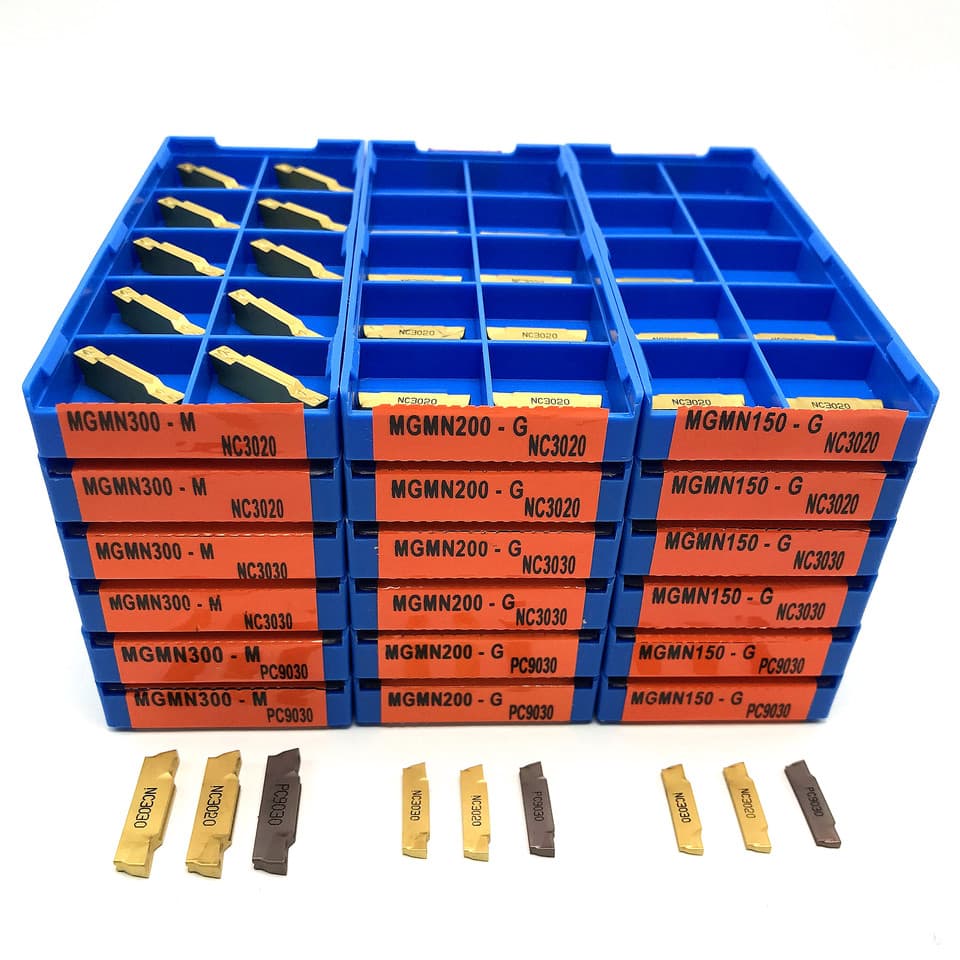
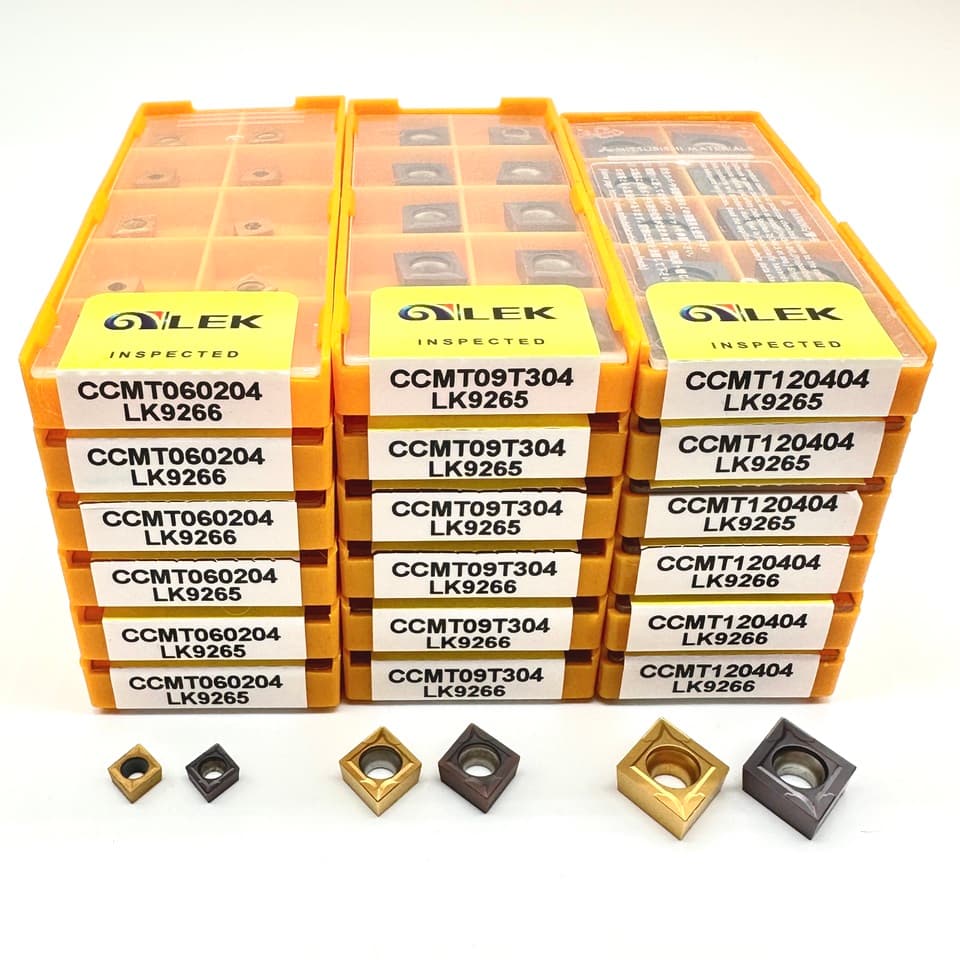
The first step in choosing a turning insert is matching its geometry to your tool holder and application. Model numbers like CCMT060204 or MGMN200 are not arbitrary; they are ISO standard codes that define the insert's shape, size, clearance angle, and tolerances.
For example, 'C' style inserts (CCMT) are rhombic and commonly used for internal turning and finishing due to their shape and positive clearance. 'M' style inserts (MGMN) are designed specifically for grooving and parting. Always verify the required ISO code for your tool holder to ensure a secure and accurate fit.
Our turning inserts are made from carbide, the industry standard for metal cutting due to its exceptional hardness and wear resistance at high temperatures. This makes it ideal for machining steel and other common industrial materials.
Coatings like PVD (Physical Vapor Deposition) or specialized multi-layer coatings (e.g., PC9030) are applied to the carbide base. These thin layers increase lubricity, reduce friction, and act as a thermal barrier, significantly extending tool life and allowing for higher cutting speeds. While specialized tasks may require cermet or CNB inserts, our coated carbide options provide excellent results for most steel turning applications.
Hardness is a specification for a cutting tool's durability. You will see ratings on either the Rockwell C (HRC) or Rockwell A (HRA) scale. Both measure resistance to indentation, but the HRA scale is often used for extremely hard materials like tungsten carbide, where a test on the HRC scale could risk damaging the test diamond.
The inserts in our catalog feature hardness ratings from 92 HRC to 95 HRA. These values represent a high degree of hardness, ensuring the cutting edge resists deformation and wear when machining metals, leading to longer tool life and consistent part quality.
Buying guide
We use cookies. Some keep the store working, others show us what to fix. No third-party trackers, and we never sell your data. Learn more about cookies and your privacy