Help
Compel Groupgroup

Air Fitting Types Chart

Author: Emma Clarke, Reference Desk3 min readReviewed

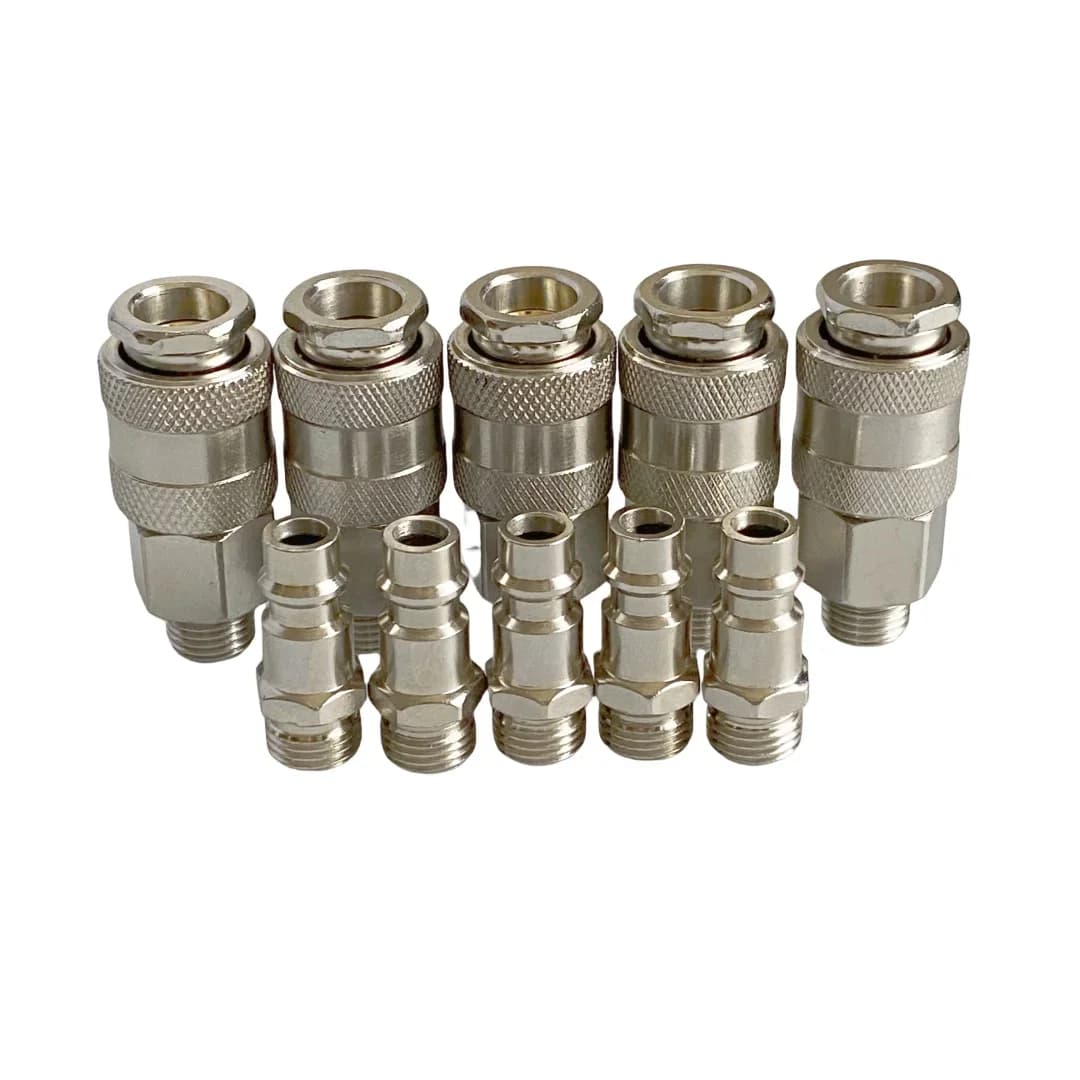
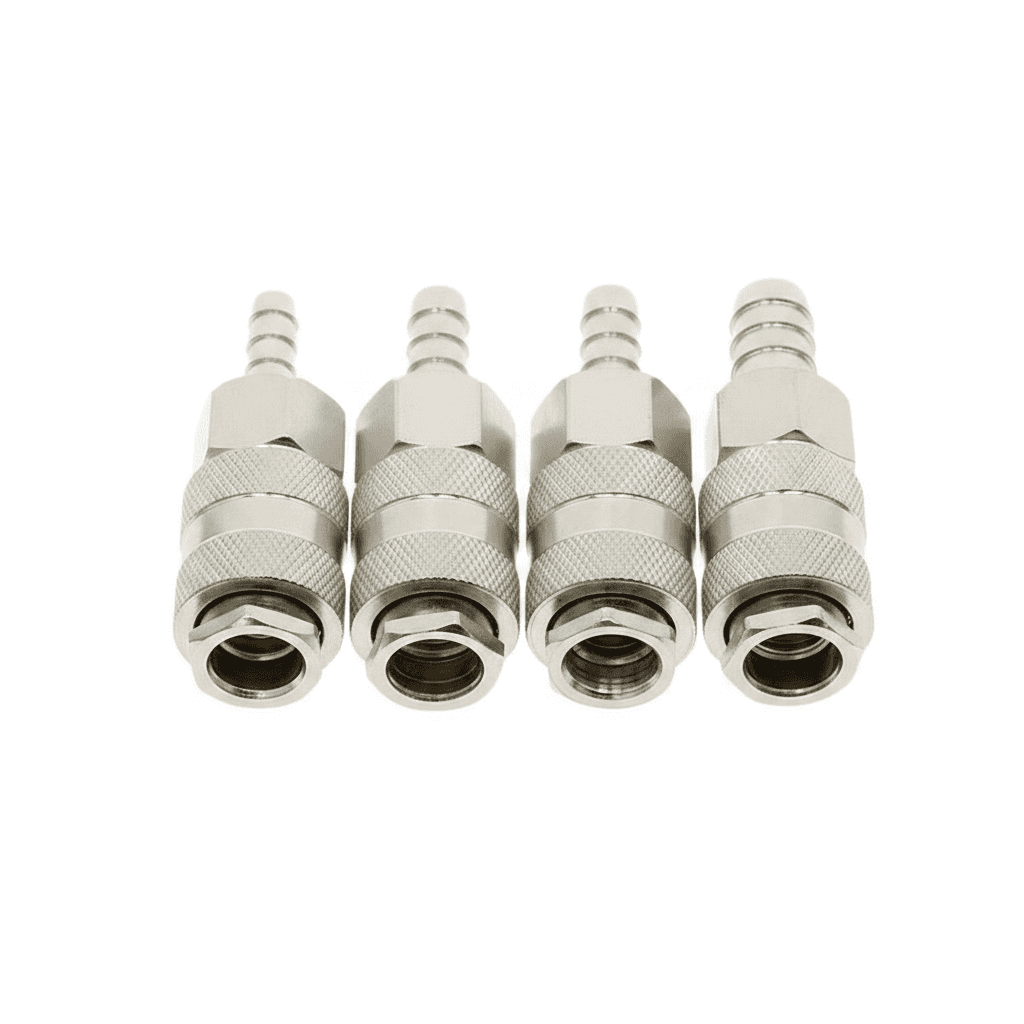
Quick couplers come in several incompatible profiles that all look similar. In the US, Industrial (Milton M-style) is the most common, with ARO, Automotive and Lincoln alongside it. In Europe the standards are CEJN and the German type. A plug of one profile will not seal in a coupler of another, and forcing it damages the seal.

Hydraulics & pneumatics. Based on ISO 6150, ARO 210.

Air coupler profiles

All of these come in the same 1/4 inch body size and look almost identical. The difference is the plug geometry, and mixing them either fails to lock or leaks continuously.

Pick one profile and standardise the whole shop on it. Mixed profiles are the single most common cause of an air system that hisses.

The common quick coupler profiles.
ProfileAlso calledRegionNotes
IndustrialMilton M, Type DUSThe most common US profile; high flow
AROType A, 210USSecond most common; slightly different plug nose
AutomotiveTru-Flate, Type TUSCommon on tyre and mobile kit
LincolnType LUSLower flow, older equipment
CEJN 320EuroEuropeEuropean workshop standard
ISO 6150 BEuro / GermanEuropeWidely used across the EU
NittoJapaneseAsiaCommon on imported machinery

Air hose size chart

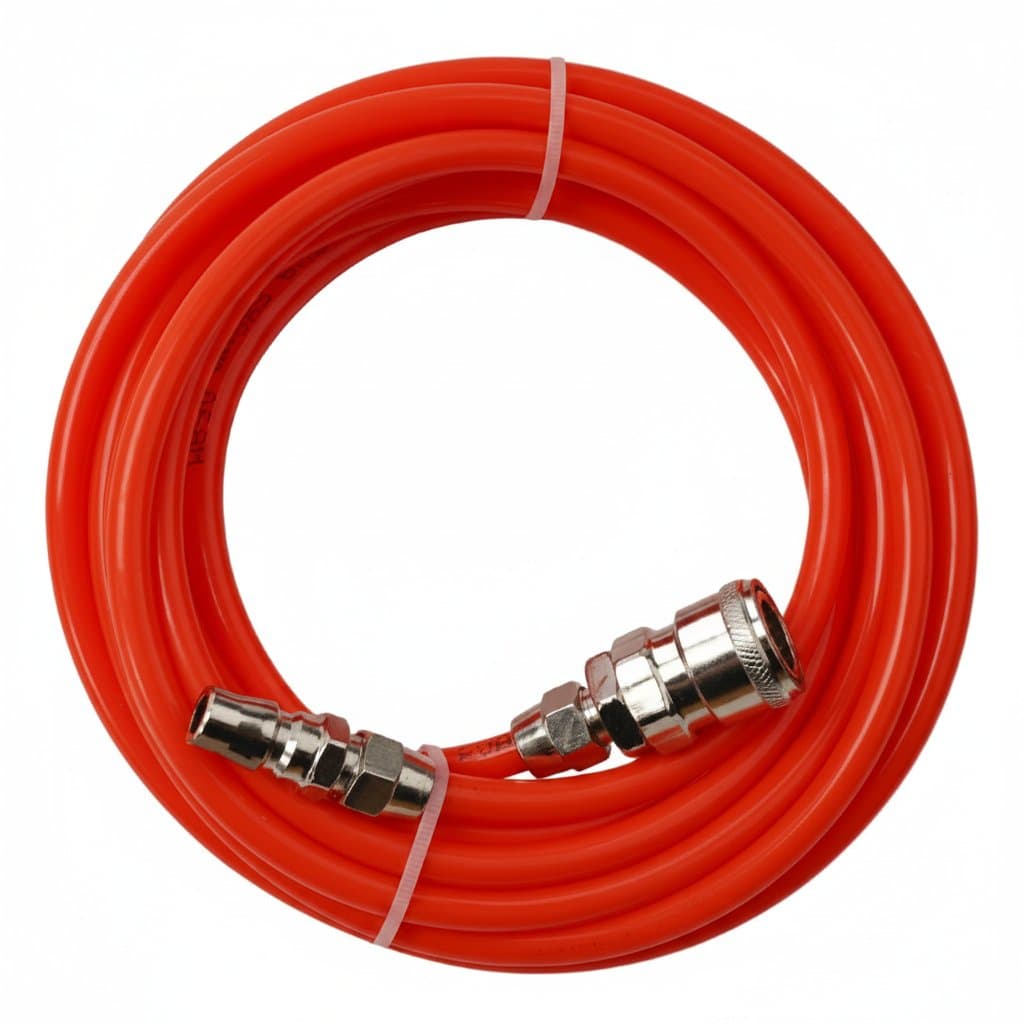
Air hose is sized on internal diameter, and length matters as much as diameter. A long run of thin hose will starve a tool even from a large compressor, because pressure drops along the way.

The usual mistake is a 50 foot 1/4 inch hose feeding a sander. The compressor is big enough, the hose is not, and the tool never reaches working pressure.

Approximate maximum flow before pressure drop becomes a problem, at 90 psi.
Hose ID25 ft50 ft100 ft
1/4 in15 CFM10 CFM6 CFM
3/8 in30 CFM25 CFM18 CFM
1/2 in65 CFM55 CFM40 CFM
3/4 in130 CFM115 CFM90 CFM

The coupler is usually the restriction

A 1/4 inch coupler body restricts flow more than the hose it sits on. Standard 1/4 inch industrial couplers pass around 40 to 50 CFM at 90 psi, but the cheaper ones are far lower and manufacturers rarely publish the figure.

On anything that consumes air continuously, a sander, a blast cabinet or a spray gun, fit high-flow couplers or plumb the tool directly. Two couplers in series, which is common when a whip hose is added, doubles the restriction.

For high-pressure work above 200 psi, standard air couplers are not rated and must not be used. Those systems need proper screwed fittings with a pressure rating.

Emma Clarke, Reference Desk editor at Compel GroupEmma ClarkeReference Desk

Emma looks after the reference charts and calculators. Every figure is copied from the named standard on the page rather than generated, and each page shows the date it was last checked. When a value looks wrong, the standard wins and the page gets fixed.

Share
Add Compel Group as a preferred source on Google

Reference

Air Fitting Types Chart questions

Are air couplers interchangeable?
No. Industrial, ARO, Automotive, Lincoln and the European profiles all use the same body sizes but different plug geometry. A mismatched plug either will not lock in or leaks constantly, and forcing it damages the seal.
What size air hose do I need?
3/8 inch for most workshop use. 1/4 inch is only adequate for short runs and intermittent tools; at 50 feet it will not carry more than about 10 CFM, which starves a sander. Go to 1/2 inch for long runs or continuous-duty tools.
Which air coupler type is most common?
Industrial, also called Milton M-style or Type D, is the most common in the US. In Europe the CEJN 320 and ISO 6150 B profiles dominate. Standardise a whole workshop on one profile.
Why does my air tool lose power at the end of a long hose?
Pressure drop. The compressor may deliver plenty at the tank, but a long thin hose and a restrictive coupler eat the pressure before it reaches the tool. Go up a hose size, shorten the run, or fit high-flow couplers.
Can I use air couplers on high pressure lines?
Not above their rating, which for standard workshop couplers is usually around 200 psi. High-pressure systems need screwed fittings with a published pressure rating rather than quick couplers.

Related reference tools