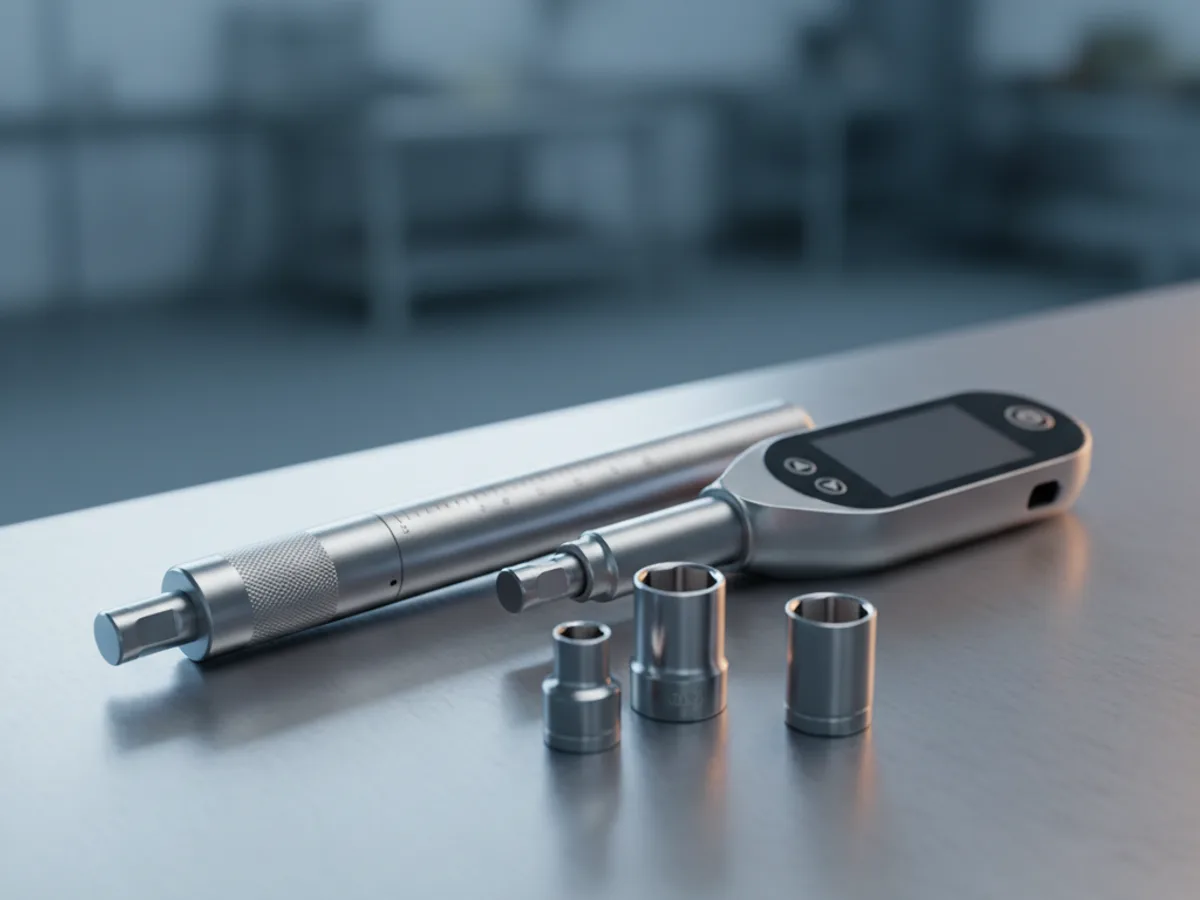


Never work at the bottom of the scale
Torque wrench accuracy is quoted as a percentage of the reading, commonly around three or four per cent, and that percentage holds across most of the scale but not at the very bottom. Manufacturers usually specify accuracy from about twenty per cent of full scale upward, and below that the mechanism is not reliably repeatable.
The practical consequence is that one wrench cannot cover everything. A half inch drive wrench reaching two hundred newton metres is the right tool for wheel nuts and suspension work and the wrong tool for a sump plug at twenty five, because that figure sits below where it can be trusted.
Aim for target figures in the middle of the range. Two wrenches, a smaller three eighths for engine and general work and a half inch for the heavy end, cover almost everything between them and each spends its life where it is accurate.
| Drive | Typical range | Usual work |
|---|---|---|
| 1/4 inch | Low, a few to about 25 Nm | Electronics, small fasteners, interior trim |
| 3/8 inch | Low to middle | Engine work, spark plugs, general automotive |
| 1/2 inch | Middle to high | Wheel nuts, suspension, structural fasteners |
Click, digital and beam
A click wrench has a spring loaded mechanism set by turning the handle against a scale. At the set torque the head breaks over with an audible click and a distinct feel. It needs no power, it is quick, and it depends on you stopping at the click rather than pulling through it.
A digital wrench measures with a strain gauge and signals with a display, a buzzer and lights. It is easier to read precisely, it can hold a target and often log readings, and it needs batteries and more care. Where a job needs an exact figure recorded, that is what it is for.
A beam wrench is the simple case: a bar that deflects against a pointer. It has almost nothing to go wrong, holds calibration indefinitely, and is awkward to read in a confined space because you must see the scale square on. As a check against a click wrench that may have drifted, it is useful to have.
Using it so the reading means something
Pull smoothly and stop at the click. Jerking the handle gives a peak the mechanism reads differently from a steady pull, and carrying on after the click applies an unknown amount more. One click, then stop.
Hold the handle at its centre, where the grip is marked. Torque is force times distance from the centre of the drive, so holding further out applies more than the wrench thinks, and holding right at the end changes the effective length enough to matter.
Torque figures assume a particular thread condition, normally clean and dry unless the specification says otherwise. Oil or anti-seize on the threads cuts friction, so much more of the applied torque turns into clamping force and a fastener tightened to the dry figure with lubricated threads can be over-stretched. Follow whatever the specification actually states.
Storage and calibration
A click wrench should be wound back before it is put away. Leaving it stored at a high setting keeps the internal spring compressed, and over months that is what makes a wrench read progressively low. Wind it down to the bottom of its scale, or to the lowest mark the maker specifies, every time.
Do not wind it below the lowest graduation, which on some designs unloads the mechanism entirely and can disturb the setting. The instruction sheet says which applies to your wrench, and it is one of the few pieces of paper worth keeping.
Calibration drifts with use and with drops. Anything a torque wrench is dropped onto is a reason to have it checked, and workshops that rely on figures have wrenches checked periodically against a reference. A wrench used for critical fasteners and never checked is giving a number rather than a measurement.