Compel Groupgroup

Moisture Meters for Timber and Building Materials

Author: James Whitfield, Equipment Desk5 min read
Updated

A moisture meter tells you what percentage of a material is water. Pin meters push two electrodes in and measure electrical resistance between them; pinless meters press against the surface and read the material below without marking it. Both need to know what they are reading, because the same electrical response means different moisture contents in different materials.

12 products from £162.99 to £417.99

Specs and prices

Specifications as declared by the seller of each listing, not our own measurements. Prices update with the catalogue.

ProductPriceProduct TypeMeasurement RangeDisplay Type
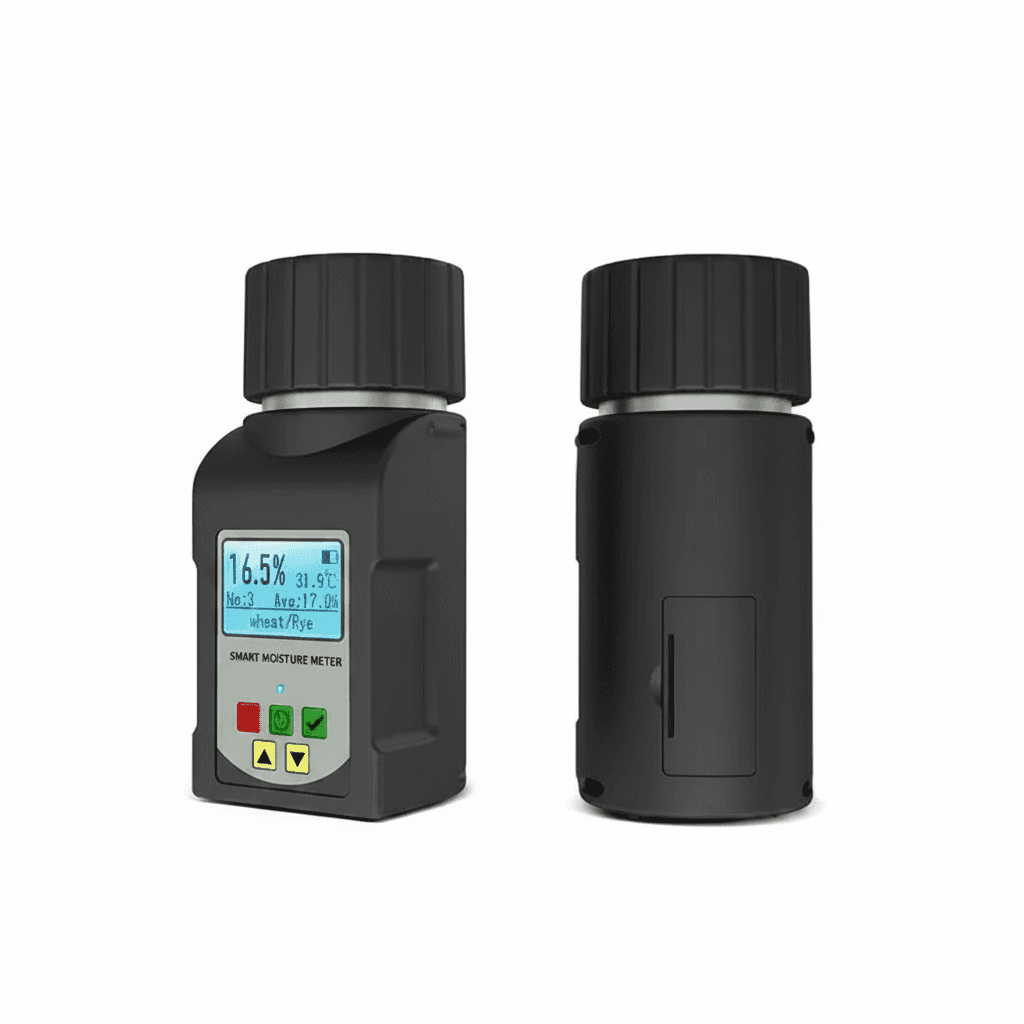
Grain Moisture Meter, a handheld device.Grain Moisture Meter£417.99--DIGITAL
Digital Carton Concrete Paper Wood Meat Moisture Tester, a portable multifunctional moisture meter for precise content analysis.Moisture Meter£366.99--Digital
MD917 pinless concrete moisture meter with non-destructive scanning for walls, floors, wood, and paper, featuring LCD alarm and auto-calibration.Concrete Moisture Meter: Non-Destructive Wall & Floor Scanner with LCD Alarm£278.99--LCD
MASTECH MS6900 mini digital moisture meter for accurate testing of wood, lumber, concrete, and building materials with LCD display.Digital Moisture Meter: Accurate Wood, Lumber & Concrete Humidity Tester with LCD£182.99-0-99.9%LCD
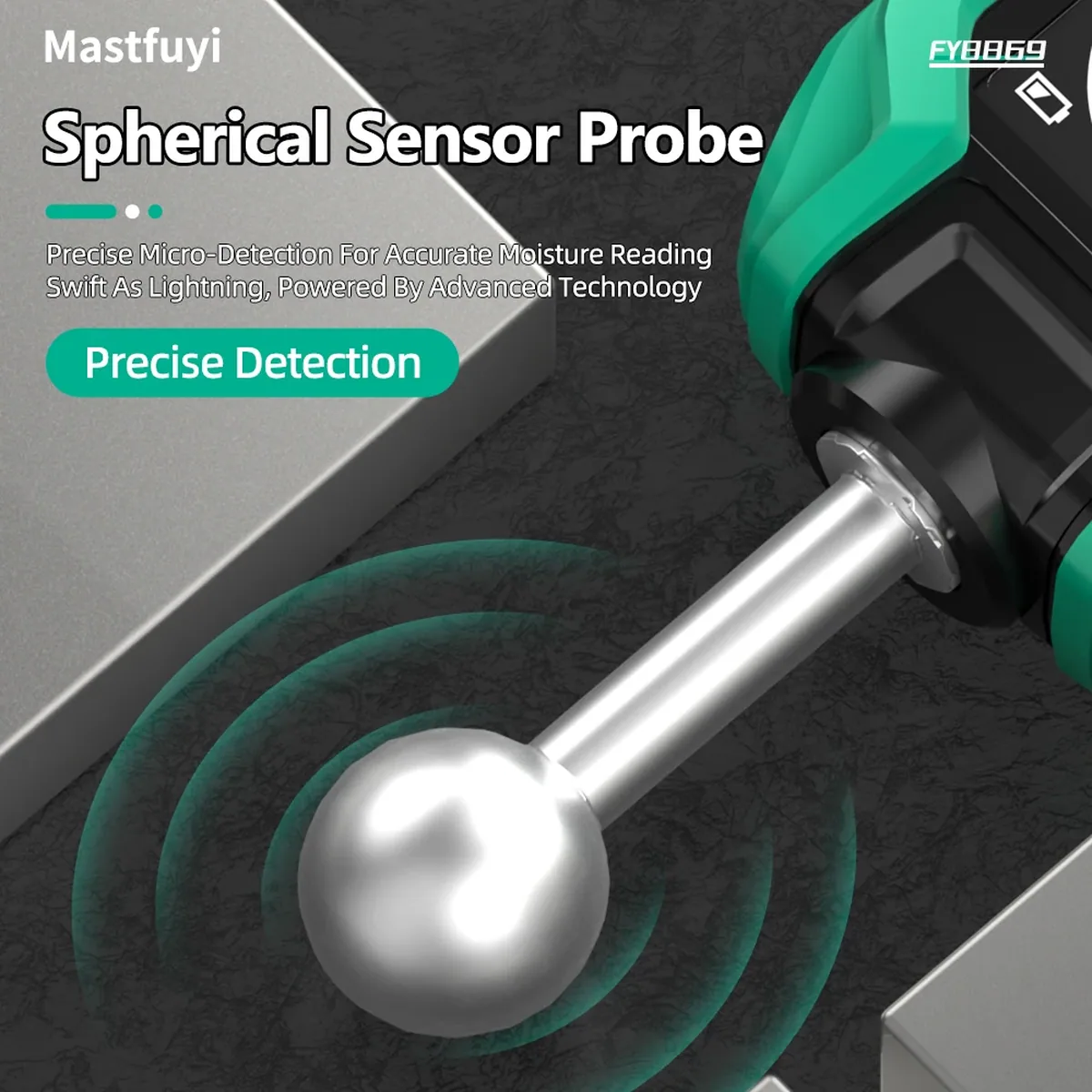
MASTFUYI digital moisture meter with spherical sensor and HD color screen, measuring 0.1-99.9% moisture in wood, plaster, and cement with dual alarm function.Moisture Meter: 0.1-99.9% Range, HD Color Screen, Dual Alarm for Wood & Cement£180.99-0.1-99.9%HD Color Screen
Digital humidity tester with a ball probe for non-destructive moisture detection.Non-Destructive Moisture Meter£180.99Non-Destructive Moisture Meter-Digital LCD
MASTFUYI digital moisture meter with spherical sensor for wood, cement, and walls, featuring a dual alarm and hold function.Digital Moisture Meter£180.99Digital Hygrometer / Moisture Meter-Digital LCD
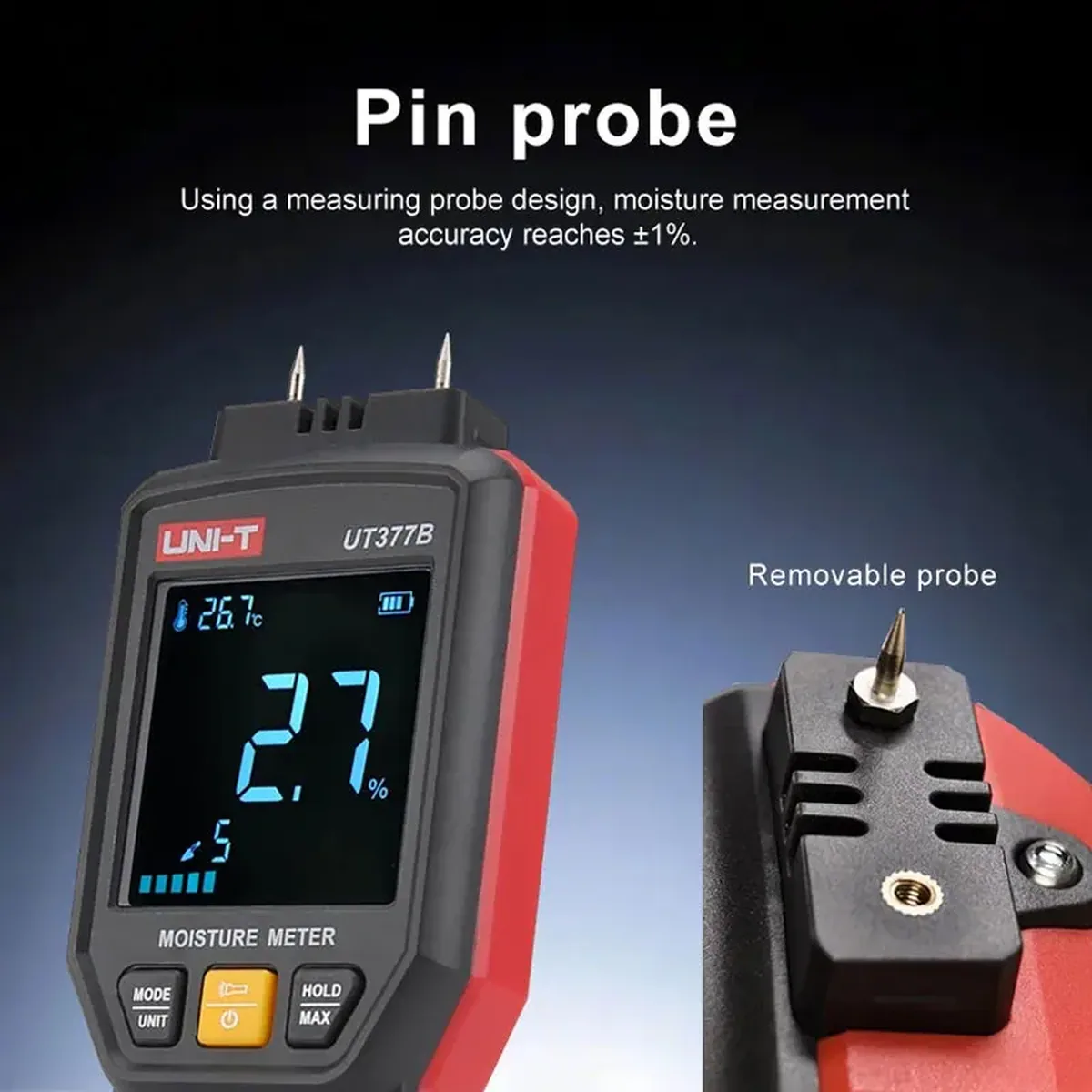
UNI-T UT377B Moisture Meter for wood and building materials, featuring a backlit LCD screen, LED flashlight, and protective cap.Wood Moisture Meter£177.99Pin-Type Moisture Meter0% to 99.9% RHLCD

Pin or pinless, and what each actually measures

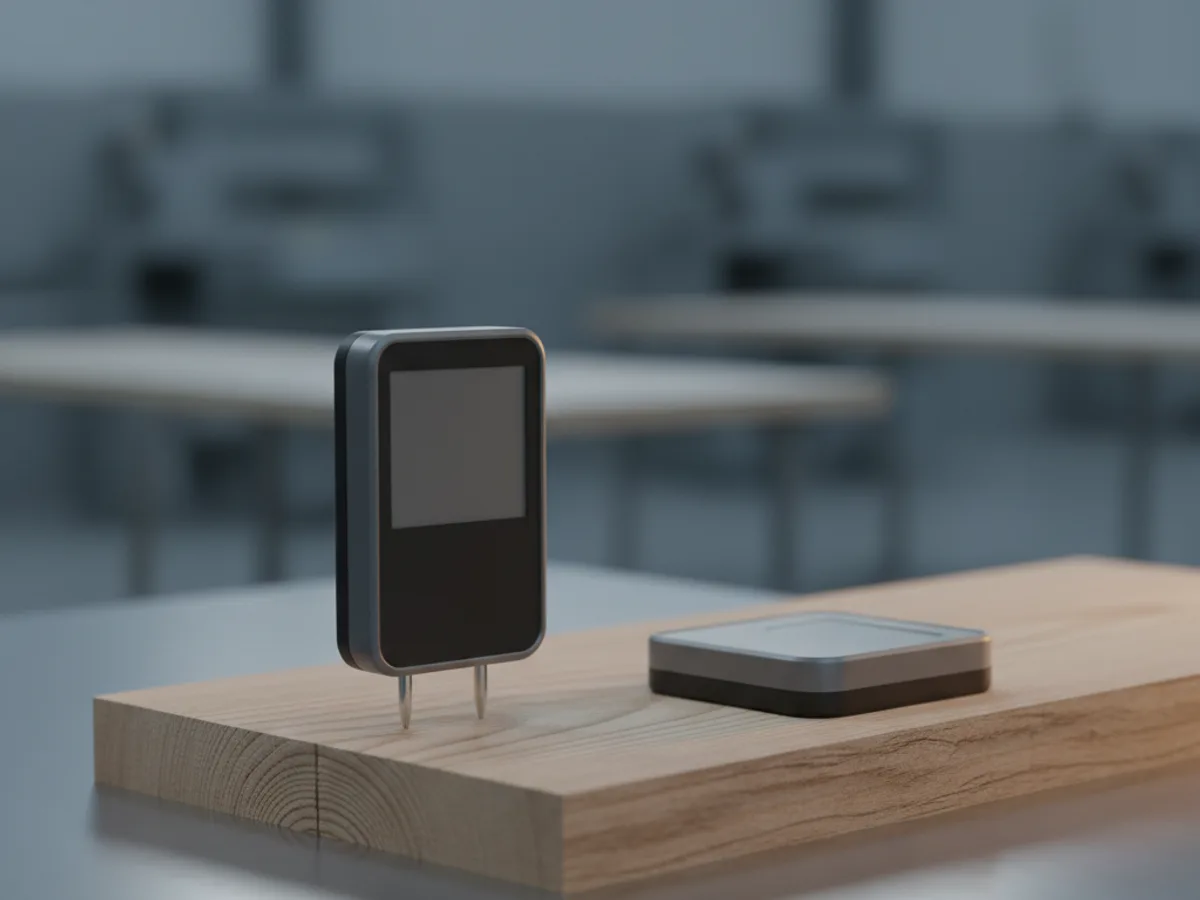
A pin meter drives two sharp electrodes into the timber and measures the electrical resistance between them. Water conducts and dry wood does not, so resistance maps to moisture content. It reads at the depth the pins reach, which makes it good for finding whether a board is wet through or only damp at the surface, and it leaves two small holes.

A pinless meter uses a pad that senses the material below it, typically to a couple of centimetres. It leaves no marks, which matters on finished joinery and flooring, and it scans an area quickly. The cost is that it reads an average through that depth and it is thrown off by anything conductive behind the surface, including foil backing, pipework and fixings.

The two suit different jobs rather than one being better. Survey a floor with a pinless meter to find the wet area, then use pins to find out how deep it goes.

Choosing between them
Pin meterPinless meter
Marks the surfaceYes, two small holesNo
Reads at depthAt the pin tips, selectable with longer pinsAveraged over a set depth
Good forConfirming depth of damp, checking a board throughScanning an area, finished surfaces
Fooled bySurface wetness on the pins, saltsMetal, foil, pipes behind the surface

Why the reading needs a species correction

The resistance of wood at a given moisture content varies with the species, because density and chemistry differ. A meter calibrated on one timber and used on another reads high or low, and the error is large enough to matter when you are deciding whether stock is fit to work.

Better meters carry a species setting or a correction table, and using it is not optional if the number is going to inform a decision. Temperature affects the reading too, which is why meters intended for site use offer a temperature correction as well; a cold board reads lower than the same board warm.

Where a meter offers no correction at all, treat its readings as comparative rather than absolute. Comparing one part of a board with another, or today with next week, is still useful even when the absolute figure carries an unknown offset.

The numbers that actually mean something

Wood is hygroscopic: it takes up and gives off water until it reaches equilibrium with the air around it. That is why timber for interior joinery is dried to a much lower moisture content than timber for an outdoor structure, and why bringing wet stock into a heated room causes it to shrink, cup and open joints as it equilibrates.

The threshold most often quoted for decay risk is around twenty per cent moisture content, because that is roughly where wood-rotting fungi become able to establish. Below it, timber is generally safe from rot; sustained above it, particularly with poor ventilation, it is at risk. Mould can appear on a damp surface at lower levels than that.

Acclimatise rather than trusting the delivery. Stack timber in the space it will live in, with air able to circulate between boards, and take readings over several days until the figure stops moving. A stable reading matters more than any single number.

Concrete, screed and grain are different measurements

Meters that offer a concrete or building material mode are giving a relative indication rather than the true moisture content of the slab. That is a genuine limitation rather than a fault: an electrical surface reading cannot tell you the moisture that matters for laying a floor covering, which is the humidity in equilibrium deep within the slab.

For that decision the recognised methods measure relative humidity inside the slab, using an in-situ probe in a drilled hole or a sealed hygrometer box on the surface, left for the time the method specifies. A handheld meter is the right tool for finding a damp patch and the wrong tool for signing off a floor.

Grain and hay meters are a third case again, calibrated per crop because different grains hold water differently. A meter with a crop list is doing the same job as a species correction on a timber meter, and selecting the wrong crop gives a confidently wrong number.

James Whitfield, Equipment Desk editor at Compel GroupJames WhitfieldEquipment Desk

James edits the machine and equipment buying guides. The specifications on these pages are the declared figures from the live listings we hold, with a note wherever a number comes from a published standard instead. Pages are re-checked as the catalogue changes.

Share
Add Compel Group as a preferred source on Google

Moisture meters for timber and building materials

Grain Moisture Meter, a handheld device.

Inspection

Grain Moisture Meter | 25 Crops, Data Logging | IP54 Waterproof

CMP-02536INSP-00009
£417.99
Digital Carton Concrete Paper Wood Meat Moisture Tester, a portable multifunctional moisture meter for precise content analysis.

Measuring Tools

Moisture Meter | Digital Analyzer for Wood, Concrete & Paper | Portable Multifunction Tester

TBS-00265TOOL-00119
£366.99
PMS710 LCD digital soil moisture meter with high precision measurement for soil, concrete, cement, river sand, and other materials.

Measuring & Surveying

High-Precision Digital Soil Moisture Meter: LCD Hygrometer for Concrete, Cement & Sand

TBS-04653MEAS-00029
£358.99
MD917 pinless concrete moisture meter with non-destructive scanning for walls, floors, wood, and paper, featuring LCD alarm and auto-calibration.

Measuring & Surveying

Concrete Moisture Meter: Non-Destructive Wall & Floor Scanner with LCD Alarm

TBS-04651MEAS-00027
£278.99
MASTECH MS6900 mini digital moisture meter for accurate testing of wood, lumber, concrete, and building materials with LCD display.

Measuring & Surveying

Digital Moisture Meter: Accurate Wood, Lumber & Concrete Humidity Tester with LCD

TBS-04650MEAS-00026
£182.99
MASTFUYI digital moisture meter with spherical sensor and HD color screen, measuring 0.1-99.9% moisture in wood, plaster, and cement with dual alarm function.

Measuring & Surveying

Moisture Meter: 0.1-99.9% Range, HD Color Screen, Dual Alarm for Wood & Cement

TBS-04644MEAS-00020
£180.99
Digital humidity tester with a ball probe for non-destructive moisture detection.

Testing Equipment

Non-Destructive Moisture Meter | Ball Probe Wood & Wall Leak Detector | Digital Humidity Tester

CMP-01347TEST-00131
£180.99
MASTFUYI digital moisture meter with spherical sensor for wood, cement, and walls, featuring a dual alarm and hold function.

Measuring Tools

Digital Moisture Meter | Dual-Alarm Hygrometer for Wood, Concrete & Walls

TBS-00284TOOL-00138
£180.99
UNI-T UT377B Moisture Meter for wood and building materials, featuring a backlit LCD screen, LED flashlight, and protective cap.

Measuring Tools

Wood Moisture Meter | UT377B Pin Tester for Timber & Building Materials | LED Flashlight

TBS-00263TOOL-00117
£177.99
MASTFUYI pinless moisture meter with ball sensor for non-invasive water leak detection in wood, drywall, and flooring.

Measuring Tools

Pinless Moisture Meter | Non-Invasive Wood & Drywall Detector | Home & RV Leak Finder

TBS-00275TOOL-00129
£174.99
Digital Wood Moisture Meter with non-contact sensor for non-destructive timber and building material humidity testing

Measuring Tools

Wood Moisture Meter | Non-Destructive Pinless Hygrometer for Timber & Building Materials

TBS-00288TOOL-00142
£164.99
MASTFUYI moisture meter with non-destructive spherical sensor for 40mm deep detection in wood, concrete, and multiple building materials.

Measuring & Surveying

Non-Destructive Moisture Meter with 40mm Spherical Sensor & TFT Display for Wood & Concrete

TBS-04652MEAS-00028
£162.99

See the full range

Buying guide

Moisture Meters for Timber and Building Materials questions

Should I buy a pin or pinless moisture meter?
Pinless for scanning an area and for finished surfaces you cannot mark. Pin for finding how deep damp goes and for checking a board through. Many people use pinless to find the problem and pins to characterise it.
Why does my meter need a species setting?
Wood resistance at a given moisture content varies with species density and chemistry, so a meter calibrated on one timber reads high or low on another. Without a correction, treat readings as comparative rather than absolute.
What moisture content is safe for timber?
Around twenty per cent is the commonly quoted threshold for decay risk, since that is roughly where wood-rotting fungi can establish. Interior joinery is dried well below that so it does not shrink once installed.
Can I use a moisture meter to sign off a concrete floor?
No. A handheld meter gives a relative surface indication. Floor covering decisions use relative humidity measured inside the slab, with an in-situ probe or a sealed surface hygrometer left for the specified time.
Why do two readings on the same board differ?
Moisture is rarely uniform. Surface and core differ, ends dry faster than the middle, and a pinless meter averages over depth while pins read at their tips. Take several readings and look at the pattern rather than one number.
Does temperature affect the reading?
Yes. A cold board reads lower than the same board warm, which is why site meters offer a temperature correction. Apply it where the meter provides it, particularly on timber brought in from outside.

We use cookies. Some keep the store working, others show us what to fix. No third-party trackers, and we never sell your data. Learn more about cookies and your privacy