


A lifting rating is not a supporting rating
The capacity printed on a jack is what it will raise. It is not a statement that the jack is a safe thing to leave a vehicle standing on, and no jack of any type is. A jack can be knocked, its base can sink into soft ground, and a mechanism under sustained load can fail without warning.
So the rule is simple and it does not bend: lift with the jack, then put axle stands under the designated support points and lower the vehicle onto them before any part of you goes underneath. The jack stays in place as a backup rather than being removed.
Choose capacity above the load rather than at it. The figure applies to the whole jack under ideal conditions, and lifting one corner of a vehicle means the jack takes a substantial share of the total weight, not a quarter of it, because weight transfers as the corner rises.
| Specification | Governs | Check against |
|---|---|---|
| Rated capacity | What it will lift | Well above the corner load |
| Minimum height | Whether it fits under at all | Ground clearance with a flat tyre |
| Maximum lift | How far the wheel comes up | Clearance needed to fit a full tyre |
| Saddle shape | Where it contacts the vehicle | The designated jacking point |
Minimum height, lift range and jacking points
The two heights that matter are the collapsed height, which decides whether the jack fits under the vehicle at all, and the maximum lift, which decides whether the wheel comes far enough off the ground. A flat tyre lowers the vehicle, so the jack has to fit under a car that is already sitting lower than normal.
The other side of that is fitting the spare. A fully inflated tyre is larger than the flat one that came off, so the jack must lift high enough to slide the new wheel in. A jack that just clears the flat will not.
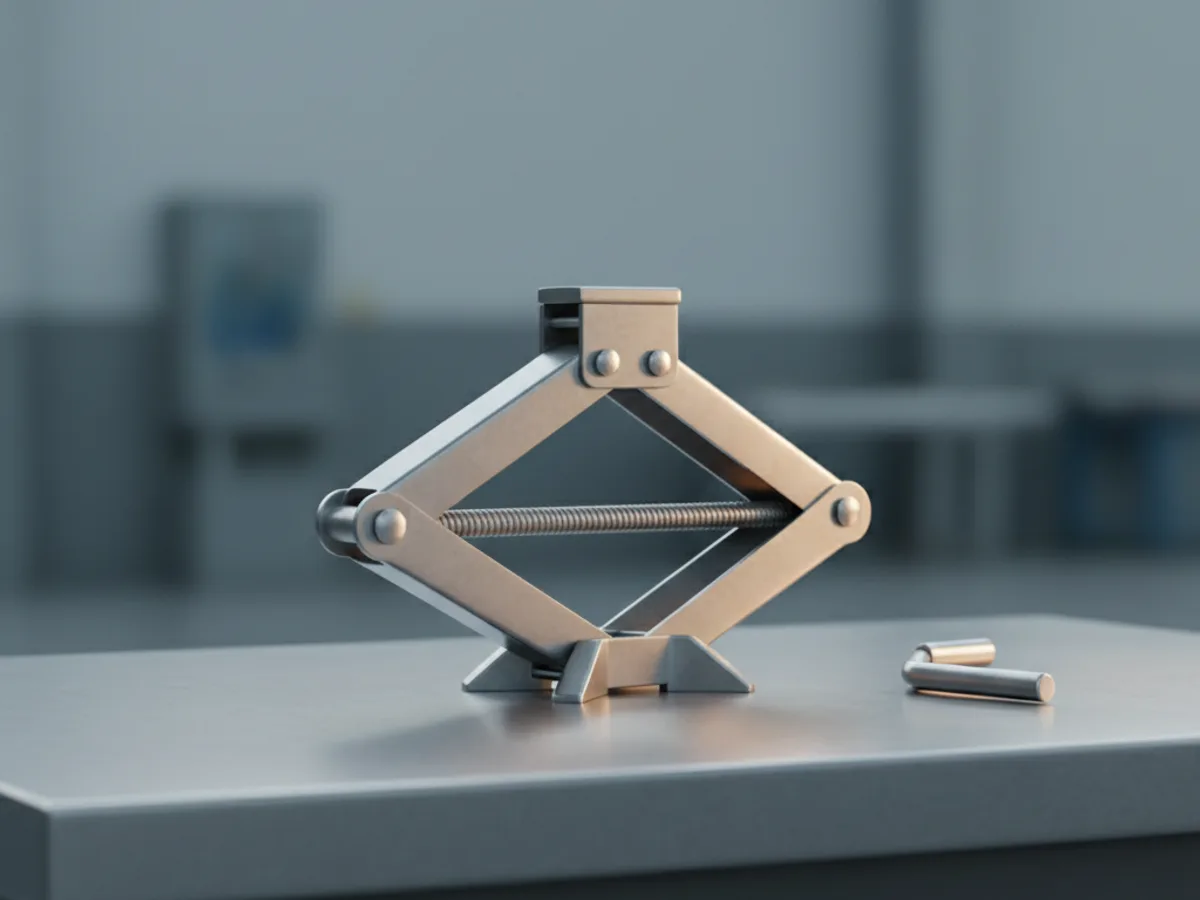
Use the designated jacking points. On most cars these are reinforced areas under the sill, often marked with a notch or an arrow, and a scissor jack saddle is usually grooved to sit on that seam. Lifting on a floor pan, a suspension arm or a plastic sill cover damages the vehicle and can let the jack slip.
Electric jacks, and what they change
A twelve volt electric scissor jack runs the screw from the vehicle accessory socket, so the work becomes pressing a button rather than kneeling on a verge turning a handle. Most include a work light, and many are sold alongside an impact wrench that runs from the same supply.
The honest picture is that they are slower than a good trolley jack and much easier than a manual scissor jack. They also draw meaningful current, which matters if the vehicle has been sitting: a battery flat enough to need a jump is a battery that will struggle to run a jack.
They still need the same discipline. Level, solid ground, the handbrake on, the vehicle in gear or in park, and the diagonally opposite wheel chocked before anything is lifted. Being powered removes the effort, not the physics.
Grease, ground and why jacks seize
A scissor jack works entirely through one threaded rod, and that thread is what seizes. A jack that has lived in a boot for six years and never been touched will be stiff or immovable at the roadside, which is precisely when nobody has the time. A wipe of grease along the thread once a year keeps it working.
Check it for damage as well. A bent linkage arm, a cracked weld or a distorted base means the jack no longer lifts squarely, and a jack lifting off centre is what topples. Anything that has been overloaded or dropped hard is worth replacing.
The ground is half the safety. Soft tarmac in summer, gravel, and grass verges all let a small base sink, and a sinking base tilts the load. A flat board under the jack spreads the load and is worth carrying, and where the ground genuinely cannot be made safe the answer is to move the vehicle or wait for recovery.