

Minimum height decides whether it fits at all
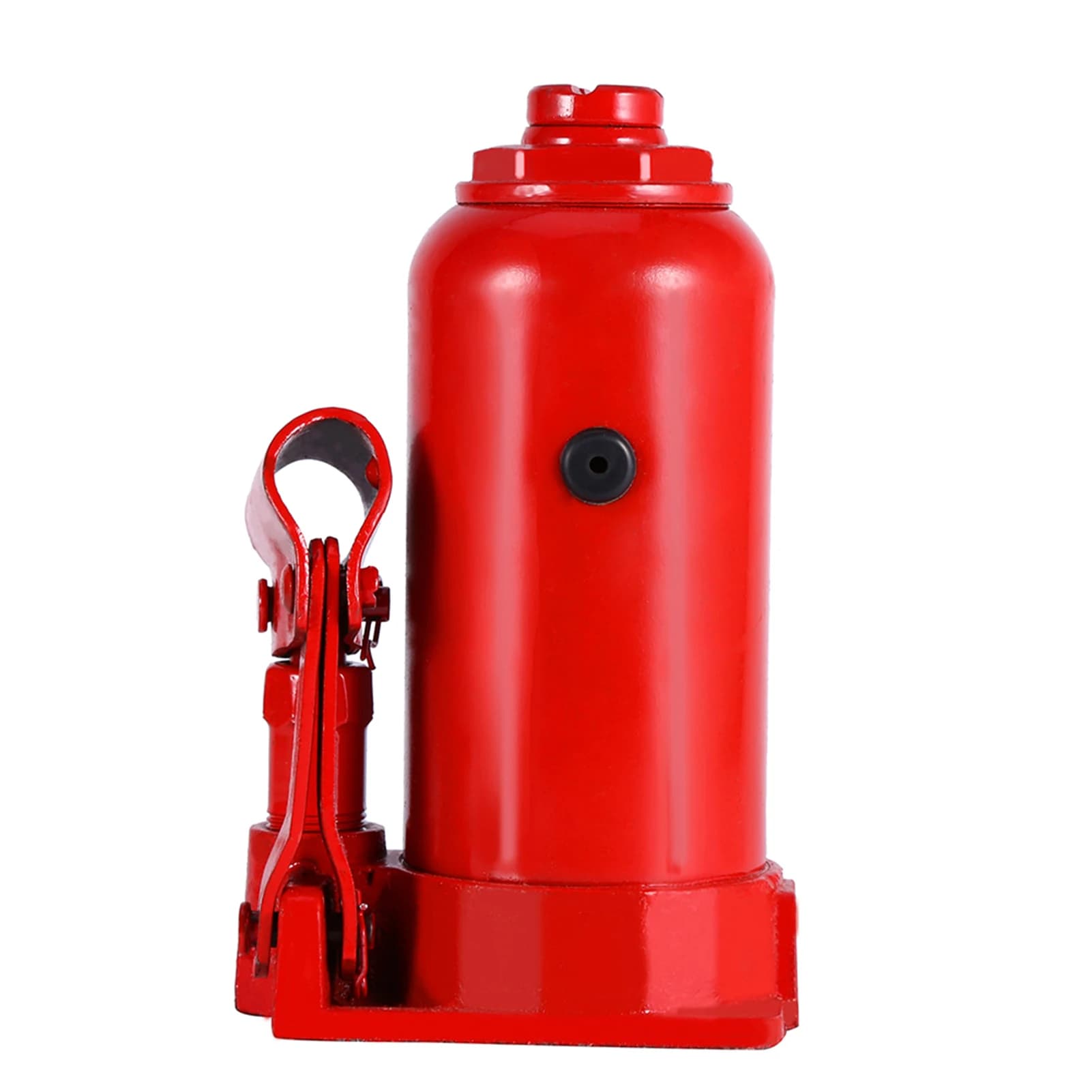
A bottle jack is tall by design, because the ram, the reservoir and the pump all stack vertically. That gives it enormous capacity for its size and it also means the closed height is substantial, often 200 millimetres or more on a larger jack.
So the first question is not how much it lifts but whether it fits under the lifting point in the first place. Measure the clearance at the jacking point with the vehicle or machine at rest, and compare it against the minimum saddle height before looking at anything else. A twenty tonne jack that will not go under the beam is no use.
The second is how far it lifts. Total travel is the ram stroke plus whatever the screw extension adds, and the extension is meant for taking up initial slack rather than for adding working height under load. Where the reach is marginal, packing under the base on firm level ground is safer than winding the extension out to its limit.
| Check | Why it comes first |
|---|---|
| Minimum saddle height | If it does not fit under the point, nothing else matters |
| Total lift | Ram stroke plus screw extension must reach the working height |
| Capacity | Usually easy to satisfy, choose well above the actual load |
Bottle jack or trolley jack
A trolley jack rolls under a vehicle, has a long handle and lifts on an arc, and its low profile gets under cars that a bottle jack cannot approach. Its capacity for a given size and price is much lower, and it is bulky to carry.
A bottle jack is compact, cheap for its capacity, and easy to keep in a truck. It lifts straight up, which means the load must be able to accept a purely vertical push, and it has a small base, which makes it less stable than a wheeled jack on anything but firm level ground.
For heavy commercial vehicles, agricultural machinery and structural lifting, the bottle jack is usually the right tool. For low cars, a trolley jack is. Many workshops keep both because the geometry rather than the capacity decides which comes out.
Never work under a load held only by a jack
A jack is a lifting device, not a supporting one. Hydraulic seals leak, valves pass, and a jack that has held for an hour can settle without warning. Every year people are killed by vehicles coming down on them, and almost all of it comes down to this one rule.
Lift with the jack, then transfer the load onto axle stands or properly rated blocking before any part of you goes underneath. Chock the wheels that stay on the ground, work on firm level hard standing, and never on soft ground, gravel or a slope where the small base can sink or slide.
Position the jack on a designated lifting point. A saddle placed on a sill, a floor pan or a sump crushes what it is pushing on, and a load that shifts as it rises is a load that will come off the jack. Raise slowly and stop at the first sign of anything moving sideways.
Air in the system, oil and storage
A jack that pumps but will not lift, or that feels spongy and sinks slowly, almost always has air in the hydraulic circuit. Bleeding it is straightforward: open the release valve, pump the handle a number of times to purge the air back into the reservoir, then close the valve and test.
Oil level is the other common cause. Too little and the jack will not reach full stroke; too much and the reservoir cannot accept the returning fluid, so the ram will not fully retract. Use hydraulic jack oil rather than brake fluid or engine oil, both of which attack the seals.
Store a bottle jack upright with the ram fully down and the release valve closed. Stored on its side, oil can pass places it should not and air finds its way in, which is why the first pump of a jack that has been lying in a toolbox often does nothing. Air hydraulic versions, which use shop air to drive the pump, still have the same hydraulic circuit and the same care applies.