
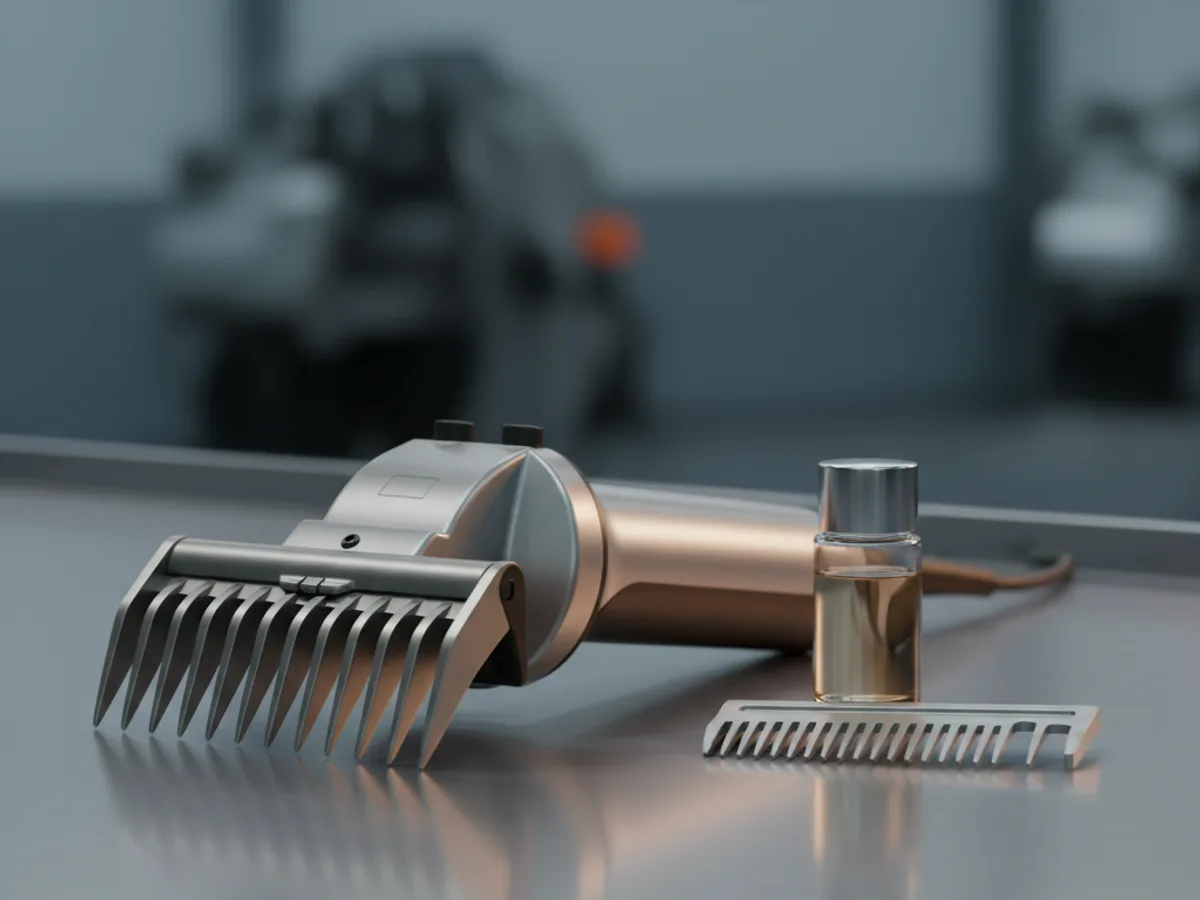


The comb and cutter are the working parts
The comb is the fixed plate that runs against the skin and lifts the wool. The cutter is the smaller moving part that sweeps across it. Cutting happens in the shear line where the two meet, so the quality of that contact decides everything about how the machine behaves.
Combs are described by their number of teeth and by their profile. A wide comb with many teeth takes a broader bite and gets a full fleece off faster, which is what a thirteen tooth comb is for. Narrower combs are slower per stroke but easier to control on a fidgeting animal, around the head and legs, and on second cuts.
Cutters wear faster than combs because they are thinner and take the reciprocating load. They are matched pairs in practice: a new cutter on a worn comb will not bed in properly, and running mismatched parts is a common cause of a machine that pulls wool instead of cutting it.
| Comb type | Best for | Trade-off |
|---|---|---|
| Wide, 13 tooth | Full fleece removal at speed | Harder to control on awkward areas |
| Narrow comb | Legs, head, crutching, nervous animals | Slower over a whole fleece |
| Fine or covered tooth | Show trimming, close finish | Not intended for heavy fleece |
Tension is the setting everything depends on
The tension nut presses the cutter against the comb. Too loose and the wool slips into the gap and is pulled rather than cut, which hurts the animal and leaves a ragged job. Too tight and the pair generate heat fast, the edges wear off within minutes, and the motor labours.
The usual method is to tighten until the head just stops slipping, then back off very slightly, and to reset tension every time you change a comb or cutter. It is a setting that drifts with use, so checking it during a session is normal practice rather than a sign that something is wrong.
Heat is the honest indicator. A correctly tensioned, well oiled head runs warm. One that is too tight becomes too hot to hold comfortably and will blue the steel at the tips, which permanently softens the edge. If a head is getting hot, stop and check tension and oil before you carry on.
Motor power, mains and battery
Mains machines in this class run from a few hundred watts up to around 1500 W, and that reserve matters most in dense, greasy or dirty fleece where a smaller motor bogs down and the shear line stalls. For a handful of animals a lower powered machine is perfectly adequate; for a full flock the extra power translates directly into fewer stalls and less time.
Battery machines running from a tool platform such as an 18 V pack trade some of that reserve for freedom from a lead, which is a genuine advantage in a race or a field pen where a trailing cable is a hazard. Runtime is the planning constraint, so a second pack on charge is part of the setup rather than an accessory.
Brushless motors appear across both types and are worth having where the machine gets heavy use. They run cooler for the same output, waste less energy, and remove the brush replacement that is otherwise routine maintenance on a machine that runs for hours at a time.
Oiling, grinding and keeping the edge
Oil goes on the comb and cutter far more often than people expect, every few minutes in continuous work. It is not only lubrication: the film carries heat out of the shear line and floats away the fine grit and lanolin that otherwise lap the edges flat. Use a light machine oil, and oil the head before it complains rather than after.
Combs and cutters are reground rather than replaced until they run out of metal. The grind has to be flat and square, which is why it is normally done on a purpose built disc grinder rather than by hand, and a set that has been ground badly will never bed in no matter how it is tensioned.
Between jobs, clean the head properly and keep it lightly oiled against rust. Wool grease sets hard and holds moisture against the steel, and a set left dirty over a wet winter can be pitted enough by spring that a regrind will not recover it.