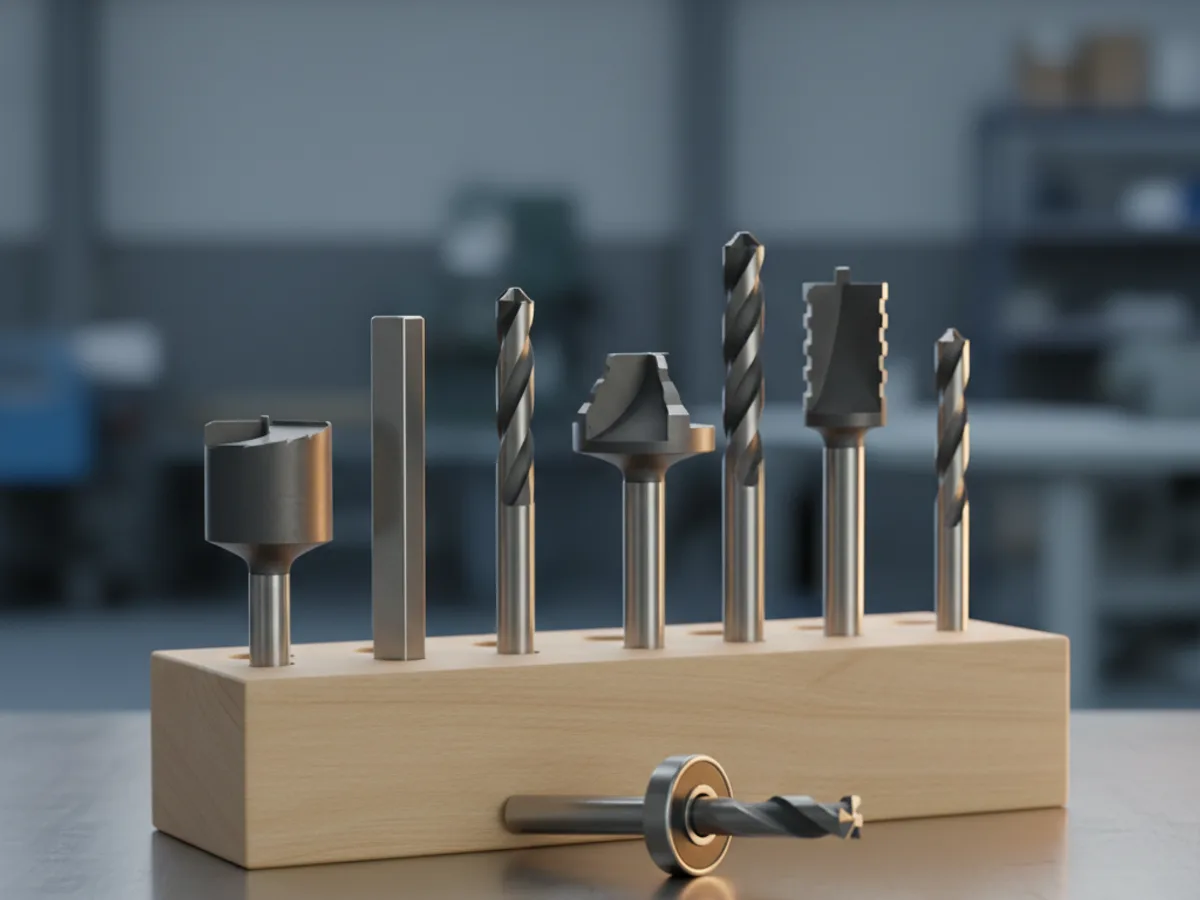

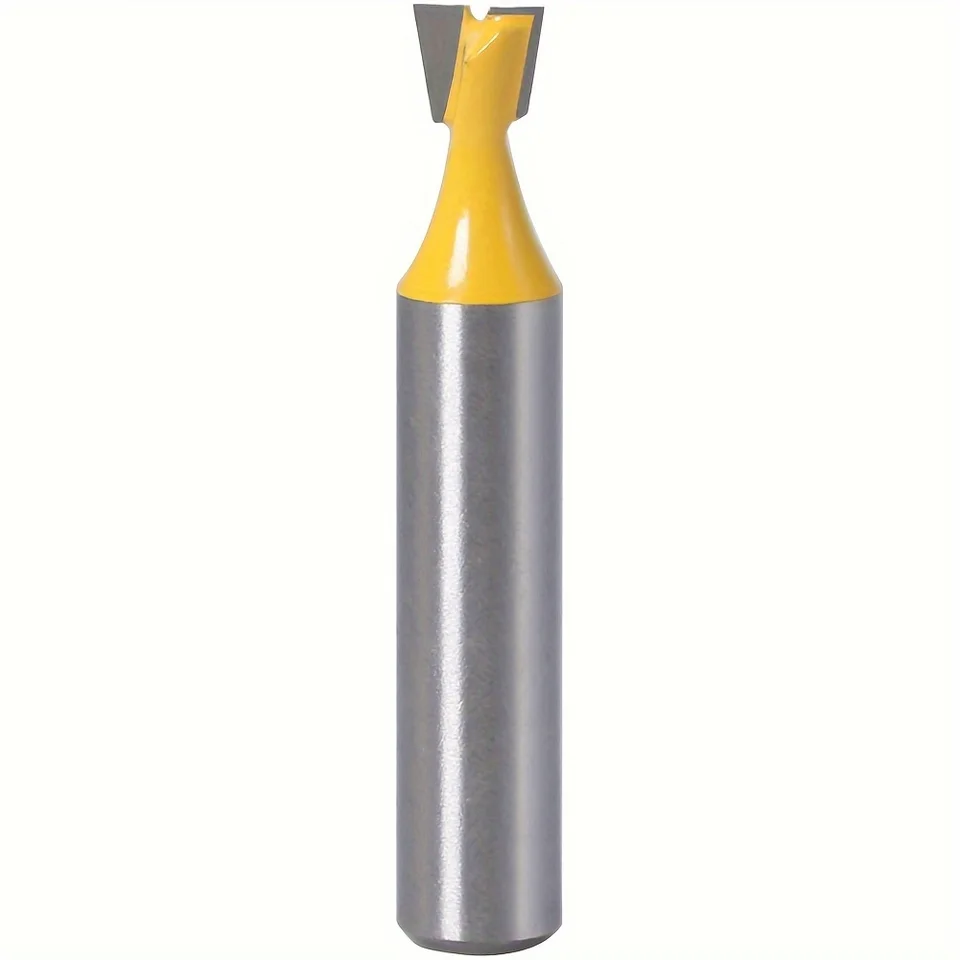


Shank diameter decides how much the bit flexes
The common shank sizes are 6 mm, 8 mm, quarter inch and half inch. Bigger is stiffer, and stiffness matters because a cutter overhanging its collet is a lever: the deeper the cut and the wider the profile, the more a thin shank deflects and chatters.
The difference is larger than the numbers suggest, because stiffness rises very steeply with diameter rather than in proportion to it. That is why an 8 mm shank is noticeably steadier than a 6 mm one on the same cut, and why large profile cutters are made with half inch shanks and are not offered on quarter inch.
Buy for the collet you have, and check whether your router came with more than one. Many take 6 mm and 8 mm collets, or quarter and half inch, and the collet is what constrains the choice rather than the router body.
| Shank | Suits | Note |
|---|---|---|
| 6 mm and 1/4 inch | Trimming, small profiles, light passes | Flexes on deep or wide cuts |
| 8 mm | General woodworking, most profiles | Noticeably steadier than 6 mm |
| 1/2 inch | Large profiles, surfacing, heavy stock removal | Needs a router with the collet for it |
Bearings, templates and flush trimming
A bearing on a router bit rides against a surface and sets how deep the cutter goes. On a flush trim bit the bearing matches the cutter diameter exactly, so the cutter follows a template or an existing edge and removes everything proud of it. That is what makes template routing possible.
Bearing position tells you what the bit is for. A bearing at the tip lets the template sit under the work; a bearing at the shank end lets it sit on top. Bits with both let you flip the workpiece and cut with the grain in either direction, which is how you avoid tear-out on figured timber.
Bearings are consumable and replaceable. They pack with resin and dust, and a bearing that has seized stops rolling and starts burnishing or burning the edge it is supposed to follow. Cleaning them with solvent and checking they spin freely takes seconds and saves a workpiece.
Solid carbide, carbide tipped and coatings
Carbide tipped bits have a steel body with brazed carbide edges, and they are the workhorse for general woodworking. Solid carbide bits are carbide throughout, which lets them be made much smaller and sharper, and they are what small diameter cutters and spiral bits are made from because a brazed tip cannot be that fine.
Spiral bits deserve a mention because the direction matters. An up-cut spiral lifts chips out of the cut, which clears slots well and tears the top face. A down-cut presses the top fibres down for a clean top edge and packs chips into the slot. Compression bits combine both, cutting up at the bottom and down at the top, which is what leaves both faces of veneered board clean.
Coatings such as titanium or aluminium titanium nitride reduce friction and heat and help on abrasive sheet materials. They are worth having on bits that see MDF and chipboard all day, and they make little difference on occasional work in solid timber.
Feed direction, depth of cut and burning
The bit turns clockwise seen from above, so on an outside edge you feed the router left to right, against the rotation. Feed the other way and the bit tries to pull itself along the work, which is a climb cut: it can grab, run away from you and spoil the cut in an instant. On the inside of a frame the direction reverses.
Take the depth in passes. A large profile cut in one go loads the bit, heats it and produces a poor surface, and on a hand-held router it is the moment things go wrong. Several shallow passes cut faster overall because the bit stays sharp and the router stays controllable.
Burn marks mean heat, and heat comes from dwelling in one spot, from a blunt or resin-clogged cutter, or from too slow a feed for the speed. Keep the router moving at a steady rate, clean the resin off the cutter with solvent rather than scraping it, and drop the speed on large diameter bits, whose rim speed is much higher than a small cutter at the same setting.