
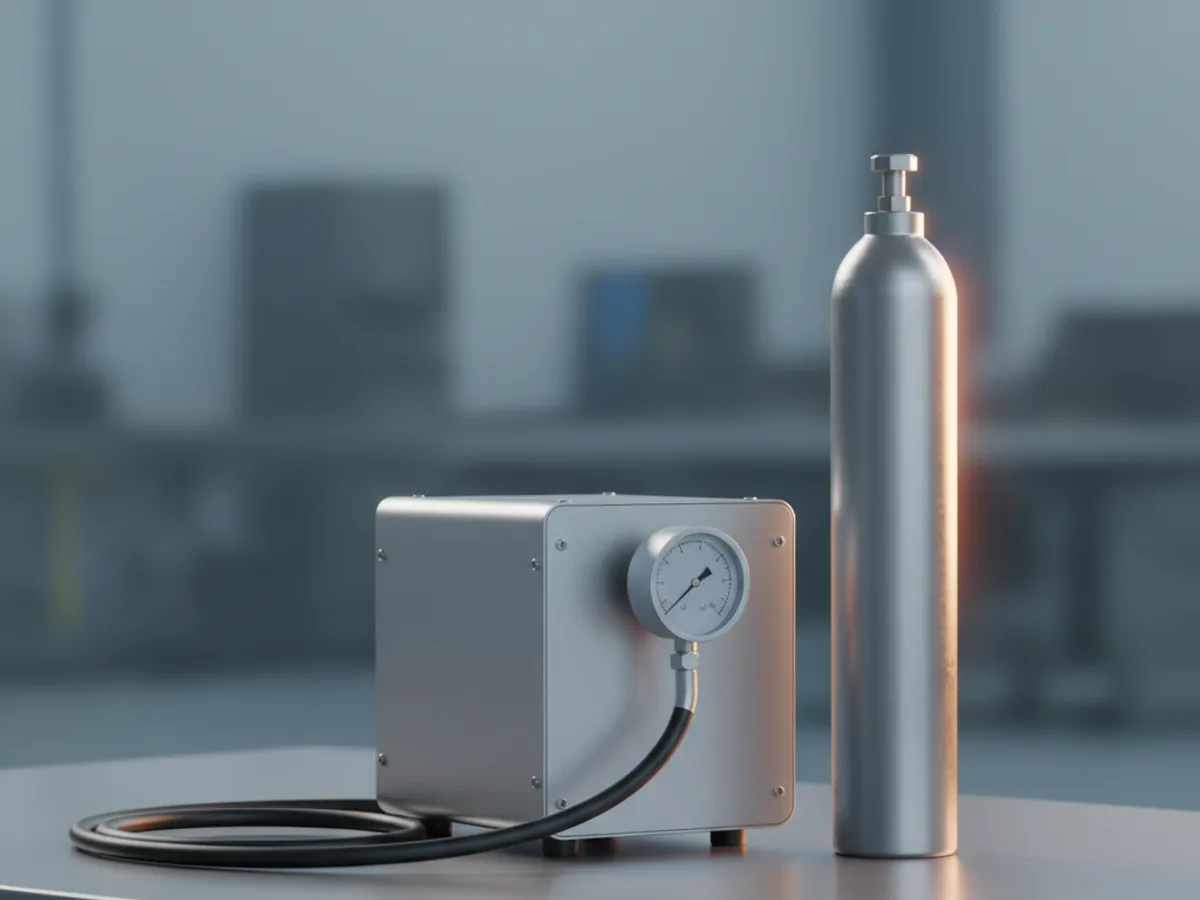


Moisture is the enemy at this pressure
Compressing air squeezes the water vapour in it into liquid, and the higher the pressure the more comes out. At three hundred bar a surprising amount of water is produced from ordinary humid air, and it has nowhere to go except into the cylinder you are filling.
Inside a cylinder or an air rifle reservoir, that water corrodes from the inside where nobody looks. It also carries into the valve and the regulator, where it affects the shot to shot consistency people buy these guns for.
Machines therefore have a moisture separator, usually with a bleed valve to drain condensate between fills, and most take a filter cartridge with desiccant and activated carbon. Draining the separator regularly and replacing the cartridge on schedule is the whole maintenance routine, and skipping it is what ruins cylinders.
| Feature | Why it matters | Watch for |
|---|---|---|
| Cooling method | These run hot and stop for heat | Water cooling on longer fills |
| Auto stop at pressure | Fills unattended and stops | Cheaper units may lack it |
| Moisture separator and filter | Keeps water out of the cylinder | Cartridge replacement cost |
| Supply, mains or 12 volt | Where it can be used | 12 volt units draw heavy current |
| Breathing air certification | Whether it may fill for diving | Most PCP units are not certified |
Filling for breathing is a different standard
Air that fills an air rifle only has to be dry and clean. Air that someone will breathe underwater has to meet a defined purity standard covering moisture, carbon monoxide, carbon dioxide and oil content, and that is achieved with a proper filtration stack, regular air testing and a compressor built and certified for the purpose.
Many compact high pressure compressors are marketed alongside diving imagery while not being breathing air compressors. The specific risk with an oil lubricated machine is oil carryover, and carbon monoxide can also be produced if the machine overheats. Neither is detectable by the person breathing the cylinder.
The safe position is straightforward. Unless a compressor is explicitly specified and certified for breathing air, and maintained with tested filtration, use it for air guns and industrial applications only, and have diving cylinders filled by a dive centre.
Heat, duty cycle and filling slowly
Compressing air to this pressure generates a great deal of heat, and these are small machines with limited ability to shed it. Most are rated for a short run time followed by a cooling period, and ignoring that is the commonest way they fail.
Water cooled units, either with a jacket or a bucket and pump arrangement, handle longer fills considerably better than fan cooled ones. If the intention is to fill large cylinders rather than top up a rifle, cooling should drive the choice of machine.
Filling slowly is also better for the result. Air heats as it is compressed into the cylinder, and a cylinder filled quickly reads at its target pressure while hot and then falls short once it cools. Filling gently and topping up after it settles gives a genuine fill.
Cylinders, test dates and burst discs
The cylinder is the part that stores the energy, and it is subject to periodic inspection and hydrostatic testing. A cylinder out of test is not a paperwork problem: fibre wrapped and steel cylinders both degrade, and testing is how damage is found before it matters.
Never exceed the working pressure stamped on the cylinder. A machine capable of three hundred bar will happily overfill a cylinder rated for less, and the auto stop setting is what prevents that, so check it against the cylinder rather than assuming.
Cylinders and fill adaptors have burst discs designed to vent if pressure gets away. Treat a burst disc that has operated as a signal that something went wrong rather than as a part to replace and carry on. Store cylinders secured, away from heat, and depressurise the fill hose before disconnecting.