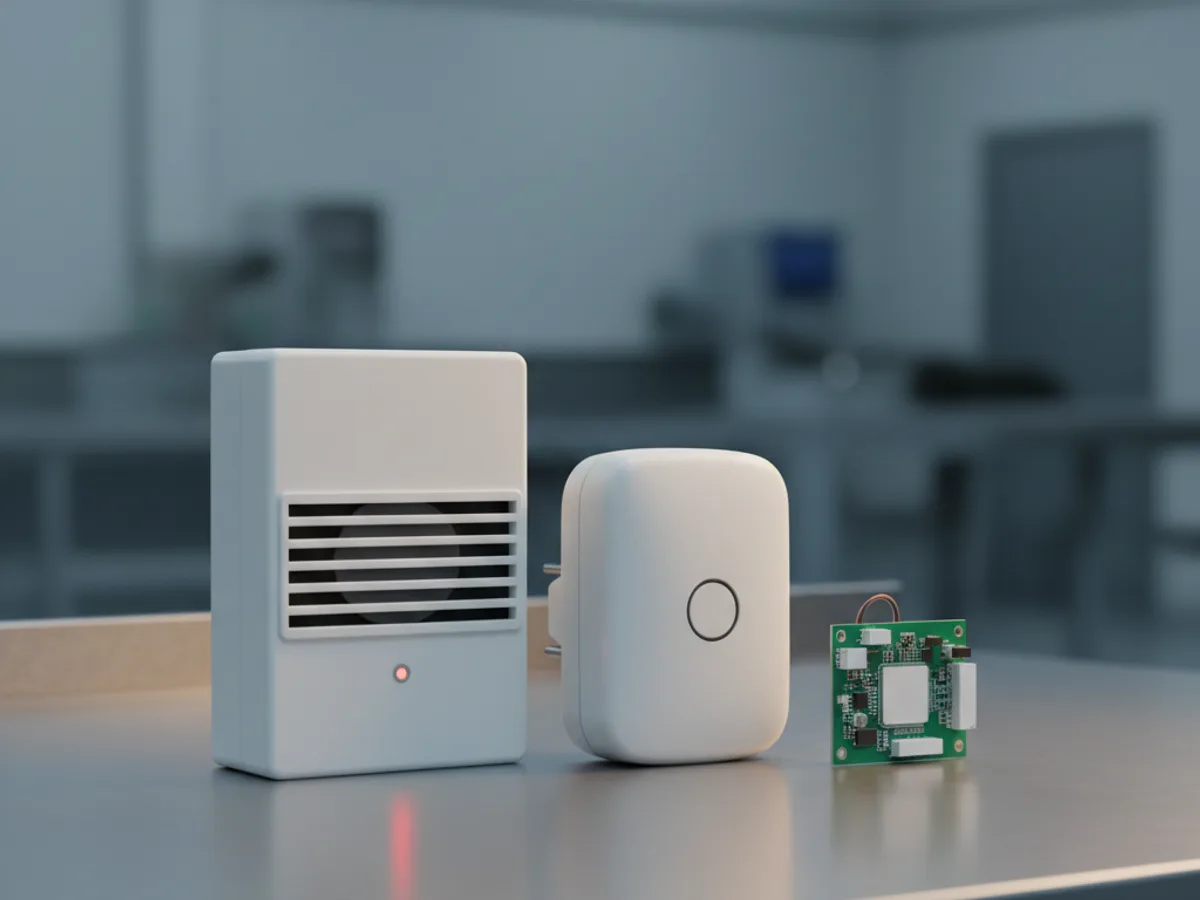


Combustible gas, carbon monoxide and carbon dioxide
These three are constantly confused and they protect against completely different things. A combustible gas detector senses methane from a mains gas supply or propane and butane from LPG, and it warns you that unburned fuel is escaping. Its job is to prevent an explosion.
A carbon monoxide alarm senses a colourless, odourless poison produced when a fuel burns without enough air. It is looking for the product of combustion rather than the fuel itself, so it will happily sit silent through a gas leak. Conversely a combustible gas alarm will not react to carbon monoxide, because there is no combustible gas present. Where both risks exist, which is any room with a fuel burning appliance and a gas supply, you need both functions, either as two devices or as one of the combination units that carries two separate sensors.
A carbon dioxide monitor is not a safety device at all in this context. It measures how well a room is ventilated. Outdoor air currently sits at roughly 420 parts per million, a well ventilated room stays under about 800, and readings climbing past 1,000 indicate the air is being recirculated rather than replaced. That is useful for air quality and for judging ventilation, and it tells you nothing about a gas leak.
| Detects | Warns about | Will it see a gas leak? | Typical sensing method |
|---|---|---|---|
| Methane, LPG | Explosive atmosphere from escaping fuel | Yes, that is its job | Semiconductor or catalytic bead |
| Carbon monoxide | Poisoning from incomplete combustion | No | Electrochemical cell |
| Carbon dioxide | Poor ventilation and stale air | No | Infrared absorption |
Mounting height depends on which gas you are chasing
Methane, the main component of mains natural gas, is lighter than air. A leak rises and collects at ceiling level, so a natural gas detector belongs high on the wall or on the ceiling, near but not directly above the appliance.
LPG is the opposite. Propane and butane are both heavier than air, so a leak sinks and pools at floor level, in pits and under units. An LPG detector mounted at ceiling height may not see a substantial leak until far too late, which is why detectors for caravans, boats and bottled gas installations are mounted low, typically within about thirty centimetres of the floor.
Carbon monoxide is close to the density of air and moves with it, so a carbon monoxide alarm goes at roughly breathing height or as the manufacturer directs, kept clear of the appliance itself, of windows and of anywhere the air is stagnant. If a single unit claims to cover both a gas leak and carbon monoxide, check that the mounting height it specifies is right for the gas you are actually most worried about, because one position cannot be ideal for both.
Sensing method, drift and end of life
Domestic combustible gas alarms usually use a semiconductor sensor, the type found in the low cost modules sold for electronics projects. A heated metal oxide surface changes resistance in the presence of a target gas. It is cheap and sensitive, but it is not very selective, so alcohol, aerosols, solvents and cooking fumes can all set it off, and it drifts as the element ages. Industrial fixed detection instead tends to use catalytic bead sensors calibrated in percentage of the lower explosive limit, which for methane is five per cent by volume in air.
Carbon monoxide alarms use an electrochemical cell, which is a small wet cell that is consumed as it works. That gives it a defined service life, commonly seven to ten years, after which the alarm must be replaced rather than merely having its battery changed. A date is normally moulded into the case, and an alarm past that date should be treated as decorative.
Carbon dioxide is measured by infrared absorption, and this is where a specification check pays. A genuine infrared sensor measures carbon dioxide directly. Cheaper modules report an estimated figure derived from a volatile organic compound sensor, sometimes labelled eCO2, which infers the level from something else entirely and can be badly wrong when there are solvents or cleaning products in the air. If the reading matters, confirm the sensor is a real infrared type.
What to check before fitting one
Look first for the standard the unit is certified to rather than the marketing text. Domestic carbon monoxide alarms sold in the UK are expected to meet BS EN 50291, and the mark should appear on the alarm body and the packaging, not only in a listing description. We list what the seller declares for each item, and where a certification claim matters to you it is worth confirming it on the unit itself before relying on it.
Check whether the device alarms locally or only notifies an app. A WiFi sensor that pushes a phone alert is useful, and it is not a substitute for an audible sounder in the room: an app notification is no help to someone asleep with a flat phone, and the sensor stops reporting entirely if the network is down. Anything relied on for safety should make a noise where the people are.
Finally, check power and testing. Mains powered units are fine until a power cut takes them out, so a battery backup matters. Semiconductor sensors need a warm up period after switching on before their readings mean anything, typically minutes, and a longer initial burn in when new. Every unit should have a test function, and the test button on most alarms checks the sounder and electronics rather than the sensor itself.