


Blade material decides what it cuts
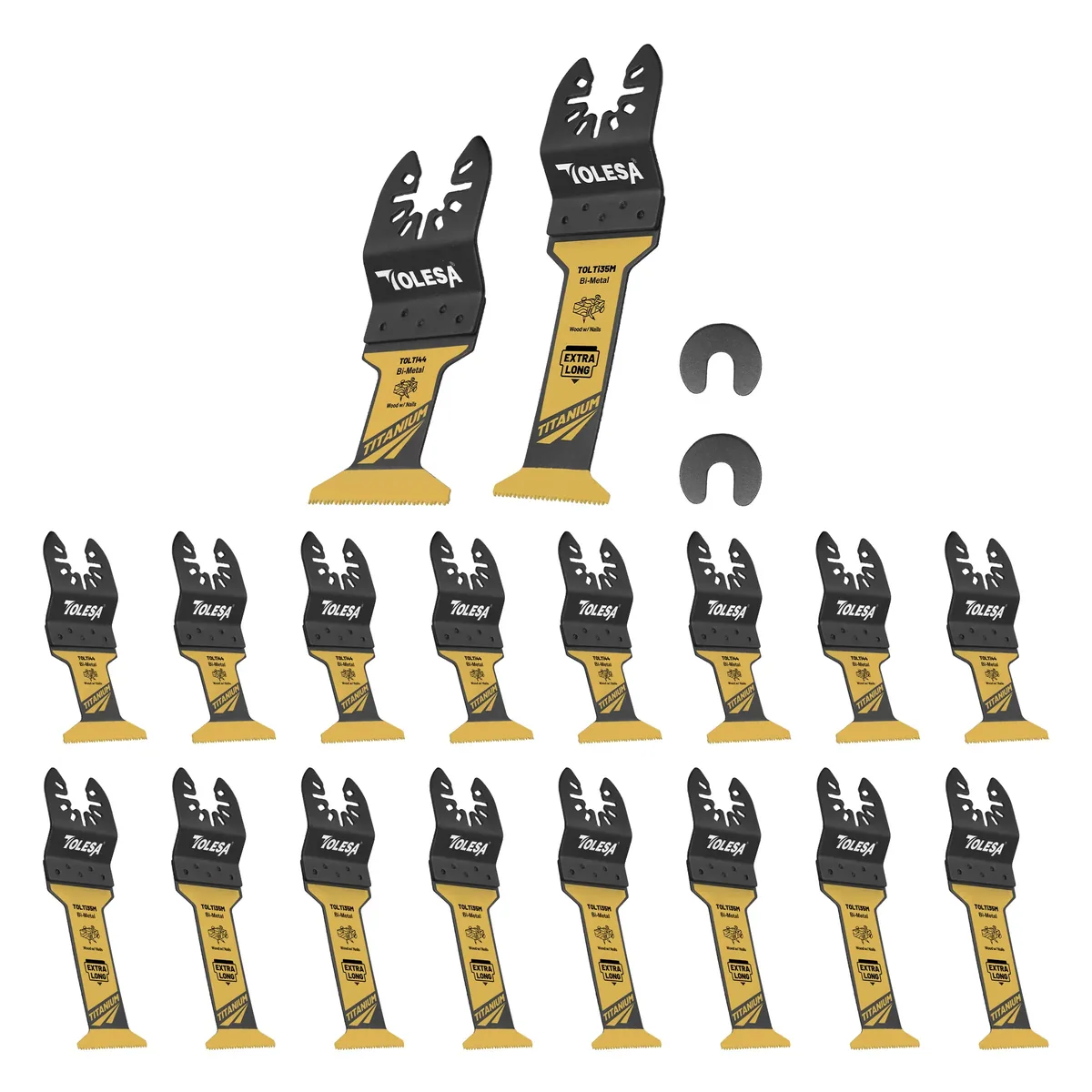
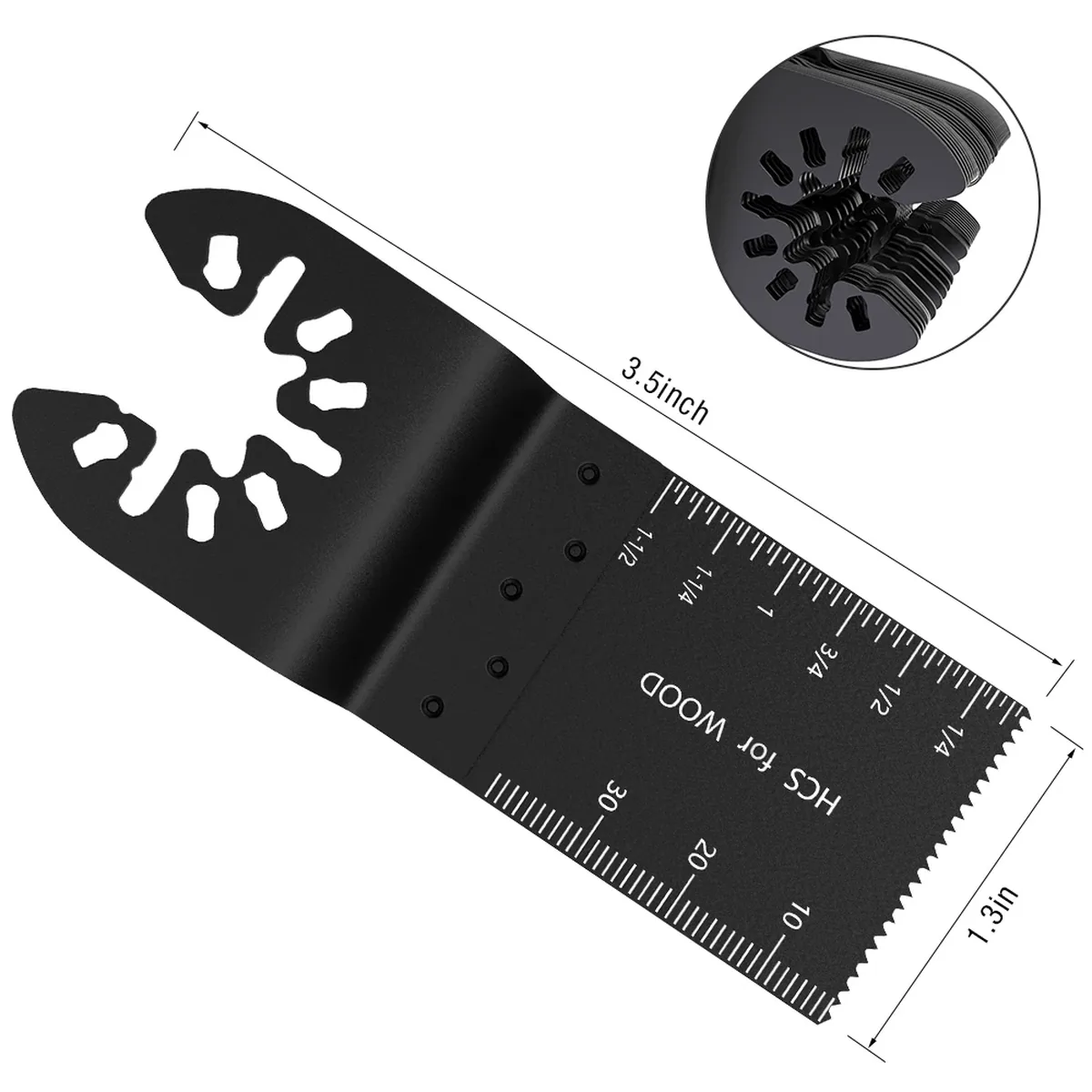
High carbon steel blades cut clean timber and plastic quickly and cheaply, and they are ruined instantly by a nail. Bi-metal blades weld a harder cutting edge to a flexible body, which is what lets them go through embedded nails and screws without losing teeth, and they are the sensible default for renovation work where you do not know what is in the wood.
Carbide toothed blades go further again, cutting cement board, hardened fixings and abrasive materials that would strip a bi-metal blade in seconds. They cost several times as much and last correspondingly longer in the materials they are meant for.
Diamond and carbide grit blades have no teeth at all. They abrade rather than cut, which is what grout, tile and stone need, and they are useless on wood because there is nothing to clear the waste.
| Material to cut | Blade | Note |
|---|---|---|
| Clean timber, plastic | High carbon steel | Fast and cheap, destroyed by nails |
| Timber with nails or screws | Bi-metal | The default for renovation work |
| Cement board, hardened fixings | Carbide toothed | Expensive and long lasting in the right material |
| Grout, tile, stone | Diamond or carbide grit | Abrades rather than cuts |
| Adhesive, sealant, carpet | Rigid or flexible scraper | Rigid for hard deposits, flexible for surfaces |
The mount, and whether a blade fits at all
Early oscillating tools each had their own blade fitting, and that history is still in the market. Most modern tools use a universal star shaped mount that accepts blades from many makers, and some use a proprietary quick change system with its own interface.
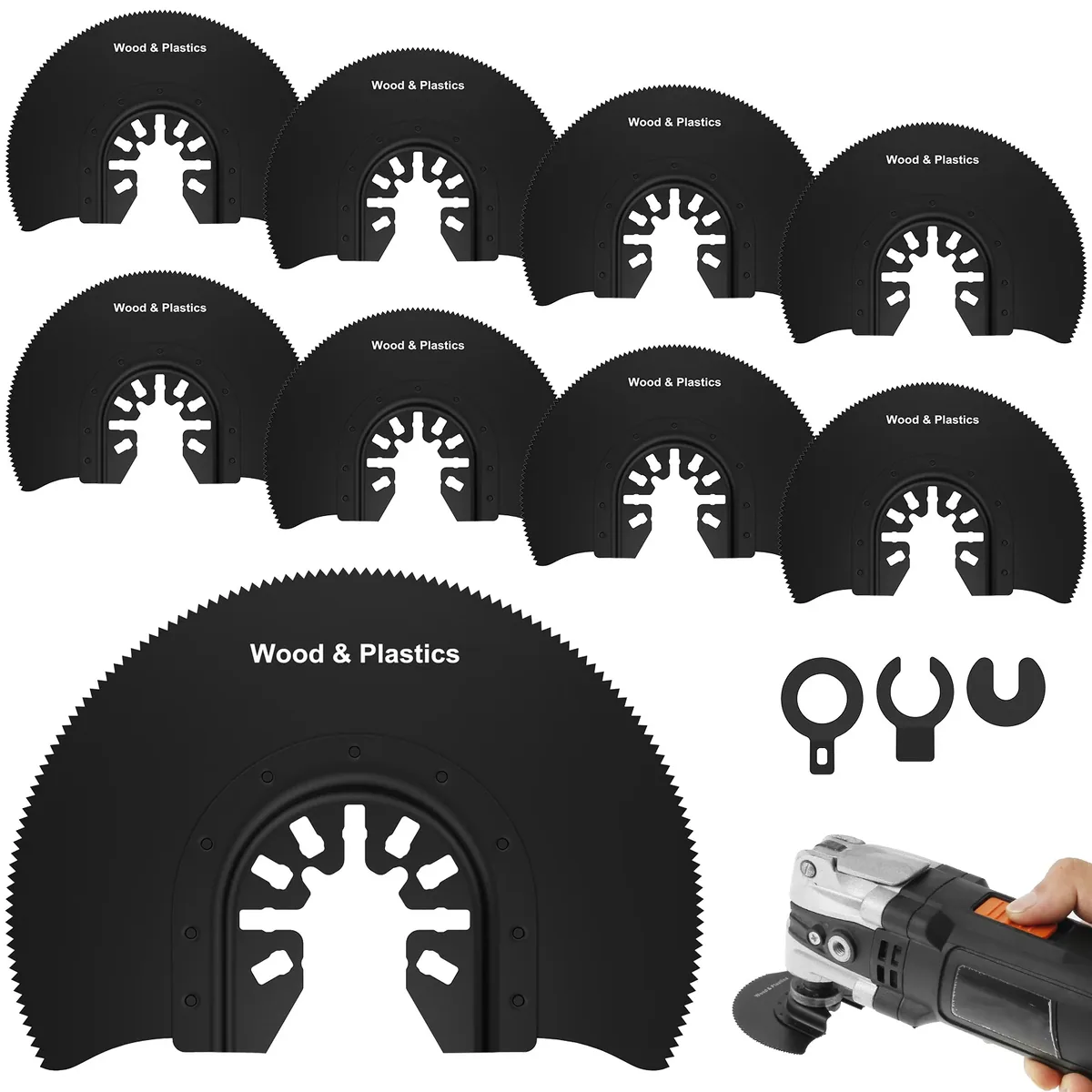
Blades sold as universal fit have a slotted opening designed to sit on several patterns, which is what makes a generic blade pack work across brands. A tool with a proprietary system will usually accept universal blades through an adapter, and its own blades will not fit anything else.
Before buying a blade set, check the mount rather than the brand. A large multi pack that does not fit the tool is a common and avoidable purchase, and quick change tool holders that need no tool to swap blades are worth having, because blade changes are frequent on this kind of work.
Let it cut, because pushing does not help
The blade moves a very short distance very quickly, so cutting happens through many tiny strokes rather than through force. Pressing hard reduces the amplitude of the oscillation, which slows the cut down, and the wasted energy comes out as heat in the blade.
Heat is what kills these blades. An overheated blade loses its temper, the teeth go blunt within seconds and the blade is finished, and the tell is a blue discoloured edge. Light pressure, letting the tool set the pace and lifting it out periodically to let it cool, gets far more work out of each blade.
Rock the tool gently as you cut. Using the whole width of the blade edge rather than one spot spreads the wear and clears waste better, which is particularly noticeable on long cuts in timber where a static blade quickly cuts a slot it cannot clear.
Plunge cutting, and the jobs nothing else does
The value of this tool is access. It plunges into the middle of a panel without a pilot hole, cuts flush against an adjoining surface, and works in a corner where nothing round can reach. Cutting a socket box into fitted plasterboard, or trimming a door architrave in place to slide flooring underneath, are the jobs it does that no other tool does neatly.
Depth control is by eye, which is a real limitation when there might be a cable or a pipe behind. Marking the blade with tape at the intended depth is the simple habit that prevents cutting further than you meant to, and checking what is behind a surface before plunging into it is worth the two minutes.
Cordless suits the tool well because the work is intermittent and access driven, and dust extraction attachments are worth having for grout removal in particular, which produces a great deal of fine silica dust that belongs in a vacuum rather than in the room.