


The sweep number is the whole naming system
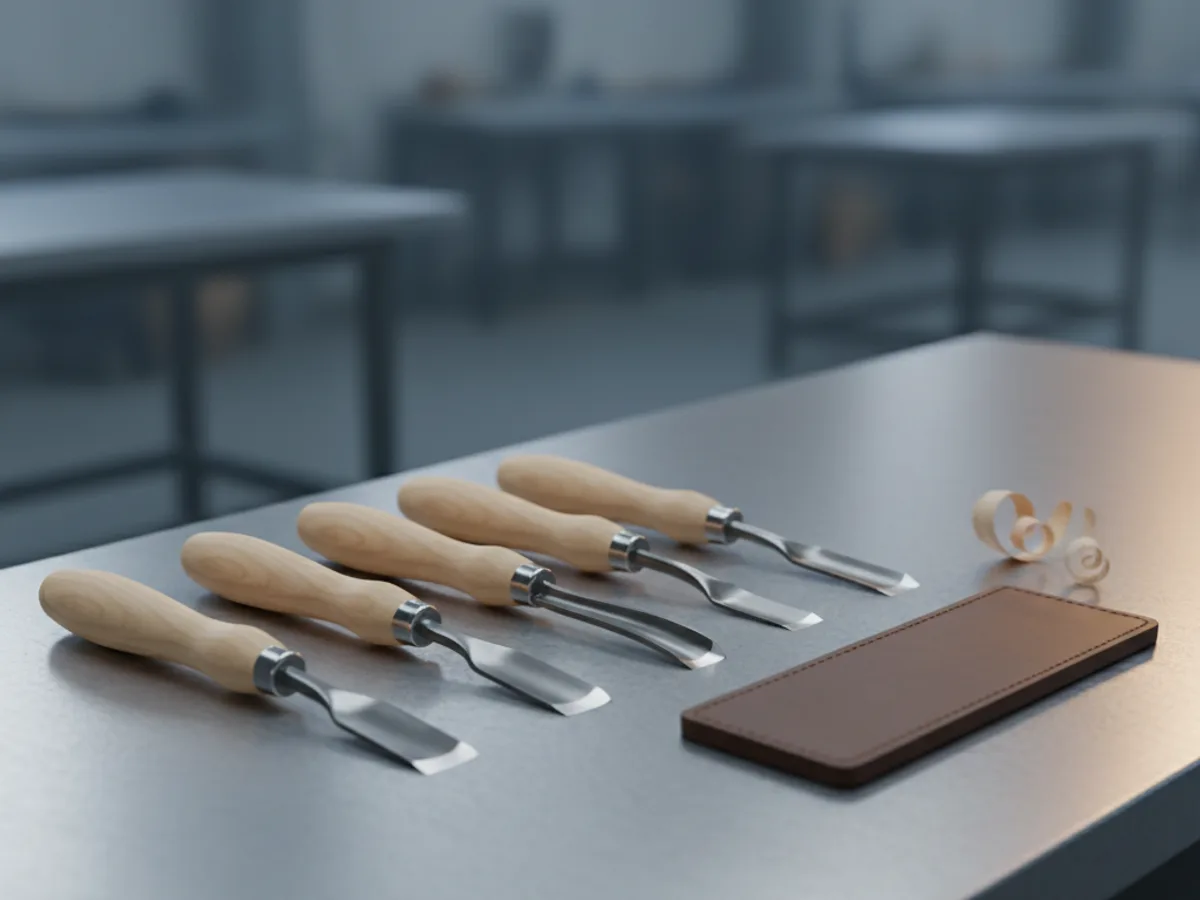
A carving gouge is a chisel with a curved cutting edge, and the sweep number says how curved. Number 1 is flat, a straight chisel. The numbers climb through progressively deeper curves, so a 3 takes a shallow scoop and a 9 cuts almost a semicircle in one pass.
The V tools are separate. Rather than a curve they have two flat faces meeting at an angle, and they are numbered by that angle: a narrow V cuts a fine crisp line, a wider one a broader groove. They are the tool for outlining and for lettering.
A tool is therefore described as a sweep and a width together, such as a number 5 by 12 millimetres. That pair identifies the shape exactly, which is why the same designation from different makers cuts the same profile even when the handles look nothing alike.
| Number | Shape | Used for |
|---|---|---|
| 1 | Flat, a straight chisel | Paring, cleaning up flats |
| 3 to 5 | Shallow to medium curve | General shaping, most used sweeps |
| 7 to 9 | Deep curve toward a half circle | Hollowing and heavy waste removal |
| 11 | Very deep, a U shaped veiner | Narrow deep channels |
| V tools | Two flats meeting at an angle | Outlining and lettering |
Which tools a first set actually needs
A large boxed set looks like value and usually contains several tools that never get picked up. Most carving is done with a handful: a shallow gouge for shaping, a medium one for waste, a deep one for hollowing, a straight chisel and a V tool for lines.
Widths matter more than count. One sweep in two or three widths covers far more work than five sweeps in one width, because the width is what has to match the curve you are cutting into.
Palm tools and full length tools are two different ways of working. Palm tools are short, pushed with the hand and suited to small detailed work at a bench. Full length tools are held in one hand and driven with a mallet in the other, which is what removes real material. A carver generally ends up with some of each rather than choosing between them.
Grain direction, mallets and holding the work
Wood tears when cut against the grain and slices cleanly when cut with it, and on a curved surface the correct direction changes as you go round. Reading that as you work, and turning the tool or the workpiece rather than forcing on, is most of what separates a clean carving from a torn one.
Cut away from the hand holding the work, always. The carving tool that slips goes exactly where it was pointed, and the traditional injury is into the hand steadying the piece. Better still, do not hold the work at all.
Clamp it, or use a carving screw or a bench hook, so both hands are on the tool. That is also what allows a mallet to be used properly, and a mallet with a controlled tap gives far more control than leaning on a tool with body weight, which is the other way people slip.