Goods only means goods only
A lift designed to carry people has to hold the car if a rope or a hydraulic line fails, control its speed on the way down, and prevent the doors opening away from a landing. Those systems are a substantial part of what a passenger lift costs.
A goods only lift is built without some of them because nothing on it is expected to be hurt by a fall. That is a legitimate design for moving pallets between floors, and it is exactly why nobody should travel on one. The temptation is obvious and the consequence is not survivable.
Where people genuinely need to move with the load, the equipment required is a passenger or goods passenger lift, and the cost difference reflects real engineering rather than paperwork. Deciding this at specification time is far cheaper than discovering it after installation.
| Question | Why it decides the machine | Common mistake |
|---|---|---|
| Will anyone ride on it? | Sets the standard the lift must meet | Buying goods only then using it for people |
| Platform size against the load | The load must sit inside the platform | Ordering on weight alone |
| Travel and number of landings | Drive type and shaft design | Forgetting pit and headroom |
| How often it runs | Duty rating of the power unit | Sizing for peak, not for cycles |
Capacity, platform size and off centre loads
The rated capacity assumes the load sits reasonably centrally on the platform. Put the same weight at one corner and the guides and rollers take a side load they were not sized for, which binds the carriage and wears the guide system quickly.
Platform dimensions therefore matter as much as the weight rating. A load that overhangs is both an eccentric load and a collision risk against the shaft, and the fix is a bigger platform rather than a higher weight rating.
Think about how the load gets on and off, too. A pallet truck riding onto the platform adds its own weight and imposes a rolling load at one edge, and a lift specified for the pallet alone may be marginal once the truck is on it as well.
Hydraulic and chain drives, and where each fits
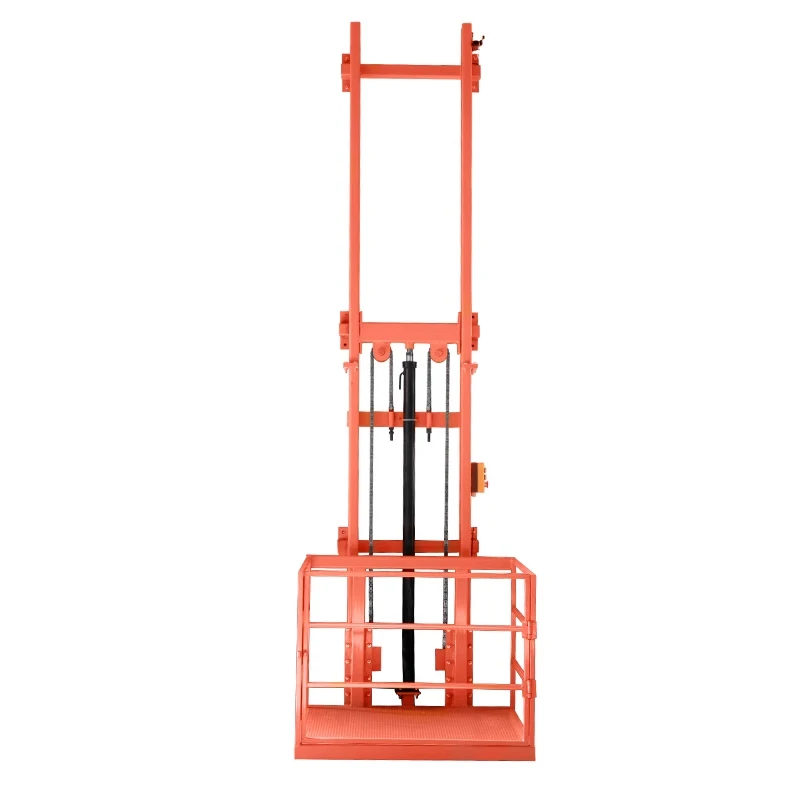
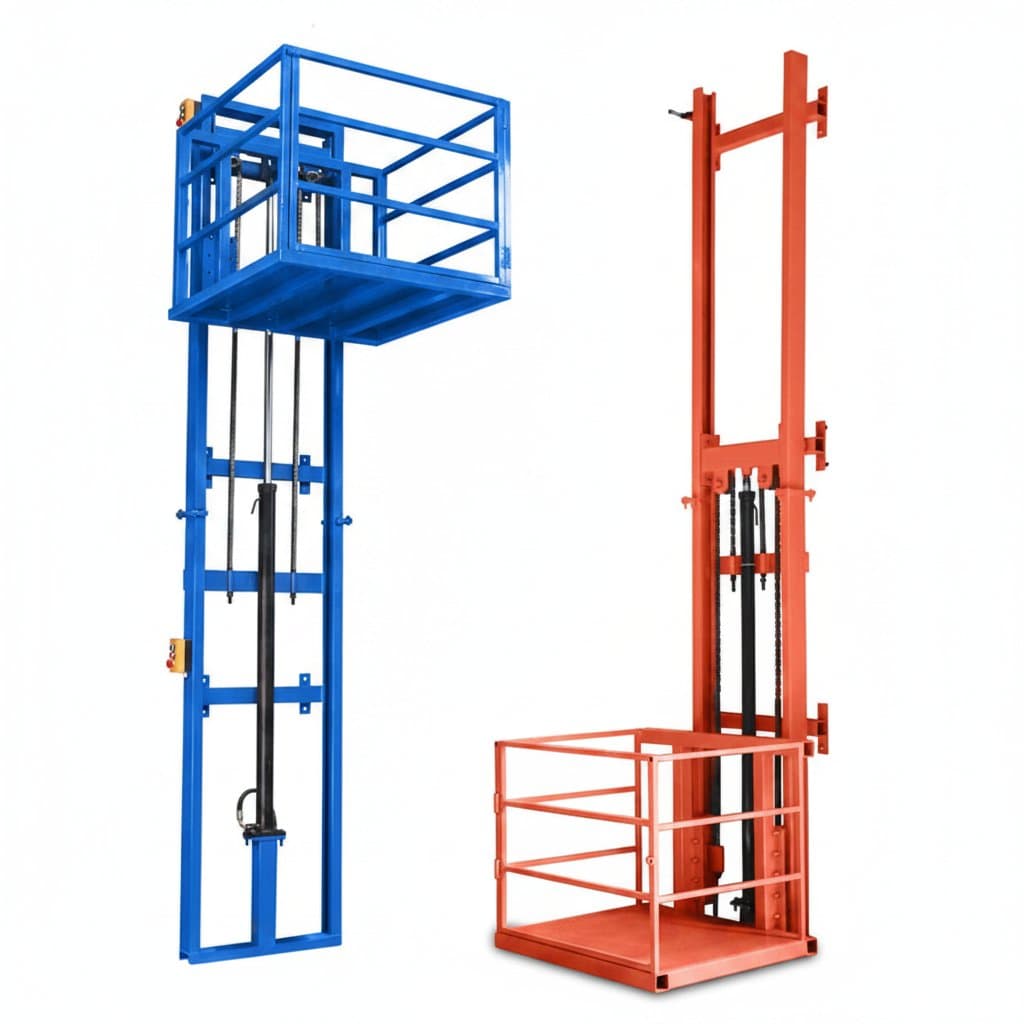
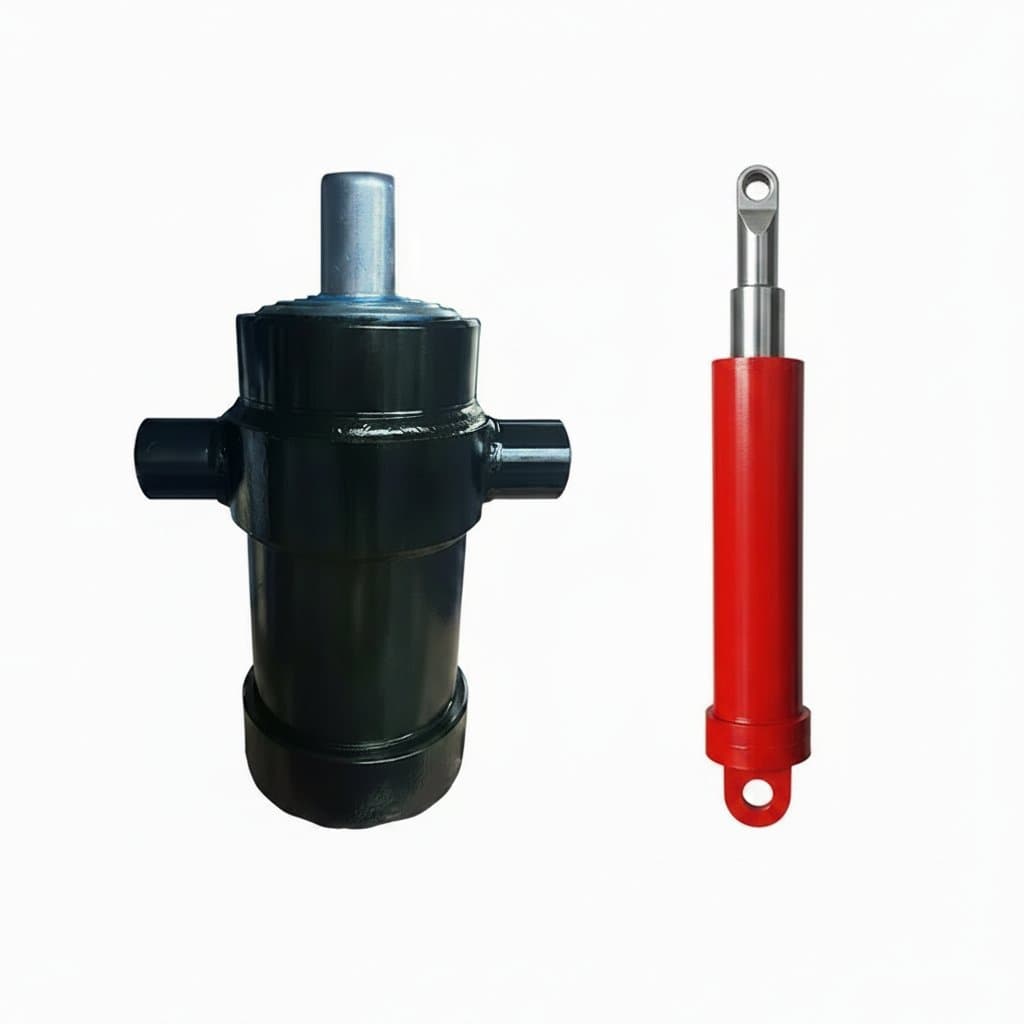
Hydraulic lifts push the platform up with a ram and lower it by releasing oil back to the tank. They are mechanically simple, hold position well, and are limited in travel and speed, which suits low rise goods movement between two or three floors.
The safety device that matters on a hydraulic lift is the rupture valve, fitted at the cylinder. If a hose bursts, the sudden rush of oil closes the valve and the platform stops instead of dropping. A hydraulic lift without one relies on the hose never failing.
Chain and traction drives suit taller travels and faster cycles and carry their own arrangements for arresting a fall. Whichever drive, interlocked gates are what stop the lift moving while a gate is open and stop a gate opening when the platform is elsewhere, and they are not an accessory to leave off.
Installation, examination and the paperwork
Installation is a building job as much as a machine job. The pit depth, the headroom above the top landing, the floor loading under the ram or the frame, and a supply of the right rating all have to exist before the lift arrives, and retrofitting a pit into an existing slab is the expensive surprise.
Lifting equipment in a workplace is subject to thorough examination by a competent person at defined intervals under the lifting regulations. Equipment used to lift people is examined at least every six months, and other lifting equipment at least every twelve, with a written report each time.
That is a legal duty on the person operating the equipment rather than a manufacturer recommendation, so budget for it as an annual cost. Keep the reports, act on defects promptly, and record the routine servicing separately, since examination and maintenance are different things.