Help
Compel Groupgroup

Laser Distance Meters and Laser Tape Measures

Author: James Whitfield, Equipment Desk5 min read
Updated

A laser distance meter measures by timing light to a surface and back, so one person can measure a room in seconds without a tape or a second pair of hands. Accuracy on a decent unit is around plus or minus 1.5 to 2 mm indoors. Range, unlike accuracy, is heavily dependent on what you are aiming at and how bright it is.

12 products from £56.99 to £685.99

Specs and prices

Specifications as declared by the seller of each listing, not our own measurements. Prices update with the catalogue.

ProductPriceProduct TypeDisplay TypePower SourceMaterial
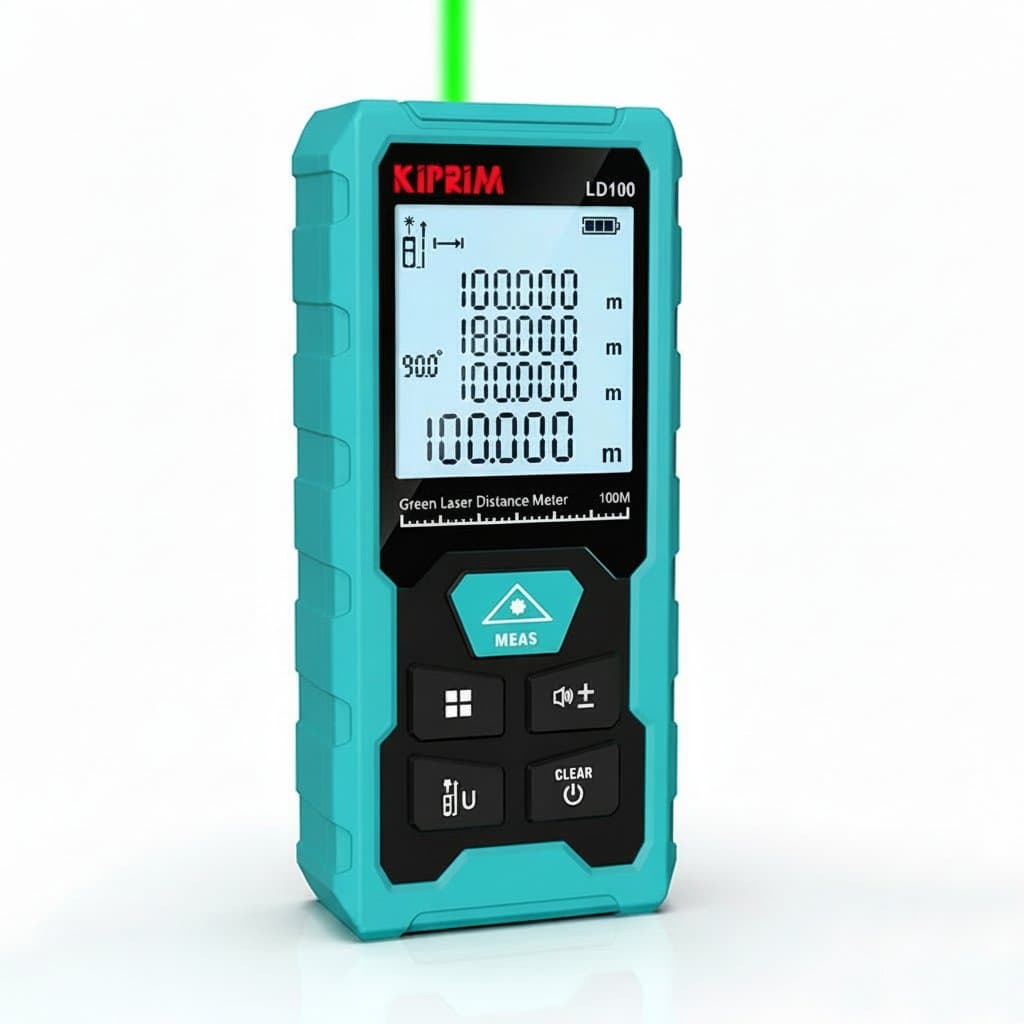
100M Laser Measure, front view.100M Laser Measure£685.99--Rechargeable-
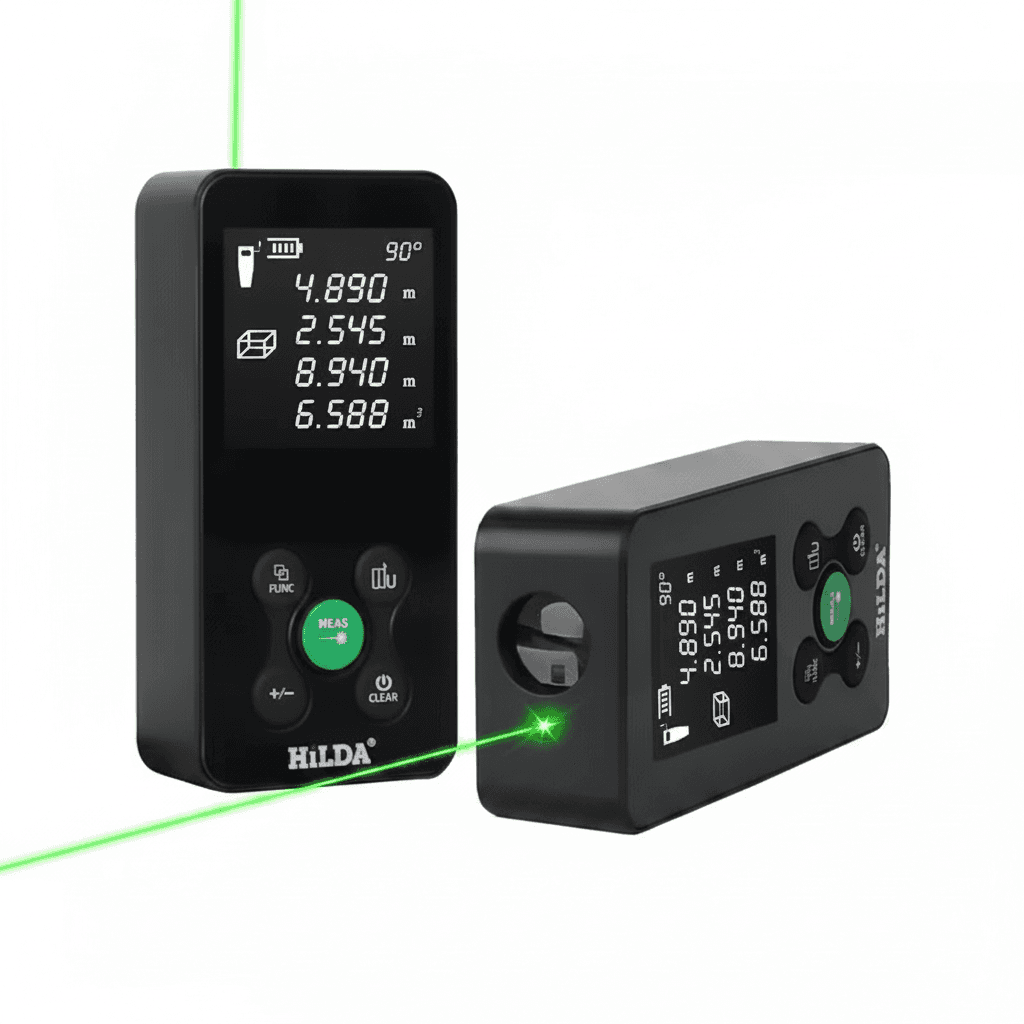
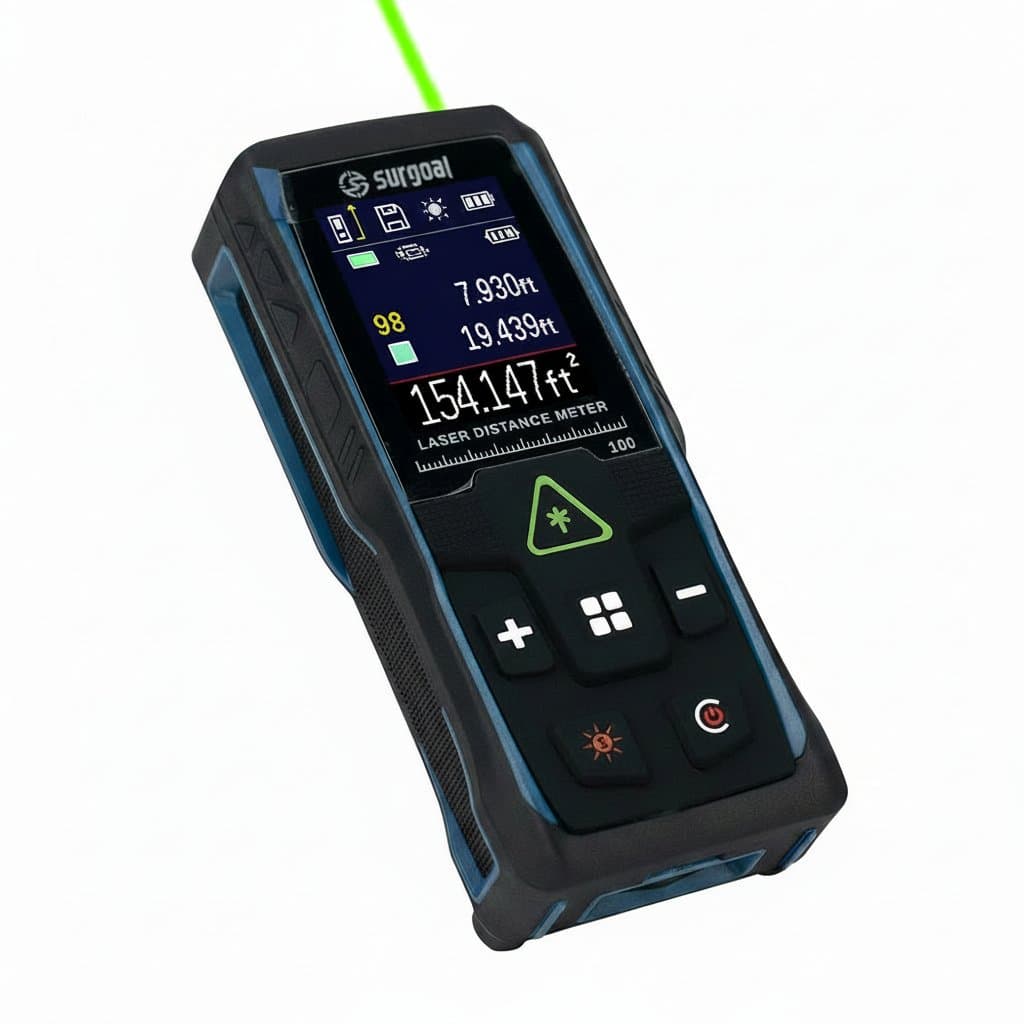
Laser distance meter with a green laser line and Bluetooth connectivity.Laser Distance Meter£123.99-LCD with backlightRechargeable Li-ion battery-
UNI-T Laser Measure LM50A-LM120A product shot.UNI-T Laser Measure LM50A-LM120A£90.99--Battery-Powered-
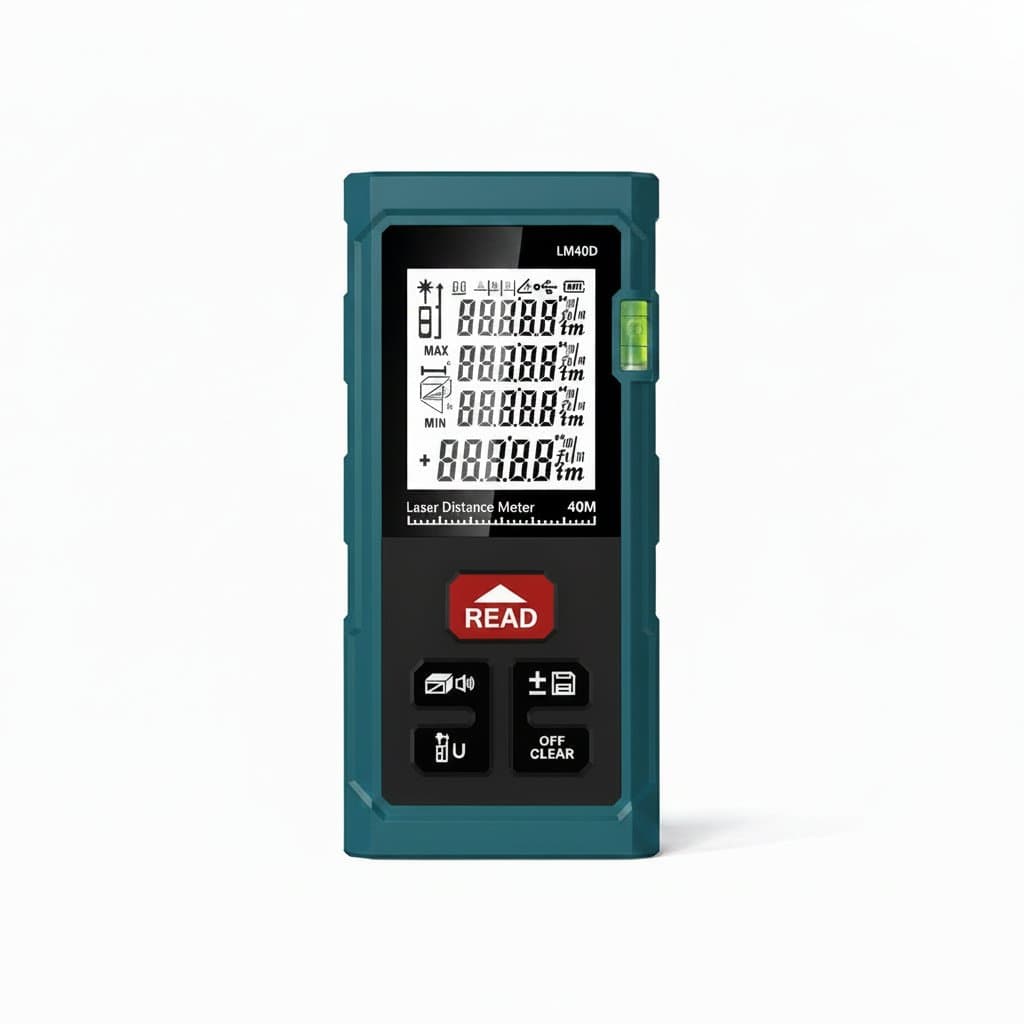
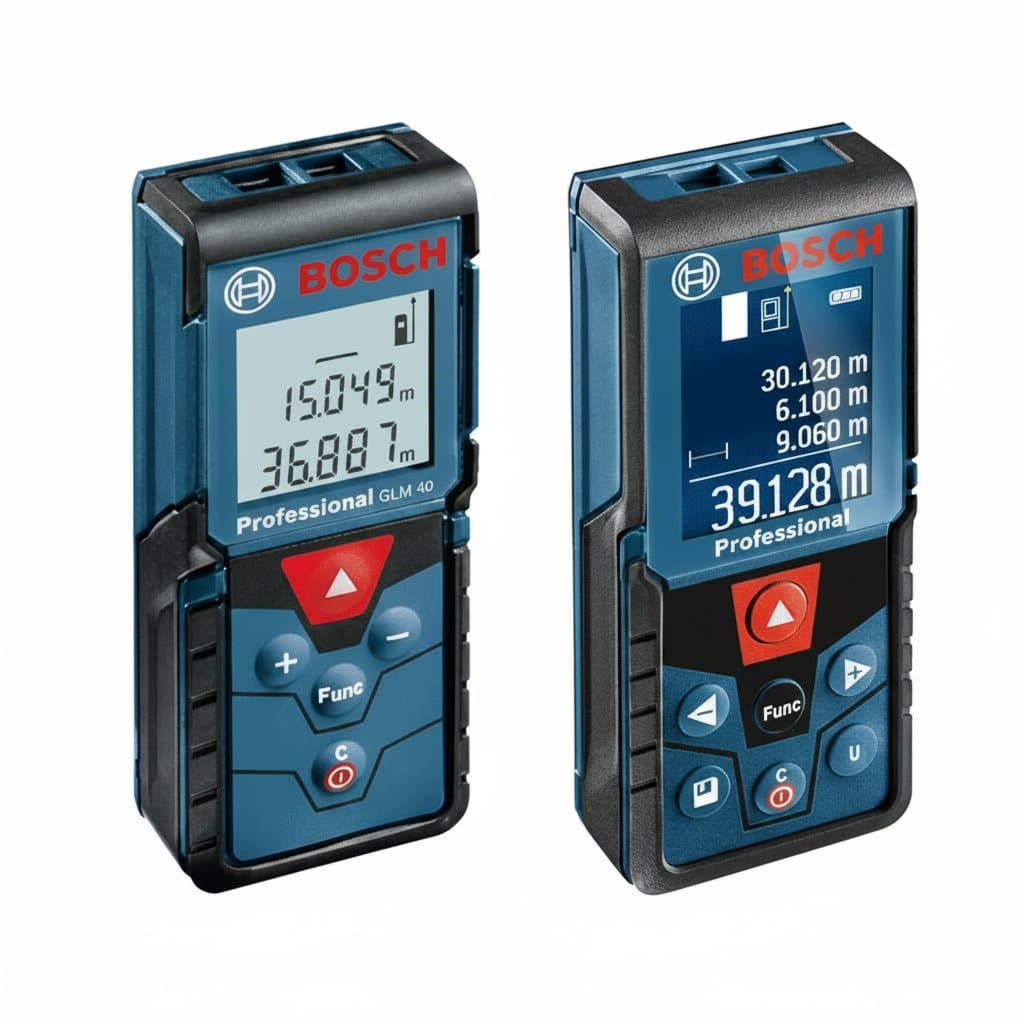
Digital laser distance meter with a 40-metre range for accurate measurements.Bosch GLM 400 Laser Distance Meter£88.99Laser Distance MeterDigital--
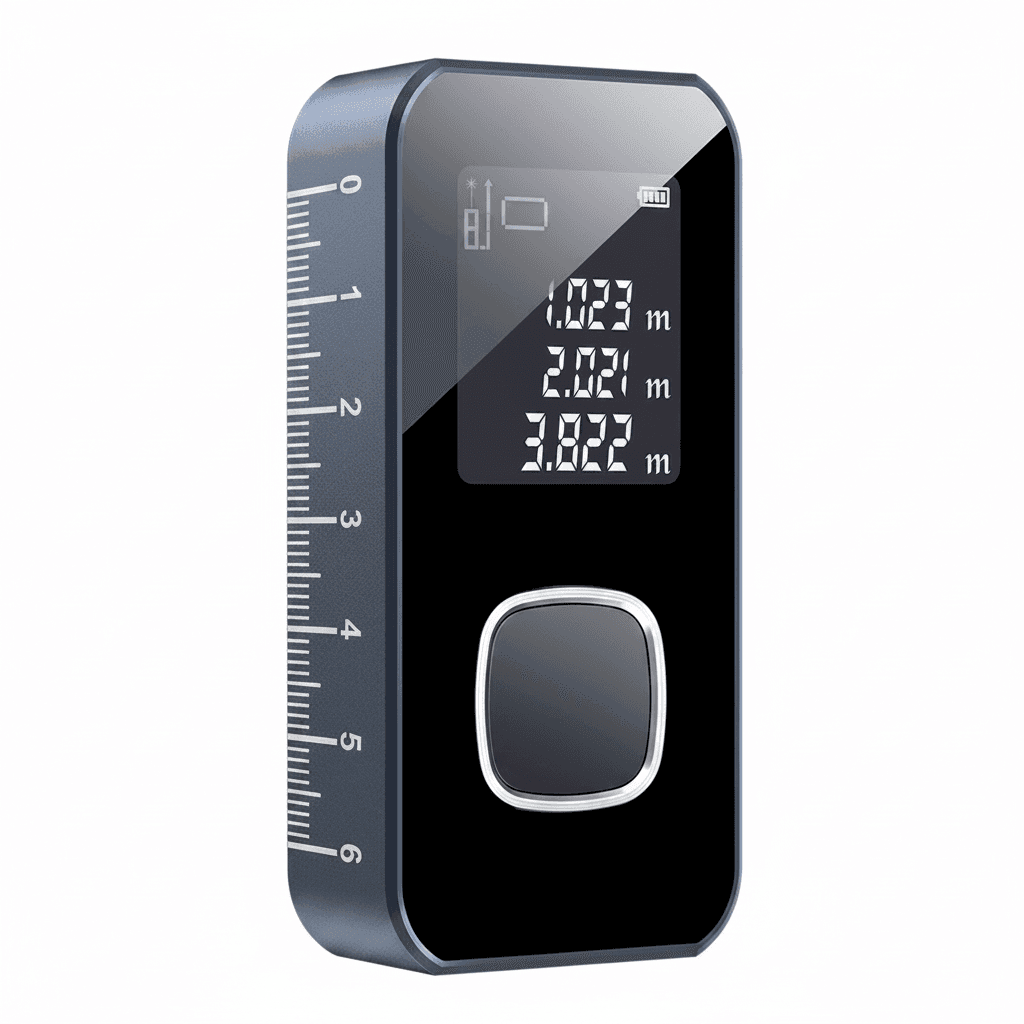
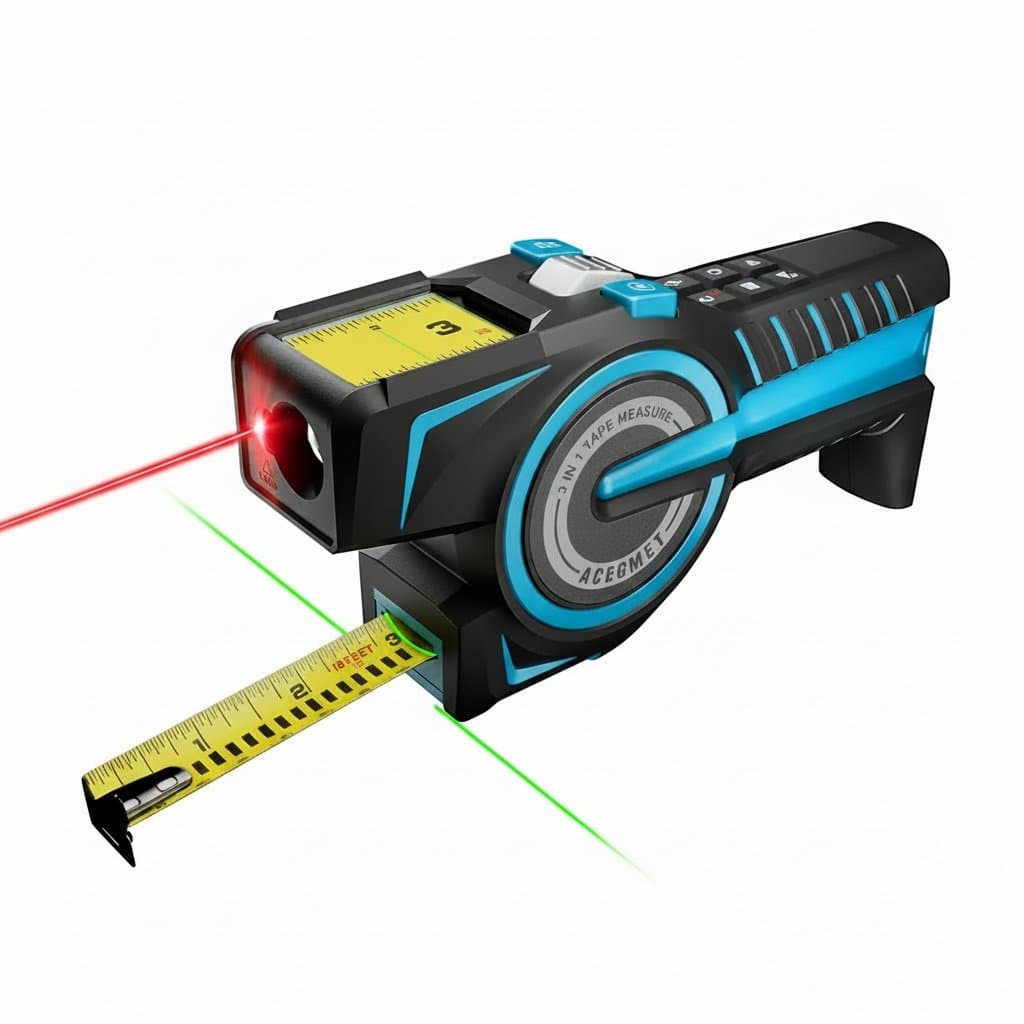
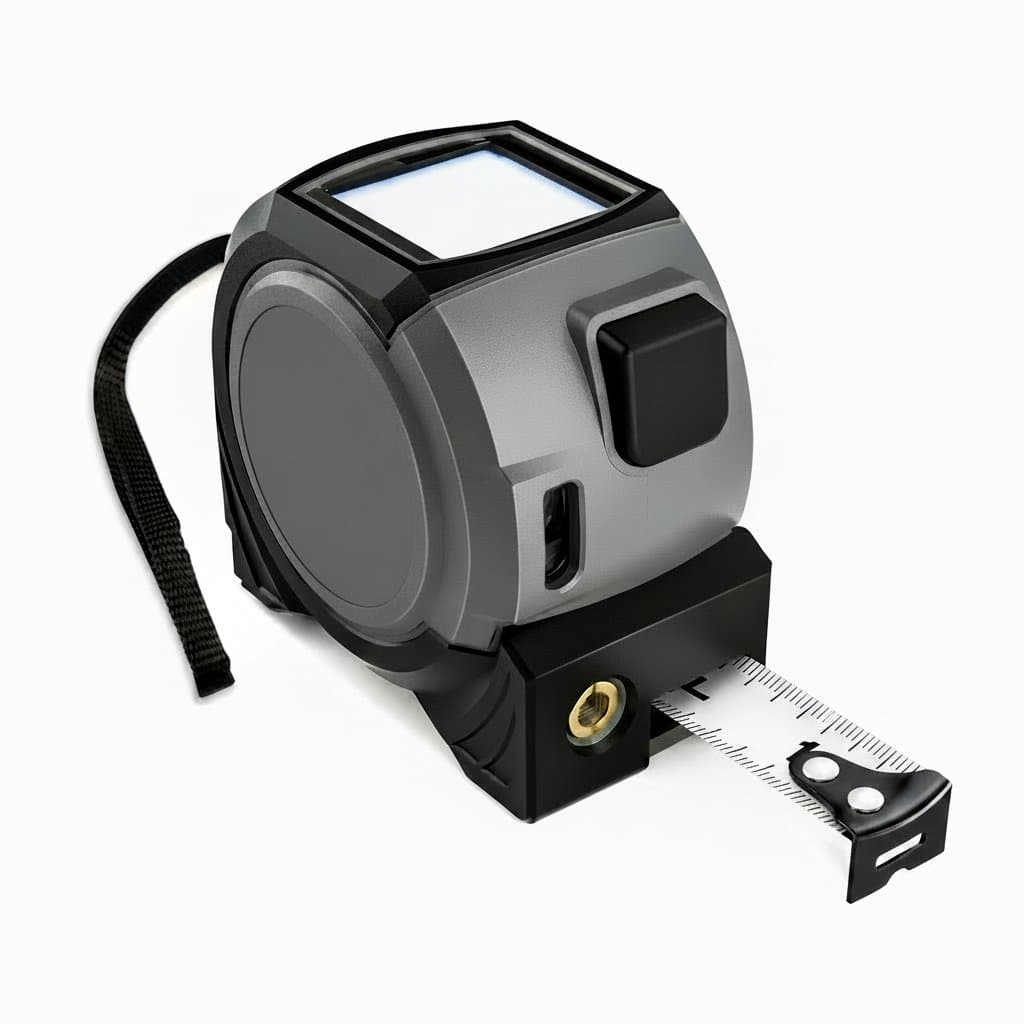
Laser tape measure with a cross-line level, measuring up to 60 metres.Laser Tape Measure£77.99Laser Tape MeasureDigitalBattery-
Digital Laser Measure 60-120m, front view with display.Digital Laser Measure 60-120m£73.99---Steel with Ergonomic Grip
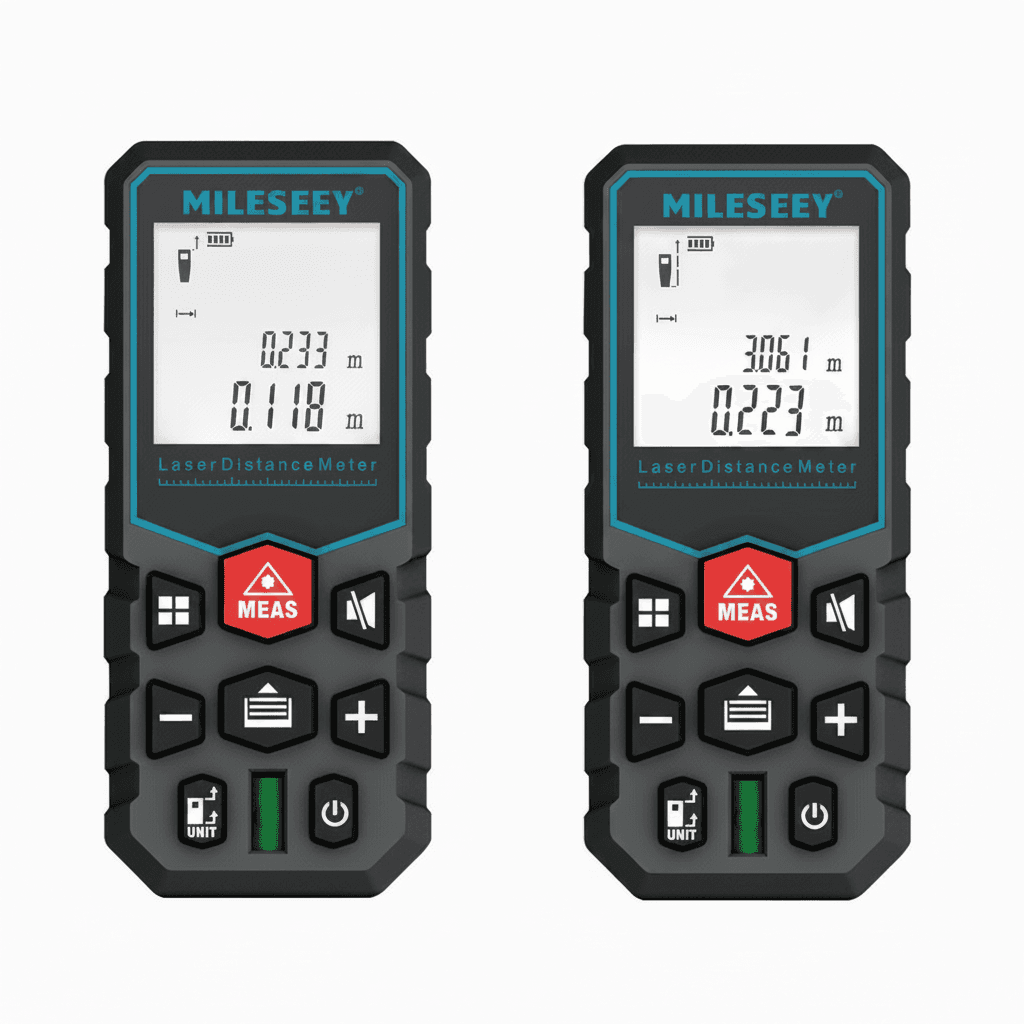
MILESEEY M120 Laser Measure, front view.MILESEEY M120 Laser Measure£69.99--RechargeableMetal
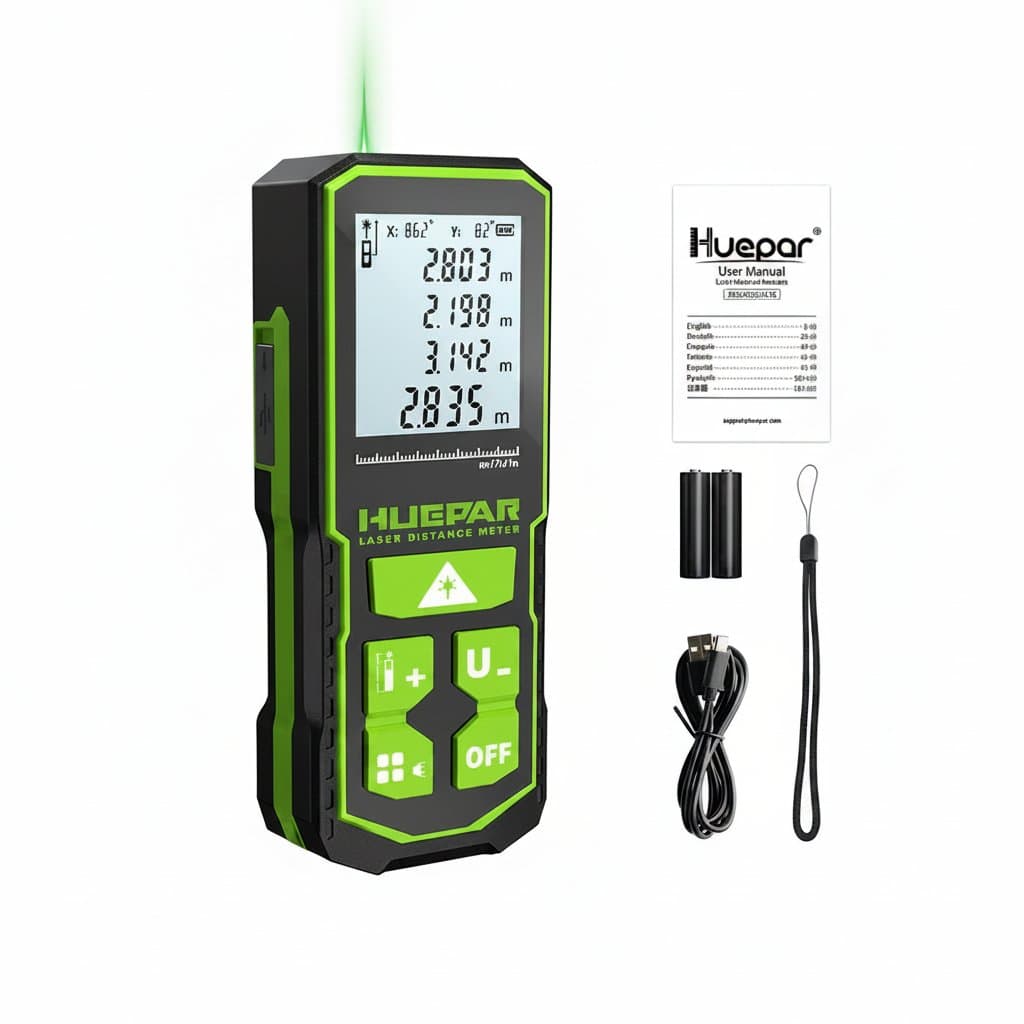
Green laser distance meter with a 120-metre range.Laser Distance Meter£63.99Laser Distance MeterLCDRechargeable Battery-

Accuracy, and the reference point people forget

Quoted accuracy of plus or minus 1.5 to 2 mm is a laboratory figure on a good target at moderate distance, and on a normal wall at normal range that is genuinely what you get. It is far better than anyone reads a tape, and it does not sag across a room, which is where a tape actually loses.

The setting that produces wrong answers is the reference point. The tool can measure from its back edge, its front edge, or a tripod thread, and it does not always default to the one you assume. Measuring from the back edge while holding the front against the wall puts the whole body length into every reading. Check the reference icon before the first measurement of any session.

Why the range figure collapses outdoors

Range depends on how much light comes back. A white matt wall indoors returns plenty and a 60 metre tool will reach 60 metres. A dark, wet or glossy surface in bright sunlight returns very little, and the same tool may refuse to read at 15 metres. This is not a fault and no amount of steadying your hand fixes it.

Two things genuinely help. A target plate, which is a bright card clamped or held at the far point, gives the tool something to see and restores most of the lost range. A green laser is also easier to aim in daylight than a red one because the eye is far more sensitive to it, though what governs the measurement is the returned signal rather than how well you can see the dot.

What limits a reading
ConditionEffect on rangeWhat helps
Indoors, light matt wallFull rated rangeNothing needed
Bright sunlightSharply reducedTarget plate, shade the target, green laser to aim
Dark, wet or glossy surfaceSharply reducedTarget plate, or aim at something matt nearby
Angled surfaceSignal scatters awaySquare the tool to the surface

Indirect measurement is the function worth learning

The Pythagoras or indirect function measures a height you cannot reach. Take one reading straight along the base, take a second up to the top of what you are measuring, and the tool solves the triangle. It gives you the height of a building, a gable or a ceiling void without a ladder or an assistant.

It only works if the base leg is genuinely horizontal and both readings are from the same point. Units with a built-in inclinometer do this properly because they know the angle; ones without rely on you holding the tool level, and any error there is multiplied into the answer. If a tool will be used for heights, an angle sensor is the feature to insist on.

Area, volume and continuous measurement

Area and volume modes multiply successive readings for you, which sounds trivial and saves real time when pricing a job: measure two walls and the tool gives the floor area, add a height and it gives the volume. For anyone quoting plaster, paint, flooring or insulation this is most of the reason to own one.

Continuous or tracking mode reads live as you move, showing minimum and maximum. That is how you find the true perpendicular distance to a wall, because the minimum reading is the square one, and how you set out a position rather than just record it. Bluetooth export matters only if you actually use an app; most people never do.

James Whitfield, Equipment Desk editor at Compel GroupJames WhitfieldEquipment Desk

James edits the machine and equipment buying guides. The specifications on these pages are the declared figures from the live listings we hold, with a note wherever a number comes from a published standard instead. Pages are re-checked as the catalogue changes.

Share
Add Compel Group as a preferred source on Google

Buying guide

Laser Distance Meters and Laser Tape Measures questions

How accurate is a laser distance meter?
Typically plus or minus 1.5 to 2 mm indoors on a normal surface, which is better than anyone reads a tape and does not sag across a room. Accuracy holds up far better than range does in difficult conditions.
Why will my laser measure not read outdoors?
Because range depends on returned light. Bright sun, dark surfaces, wet surfaces and glass all send too little back. Use a target plate at the far end, or aim at something matt nearby. A green laser is easier to aim but does not fix the return signal.
What is the reference point setting?
Whether the tool measures from its back edge, its front edge or the tripod thread. Getting it wrong adds or subtracts the body length from every reading, so check the reference icon before the first measurement of a session.
How does the height function work?
It solves a triangle from two readings, one along the horizontal base and one to the top. It needs the base leg genuinely level, so a unit with a built-in inclinometer is far more reliable than one that relies on you holding it straight.
Is a laser measure better than a tape?
For rooms, long spans and one-person work, clearly. It does not sag, needs no second person and calculates area and volume. A tape still wins for short measurements, curves, and anywhere you need to mark as you measure.