
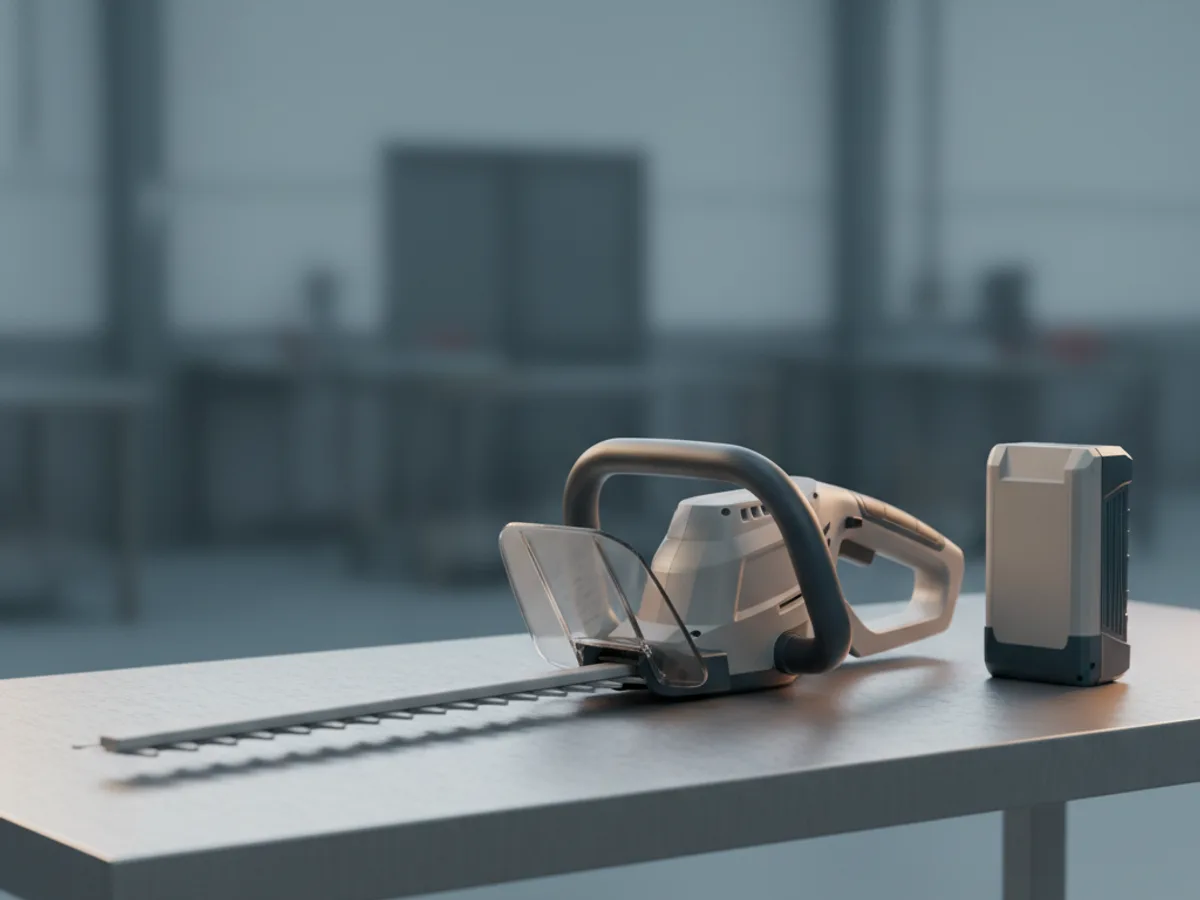


Blade length and tooth gap do different jobs
Blade length is the obvious number and it governs reach and how much hedge falls per sweep. A longer blade covers a formal hedge faster and is heavier at the end of the arms, which decides how long anyone can hold it level at head height.
Tooth gap, the spacing between the cutting teeth, is what limits stem thickness. A narrow gap gives a fine finish on soft new growth and stops dead on a woody stem. A wide gap chews through thicker material and leaves a coarser cut. Trimmers intended for trade work generally have wider gaps for exactly that reason.
Match this to the hedge rather than to the price. Annual maintenance of a soft hedge is a narrow gap job. Reclaiming a hedge that has not been touched for three years is not, and forcing a fine trimmer through it burns out the gearbox rather than cutting the hedge.
| Specification | Governs | Trade-off |
|---|---|---|
| Blade length | Coverage per pass and reach | Longer is heavier at arms length |
| Tooth gap | Maximum stem thickness | Wider cuts thicker, finish is coarser |
| Double sided blade | Cutting in both directions | Faster, heavier |
| Single sided blade | One direction, lighter | Common on pole trimmers |
Petrol, cordless or corded
Petrol trimmers still dominate long days away from power. They run as long as fuel is carried, they take the thickest material, and they are heavy, loud and need mixed fuel, servicing and somewhere to store fuel legally.
Cordless has taken over most trade work at this size. A brushless motor on a decent battery platform gets through a working session, it starts instantly, and it makes the machine usable in gardens where two stroke noise is a problem. The constraint is planning: batteries and a charger are part of the purchase, not an afterthought.
Corded is the cheapest and lightest for occasional work close to a building, and it puts a cable in the same space as a moving blade. If a corded trimmer is the tool, an RCD in the supply is not optional, and the cable should be over a shoulder rather than underfoot.
Pole trimmers and working at height
A pole trimmer puts the cutting head on an extension so tall hedges can be cut from the ground. The articulating head is what makes it useful, because it lets the blade sit flat on the top of a hedge while the operator stands well back from it.
That is the safety argument as well as the convenience one. Cutting a tall hedge from a ladder while holding a running blade is how serious injuries happen, and a pole trimmer removes the ladder from the job entirely. Where a hedge genuinely cannot be reached from the ground, a platform rather than a ladder is the answer.
The trade is weight and leverage. A head on a long pole is tiring in a way its bare weight does not suggest, so a harness makes a real difference over a session. Keep well clear of overhead lines: a conductive pole raised into a service is a fatal mistake and the reason for looking up before starting.
Resin, sharpness and the safety features that matter
Hedge trimmer blades gum up with sap and resin, and gummed blades drag, heat and tear rather than cut. Cleaning the blades with a resin solvent at the end of a session and wiping a light oil along them takes a minute and is most of the maintenance these machines need.
Sharpness matters differently from a saw. The teeth shear against each other, so a blunt trimmer bruises and crushes stems instead of cutting them, and a hedge cut with blunt blades browns off at the tips afterwards. That is a plant health issue as well as a tidiness one.
Two safety features are worth insisting on: a two hand switch so the blade only runs when both hands are on the machine, and a brake that stops the blade quickly when the trigger is released. Cut resistant gloves and eye protection are the rest, since the material thrown by a trimmer comes back at the operator.