
What the tonnage figure describes
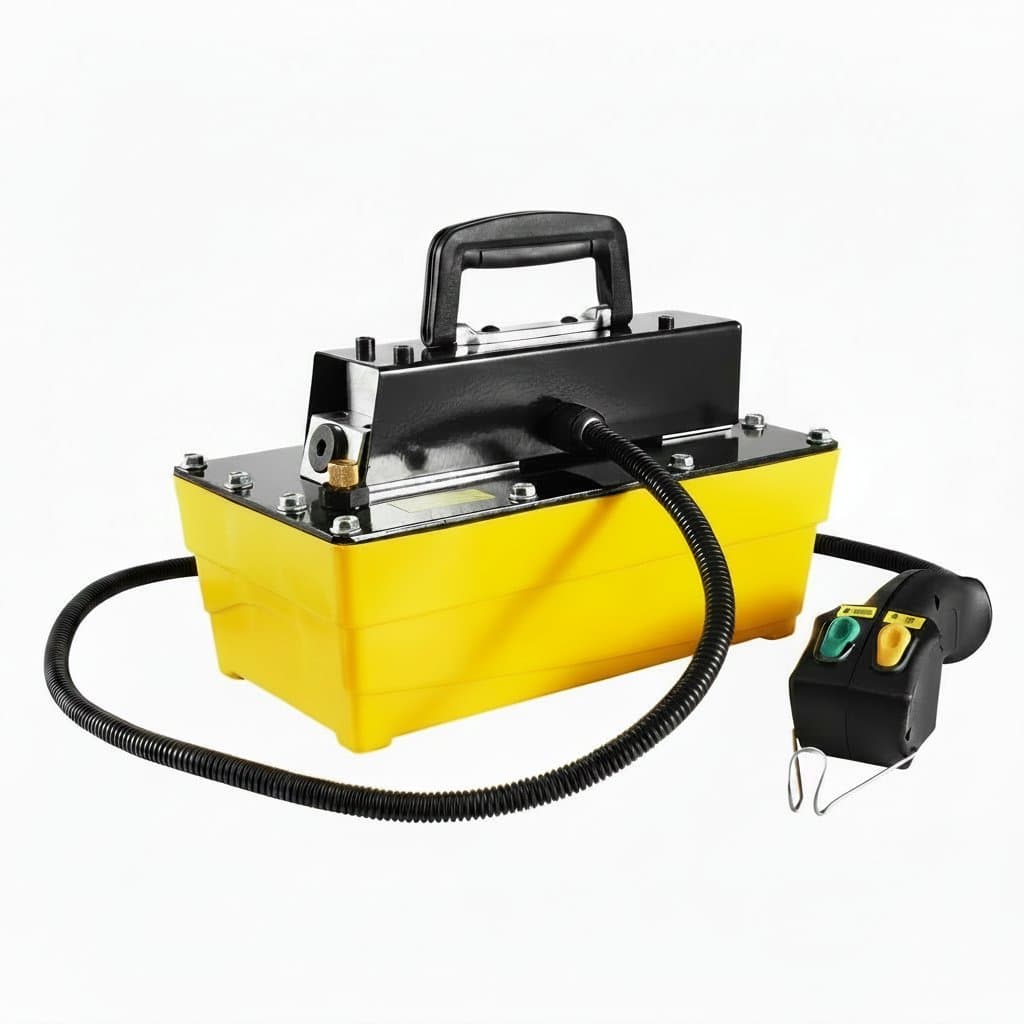
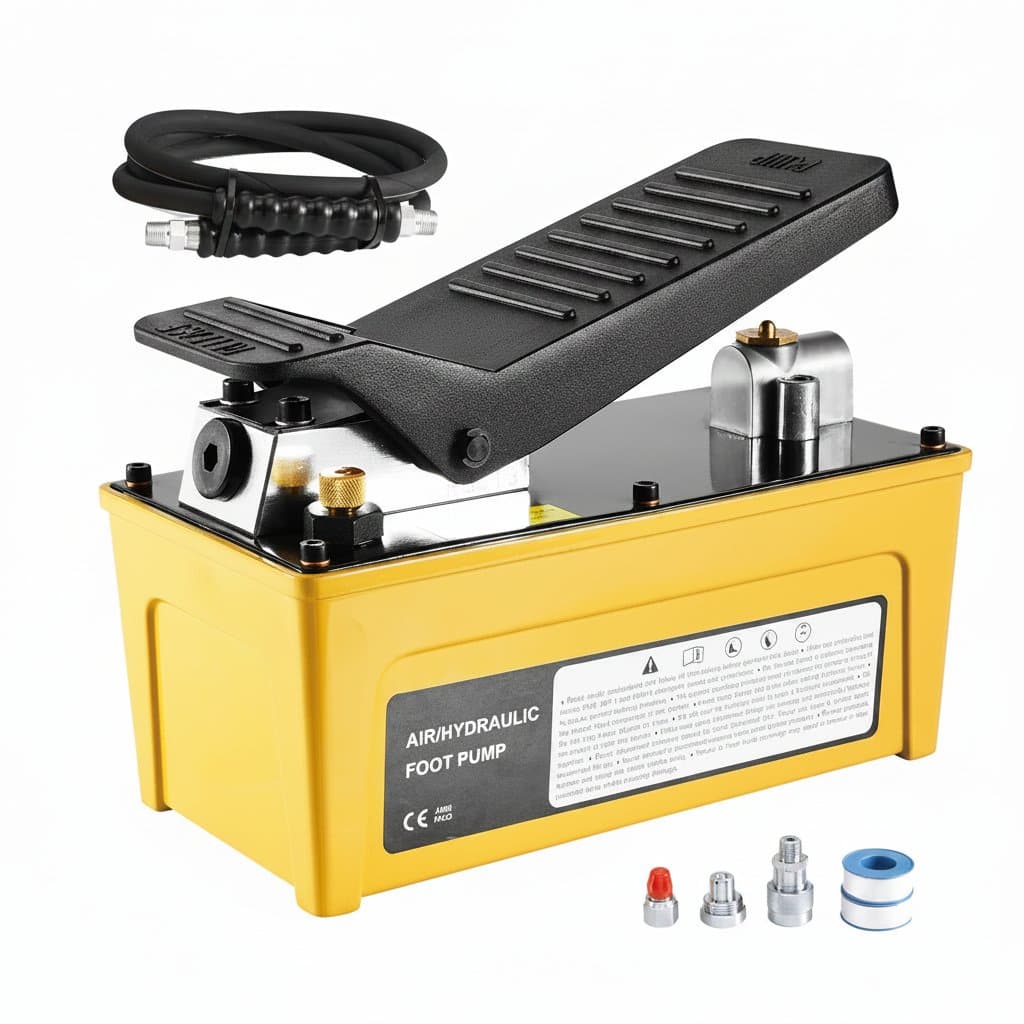
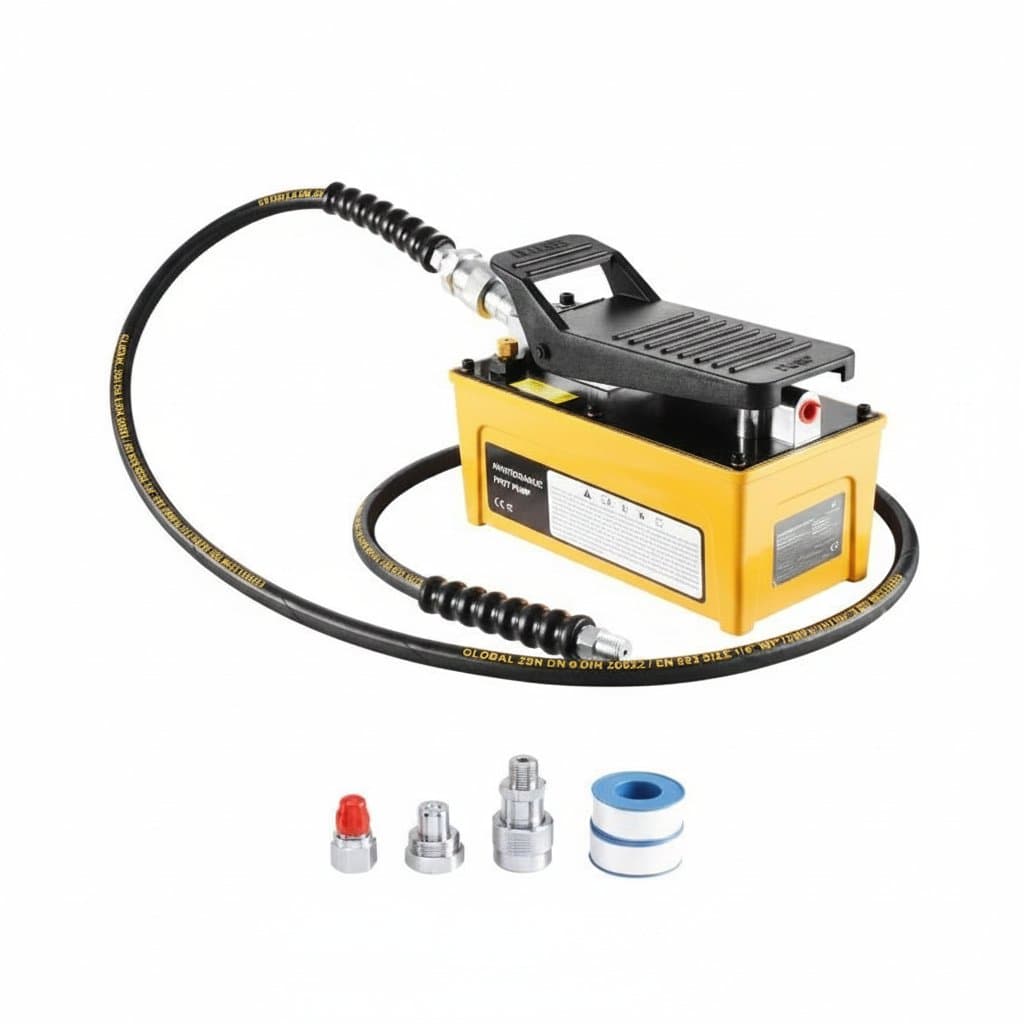
The rating is the force the ram develops at full pump pressure, and reaching it depends entirely on the pump. A hand pump will get there, in a great many strokes, moving a small volume of oil each time. An air over hydraulic or electric pump reaches the same force in seconds.
So tonnage tells you what the press can do and the pump tells you how tedious it is to do it. For occasional bearing work a hand pump is fine. For repeated pressing, the pump type matters more day to day than the last few tonnes of capacity.
Bear in mind that the pressure gauge on a shop press is an indication rather than a measurement. It reads hydraulic pressure, from which force is inferred, and the accuracy is nothing like a load cell. Treat it as a guide to how hard you are pushing, not as a calibrated reading.
| Specification | Governs | Watch for |
|---|---|---|
| Tonnage | Maximum ram force | Only reached at full pump pressure |
| Pump type | How quickly force is applied | Hand pumps are slow but adequate |
| Ram stroke | How far the ram travels | Short strokes need repositioning |
| Daylight | Opening between ram and bolsters | Decides what fits at all |
| Frame type | H frame or C frame | C frames flex, H frames do not |
H frame, C frame and working height
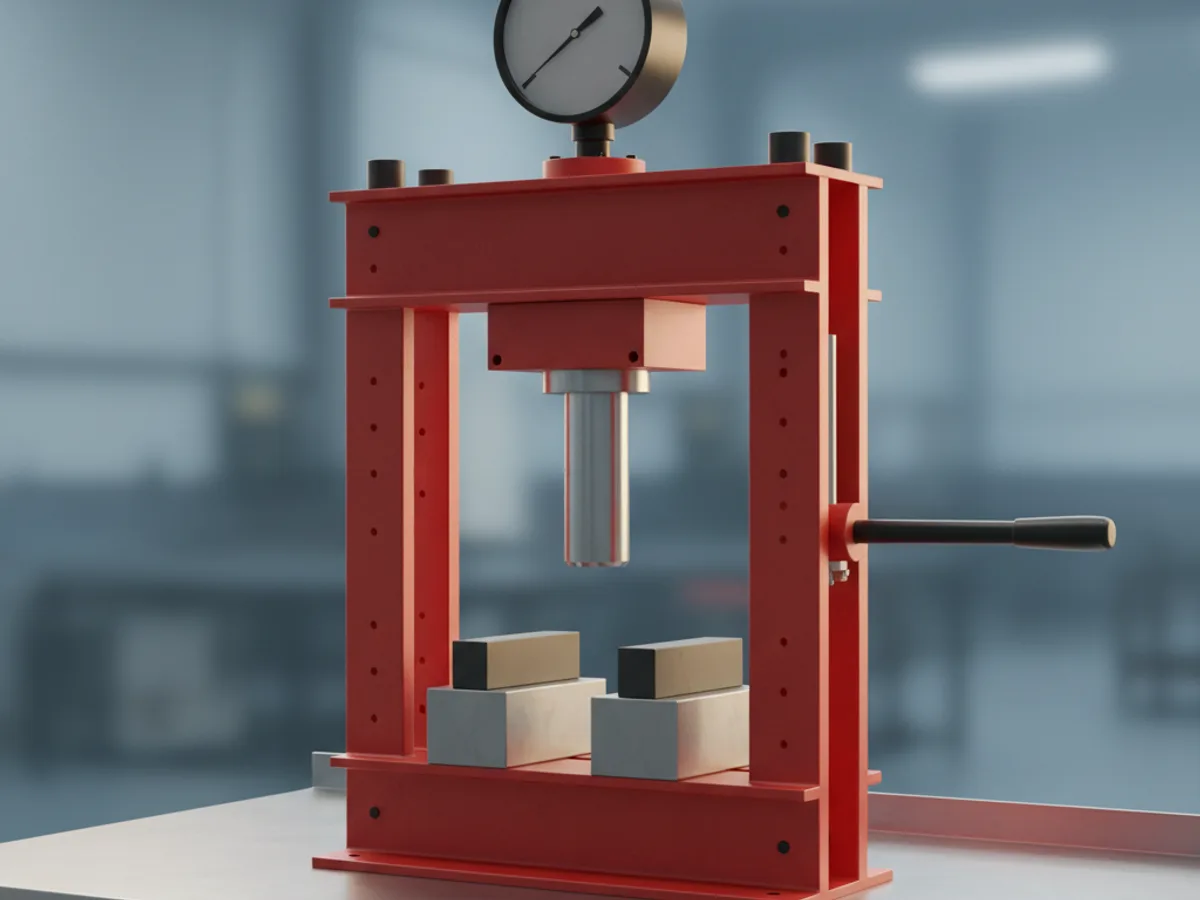
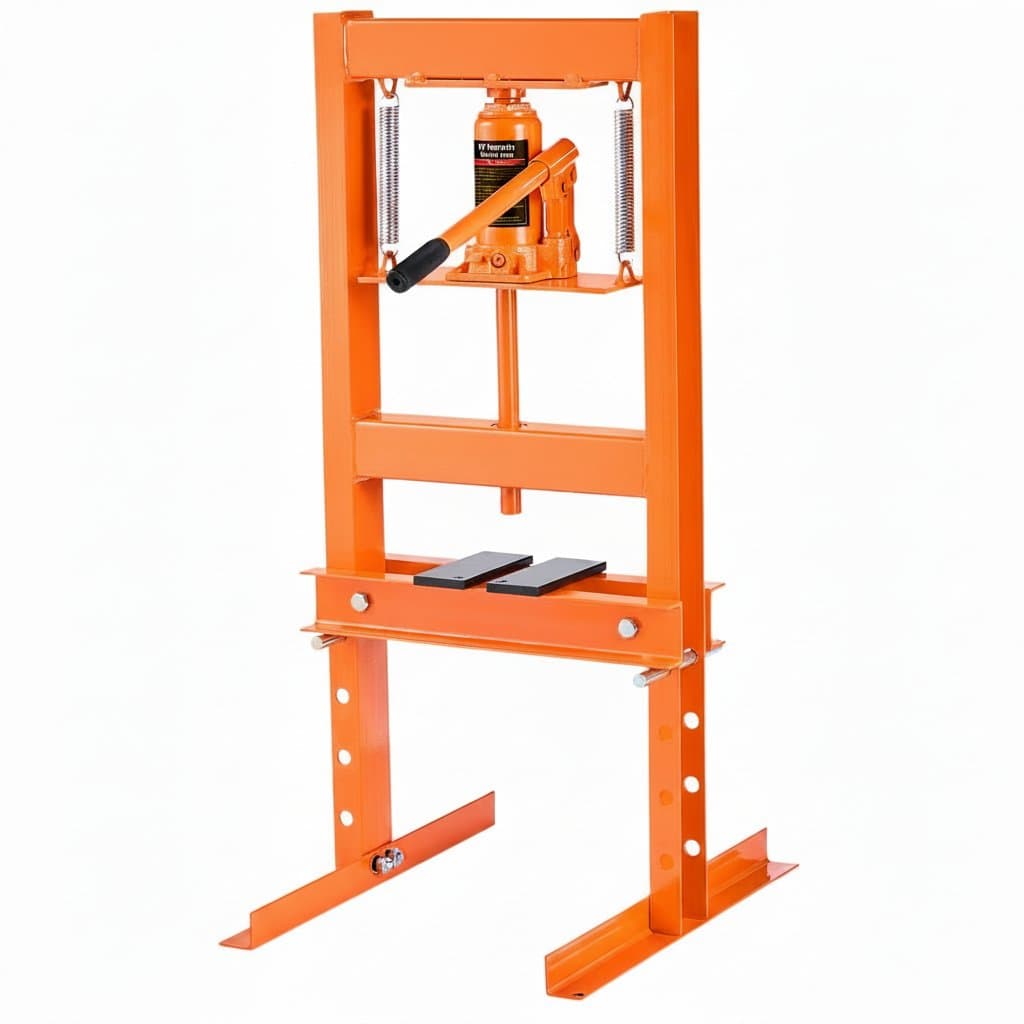
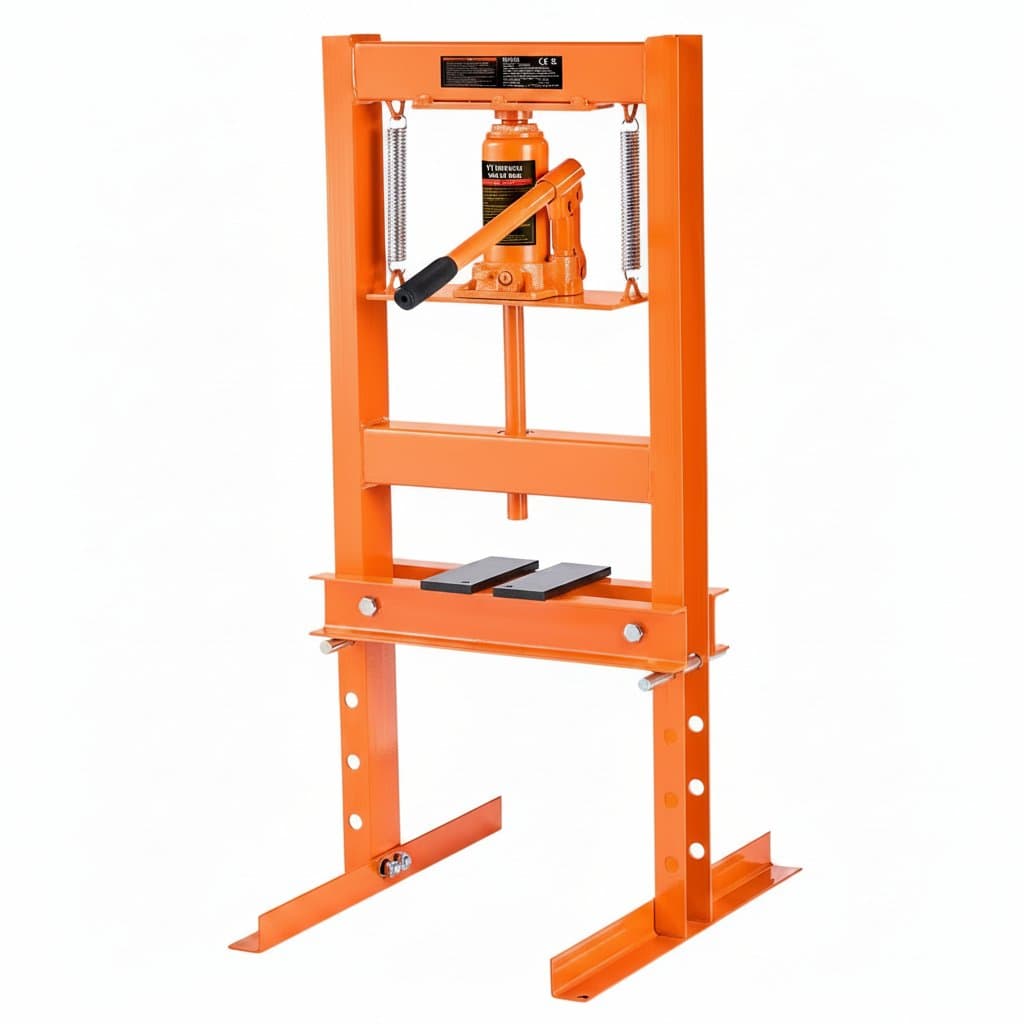
An H frame press takes the load in two uprights either side of the ram, so the force stays in line and the frame barely deflects. That is the general workshop shape, and it is why bench and floor standing shop presses look the way they do.
A C frame or arbor press is open on one side, which makes it far easier to get work in and out and lets the frame spring open slightly under load. That flex is acceptable for light assembly work and unacceptable for heavy pressing.
The two dimensions to check against the actual job are the daylight, meaning the opening between the ram and the bolster plates, and the ram stroke. Between them they decide whether a hub, a bush or an axle will physically fit and whether the ram reaches through it in one pass.
Supporting the work squarely
The bolster plates carry the work, and they sit on pins through the uprights. Both pins must be in matching holes so the plates are level, because a workpiece sitting on a tilted support pushes the ram off axis and loads the frame sideways.
Press plates and split bearing separators exist because supporting work on odd offcuts is how parts fly out. Something that is not flat, not parallel or not strong enough will squirt out from under the load at the worst moment, and the load behind it is measured in tonnes.
Line up the ram with the centre of what is being pressed and check it again once light pressure is on. A part that is nearly aligned will move as force builds, and the moment it slips is the moment the stored energy is released.
Stored energy, guarding and release
Everything under a press is being elastically compressed, the frame included. When a stuck component finally breaks free, all of that stored energy converts into movement in an instant, and fragments of a cracked casting or a shattered bearing race travel far enough to cross a workshop.
A mesh or polycarbonate guard around the working area is the single most effective control, and eye protection is the minimum where no guard exists. Stand to one side rather than in line with the work, and keep other people out of the area while pressure is on.
Release pressure deliberately and slowly at the end of the job, and never leave a press loaded and pressurised while you walk away. Heat, penetrating oil and a puller often achieve what more tonnes will not, and reaching for more force on a part that will not move is usually the wrong answer.