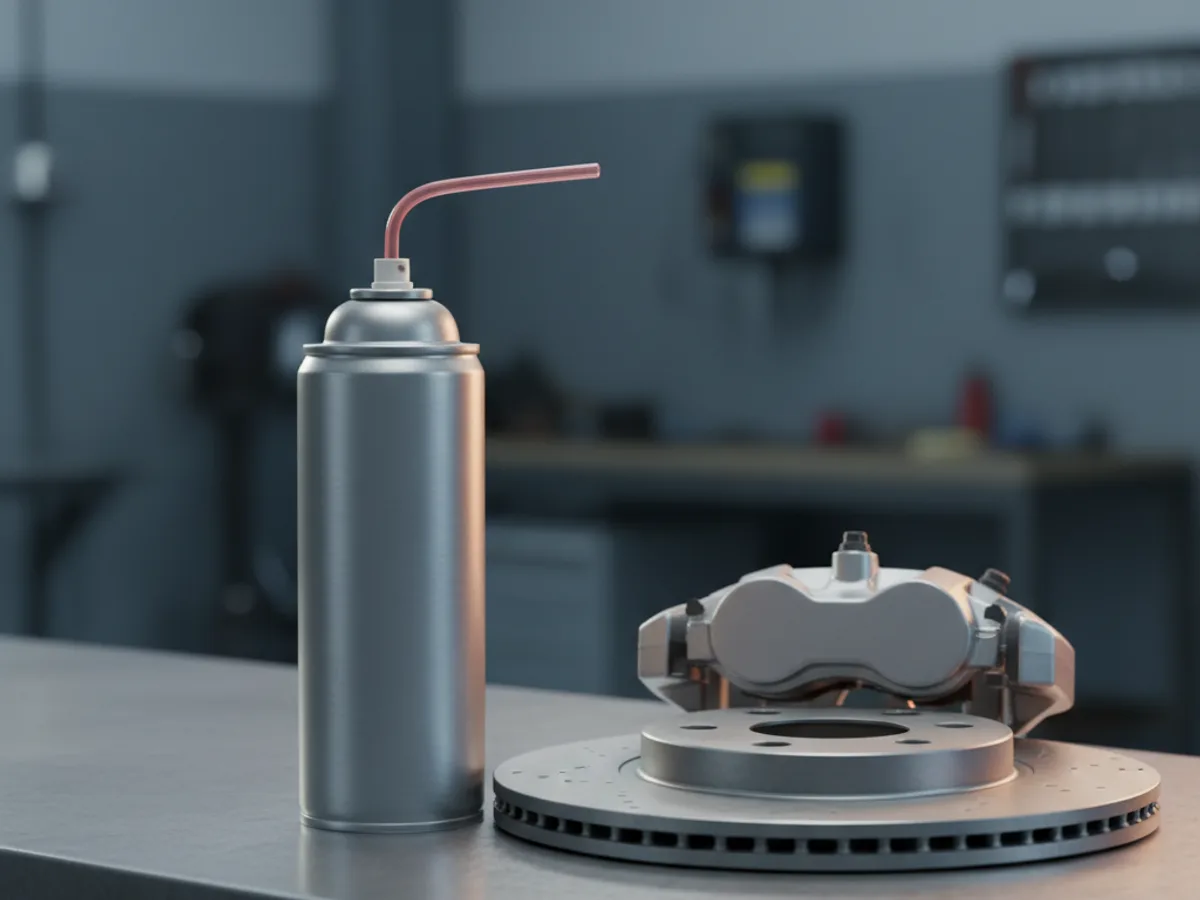


Chlorinated or non-chlorinated, and the welding rule
Chlorinated brake cleaner uses chlorinated solvents. It dissolves grease aggressively, it does not burn, and for a long time it was the default in workshops for exactly those reasons.
It carries one serious hazard that decides where it can be used. Chlorinated solvent vapour exposed to a welding arc, a flame or another very hot surface can decompose into phosgene, which is acutely toxic. This is a documented hazard rather than a theoretical one, and it is why chlorinated cleaner has no place anywhere near welding, cutting, grinding sparks or a running engine exhaust manifold.
Non-chlorinated cleaner avoids that entirely and is what belongs in a fabrication shop. Its own hazard is straightforward: it is flammable, so it is kept away from ignition sources and used with ventilation. Where any hot work happens in the same space, non-chlorinated is the sensible standing choice.
| Chlorinated | Non-chlorinated | |
|---|---|---|
| Grease cutting | Stronger | Good, may need a second pass |
| Flammable | No | Yes |
| Safe near welding or hot work | No, decomposition hazard | Yes, subject to fire precautions |
| Sensible default where hot work happens | Avoid | Yes |
What it strips besides brake dust
A solvent that removes grease with no residue is not selective. Brake cleaner attacks paint, softens or crazes many plastics, swells and hardens rubber, and lifts the printing off labels. Overspray onto a painted wing, a plastic wheel arch liner or a rubber boot causes damage that is obvious the next day rather than at the time.
Mask or shield rather than aiming carefully. A piece of card behind the work catches most of the overspray, and covering nearby painted surfaces takes seconds. Wheel speed sensors, ABS wiring and the rubber boots on slider pins are the parts most often damaged, because they sit exactly where the spray goes.
On the friction surfaces themselves it is doing its job. Cleaning new discs to remove the protective coating they are shipped with, and cleaning the hub face before fitting, are both worth doing properly. Let it flash off fully before assembly rather than trapping wet solvent under a rotor.
Using it well and using less of it
The technique that works is to flood rather than to mist. A generous flow carries the loosened dust and grease off the part and onto the floor; a light mist dissolves the grease and leaves it in place to dry back down as a film. Work top down so the runoff does not cross a surface you have already cleaned.
Catch the runoff. Brake dust and the solvent that carried it should not go down a drain, and a tray under the work makes disposal straightforward as well as keeping the floor from becoming slippery.
Ventilate properly and do not rely on smell as a warning. These solvents are heavier than air and pool in inspection pits and low spaces, which is the one place a workshop is least likely to have airflow. Working outdoors or with extraction is the norm rather than a precaution for large jobs.
What to check when buying
Check the type first, because many listings do not lead with it. If the description does not say chlorinated or non-chlorinated, the safety data sheet does, and in a workshop where anyone welds that is the specification that matters most.
Look at the fill volume rather than the can size, since aerosol cans of the same physical size hold different amounts. Volume per can and the number of cans in a pack are what let you compare price sensibly across listings.
A straw or extension tube is worth having for slider pins and calipers, where a directed jet does the job with far less product than a broad spray. Where a can is described as fitting an existing trigger or extension, that is a genuine convenience rather than a marketing line.