
Compel Groupgroup

HVLP and Air Spray Guns

Author: James Whitfield, Equipment Desk5 min read
Updated

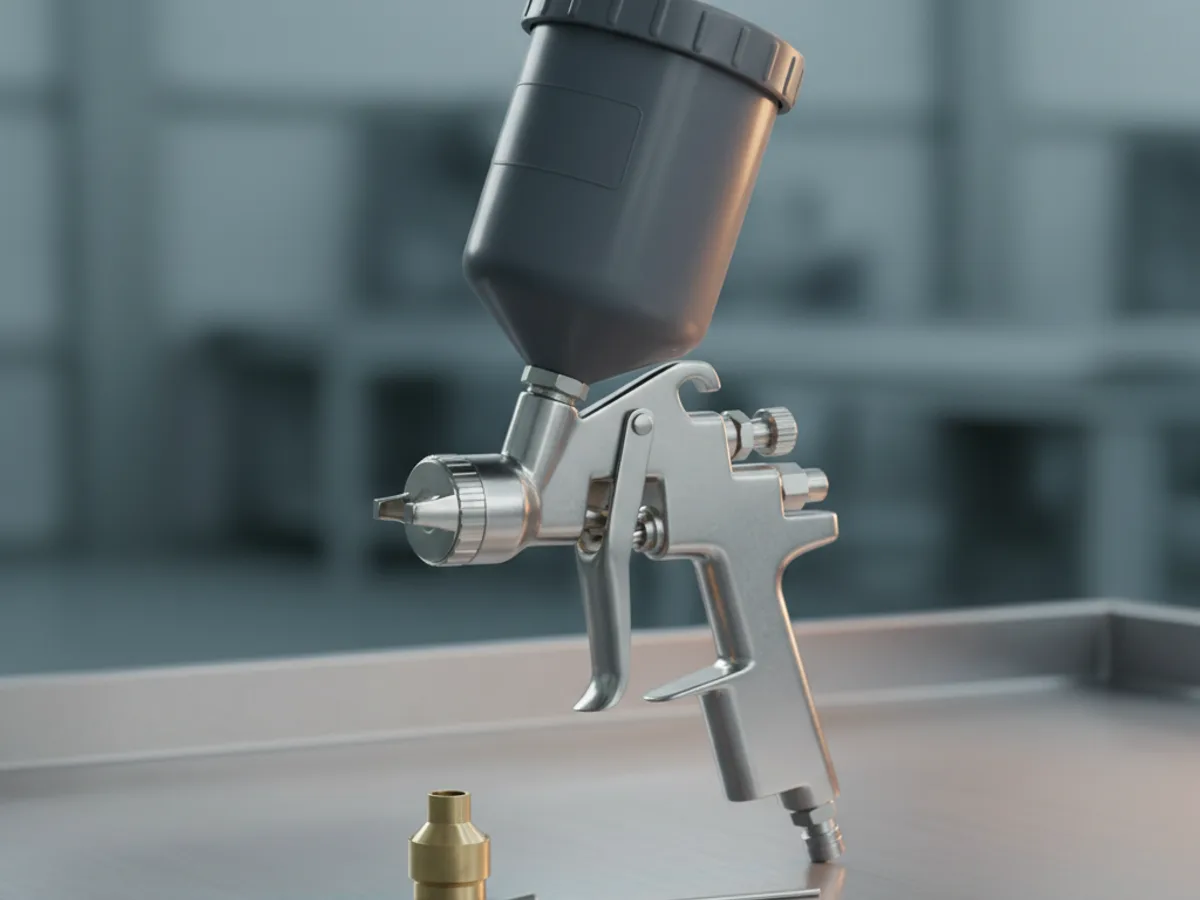
HVLP means high volume, low pressure: a large volume of air atomises the paint at low pressure at the cap, so more of the material lands on the work and less drifts off as overspray. The trade is air demand. An HVLP gun needs considerably more air than a conventional gun, and the compressor is usually what limits the choice.

12 products from £169.99 to £261.99

Specs and prices

Specifications as declared by the seller of each listing, not our own measurements. Prices update with the catalogue.

ProductPriceProduct TypePower TypeNozzle SizeFeed Type
DEVIDISS HVLP NGT pro TE20 Lite professional spray gun kit with a 1.3mm nozzle, designed for comfortable application of all automotive paints.HVLP Spray Gun£261.99---Gravity
HVLP spray gun with adapter and mix tank, includes 1.3mm and 1.7mm nozzles for water-based paints in car repair.HVLP Spray Gun Kit£216.99HVLP Spray Gun with Mix Tank---
HVLP 4000B Paint Sprayer, the product itself.HVLP 4000B Paint Sprayer£210.99-Pneumatic-Gravity
Slit nozzle spray gun with 1.3mm opening for high fine atomization, suitable for automotive painting and detailed air spraying.Nozzle Air Spray Gun£199.99Slit Nozzle Spray GunManual1.3 mm-
Professional T110 Paint Sprayer, a complete unit ready for use.Professional T110 Paint Sprayer£198.99-Pneumatic1.3/1.8MMGravity
R830 LVLP Paint Sprayer.R830 LVLP Paint Sprayer£192.99-Pneumatic-Gravity
HVLP Paint Sprayer infographic detailing parts with callout text and lines.HVLP Paint Sprayer£182.99-Pneumatic-Pressure
Original PORPHIS PHS-135 spray gun for automotive painting, featuring 1.3mm and 1.8mm nozzles for oil and water-based paints.Car Painting Spray Gun£177.99-Pneumatic--

The compressor is usually the real constraint

An HVLP gun trades pressure for volume, and the volume has to come from somewhere. Guns of this type are quoted with an air consumption figure in cubic feet per minute at a working pressure, and that figure is continuous rather than intermittent, because spraying a panel means holding the trigger down.

Compressors are rated for delivery, and the honest number is what they actually deliver at pressure rather than the headline displacement. A compressor that cannot keep up shows it in the finish: pressure drops as the tank empties, atomisation coarsens through the pass, and the result is orange peel or a dry, sandy edge on the last part of the panel.

Tank size buys you continuity rather than capacity. A large tank lets a marginal compressor finish a panel before the pump has to catch up, which is workable for occasional work. For continuous spraying, the delivery rate is what matters and there is no substitute for enough of it.

What limits the finish
SymptomUsual cause
Coarse finish that worsens through the passCompressor cannot sustain the air demand
Orange peelToo little atomisation, material too thick, or gun too far out
Runs and sagsToo much material, gun too close, or moving too slowly
Dry, sandy edgesGun too far from the work, or air pressure too high

Nozzle size follows the material, not the gun

The nozzle and needle are a matched set, and the size is chosen from the viscosity of what you are spraying rather than from the gun or the job. Thin materials need a small orifice; thick ones need a larger one or they will not atomise at all.

As a general guide, around 1.3 mm suits basecoat and clearcoat, 1.4 to 1.5 mm suits single stage and heavier topcoats, and 1.7 to 1.8 mm suits primer and high build materials. A gun sold with one setup will usually take others from the same family, and having a second nozzle set is what makes one gun cover primer and topcoat properly.

Viscosity is measurable rather than a matter of judgement. A flow cup and a stopwatch give a repeatable number, and paint datasheets state the viscosity the material should be sprayed at. Thinning to the stated figure removes most of the guesswork about whether a poor finish is the gun or the mix.

Fan, fluid and air: setting the gun up

Three controls do different things and they interact. The fan control changes the pattern from round to a tall oval. The fluid control limits how far the needle opens, which sets how much material comes out. The air control, where the gun has one, sets the pressure at the inlet.

Set them in that order and test on card or masking paper rather than on the job. A correct pattern is an even oval with material distributed consistently, not heavy in the middle and thin at the ends, and not split into two lobes. A split pattern usually means a partly blocked air cap horn, which is a cleaning problem rather than a setting one.

Then set the distance and keep it. HVLP guns generally work around 150 to 200 millimetres from the surface, held perpendicular and moved parallel to it. Arcing the wrist through the pass changes the distance across the panel, which is what leaves a stripe of heavier coating in the middle and dry edges at each side.

Cleaning is what decides how long a gun lasts

A spray gun is a set of very small precise passages, and dried paint in any of them changes the pattern permanently. Cleaning is not maintenance to be done when convenient; it is part of using the gun, done immediately after each session while everything is still wet.

Strip it as far as the manufacturer intends, clean the passages with the correct solvent for the material sprayed, and use the soft brushes supplied rather than anything metal. Never put a drill bit, a wire or a pin through an air cap orifice: those holes are precisely sized, and opening one out even slightly ruins the pattern for good.

Reassemble with a light smear of gun lubricant on the needle packing and the trigger pivot, and store the gun with the fluid control backed off so the needle is not sitting under spring pressure in its seat. A gun looked after this way stays consistent for years; one left to dry out once often never sprays evenly again.

James Whitfield, Equipment Desk editor at Compel GroupJames WhitfieldEquipment Desk

James edits the machine and equipment buying guides. The specifications on these pages are the declared figures from the live listings we hold, with a note wherever a number comes from a published standard instead. Pages are re-checked as the catalogue changes.

Share
Add Compel Group as a preferred source on Google

HVLP and air spray guns

DEVIDISS HVLP NGT pro TE20 Lite professional spray gun kit with a 1.3mm nozzle, designed for comfortable application of all automotive paints.

Maintenance & Parts

HVLP Spray Gun | DEVIDISS NGT Pro TE20 Lite | 1.3mm Nozzle for All Car Paints

TBS-05464MAIN-00163
£261.99
HVLP spray gun with adapter and mix tank, includes 1.3mm and 1.7mm nozzles for water-based paints in car repair.

Tool Accessories

HVLP Spray Gun Kit | 1.3 & 1.7mm Nozzles with Mix Tank | Car Repair & Water-Based Paint

TBS-05454ACCS-00467
£216.99
HVLP 4000B Paint Sprayer, the product itself.

Painting & Decorating

HVLP 4000B Paint Sprayer | 1.3 & 1.8mm Nozzles | 400cc Tank for Car Varnish

CMP-02826PAIN-00009
£210.99
Slit nozzle spray gun with 1.3mm opening for high fine atomization, suitable for automotive painting and detailed air spraying.

Tool Accessories

Nozzle Air Spray Gun | 1.3mm High Fine Atomization | Professional Car Paint & Finish Application

TBS-05426ACCS-00449
£199.99
Professional T110 Paint Sprayer, a complete unit ready for use.

Painting & Decorating

Professional T110 Paint Sprayer | 1.3/1.8mm TE20 Nozzle | Water-Based Compatible

CMP-02846PAIN-00011
£198.99
R830 LVLP Paint Sprayer.

Painting & Decorating

R830 LVLP Paint Sprayer | 1.3-2.0mm Nozzles | Car Body Repair & Primer

CMP-04273PAIN-00028
£192.99
HVLP Paint Sprayer infographic detailing parts with callout text and lines.

Painting & Decorating

HVLP Paint Sprayer | 1.4/1.7/2.0mm Nozzles | 600ml Disposable Cups

CMP-02849PAIN-00013
£182.99
Original PORPHIS PHS-135 spray gun for automotive painting, featuring 1.3mm and 1.8mm nozzles for oil and water-based paints.

Power Tools

Car Painting Spray Gun | 1.3mm & 1.8mm Nozzle | For Automotive Repair & Air Tools

TBS-05451TOOL-00973
£177.99
An HVLP spray gun for varnishes and primer, equipped with a 1.4mm air cap, 1.8mm nozzle kit, 400cc mixing cup, and 600cc tank.

Power Tools

Spray Gun Kit | 1.4mm & 1.8mm Nozzles with 600CC Tank | For Varnishes & Primer

TBS-05465TOOL-00982
£175.99
DeWalt 20V Paint Sprayer. The product itself.

Painting & Decorating

DeWalt 20V Paint Sprayer | 200W HVLP, 4 Copper Nozzles | For Home Painting

CMP-02932PAIN-00020
£174.99
HVLP spray gun kit with 1.3mm gun, 1.7mm nozzle, 400cc mix cup, and 600cc tank for varnishes, primer, and paint applications.

Tool Accessories

Spray Gun Kit | 1.3mm & 1.7mm Nozzles with 400cc Cup & 600cc Tank | For Varnishes & Primer Paint

TBS-05424ACCS-00448
£173.99
Cordless HVLP spray gun compatible with Makita batteries, includes 5 copper nozzles for interior and exterior painting.

Power Tools

Cordless Paint Sprayer | HVLP Spray Gun for Makita | 5 Nozzles for Fence & Interior/Exterior

TBS-05456TOOL-00977Makita
£169.99

See the full range

Buying guide

HVLP and Air Spray Guns questions

What does HVLP actually mean?
High volume, low pressure. A large volume of air atomises the paint at low pressure at the cap, so more material lands on the work and less drifts away as overspray. The cost is much higher air demand.
What size compressor do I need?
Enough sustained delivery to meet the gun air consumption figure continuously, not just its headline displacement. A compressor that cannot keep up shows as a finish that coarsens through the pass.
Which nozzle size should I use?
Choose from the material viscosity. Around 1.3 mm suits basecoat and clear, 1.4 to 1.5 mm heavier topcoats, and 1.7 to 1.8 mm primer and high build. A second nozzle set is what lets one gun do both ends.
Why is my finish coming out like orange peel?
Usually too little atomisation: material too thick, air pressure too low, or the gun held too far from the surface. Check the viscosity against the paint datasheet before adjusting the gun.
Why is my spray pattern split into two lobes?
Almost always a partly blocked horn on the air cap. Clean it with solvent and the soft brush supplied. Never clear an orifice with a pin or drill, since opening it out ruins the pattern permanently.
How soon do I need to clean the gun?
Immediately after each session, while everything is still wet. Dried paint in the small passages changes the pattern permanently, and a gun left to dry out once often never sprays evenly again.

We use cookies. Some keep the store working, others show us what to fix. No third-party trackers, and we never sell your data. Learn more about cookies and your privacy