Impulse against constant heat
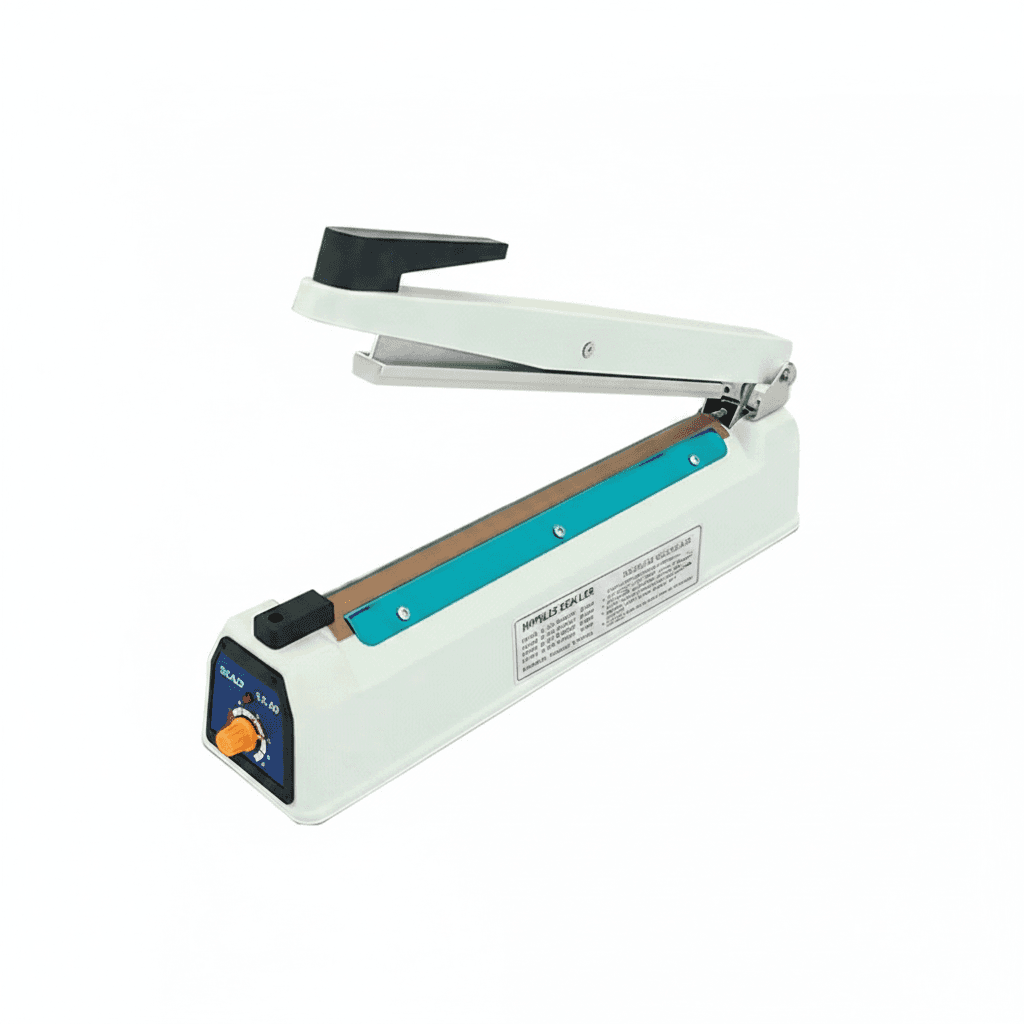
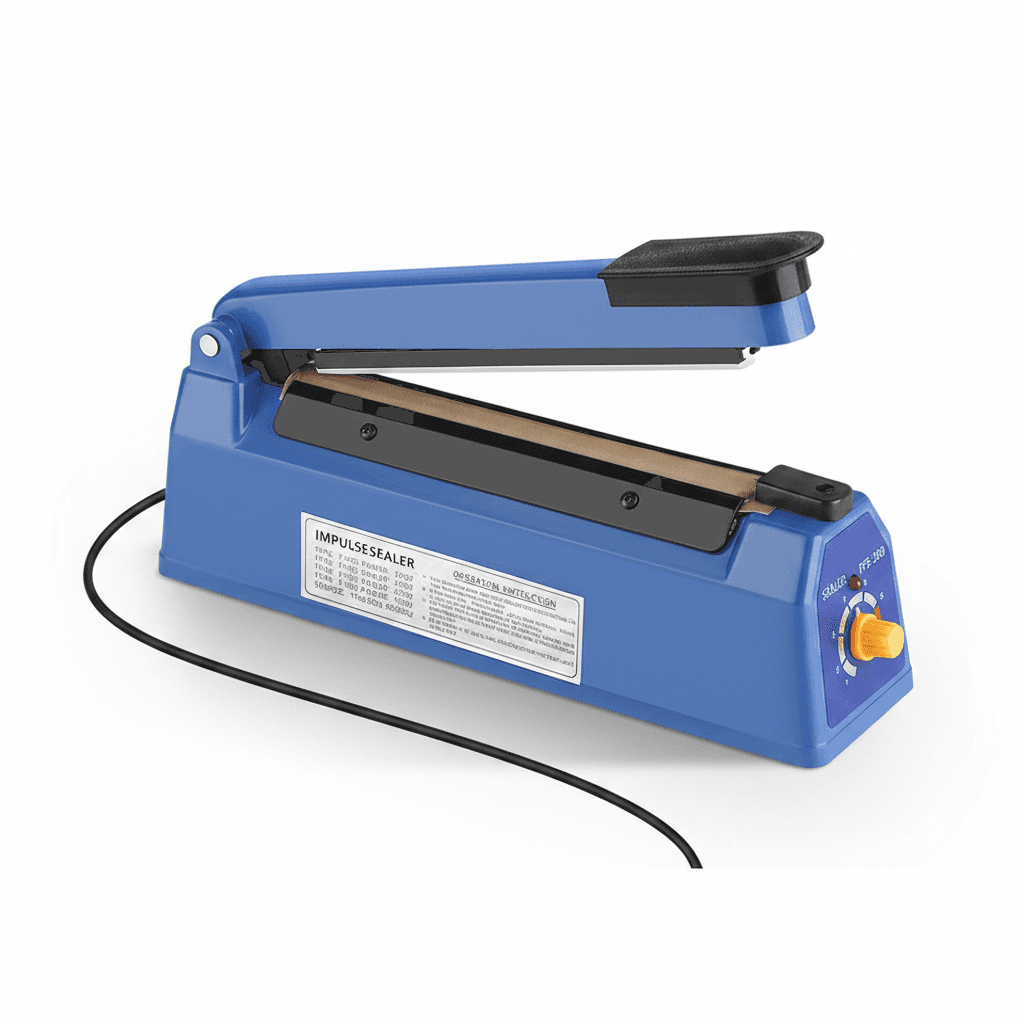
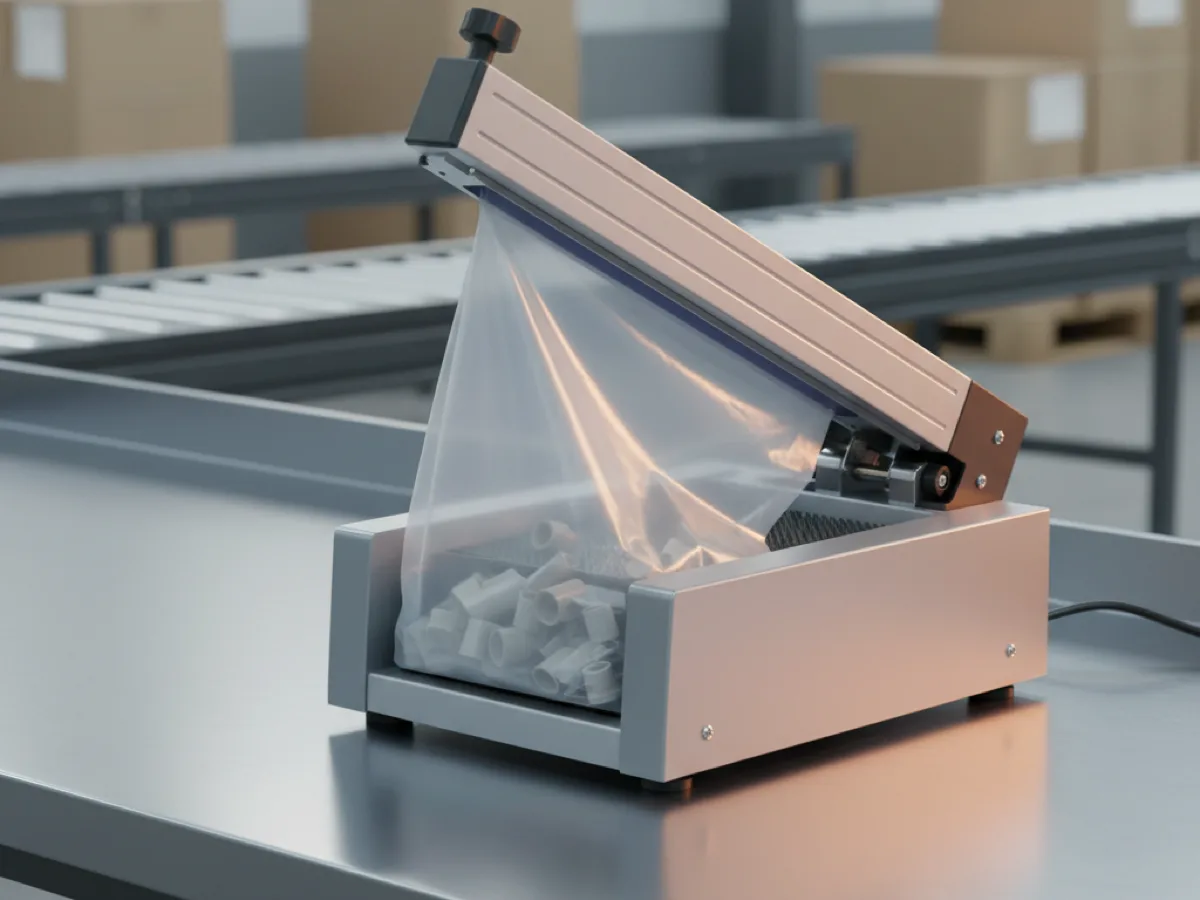
An impulse sealer passes current through a nichrome ribbon only while the bar is pressed down. The element gets hot, melts the seal, then cools under pressure while still clamped, which is what sets the weld. Nothing is hot between cycles, so there is no warm-up and nothing to burn anyone who leans on it.
A constant-heat sealer keeps its jaws hot all the time. That suits thicker materials and laminates that an impulse machine struggles with, and band sealers, which pull the bag through between heated belts, do the same job continuously for production runs. The trade-off is warm-up time and a machine that is hot whenever it is switched on.
| Type | Suits | Watch out for |
|---|---|---|
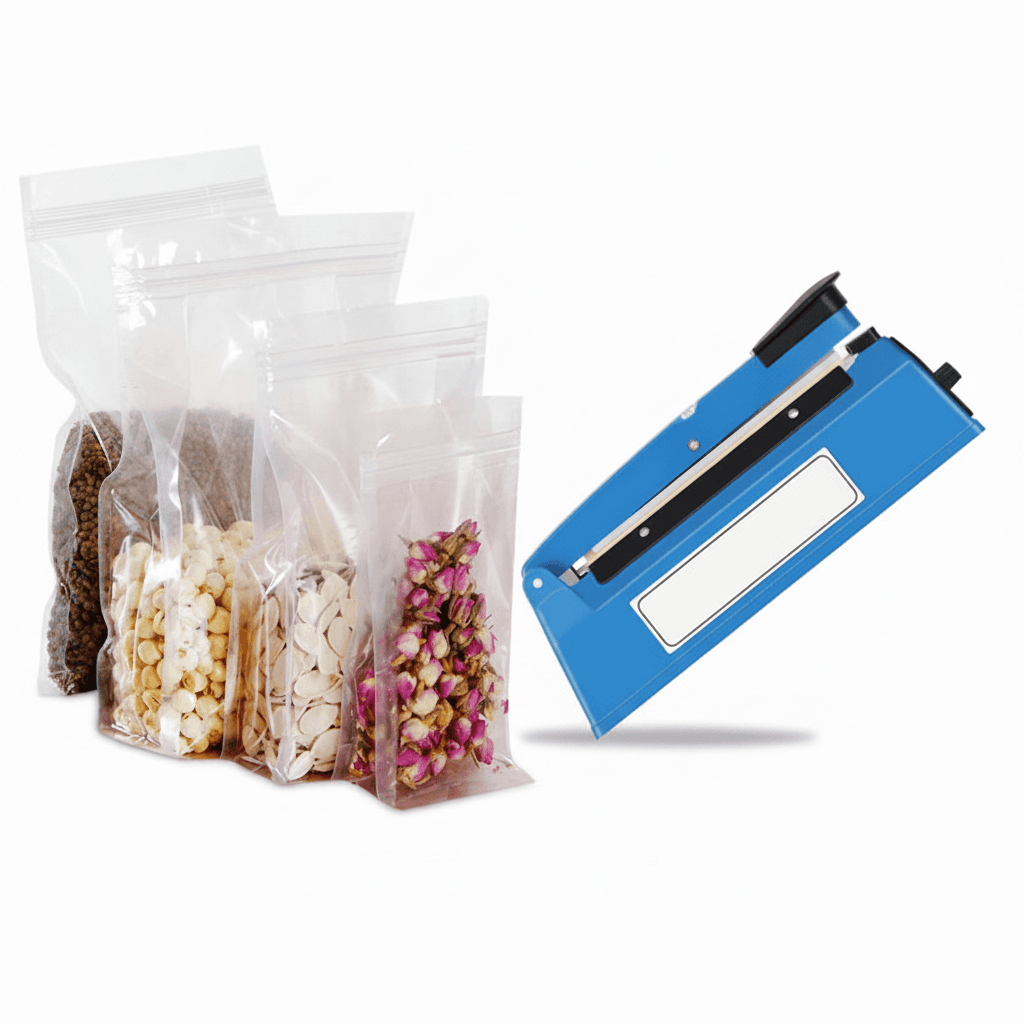
| Impulse, hand press | Polythene bags, low to medium volume | Struggles with thick laminates and foil |
| Impulse, foot operated | Same, both hands free for the bag | Needs bench space and a foot pedal run |
| Constant-heat band sealer | Continuous production, thicker films | Warm-up time, permanently hot jaws |
| Shrink wrap combination | Retail packs, tamper-evident finish | Needs shrink film, not ordinary polythene |
Seal width and bag material decide compatibility
The number on an impulse sealer, 200 mm or 400 mm, is the length of the heating element and therefore the widest bag it can close in one press. A wider bag can sometimes be done in two overlapping presses, but the overlap is the weak point and it looks it, so size the machine to the widest bag you actually use.
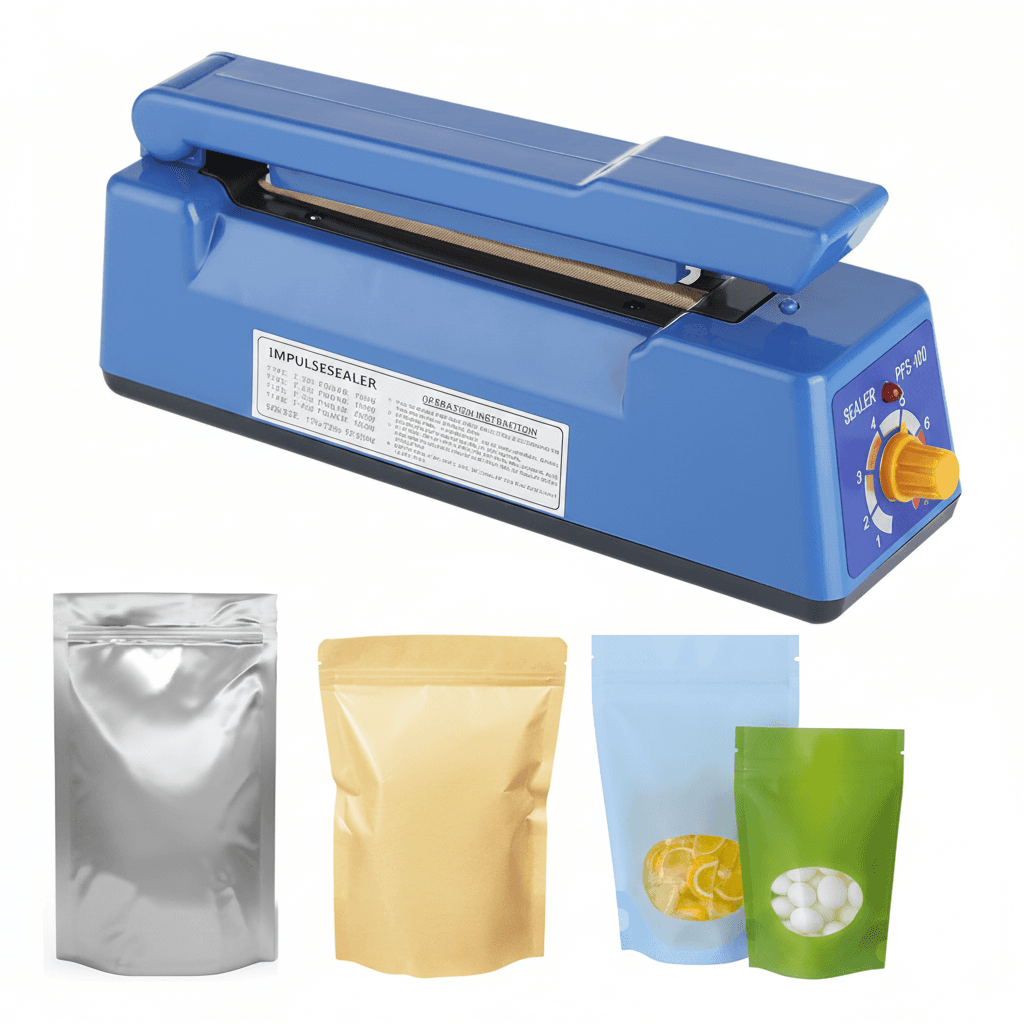
Material matters as much as width. Ordinary polythene seals easily. Polypropylene needs more heat and a slower cycle. Foil laminates and heavier barrier films often need constant heat rather than impulse. If bags are arriving with seals that peel apart, the usual causes are too short a dwell, releasing the pressure before the seal has cooled, or simply the wrong machine for the film.
The element and the PTFE tape are consumables
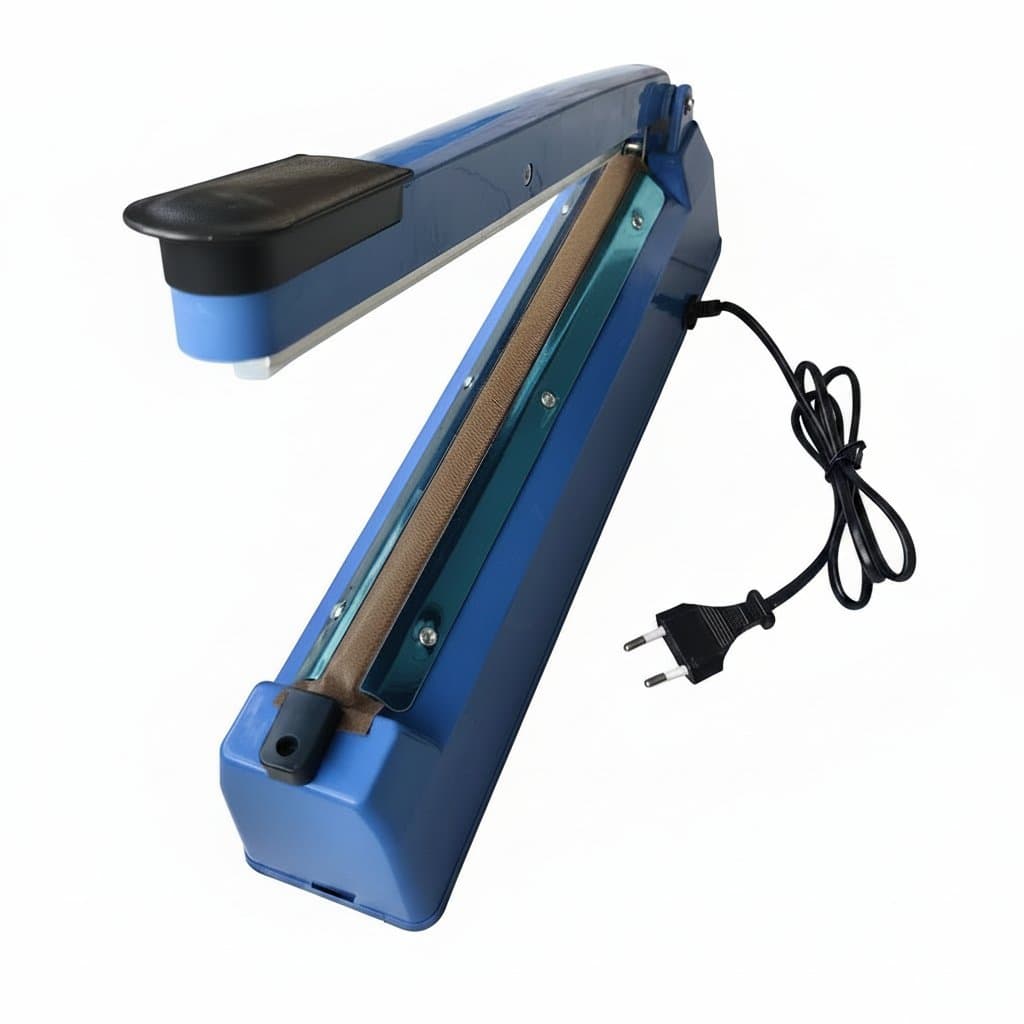
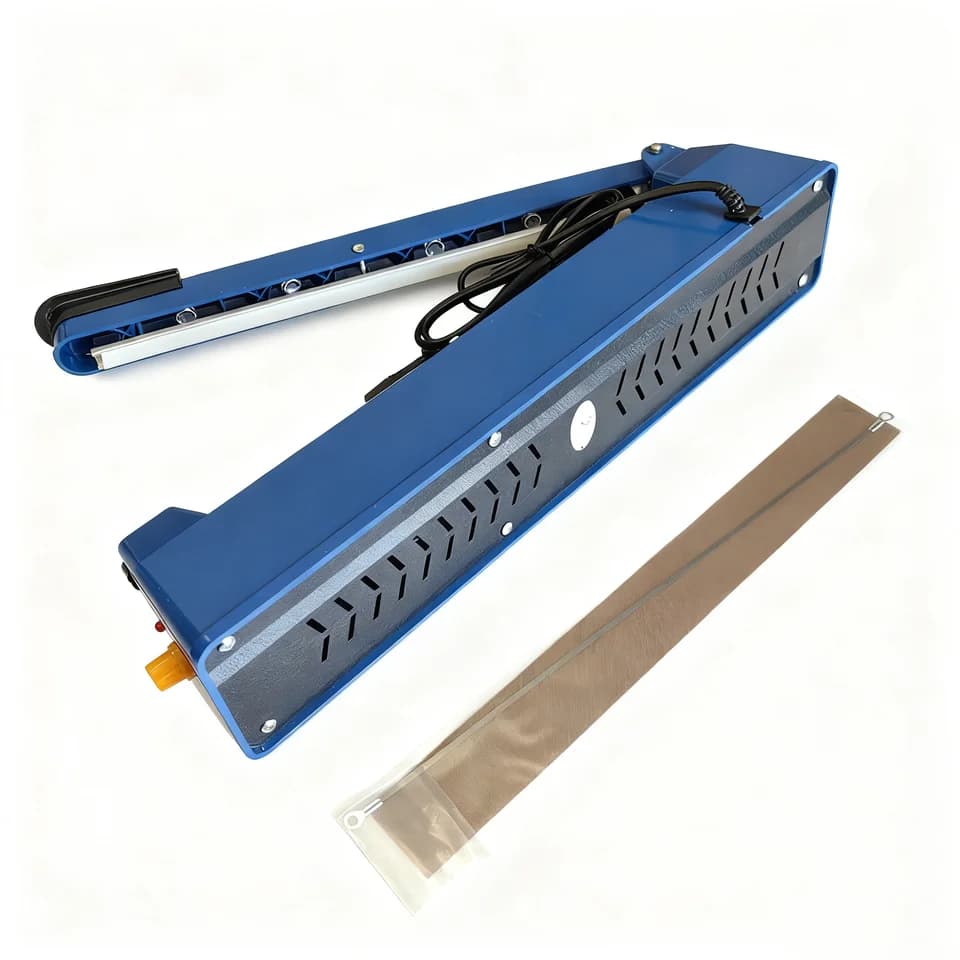
Every impulse sealer has a nichrome element and a strip of PTFE tape over it that stops the melted plastic sticking. Both wear out, and when they do the machine appears to fail: seals go patchy, plastic sticks to the bar, and the cycle seems weaker. It is not a fault, it is maintenance, and a spare element and a roll of tape should be bought with the machine.
Replacing them takes minutes and costs very little. The tell-tale is a seal that is good at one end of the bar and poor at the other, or melted plastic building up on the bar. Cleaning the tape when cool between runs extends its life considerably.
Getting a seal that actually holds
Almost every seal failure comes down to one of three things: not enough dwell time, letting go too early, or contamination in the seal area. The plastic has to melt and then cool while still clamped, so releasing the bar as soon as the timer beeps is the classic error. Hold it for a moment after the cycle ends.
Keep the seal area clean and dry. Powder, grease or product dust in the seal line prevents the faces welding and produces a seal that looks fine and opens in transit. Leave enough headspace above the contents that the bag mouth can be laid flat, and on anything valuable, test a few seals to destruction rather than assuming.