
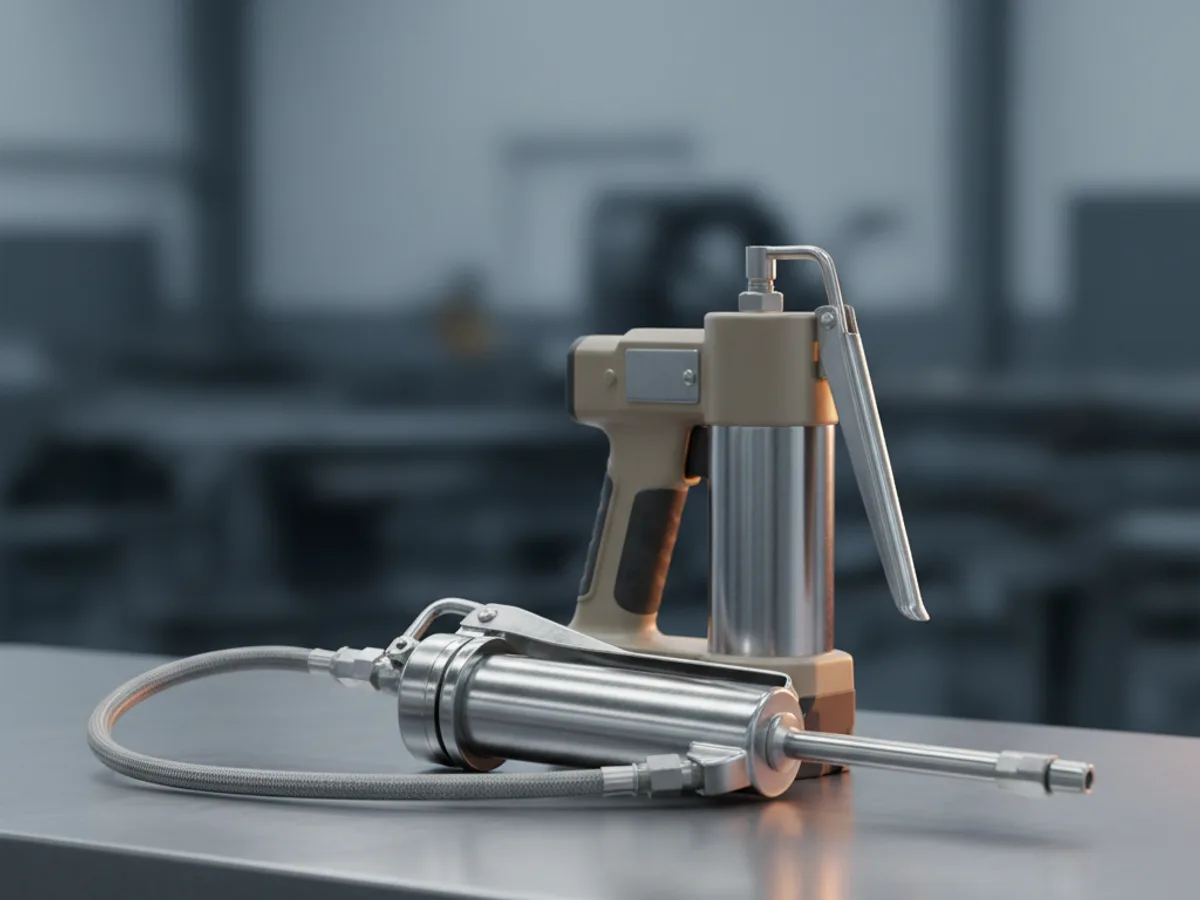




Lever, pistol, pneumatic and battery
A lever gun uses a long handle and two hands, and it generates the highest pressure of the manual types, which is what a stiff or partly blocked nipple needs. A pistol grip gun is worked one handed, which matters when the other hand is holding a torch or steadying you under a machine, at the cost of pressure.
Pneumatic guns run from shop air and deliver continuously, which suits a workshop greasing plant regularly. Battery guns do the same without an airline and have largely taken over mobile maintenance, where walking around a yard with a compressor is not an option.
For occasional use a lever gun is entirely adequate and costs a fraction of the powered types. The case for powered arrives when there are dozens of points on a schedule, because that is when hand pumping becomes the reason greasing gets skipped.
| Type | Suits | Trade-off |
|---|---|---|
| Lever | Stiff nipples, highest manual pressure | Two hands needed |
| Pistol grip | One handed access in awkward places | Lower pressure |
| Pneumatic | Workshop with air, many points | Tied to an airline |
| Battery | Mobile maintenance, many points | Cost and battery management |
More grease is not better
A rolling element bearing needs its cavity roughly a third to a half full. Packed solid, the rolling elements have to plough through grease rather than roll in it, and the churning generates heat. That heat degrades the grease, which then stops lubricating, and the bearing fails from being over serviced.
On a sealed unit the failure is more direct. The pressure a grease gun makes is easily enough to push a seal out of its housing or split a rubber boot, and once that has happened the joint is open to water and grit and its life is measured in weeks.
The rule that avoids both is to pump slowly and stop at the first sign of movement: grease appearing at the relief, the seal beginning to swell, or resistance rising sharply. Where a manufacturer states a number of strokes or a quantity, that figure exists precisely because feel is unreliable.
Mixing greases can destroy both
Grease is oil held in a soap thickener, and the thickener type is what decides compatibility. Lithium, lithium complex, calcium sulphonate, polyurea and clay based greases are all common, and several combinations are incompatible with each other.
Incompatible greases do not simply coexist. The thickener structure breaks down and the mixture softens, sometimes to the consistency of oil, and it then runs out of the housing leaving the bearing dry. A bearing that has lost its grease this way fails quickly and the cause is invisible without knowing what was in there before.
So find out what a machine has been greased with before adding something else. Where the history is unknown and the point is accessible, purging the old grease through until clean new grease emerges is the safe approach. Labelling guns for a single grease type, and keeping one gun per grease, is what workshops do to avoid the problem entirely.
Couplers, air locks and loading
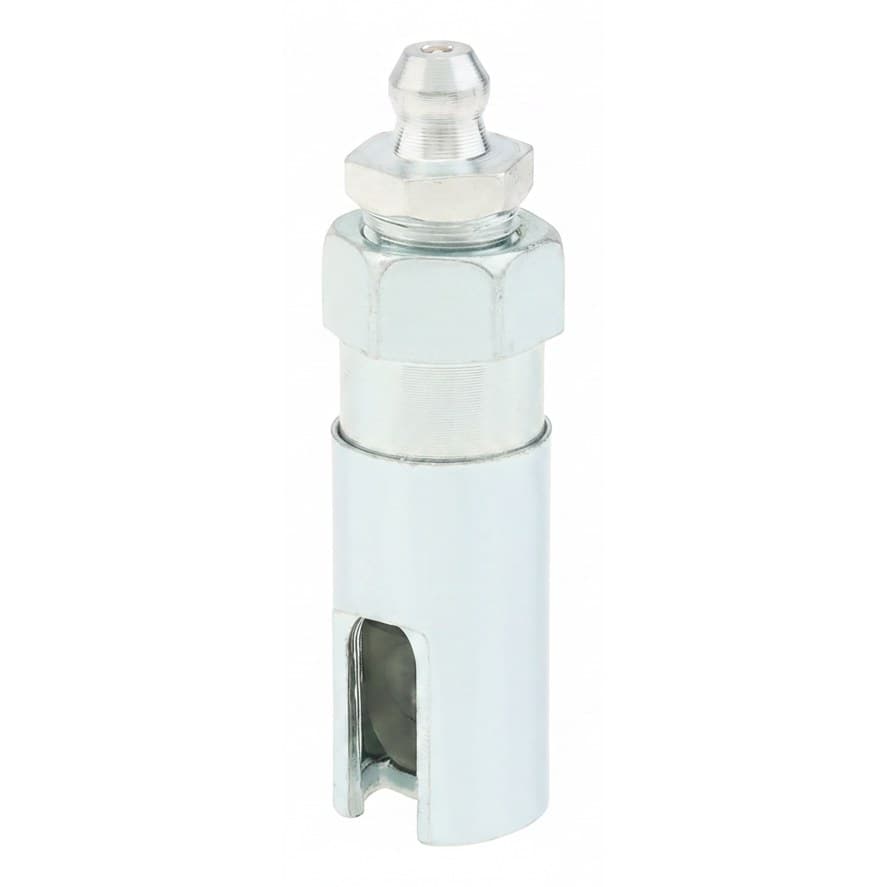
The standard coupler pushes onto a grease nipple and grips with internal jaws. Getting it off a tight nipple without spraying grease is the usual annoyance, and locking couplers, which release with a lever, solve it neatly and are worth fitting to any gun in regular use.
Air trapped in the barrel is the reason a gun pumps and nothing comes out. Cartridge guns take air in when the cartridge is fitted, and the bleed valve on the head exists to let it out: crack it open and pump until grease rather than air appears.
Cartridges are the convenient way to load and bulk filling is the cheap one. Suction filling from a tub works and it is the easiest way to introduce both air and dirt, so a filler pump is worth having where bulk grease is used. Keep the coupler capped between jobs, since a coupler left open collects the grit that then gets injected into a bearing.