Polarity is not a preference
The dielectric in an electrolytic capacitor is an oxide layer formed electrically on the anode foil, and it is maintained by the applied voltage being the right way round. Reverse it and the oxide starts to break down, the device conducts, it heats, and the electrolyte boils.
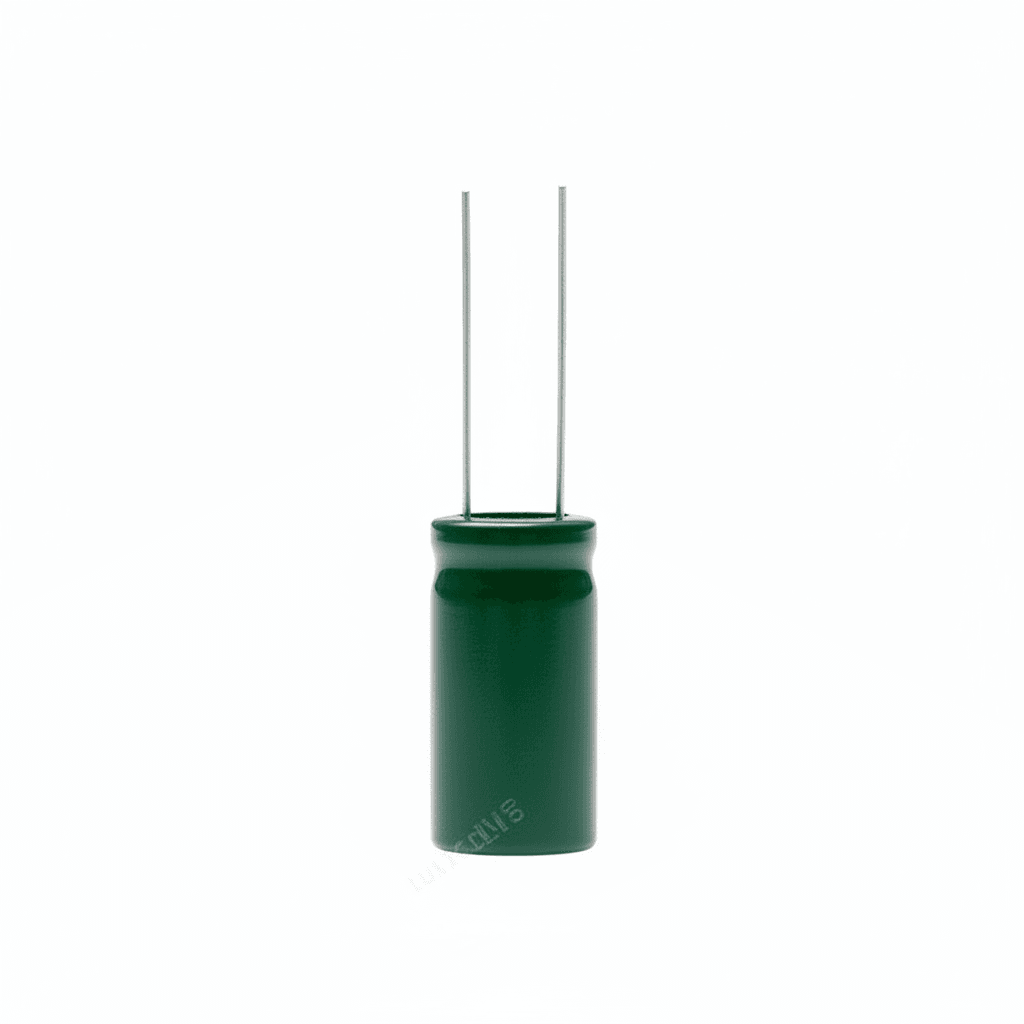
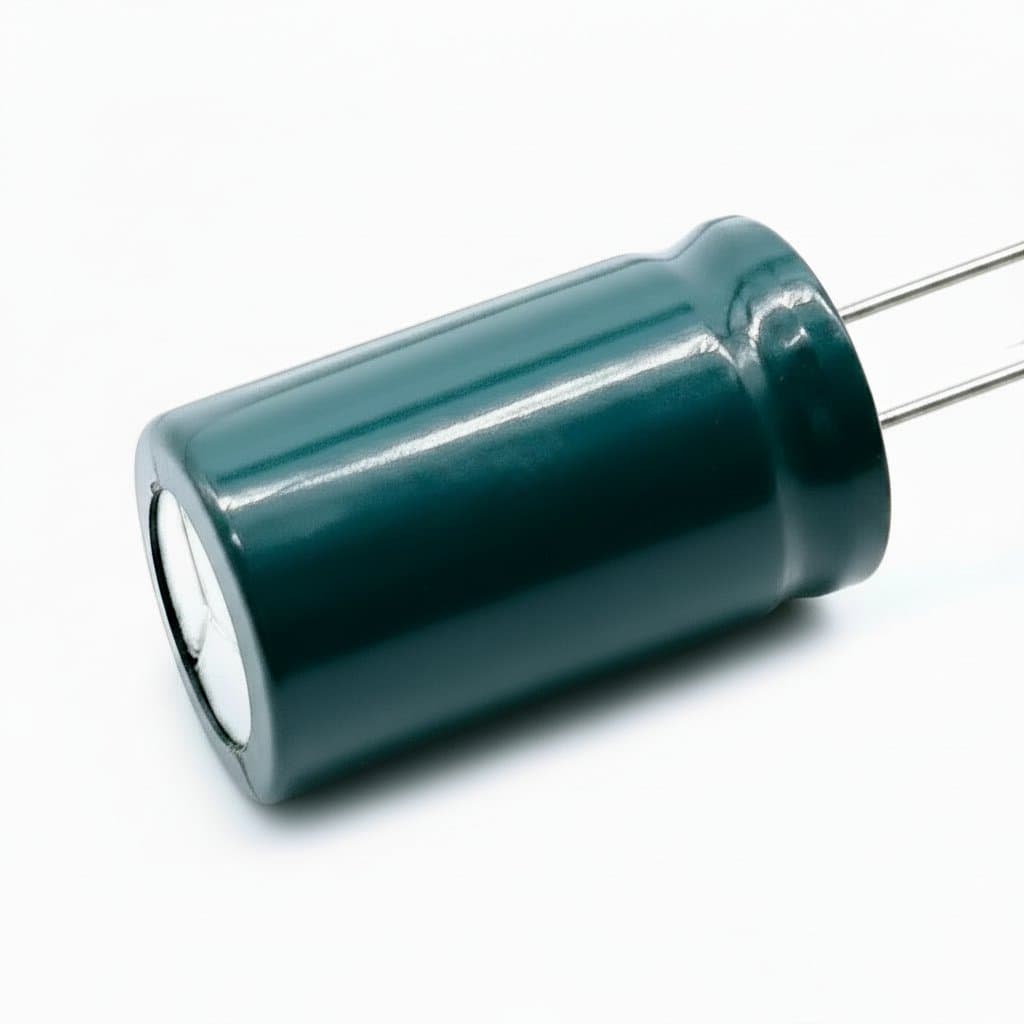
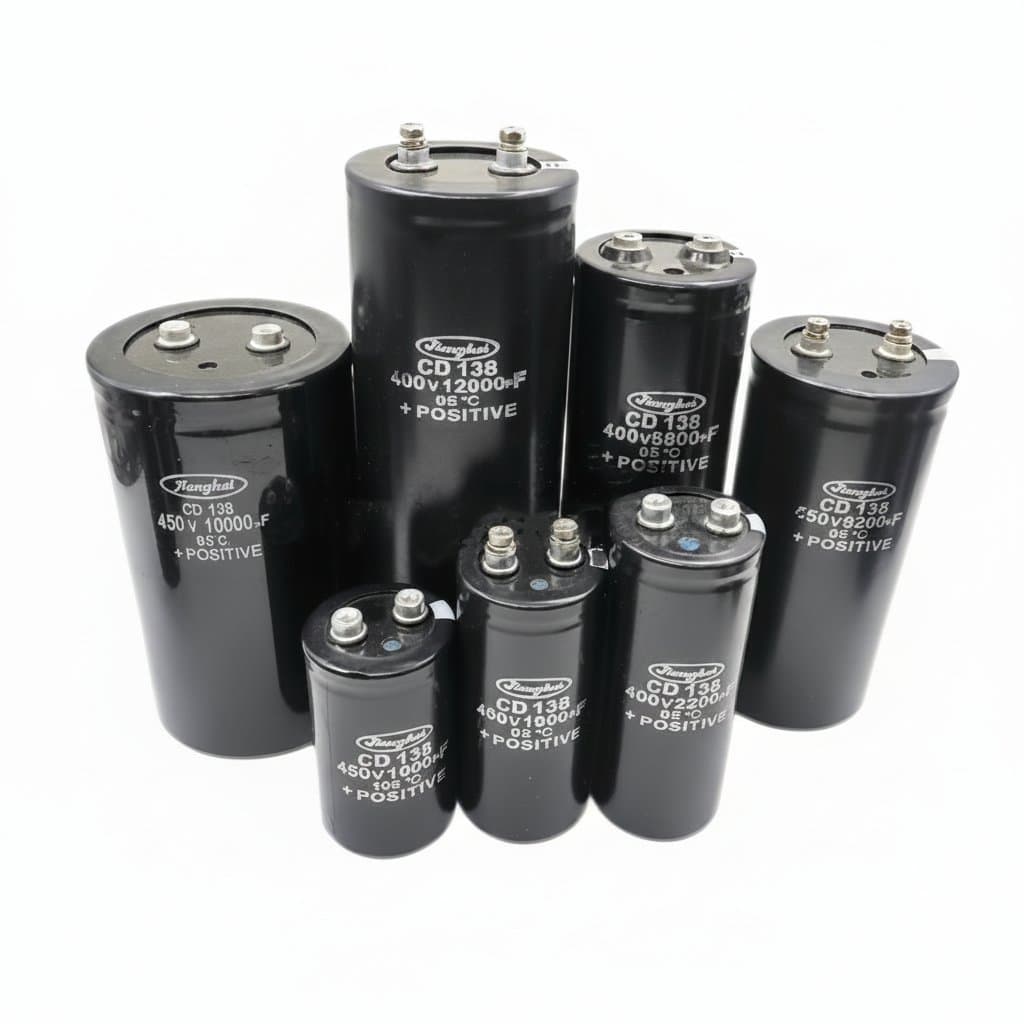
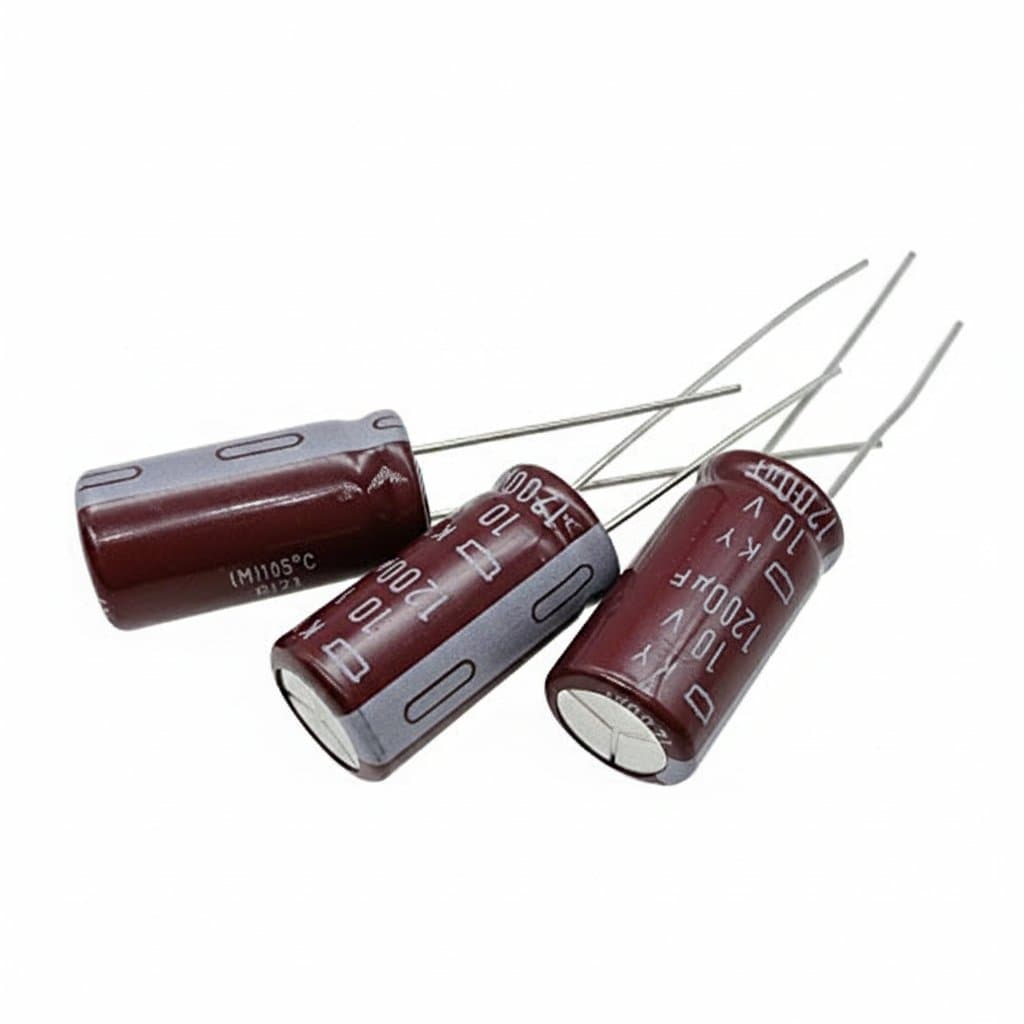
That is why these capacitors have a vent, usually a cross or a Y stamped into the top of the can. It is a designed weak point that lets pressure out in a controlled way instead of the case bursting. A capacitor that has vented is finished, and the electrolyte it has released is corrosive to the board.
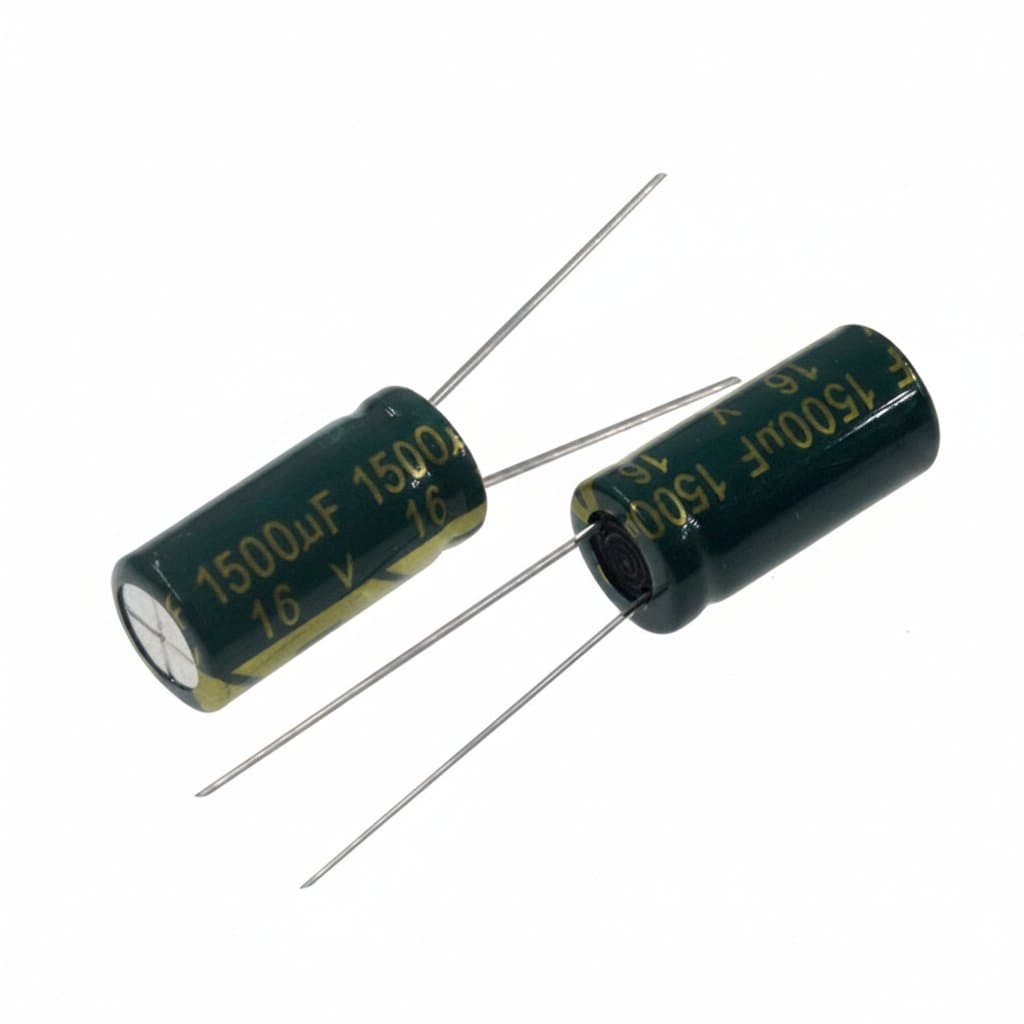
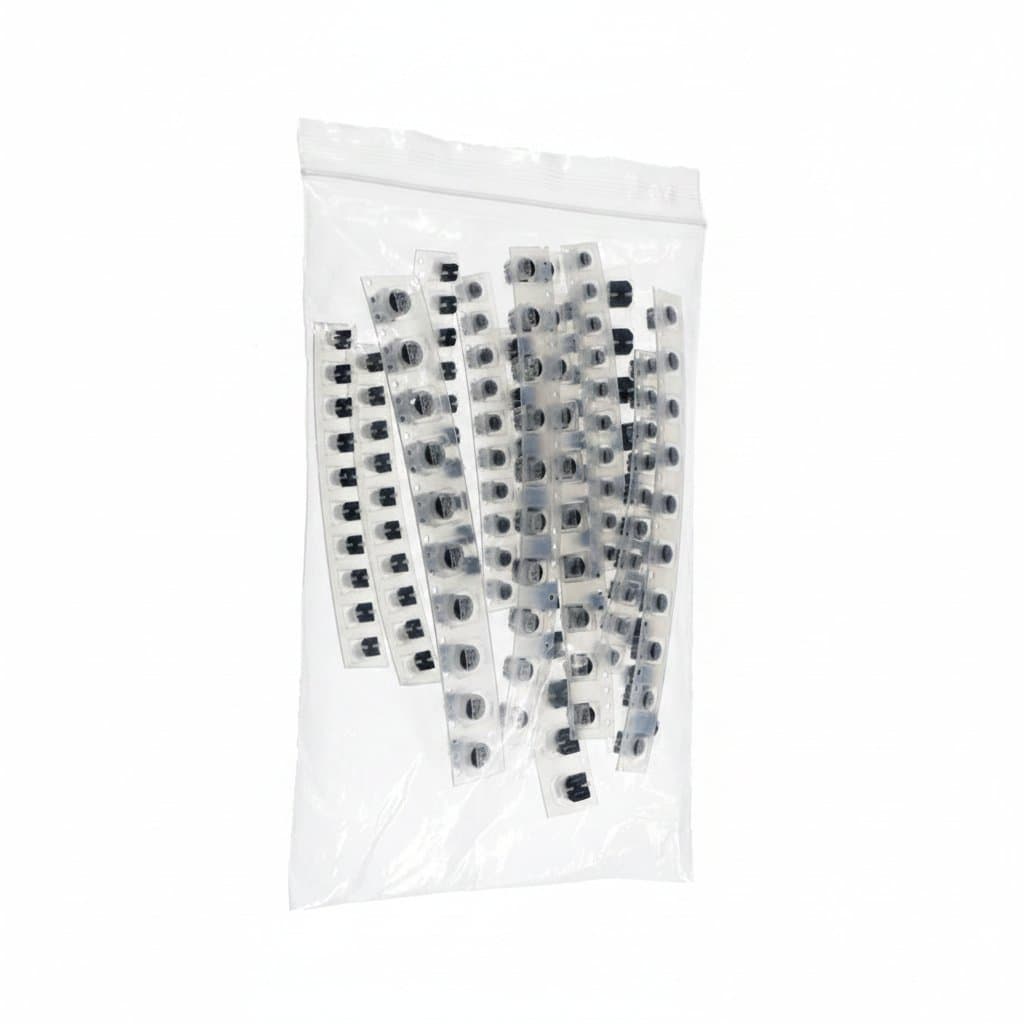
The negative lead is marked with a stripe down the can on radial parts and by a bevel or bar on surface mount ones. Check it every time, particularly when replacing a part on a board where the silkscreen is worn, and never rely on lead length alone once the leads have been trimmed.
| Marking | Means |
|---|---|
| Stripe down the can with minus symbols | Negative lead on a radial part |
| Bar or bevelled edge on the package | Negative end on a surface mount part |
| Cross or Y stamped in the top | Pressure vent, not a defect |
| Bulged top or leaked residue | Failed, replace and clean the board |
Voltage rating is a ceiling to design under
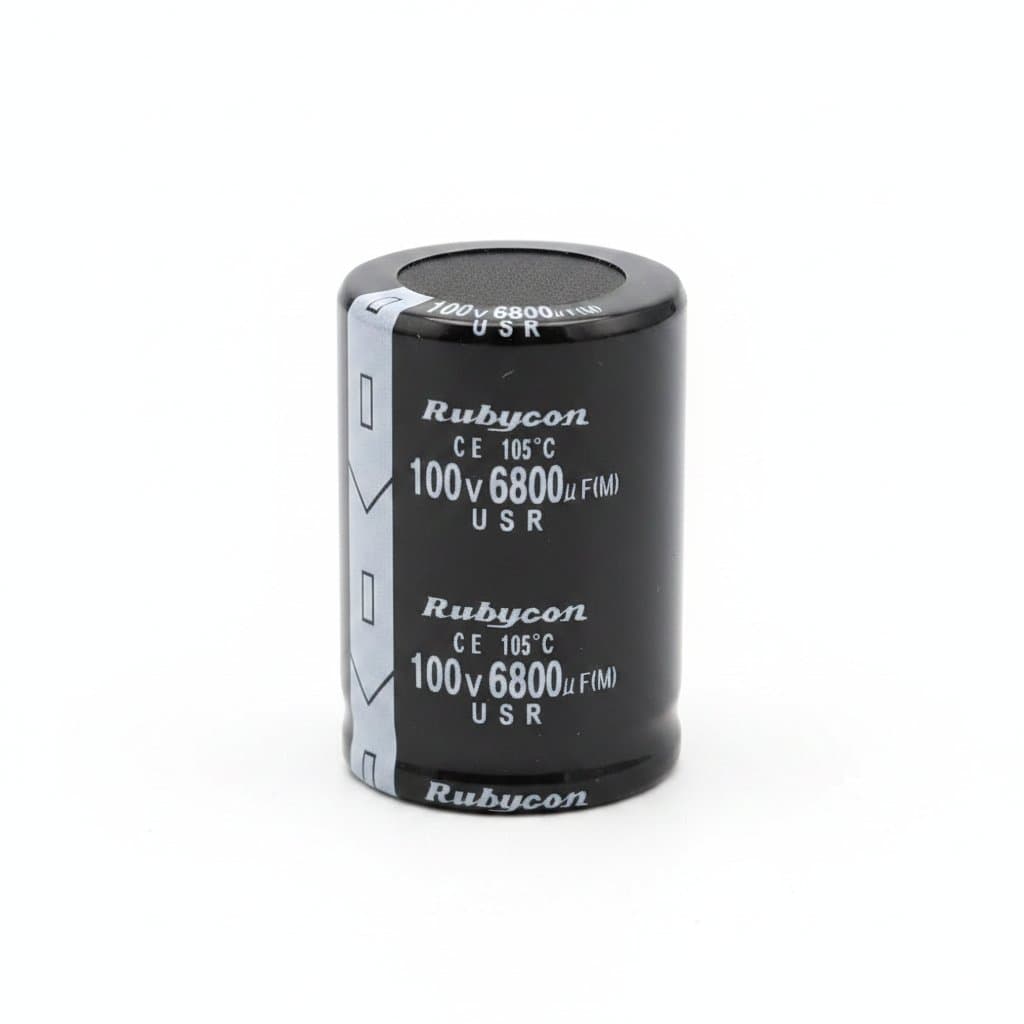
The voltage rating is the maximum the capacitor may see continuously, including ripple peaks and any transient that reaches it. Running one right at its rating works but leaves nothing for a supply that sags high or a spike on switch-on, so the usual practice is to fit a part rated comfortably above the working voltage.
Going higher is safe electrically and costs you size and sometimes a little ESR. Going lower is not safe at all, and the failure is the vent-and-leak one rather than a graceful loss of performance. Where a repair calls for a 63 V part, a 100 V part of the same capacitance will normally do; a 50 V one will not.
Capacitance tolerance on these parts is wide by the standards of other components, commonly around plus or minus twenty per cent, and older or looser grades wider still. That is fine for bulk filtering, which is what they are for, and it is why they are the wrong choice anywhere the exact value matters, such as a timing or filter network.
ESR and ripple current, the specifications that bite
Equivalent series resistance is the small resistance in series with the ideal capacitance. In a mains transformer supply it barely matters. In a switching supply, where the capacitor is charged and discharged tens of thousands of times a second, it decides how well the capacitor smooths and how much it heats itself.
Ripple current rating follows from that. The current going in and out passes through the ESR and dissipates power inside the can, so exceeding the ripple rating cooks the part from the inside even when the voltage is well within spec. Capacitors that fail in switching supplies have usually died of ripple, not of overvoltage.
This is why low-ESR parts exist and why fitting an ordinary general purpose capacitor where the original was low-ESR is a common repair mistake. It works on the bench and fails months later. If the original is marked low ESR or the board is a switching supply, match it.
The temperature rule, and why 105 degree parts cost more
These capacitors have a stated life at their maximum rated temperature, often a couple of thousand hours at 105 degrees. That sounds short because it is the worst case. The well established rule of thumb is that life roughly doubles for every ten degrees below the rated temperature, so the same part run far cooler lasts for years.
That arithmetic is the whole argument for 105 degree parts over 85 degree ones. In a warm enclosure, next to a heatsink, or in equipment that runs continuously, the higher temperature class buys a large multiple of service life for a small price difference. In a cool, intermittently used device the difference matters much less.
It also explains where these capacitors fail first: the ones nearest the hot components. When recapping a board it is worth replacing the whole group rather than the one that has visibly failed, because its neighbours have lived the same thermal life and are the next to go.