

FFP and P classes, and what each stops
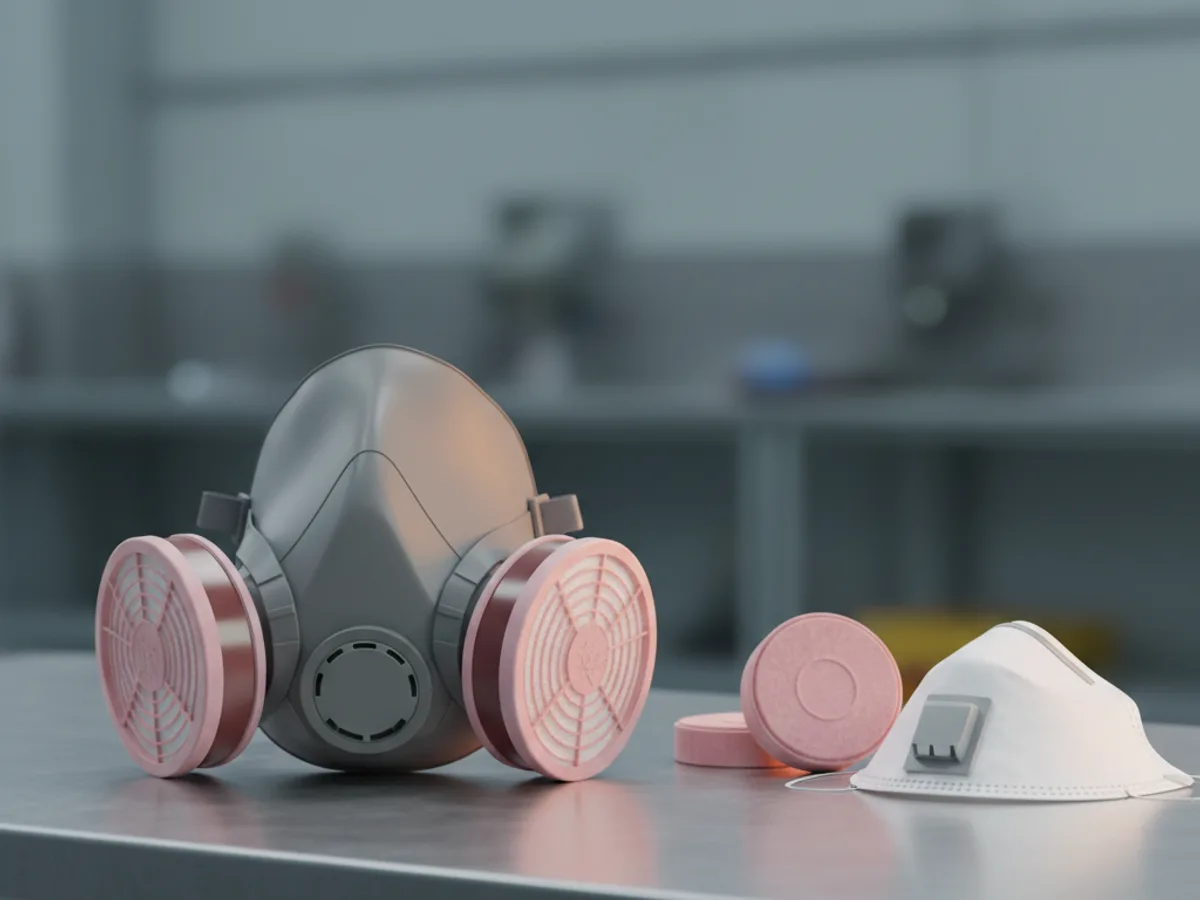
Disposable masks are graded FFP1, FFP2 and FFP3, in rising order of filtering efficiency. The class needed follows the hazard rather than the comfort: nuisance dust is one thing, and respirable crystalline silica from cutting concrete, stone or engineered worktops is another entirely, and the latter is the reason FFP3 exists.
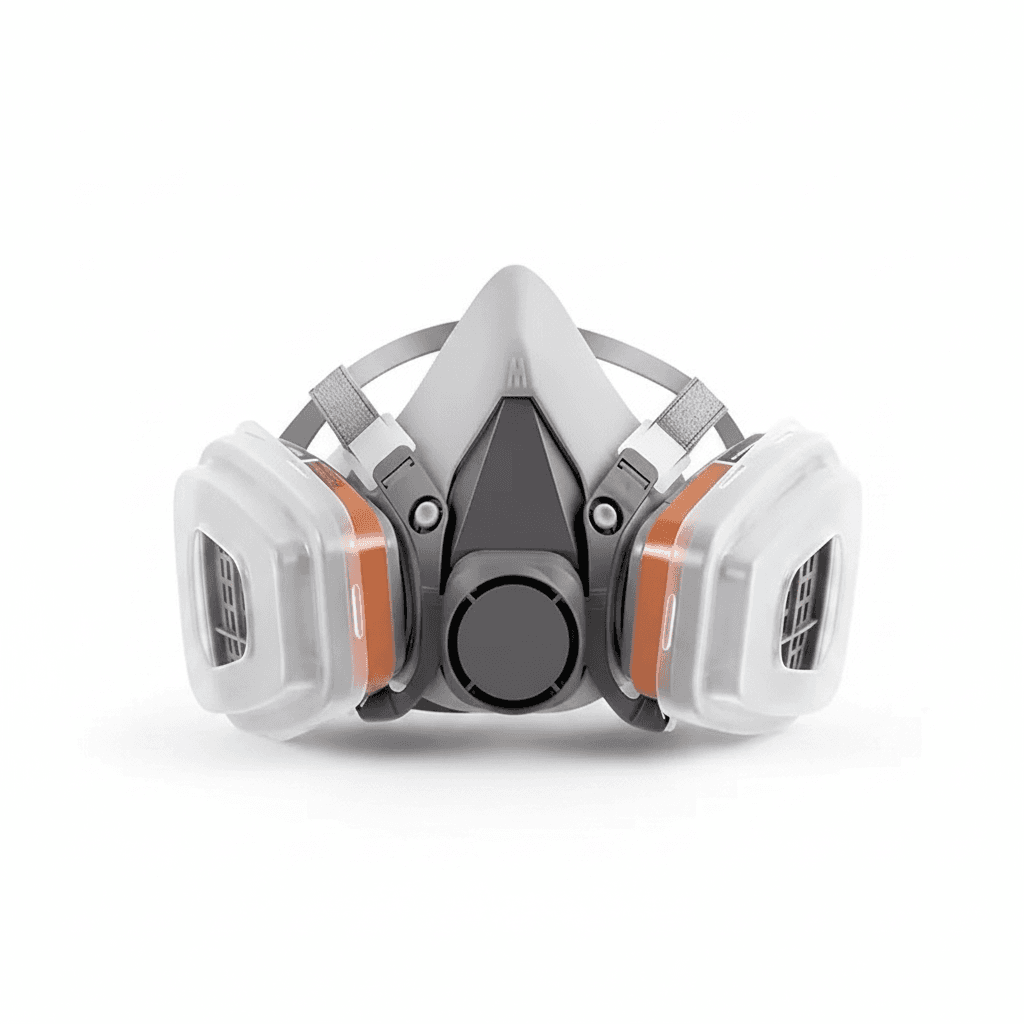
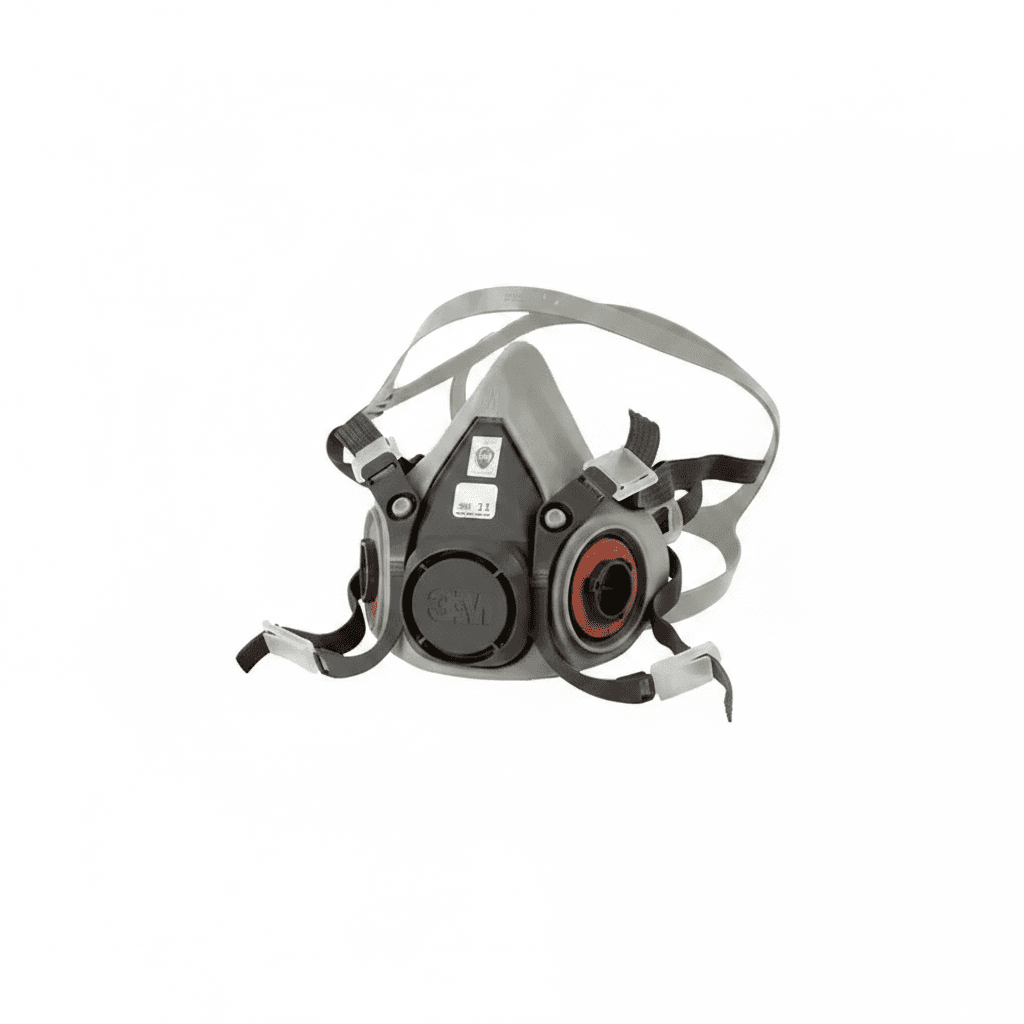
Reusable half masks take replaceable filters instead. A P3 particulate filter is the equivalent step for dust and mist. Gas and vapour filters are lettered by what they absorb, with A for organic vapours such as solvents, B for inorganic gases, E for acid gases and K for ammonia, and combined ABEK filters covering all four.
Particulate and gas hazards need different filters, and where both are present a combined filter with a particulate stage is required. Paint spraying is the common case: the solvent needs an A filter and the paint mist needs a particulate stage, so a gas filter alone is not enough.
| Hazard | Filter | Note |
|---|---|---|
| Nuisance dust, sweeping | FFP1 or FFP2 | Comfort and low toxicity work |
| Silica dust, cutting stone or concrete | FFP3 or P3 | The reason the highest class exists |
| Solvent vapour | A class gas filter | Not a dust mask, which does nothing for vapour |
| Spray painting | Combined A plus particulate | Vapour and mist together |
The face seal is the whole thing
Air takes the easiest route. If there is a gap between the mask and the face, air goes through the gap rather than through the filter, and the filter class becomes irrelevant. This is why two people wearing identical masks can get very different protection.
Facial hair is the common defeat. Any stubble or beard crossing the seal line prevents a tight fitting mask from sealing, and no amount of tightening the straps fixes it, because the hair holds the seal off the skin. That is a physical fact rather than a policy, and it applies to disposables and half masks alike.
Do a seal check every time. Cover the filters or the exhalation valve with your hands and breathe in gently: the mask should pull onto the face and stay there. If it does not, reposition and try again. In UK workplaces, tight fitting respiratory equipment also requires formal face fit testing for the individual wearer, which is a separate and legally required exercise.
Where a tight fitting mask cannot be used
Where someone cannot get a seal, whether because of a beard, facial scarring or bone structure, the answer is not a bigger mask. It is loose fitting powered equipment: a hood or visor supplied with filtered air by a battery blower, which works by keeping the inside at slightly positive pressure so leakage flows outward.
That approach also suits long shifts. Breathing through a filter is work, and a powered unit removes that effort, which matters over hours rather than minutes.
It is a considerably larger purchase than a box of masks, so it tends to arrive only after someone has failed a fit test. Where a team includes anyone who cannot seal a mask, planning for it in advance is cheaper than discovering it on the day of the job.
When a filter is finished
Particulate filters clog. As they load with dust the breathing resistance rises, and that increasing effort is the signal to change them. They do not become dangerous as they load, they become hard work, and a filter that is difficult to breathe through has done its job.
Gas and vapour filters are the opposite and far more dangerous. They absorb until they are saturated, then let the contaminant straight through with no change in breathing resistance at all. Smelling or tasting the contaminant means the filter has already broken through and you are being exposed.
So gas filters are changed on a schedule based on use rather than on feel, and they keep absorbing from the air around them even when nobody is wearing the mask. Store them sealed in a bag away from the workspace, note when a cartridge was first opened, and discard rather than hoard.