
Compel Groupgroup

Safety Helmets and Hard Hats

Author: James Whitfield, Equipment Desk5 min read
Updated

Two different standards cover head protection and they are built for opposite situations. An industrial hard hat protects against something falling on it and its chinstrap is designed to let go under load. A climbing type helmet adds side impact protection and a strap that must not let go, which is what working at height needs.

12 products from £146.99 to £387.99

Specs and prices

Specifications as declared by the seller of each listing, not our own measurements. Prices update with the catalogue.

ProductPriceMaterialProduct Type
CE-certified construction safety helmet with built-in visor and goggles, made from ABS material and meeting ANSI standards for industrial head protection.Certified ABS Hard Hat£262.99ABSConstruction Safety Helmet
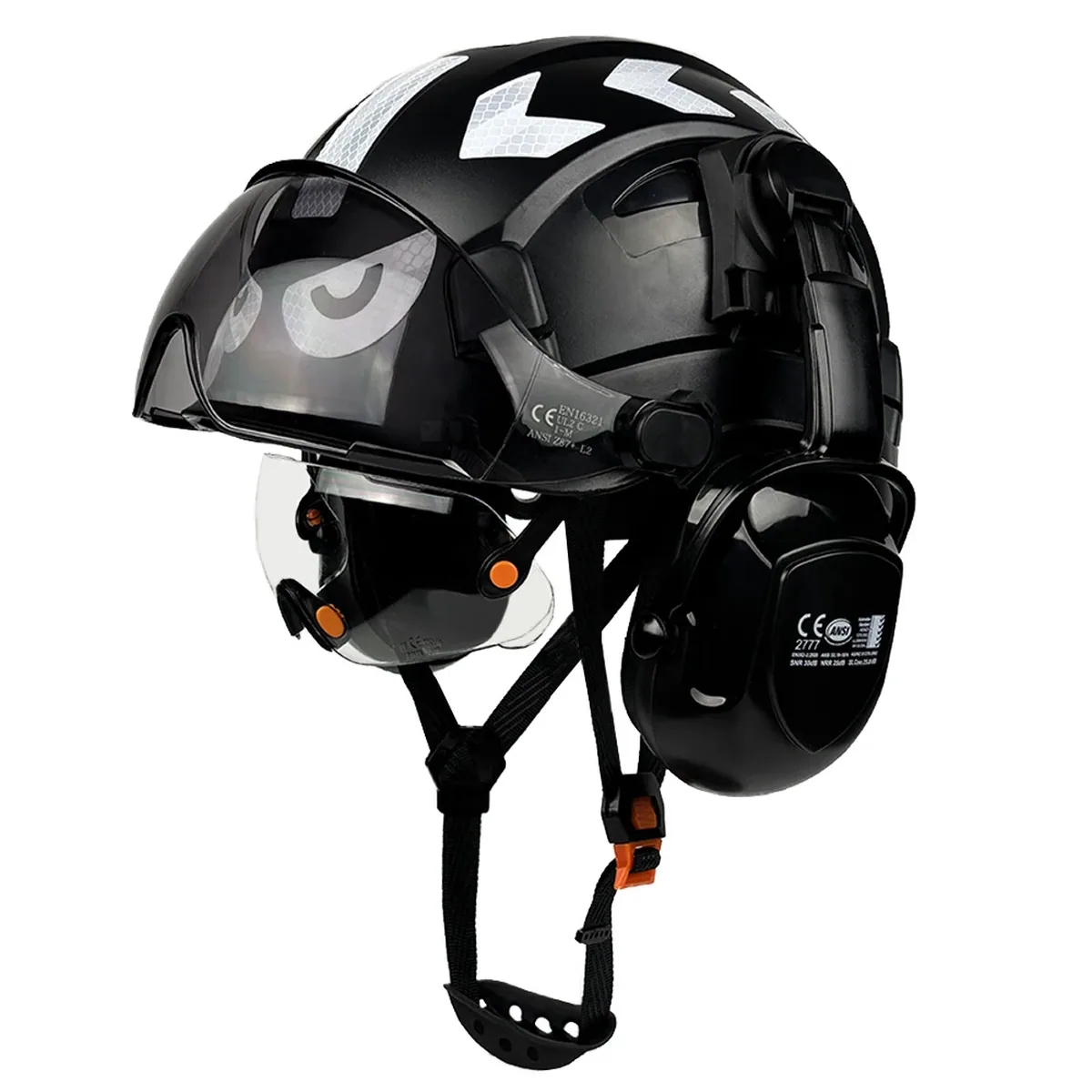
CE-certified construction safety helmet with built-in goggles, earmuffs, and a visor on an adjustable vented ABS hard hat.Multi-Hazard Safety Helmet£199.99ABS Plastic-
CE certified construction safety helmet with built-in goggles, earmuffs, reflective stickers, adjustable venting, and integrated visor.Hard Hat£199.99ABS-
CE-certified lightweight ABS safety helmet with integrated goggles, LED headlamp, and earmuffs for construction and engineering work, ANSI compliant.Safety Helmet£188.99ABSSafety helmet with integrated accessories
Forestry safety helmet with mesh face shield and earmuffs, ABS construction for logging and brushcutter work, includes DIY sticker set, CE certified.Safety Helmet£180.99ABSForestry Safety Helmet
Forestry Hard Hat.Forestry Hard Hat£177.99Steel with Ergonomic Grip-
CE certified safety helmet with double goggles, adjustable ventilation, DIY reflective stickers, and ANSI compliance for construction work.Vent Hard Hat£166.99ABS plastic-
CE-certified ABS construction safety helmet with double goggles, reflective stickers, adjustable ventilation, and ANSI-compliant hard hat design.Safety Helmet£159.99ABS-

Industrial or climbing type, and why the strap differs

An industrial safety helmet is designed around a falling object. The shell is shaped to deflect the impact and the harness absorbs it, and the chinstrap is deliberately weak: it is required to release at a low force so that a snagged strap cannot strangle the wearer.

A helmet for work at height is built to the opposite requirement. It has to stay on during a fall, so its retention system is strong and does not release, and it adds protection against impacts to the sides, front and rear rather than the crown alone. That is why these look like climbing helmets, because they are tested to a similar idea.

The practical consequence is that a hard hat is the wrong helmet for anyone working at height or likely to fall, and a climbing type helmet is the wrong one where a strap could snag on machinery. Choose from the actual hazard rather than from what is in the store, and check the standard marked inside the shell rather than a listing description.

Which type suits the hazard
HazardHelmet typeRetention
Objects falling from aboveIndustrial hard hatReleases under load to avoid strangulation
Working at height, risk of a fallClimbing type helmetStrong strap that stays fastened
Live electrical workNon-vented, insulating helmetAs required by the electrical standard
Forestry and clearingHelmet with visor and ear defendersCombined system

Vented shells, and where they are not allowed

Vents make a helmet considerably more comfortable in heat, and they do it by putting holes in the shell. For general construction that is a straightforward comfort gain worth having.

For electrical work it is not. A helmet intended to protect against contact with live parts has to be an unbroken insulating shell, so it is never vented, and that is a hard requirement rather than a preference. A vented helmet on an electrical job is the wrong equipment however comfortable it is.

Integrated systems are worth considering where the job needs more than a shell. Helmets that accept a visor and ear defenders on the same mounting keep everything on one head fitting rather than three, which in practice is the difference between the eye and ear protection being worn and being in a van.

Harness adjustment and how the helmet actually works

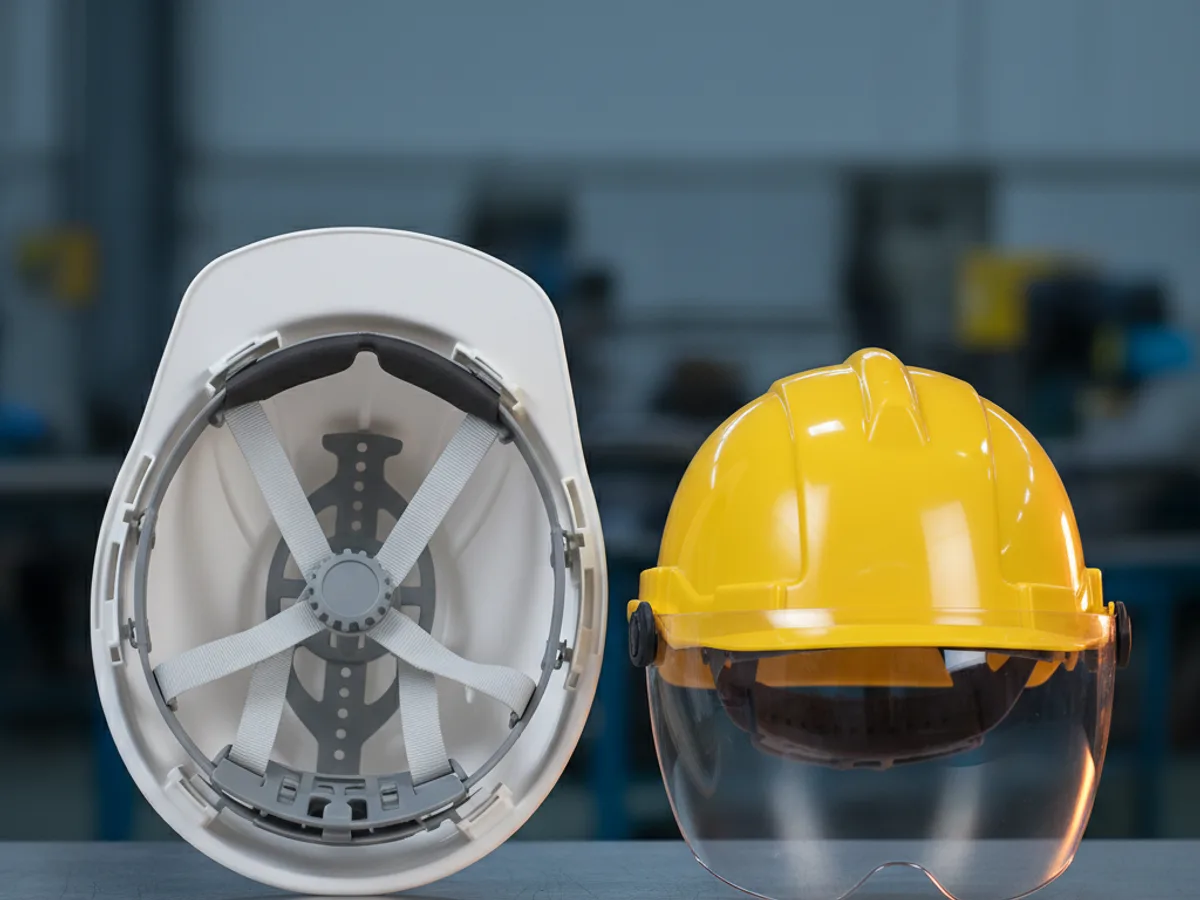
The shell does not touch the head. The harness inside holds it a set distance away, and that gap is the crumple zone: an impact deforms the shell and the harness stretches, and the energy goes into both rather than into the skull. A helmet worn on the back of the head, or with the harness slackened until it sits low, has given up most of that clearance.

Adjust the harness so it is firm without pressure points, sitting level rather than tipped back. A six point harness spreads load better than a four point one and is more comfortable over a long day.

Never modify the shell. Drilling it for accessories, painting it or applying solvent based stickers all attack the plastic, and a shell that has been crazed by solvent can fail at a fraction of the impact it was tested for. Use accessories designed to clip into the existing slots.

Age, sunlight and when to bin it

Helmet shells are usually polyethylene or ABS, and ultraviolet light degrades both. A helmet left on a dashboard or worn outdoors every day ages faster than one kept in a locker, and the degradation is invisible until the plastic becomes brittle.

Manufacturers mould a date of manufacture into the shell, usually as a clock face with an arrow to the year, and they state a service life from that date and from first use. Those figures are the manufacturer instruction rather than a suggestion, and a helmet past them should be replaced regardless of appearance.

Replace immediately after any significant impact, even where the shell looks undamaged, because the energy has been absorbed by deformation you cannot see. The same applies to a helmet that has been dropped a long way onto a hard surface. A helmet is cheap next to what it protects.

James Whitfield, Equipment Desk editor at Compel GroupJames WhitfieldEquipment Desk

James edits the machine and equipment buying guides. The specifications on these pages are the declared figures from the live listings we hold, with a note wherever a number comes from a published standard instead. Pages are re-checked as the catalogue changes.

Share
Add Compel Group as a preferred source on Google

Safety helmets and hard hats

See the full range

Buying guide

Safety Helmets and Hard Hats questions

Can I use a hard hat for working at height?
Generally no. An industrial hard hat is designed so its chinstrap releases under load, so it can come off in a fall. Work at height needs a climbing type helmet with a strong retention strap and side impact protection.
Why is the chinstrap on a hard hat so weak?
It is required to release at low force so a snagged strap cannot strangle the wearer around machinery. That is a deliberate safety feature, and it is exactly why the same helmet is wrong for a fall risk.
Can I wear a vented helmet for electrical work?
No. A helmet protecting against contact with live parts must be an unbroken insulating shell, which means no vents. That is a requirement of the electrical standard rather than a comfort choice.
How long does a safety helmet last?
Follow the manufacturer figures, which run from the moulded date of manufacture and from first use. Ultraviolet light degrades the shell invisibly, so a helmet stored on a dashboard ages faster than one in a locker.
Can I put stickers on my helmet?
Only ones intended for it. Solvent based adhesives and paint attack the shell plastic, and a crazed shell can fail well below the impact it was tested for. Never drill a shell for accessories.
Do I need to replace a helmet after a knock?
After any significant impact, yes, even if it looks undamaged. The energy was absorbed by deformation you cannot see, so the shell no longer offers the protection it was tested to.

We use cookies. Some keep the store working, others show us what to fix. No third-party trackers, and we never sell your data. Learn more about cookies and your privacy