



Spotting the differences at the bench
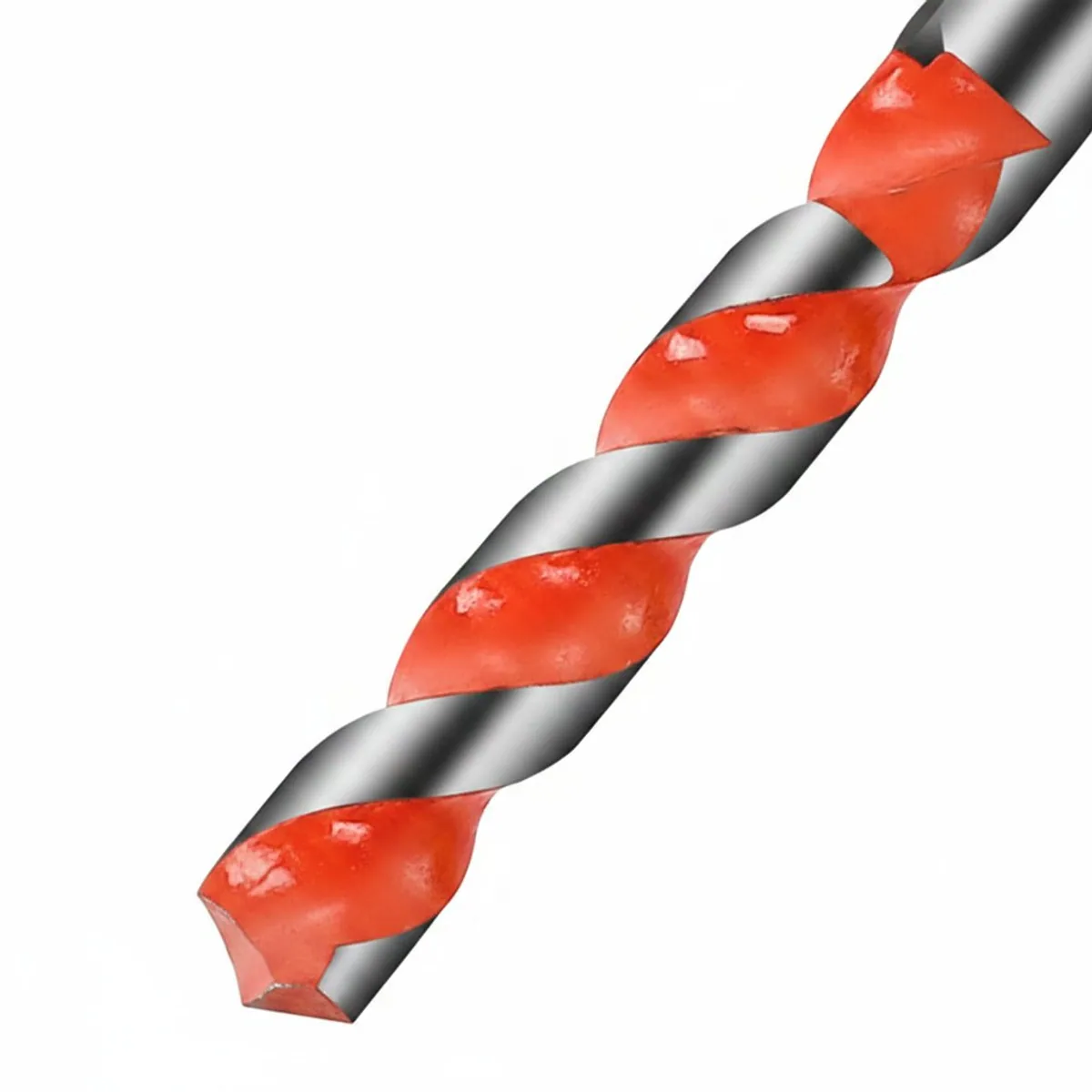
I tell these bits apart by looking straight at the tip. A wood drill has a sharp centre spike called a brad point, flanked by two raised spurs. Those spurs slice the wood grain along the rim before the main lifters clear the core, which stops timber from splintering.
A metal bit has a blunt, continuous cutting edge across the nose. You will see a 135 degrees split point or a standard conical face. The split point bites immediately into hard sheet without skating across the surface, meaning I do not have to centre-punch every single hole.
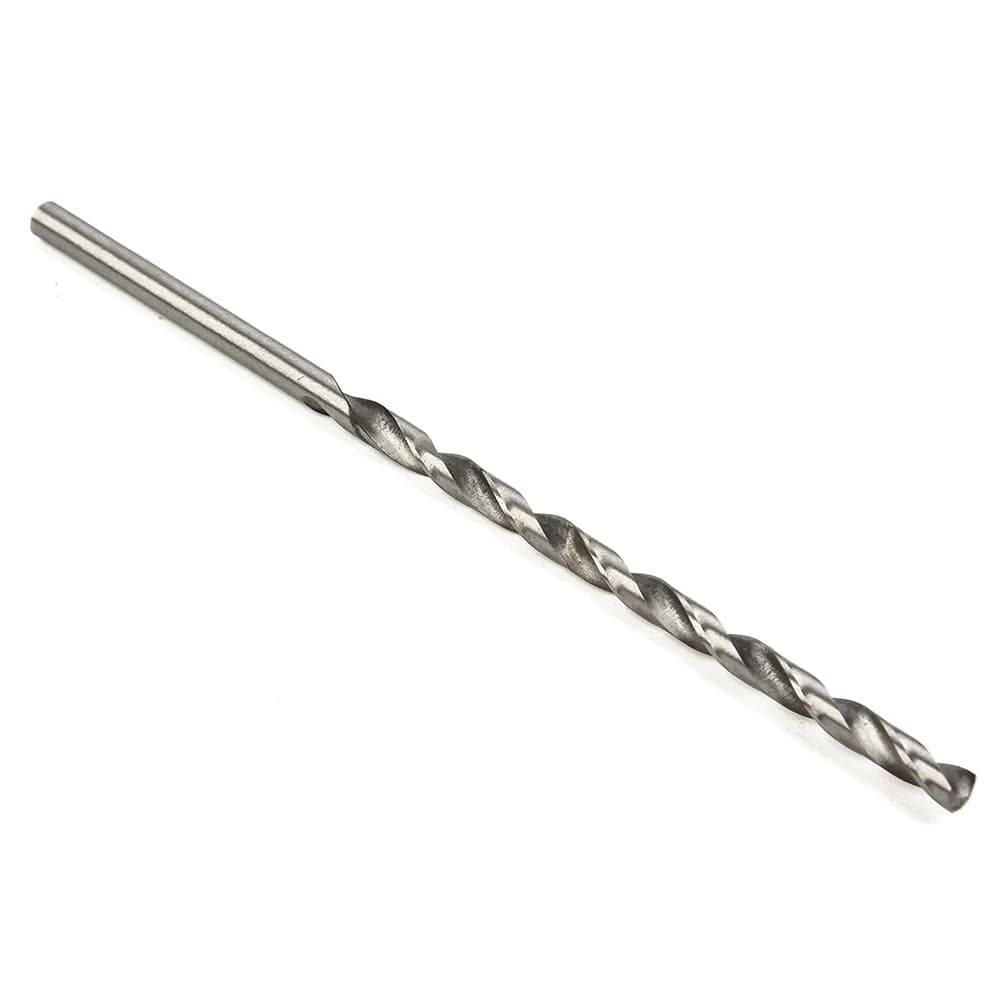
The flute shape also differs between tasks. Wood bits often carry wide flutes to lift soft shavings and chips out fast. Metal bits rely on a tighter spiral flute or twist pattern to roll out tight curls of swarf without clogging or jamming in the cut.
Picking the right grade for hard plate
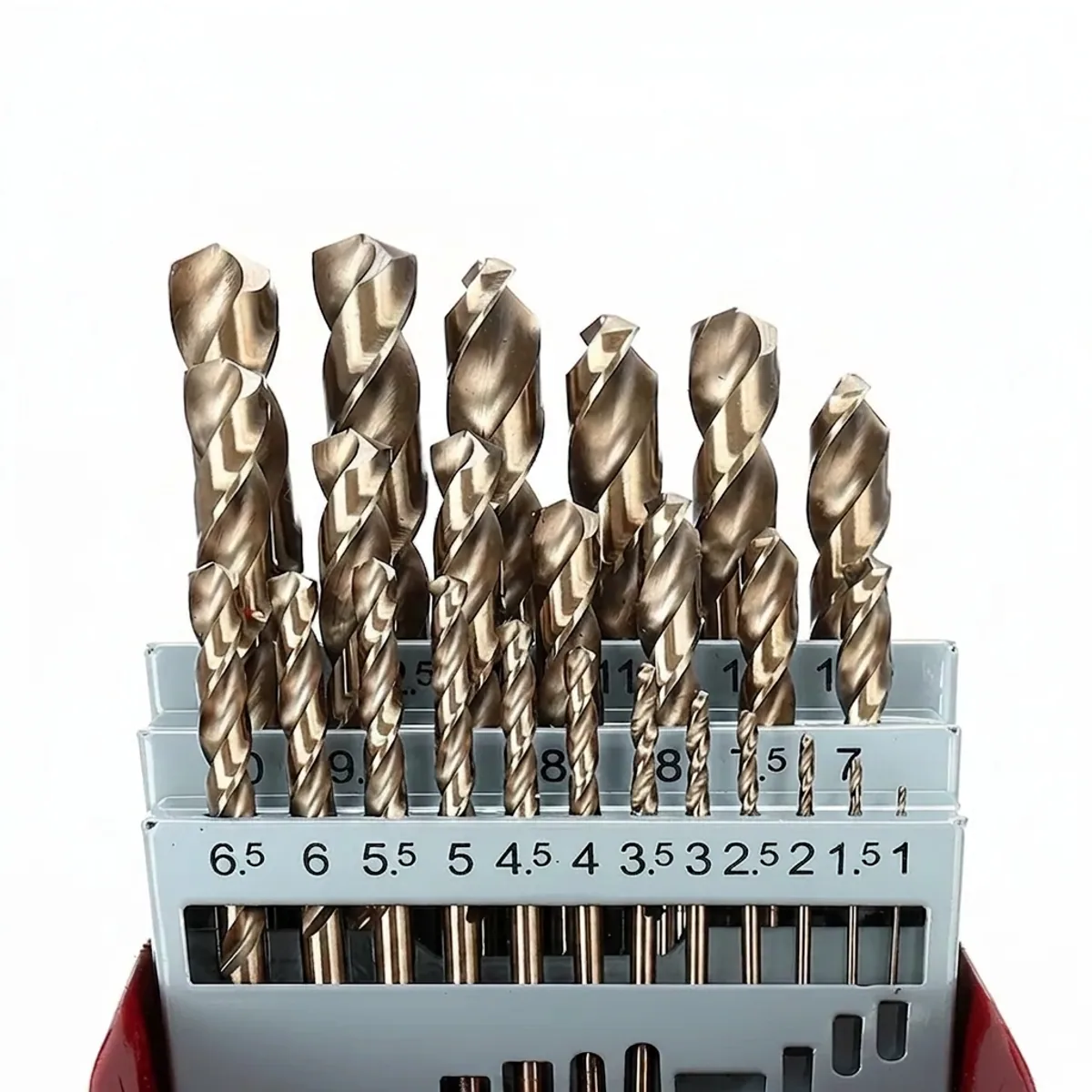
Standard high-speed steel works well on mild steel, brass, and plastics. When I drill tough alloys or stainless steel, standard bits dull quickly from friction heat. For those jobs, I step up to M35 Cobalt High-Speed Steel (HSS-Co) with 5% Cobalt content.
Cobalt is not a surface coating. The alloy runs right through the steel body, so the cutting edge keeps its hardness even when working at high temperatures. Bits made to the DIN 338 standard provide the right balance of flute length and rigidity for bench and handheld drilling.
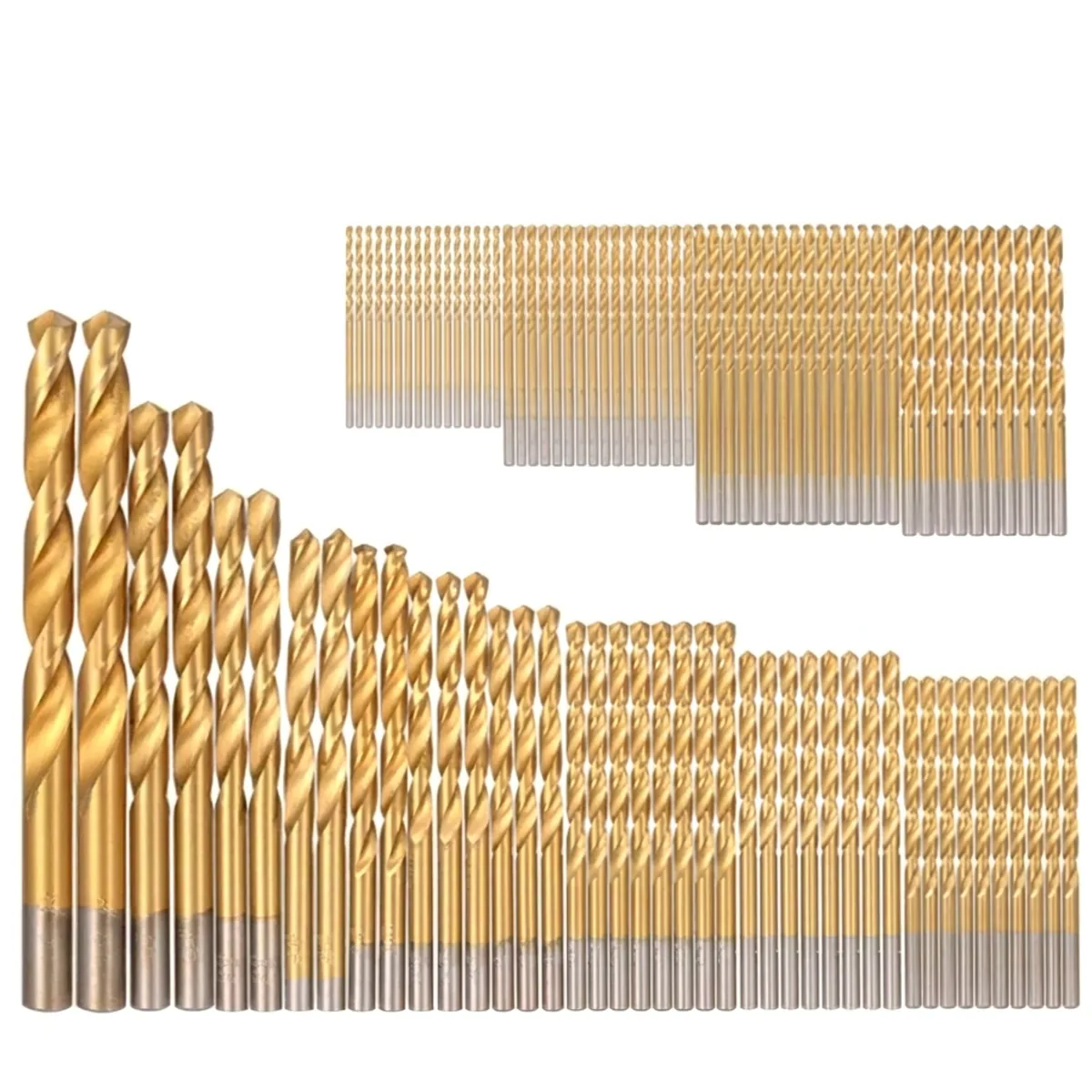
Coatings also change performance in production work. An AlTiN or TiAlN coating adds high surface hardness and protects the base metal from thermal breakdown, keeping the cutting edges sharp across repeated passes.
| Tool Type | Material | Point Angle | Standard | Size Range |
|---|---|---|---|---|
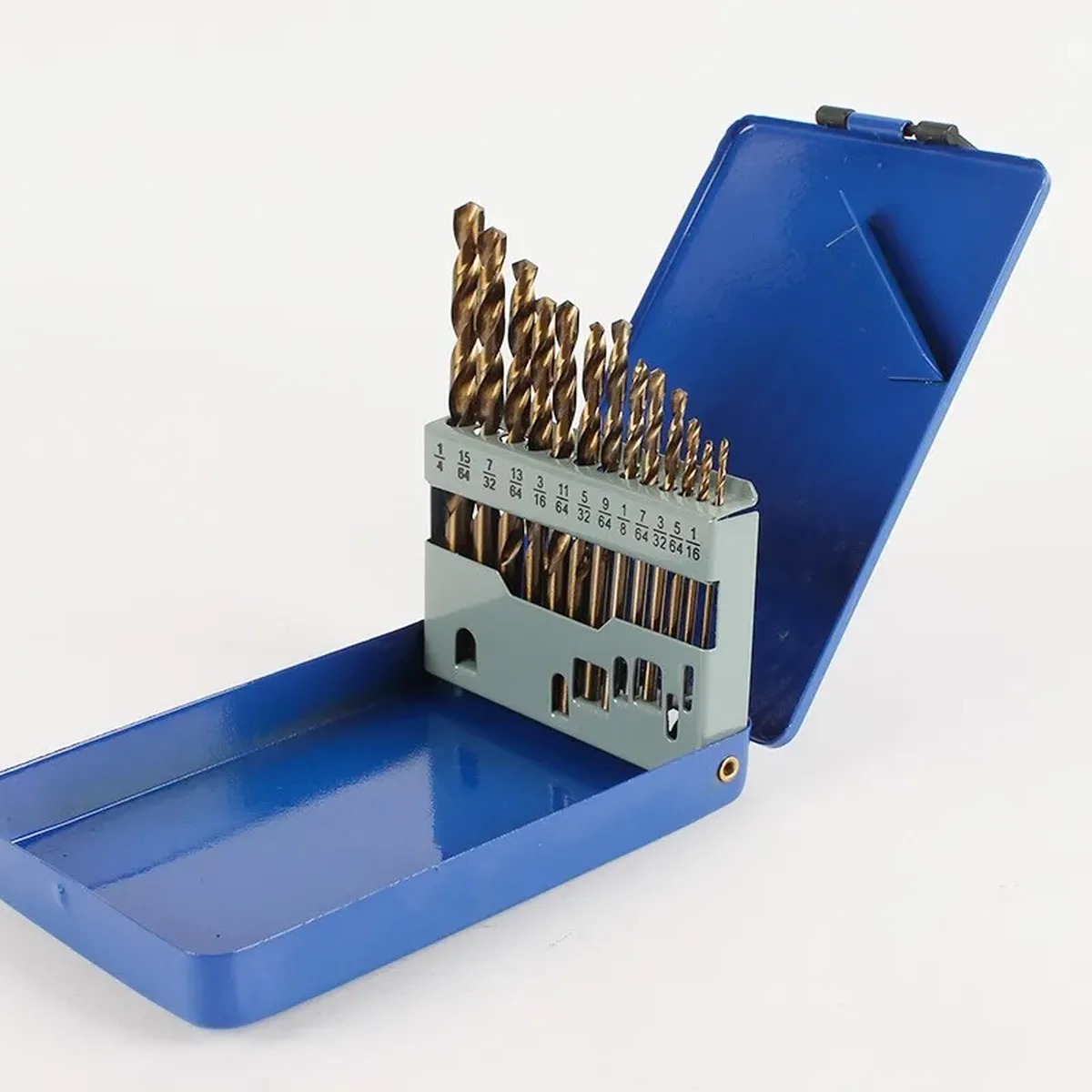
| Jobber Twist Drill Bit Set | M35 Cobalt HSS (5% Cobalt) | 135° Split Point | DIN 338 | 1 - 13 mm |
| Twist Drill Bit Set | M35 Cobalt High-Speed Steel (HSS-Co) | 135 degrees | DIN 338 | 1.0-10.0 mm |
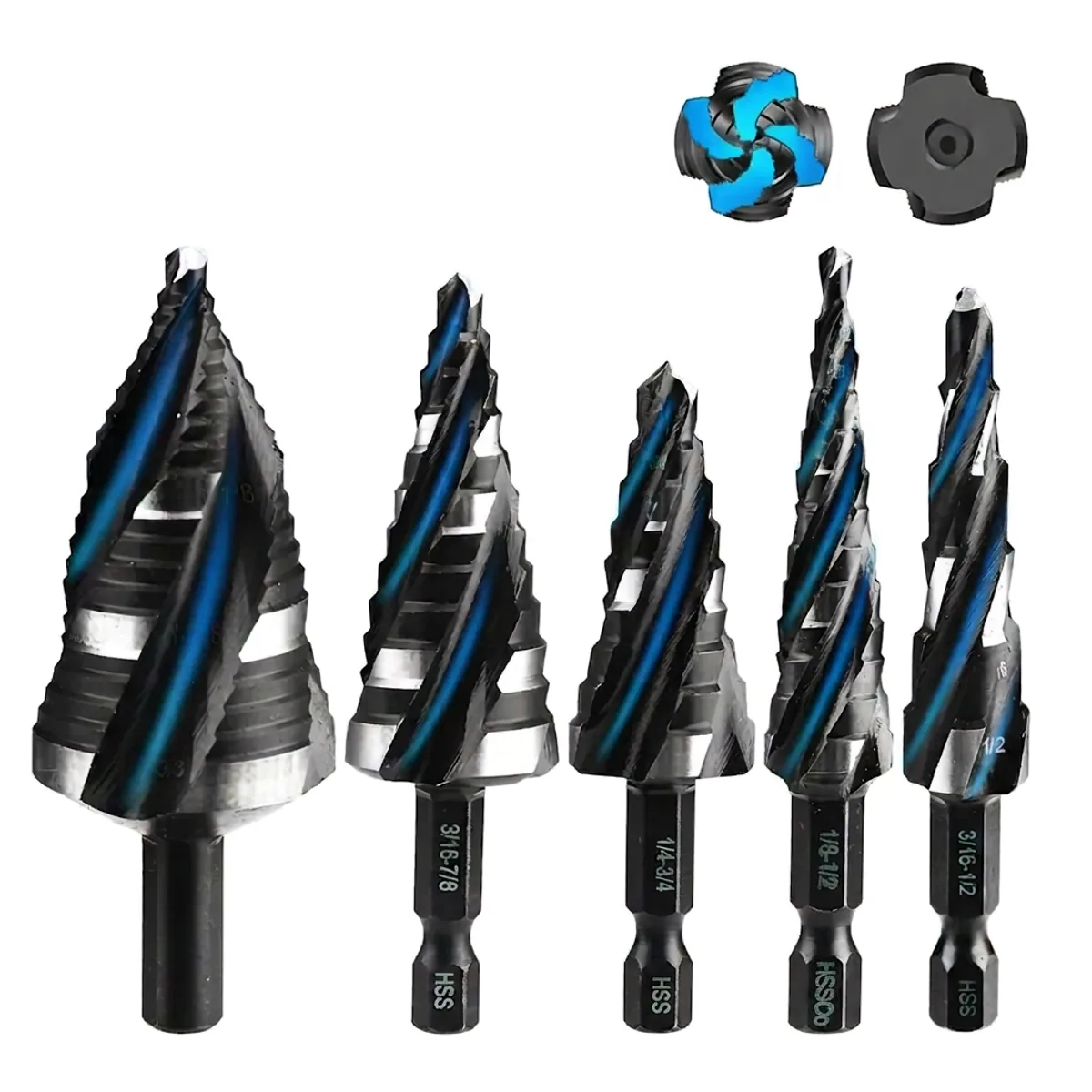
| Step Drill Bit | M35 Cobalt HSS | - | - | 4 - 32 mm |
| Step Drill Bit | M35 Cobalt HSS | - | - | 3/16" - 7/8" (4.76 - 22.23 mm) |
Running twist drills and cone bits in sheet
Twist drill bits remain the daily choice for solid bar, plate, and structural sections. A standard straight round shank slips into standard chucks cleanly. For thick stock, I keep pressure steady and run at lower speeds to prevent burning the nose.
Thin sheet metal behaves differently. Standard twist drills catch and tear thin steel as they punch through, leaving ragged burrs or triangular holes. For sheet work, I switch to a step drill bit with a spiral flute or 4 spiral flute pattern.
A 15-step unibit lets me enlarge holes progressively through 4 - 32 mm without swapping tools. The stepped profile cuts clean round holes in thin panels and stainless steel sheet without snatching or grabbing the workpiece.
Why swapping between materials causes trouble
Putting a wood bit into metal ruins the tool in seconds. Wood bits lack the toughness required for dense stock, and the brad point snaps instantly against metal faces. Wood spade bits and augers must never touch steel.
Using a metal twist bit in timber works, but it brings drawbacks. Metal bits compress timber fibres rather than slicing them, which produces blown-out exits on the back of the board. The tighter flutes also pack full of fine sawdust quickly.
I keep my metal bits strictly for metalwork. Cutting timber with an expensive M35 Cobalt HSS bit leaves pitch on the flutes and dulls the fine ground edges, leading to poor cuts once you return to steel.