

Reading the IP rating before anything else
The two digits come from IEC 60529 and they are not interchangeable. The first is solids, and a 6 means dust tight rather than merely dust protected. The second is water: 4 is splashing, 5 is a low pressure jet from any direction, 6 is a powerful jet, 7 is temporary immersion to a metre. An IP65 box on a pole in driving rain is doing its job; the same box in a flooded chamber is not.
The rating belongs to the whole assembly, not the plastic shell. It holds only while the lid gasket is seated, the lid screws are all in and even, and every cable entry is either a correctly sized gland or a blank. The commonest way a sealed box fails is an oversized gland hole stuffed with a smaller cable, which leaves a gap that wicks water straight in along the sheath.
Where an enclosure is exposed to the sun, look at the material as well. ABS is the usual moulding and is fine indoors and in sheltered outdoor positions. Polycarbonate holds up far better to prolonged ultraviolet and to impact in the cold, which matters on anything left outside for years.
| Rating | Tested against | Sensible use |
|---|---|---|
| IP44 | Splashing water from any direction | Sheltered outdoor, indoor damp areas |
| IP65 | Low pressure jets from any direction | General outdoor, washdown-adjacent |
| IP66 | Powerful water jets | Exposed sites, vehicle washdown areas |
| IP67 | Immersion to one metre, thirty minutes | Chambers and pits that flood occasionally |
Ways, modules and the DIN rail inside
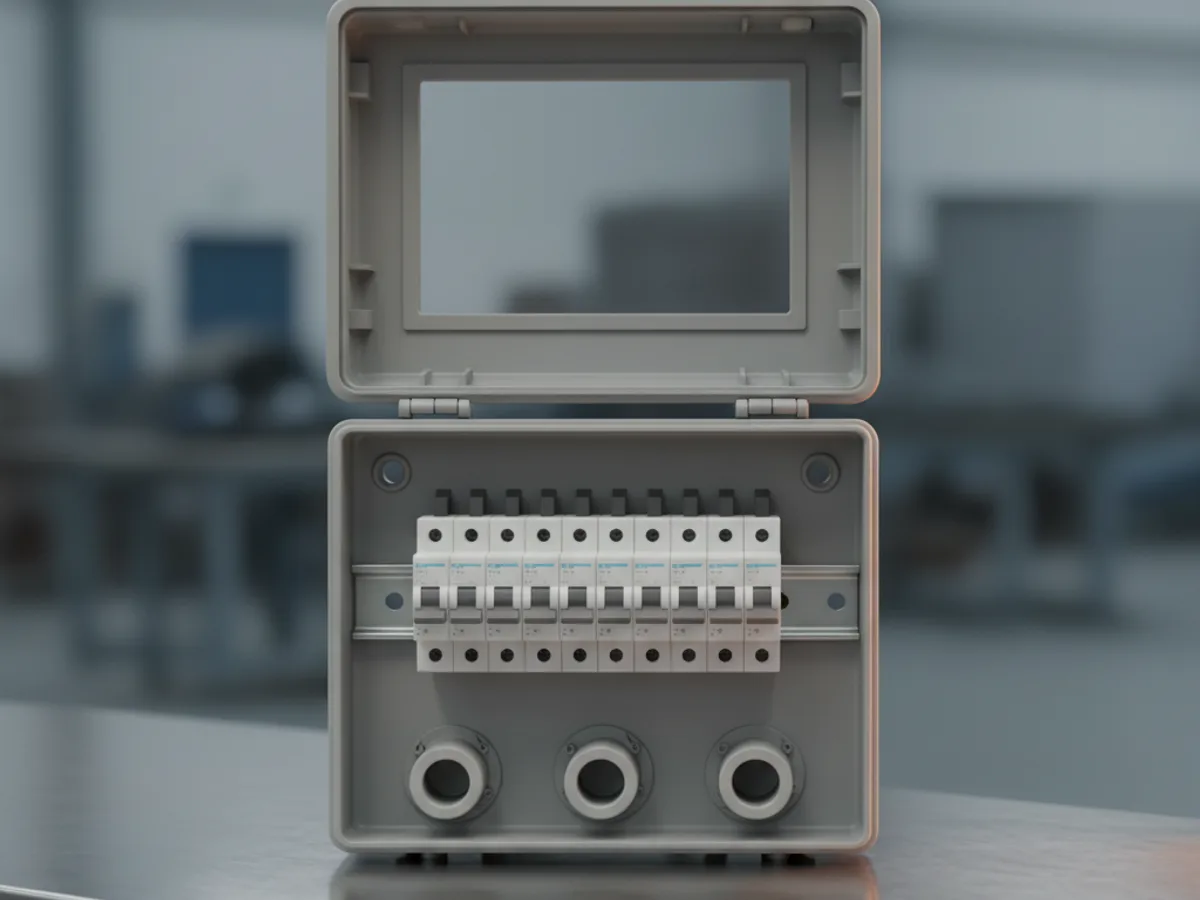
Capacity is quoted in ways, and a way is one 18 mm module position on the 35 mm DIN rail. A single pole MCB takes one way. An RCD or a three phase breaker takes several, so a box described as twelve way does not hold twelve devices unless every device happens to be a single module.
Count the modules the finished board needs rather than the number of circuits, then add spare ways. Two or three spare modules costs almost nothing at purchase and saves replacing the whole enclosure the first time somebody adds a circuit. Leave room for the incoming device and any surge protection as well, because those are usually the widest items in the box.
Check the depth as much as the width. Deep terminals, a chunky incoming cable with a large bending radius, or a busbar comb can all foul a shallow lid, and a lid that will not close flat has lost the seal that the IP rating depends on.
Why a solar combiner box is not an ordinary board
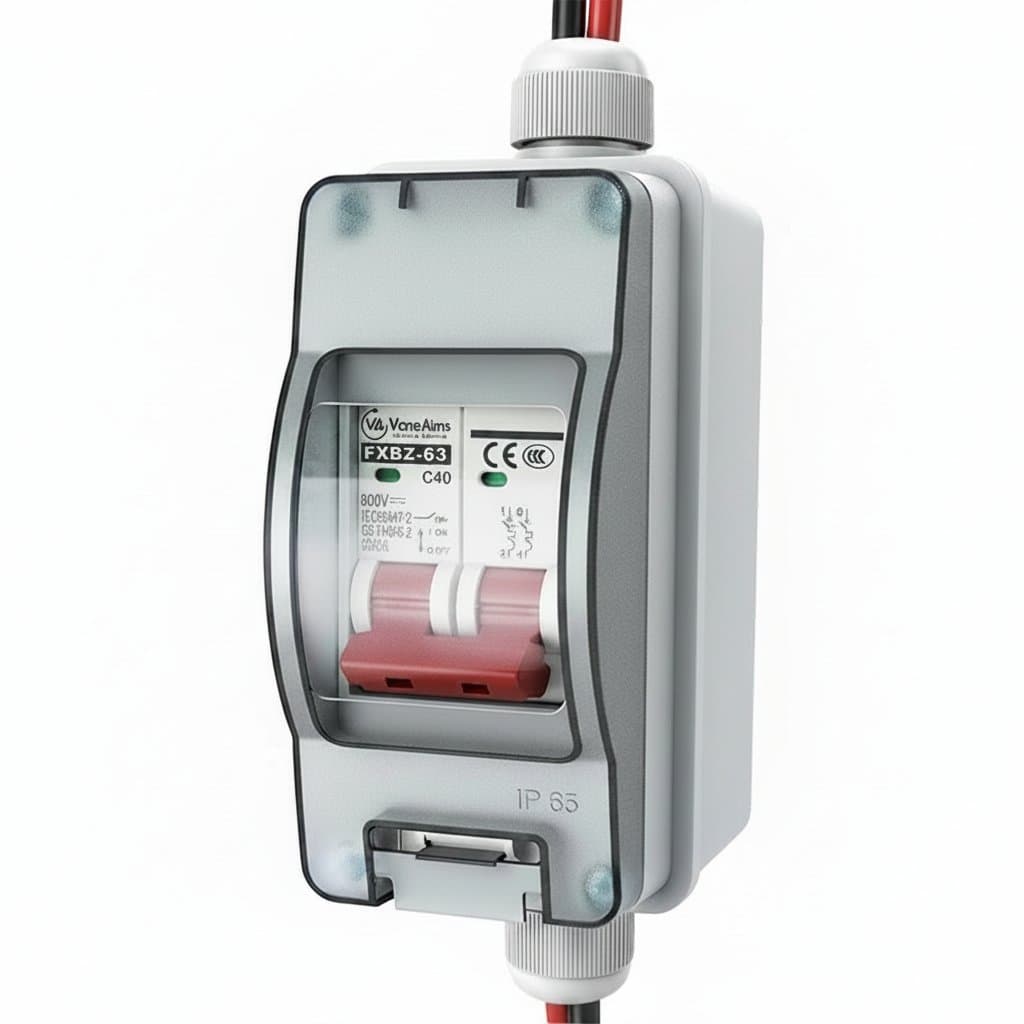
A photovoltaic combiner box brings several string cables together before the inverter, and it has to do it on direct current. That single difference drives everything else. Alternating current crosses zero a hundred times a second, which gives an opening contact a natural moment to extinguish the arc. Direct current never does, so the arc has to be stretched and cooled by the device itself.
This is why a DC rated breaker or isolator is not optional and why an AC device of the same current rating is not a substitute. Look for a DC voltage rating that covers the full string open circuit voltage in cold weather, which is higher than the figure on a sunny afternoon, because panel voltage rises as temperature falls.
The other component in these boxes is usually surge protection, which matters because array cabling is a long exposed loop. Fitting it is worthwhile on anything roof mounted or in open ground, and it should be sized for the DC side rather than borrowed from an AC parts bin.
Glands, blanks and getting the cable in
Cable entries are where most site-built enclosures leak. A gland must match the cable diameter, not just the hole, and the range printed on it is a real limit at both ends. Too large and the seal never grips the sheath; too small and the gland will not close on the cable at all.
Any knockout you open and do not use needs a blanking plug, and any threaded entry needs its locknut and washer on the inside. Where the box is metal, the gland is often part of the earth path and the paint under the locknut has to be cleaned back for that to work.
Give the cable a drip loop below the entry wherever it runs downhill into the box. Water tracks along a sheath far more readily than it passes through a gasket, and a loop that lets it fall off before the gland is a better defence than a higher IP number.