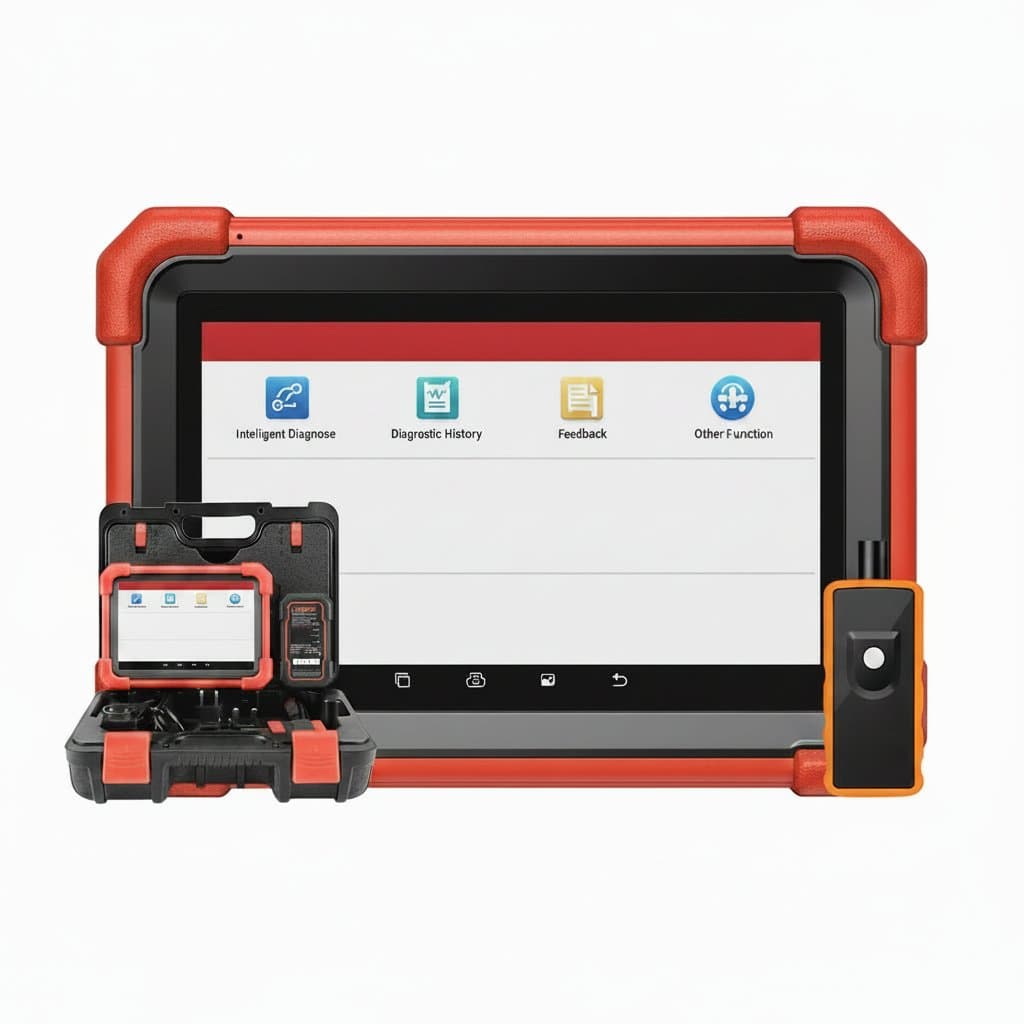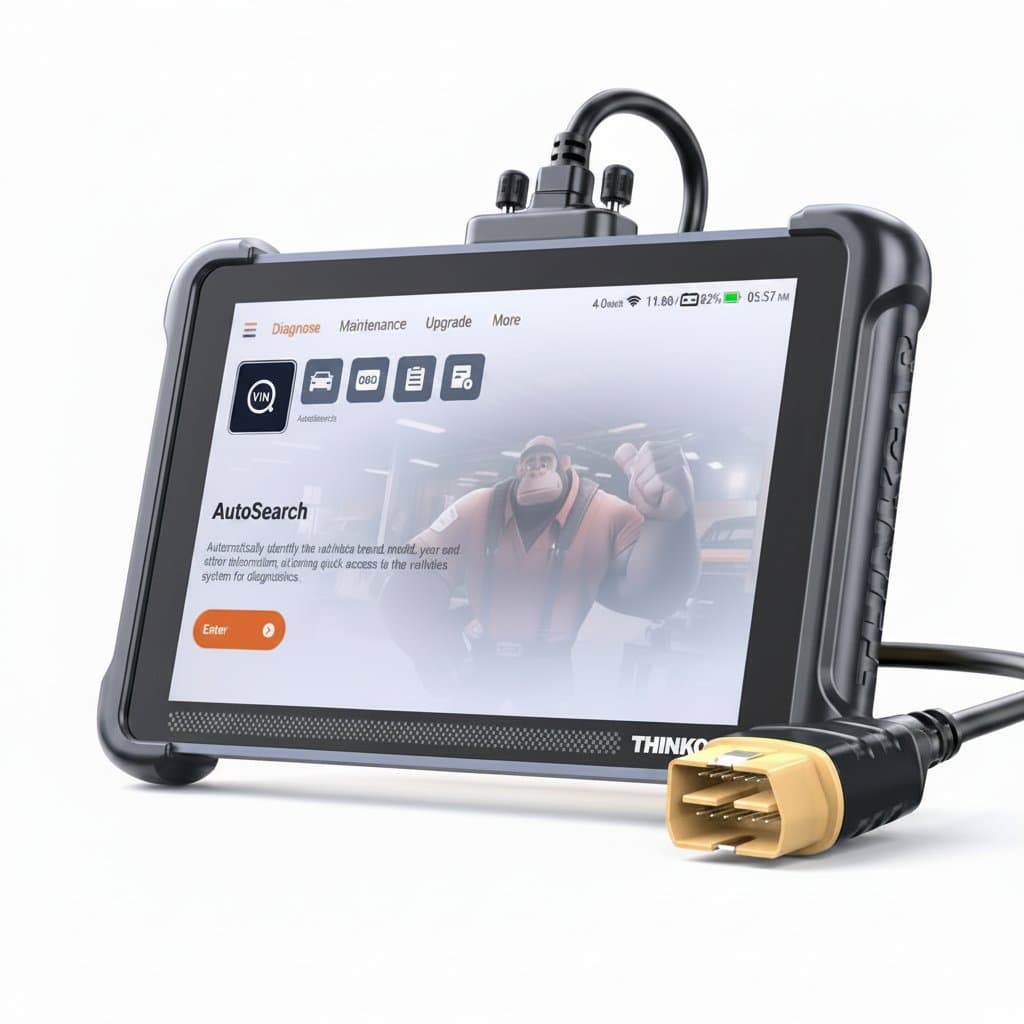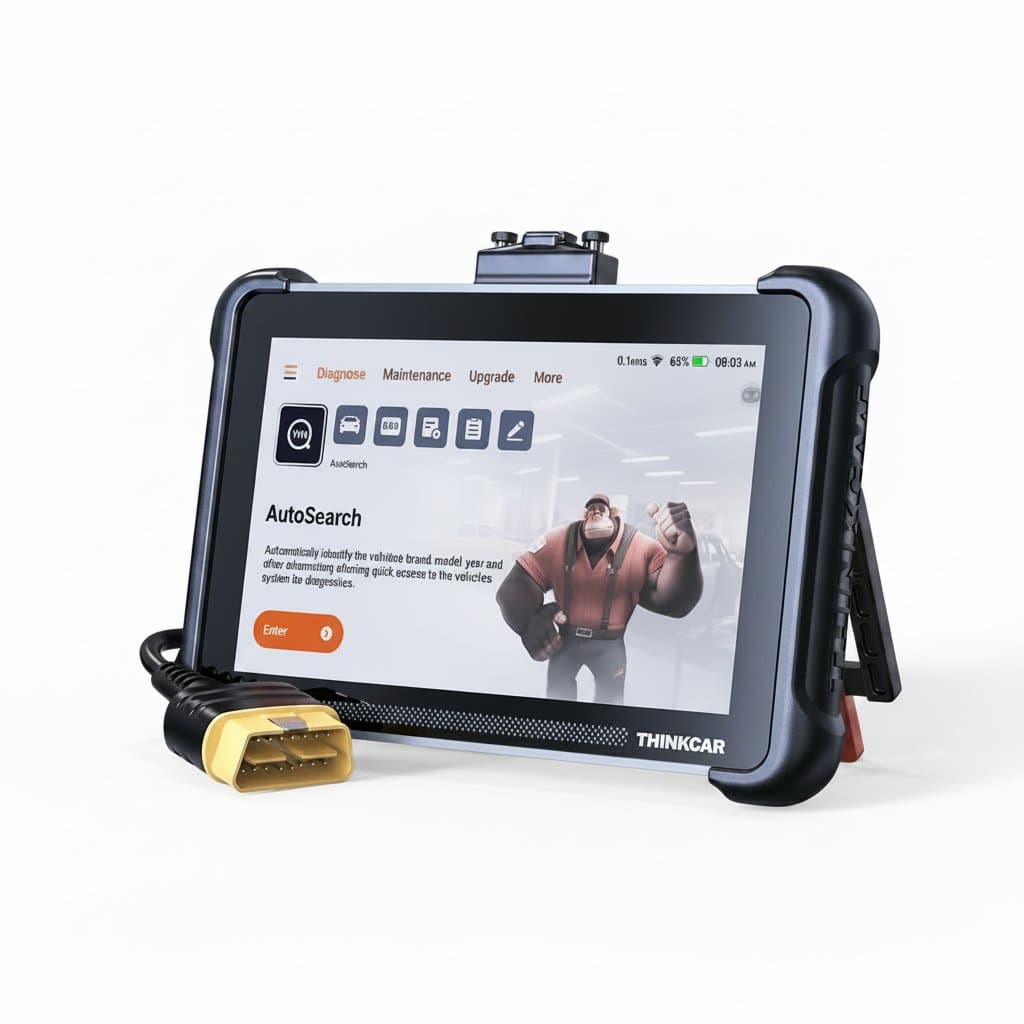

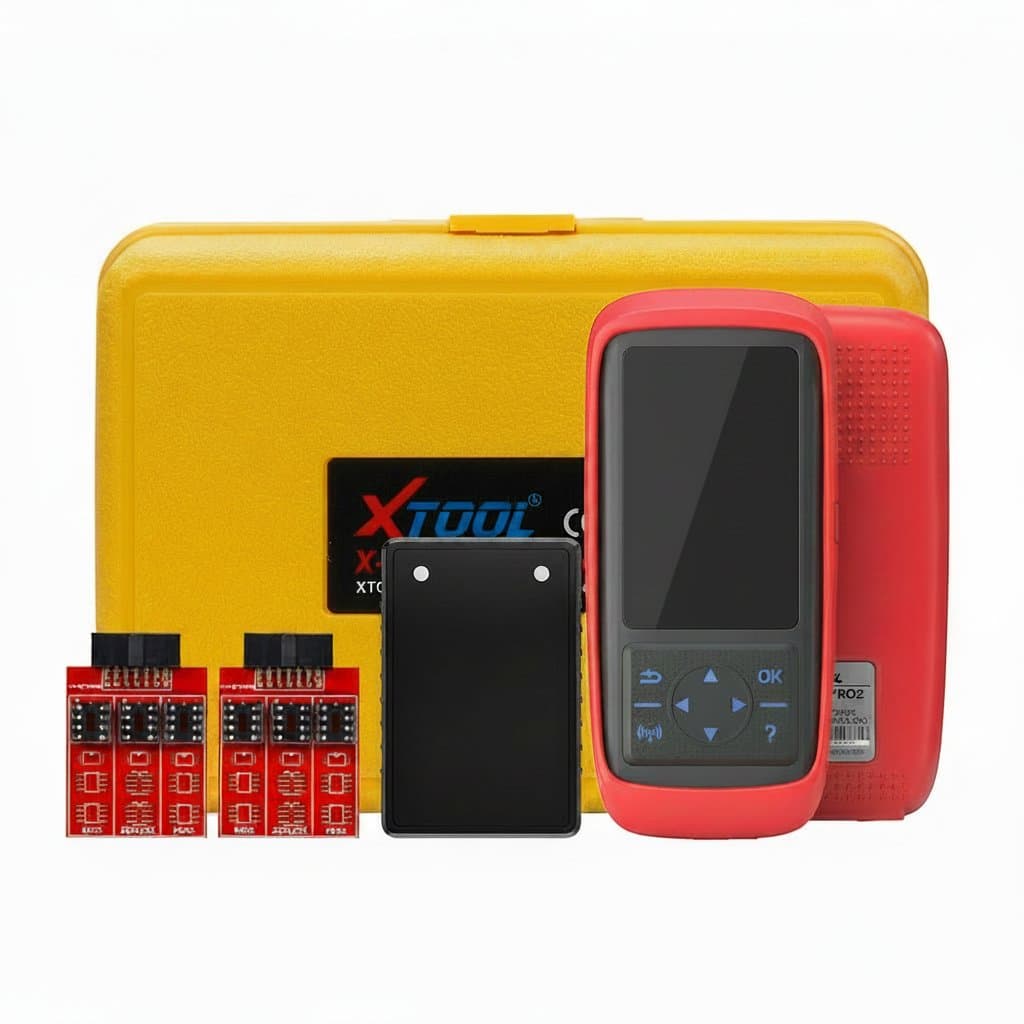
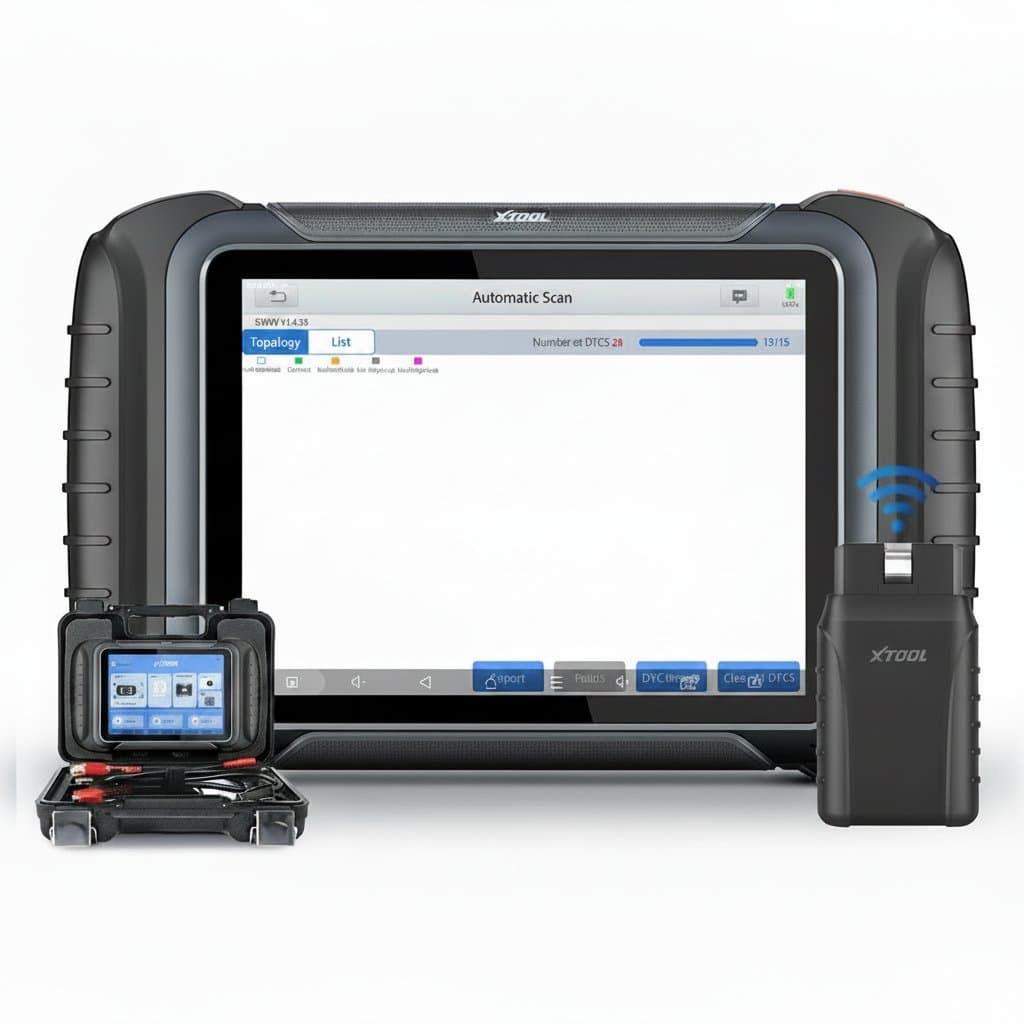
Code reader, full system, bi-directional
The cheapest tools read generic engine and emissions codes, because that much is standardised across all vehicles. They will tell you a sensor circuit is reporting a fault, and they cannot see the anti lock brakes, the airbags, the transmission or any body module.
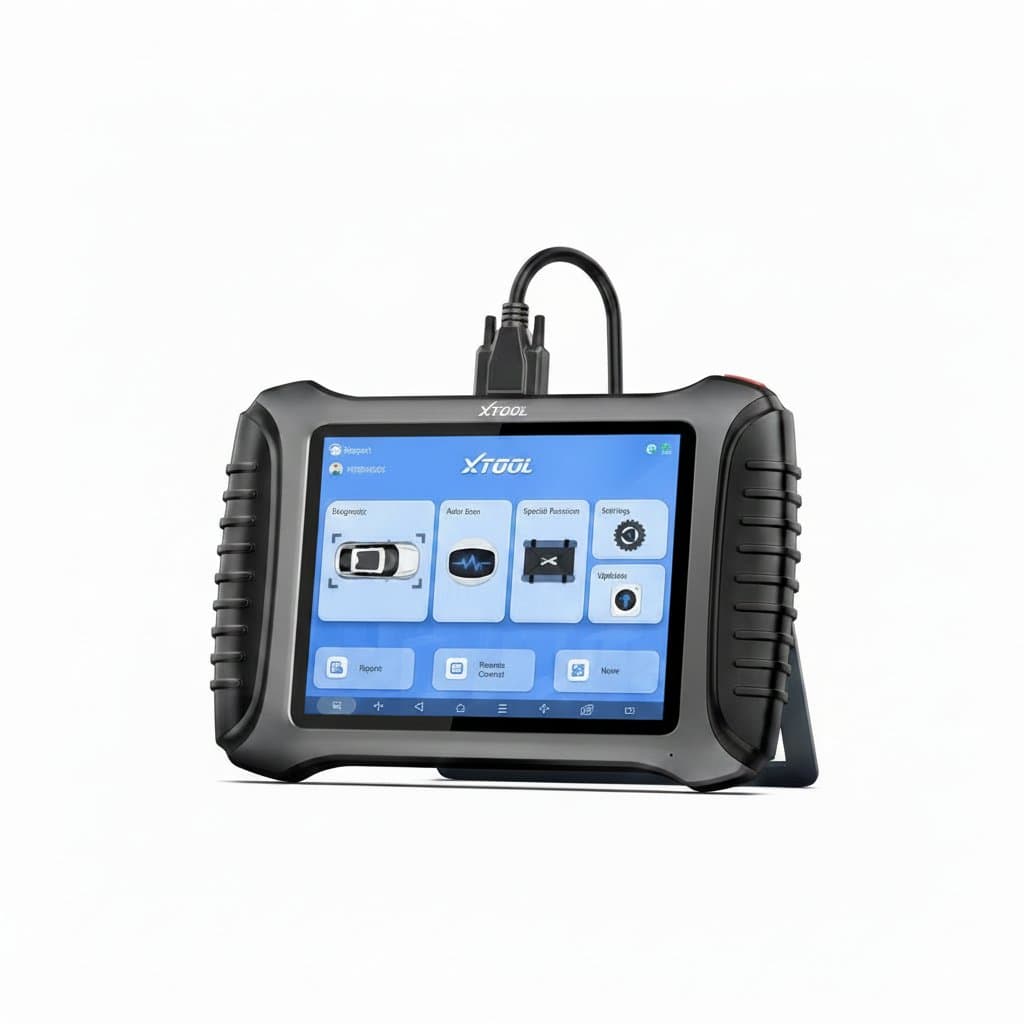
A full system scanner talks to those other modules using manufacturer specific protocols, which is what you need when the warning light is anything other than engine related. That capability, not the size of the code database, is the first real step up.
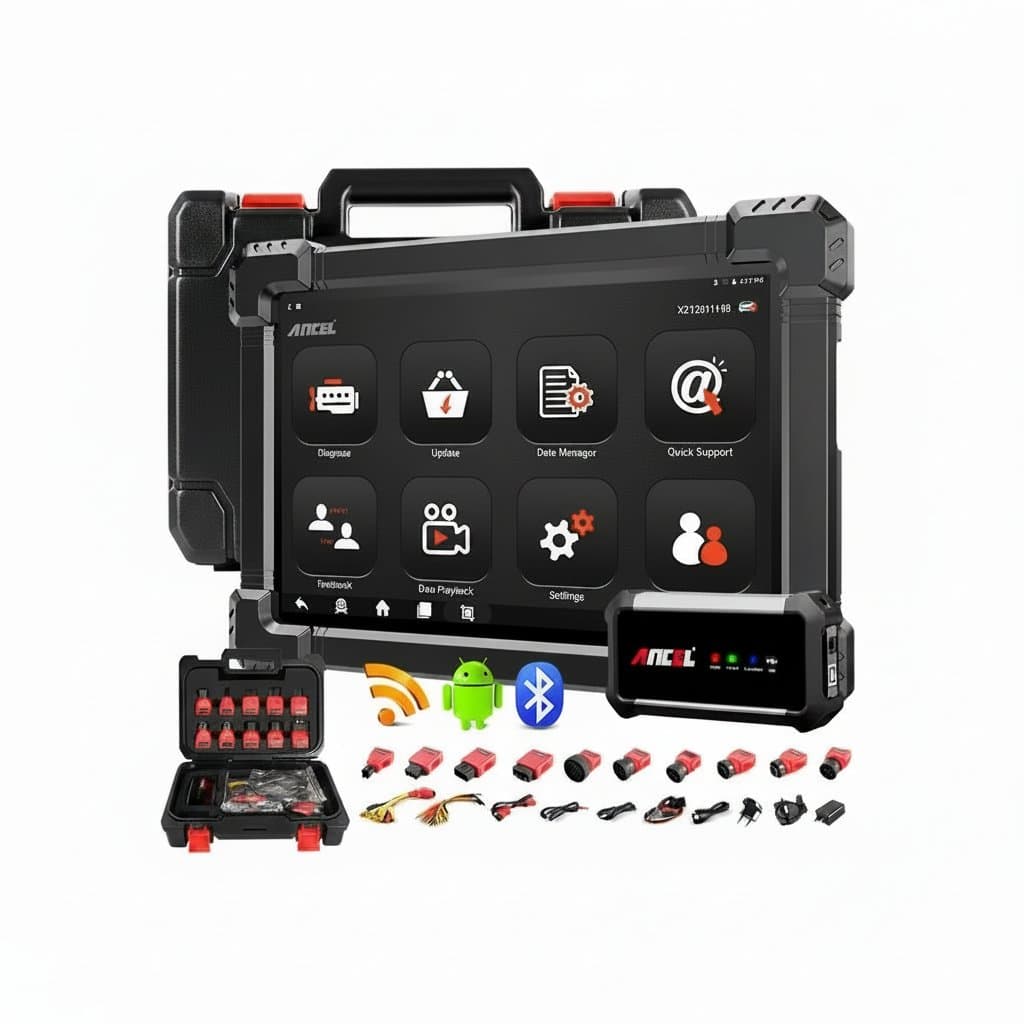
Bi-directional control is the second. Instead of only reading, the tool commands the vehicle: cycle the anti lock pump to bleed the brakes, retract an electric parking brake to change pads, fire an injector, run a fan. Testing a component by operating it directly turns diagnosis from inference into observation.
| Tier | Can do | Cannot do |
|---|---|---|
| Generic code reader | Read and clear engine and emissions codes | See ABS, SRS, transmission, body |
| Full system scanner | Read all modules, live data | Command components |
| Bi-directional tool | Actuate components, service functions | Rewrite module firmware |
| Coding and programming | Configure and reflash modules | Work without a stable supply |
Service functions are what get used daily
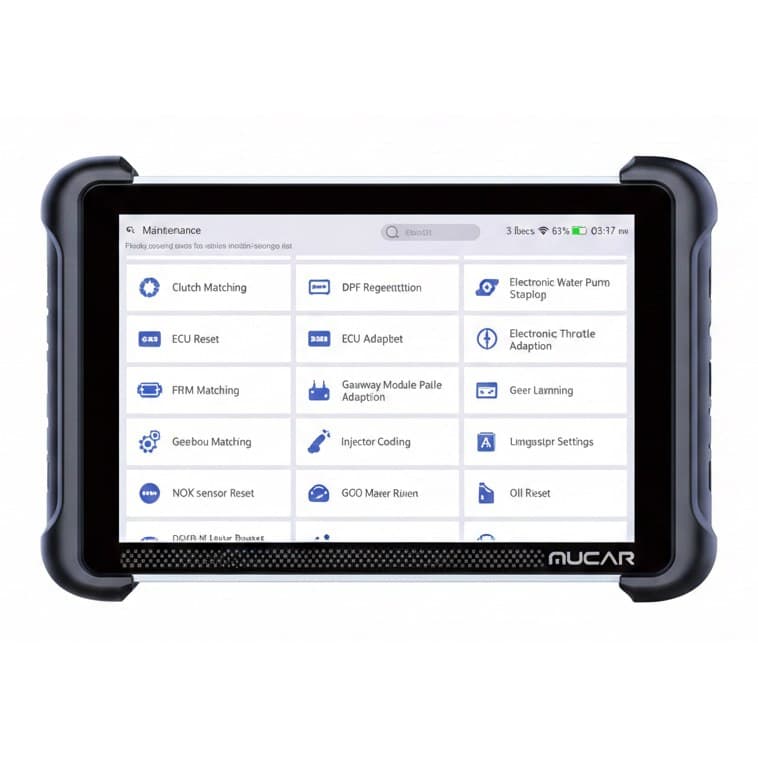
Most workshop use is not fault finding at all, it is completing routine jobs that modern vehicles will not accept without an electronic step. Resetting a service interval, retracting an electric parking brake, forcing a diesel particulate filter regeneration, relearning a throttle body, calibrating a steering angle sensor and registering a new battery are all in that category.
Battery registration is worth singling out. On vehicles with intelligent charging, fitting a battery without telling the car produces a charging profile matched to the old battery, and the new one is undercharged or overcharged from the day it goes in.
When comparing tools, check the specific functions against the vehicles you actually work on rather than counting the total. A list of two hundred functions is not useful if the two you need every week are missing for your marques.
CAN FD, DoIP and the security gateway
Vehicle networks have moved on. Classic CAN carried diagnostics for years, and newer vehicles use CAN FD for higher data rates and diagnostics over internet protocol for module programming. A tool without those cannot establish a connection at all on the vehicles that require them, which presents as the tool simply not working rather than as a missing feature.
Many manufacturers now also fit a security gateway that blocks write access from unauthorised tools. Reading may still work while coding and actuation do not, and getting past it means registration with the manufacturer rather than a better cable.
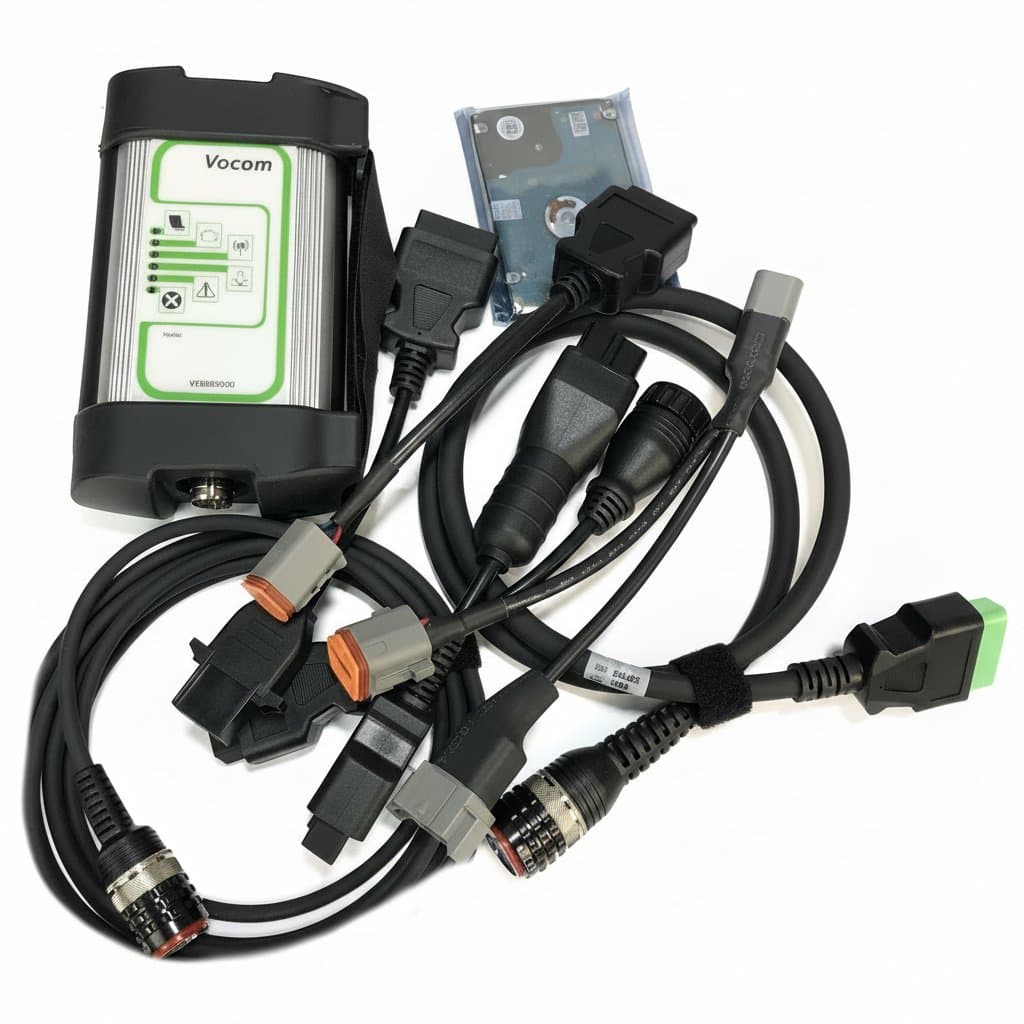
Commercial vehicles are a separate world again. They run on 24 volt systems with different connectors and their own protocols, so a car tool will not talk to a truck. If the fleet includes both, that is two tools or one with explicit heavy duty support.
Coding risk, updates and the real cost
Coding and programming are different operations with different risks. Coding changes configuration values a module already understands, and it is generally reversible. Programming rewrites the firmware, and an interruption partway through can leave a module that no longer responds to anything.
That is why a battery support unit is not optional for programming work. Vehicle voltage sags as fans and pumps cycle, and a voltage dip during a flash is the most common way a module is lost. The cost of the support unit is trivial next to a replacement module and its coding.
The purchase price of a scan tool is rarely the whole cost. Software updates are typically an annual subscription, and a tool without a current subscription gradually stops covering new vehicles. Claims of lifetime free updates deserve a careful reading of what exactly is being updated and for how long.