
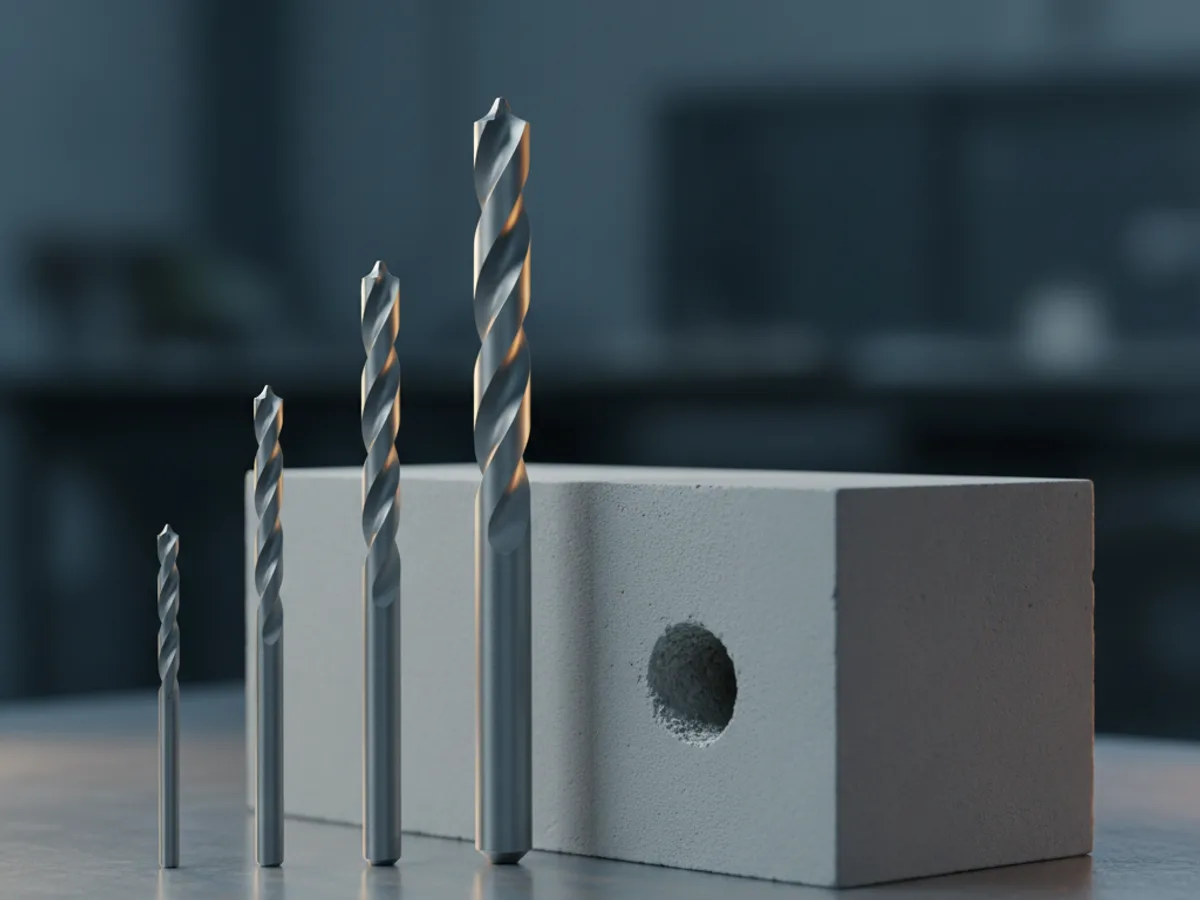


The shank decides which machine it fits
A plain round or hex shank goes into an ordinary three jaw chuck, which is what a combi drill or a cordless drill takes. The chuck grips the bit tight, so any hammer action has to shake the whole tool, and that is why a combi drill in hammer mode is slow in concrete and tiring to use.
SDS is a different idea. The shank has open grooves and the chuck locks into them while letting the bit slide back and forth a few millimetres, so a piston inside the tool strikes the end of the bit directly. Almost all the energy reaches the tip instead of shaking the operator, which is why an SDS machine drills concrete several times faster than a combi drill.
SDS Plus and SDS Max are not the same system. SDS Plus has a 10 mm shank and suits the common cordless and corded rotary hammers; SDS Max has an 18 mm shank and belongs on larger breakers and heavy rotary hammers. They do not interchange, and adapters exist mainly to put smaller bits in bigger machines rather than the reverse.
| Shank | Fits | Best at |
|---|---|---|
| Round or hex | Ordinary drill chuck | Small holes, brick, occasional work |
| SDS Plus, 10 mm | Standard rotary hammers | General concrete and masonry drilling |
| SDS Max, 18 mm | Large rotary hammers, breakers | Big diameters and deep holes |
Carbide tips, and where a multi-cutter earns its cost
The working end is a piece of tungsten carbide brazed into a steel body. Carbide is very hard and quite brittle, which is exactly right for crushing aggregate and exactly wrong for prying, so a bit that has been levered in a hole tends to lose its tip rather than bend.
The traditional shape is a single chisel across the diameter. It is cheap, it works, and it is thrown off line when it meets a piece of hard aggregate or a reinforcing bar at an angle. Multi-cutter heads, with four cutting edges or a cross form, stay centred far better, break through aggregate more cleanly and leave a rounder hole, which matters when the hole is for a resin anchor.
A blunt masonry bit is often recoverable. Carbide can be dressed back to a clean edge on a green silicon carbide wheel, keeping the original tip angle, and a resharpened bit cuts far better than a rounded one. What cannot be fixed is a tip that has been overheated to blue, because the braze holding it in will have softened.
When hammer action helps and when it ruins the hole
Concrete, block and hard brick all want hammer action, because the blow is what fractures the material ahead of the tip. Without it you are relying on the carbide to abrade its way through, which is slow and cooks the tip.
Soft or brittle materials want the opposite. Hollow blocks blow out on the far side under hammering, soft brick crumbles into an oversized hole that will not hold a plug, and glazed tile shatters. Switch to rotation only for those, and use a diamond bit rather than a masonry bit for porcelain and hard tile.
The technique that keeps a bit alive is to let the tool do the work and withdraw the bit every few centimetres to clear dust. Packed dust in the flutes stops the bit advancing, which tempts more pressure, which generates heat, which is what softens the braze. On deep holes clearing regularly is faster overall as well as kinder to the bit.
Diameter, length and drilling for a fixing
Match the bit diameter to the fixing rather than to the screw. A plastic plug states the hole size it needs and the screw size it takes, and those are two different numbers. Drilling to the screw diameter gives a hole the plug will not enter; going oversize gives a plug that spins.
Working length matters as much as overall length. The usable depth is the fluted section, not the whole bit, so a 160 mm bit does not drill a 160 mm hole. Where a fixing needs a specific embedment, check the flute length and allow for the dust that collects at the bottom.
Drill deeper than the fixing needs and clear the hole properly before setting anything in it. Dust left at the bottom stops a plug seating and, with resin anchors, it is the single most common reason a fixing pulls out well below its rated load. A blow pump or a vacuum is worth having for anything structural.