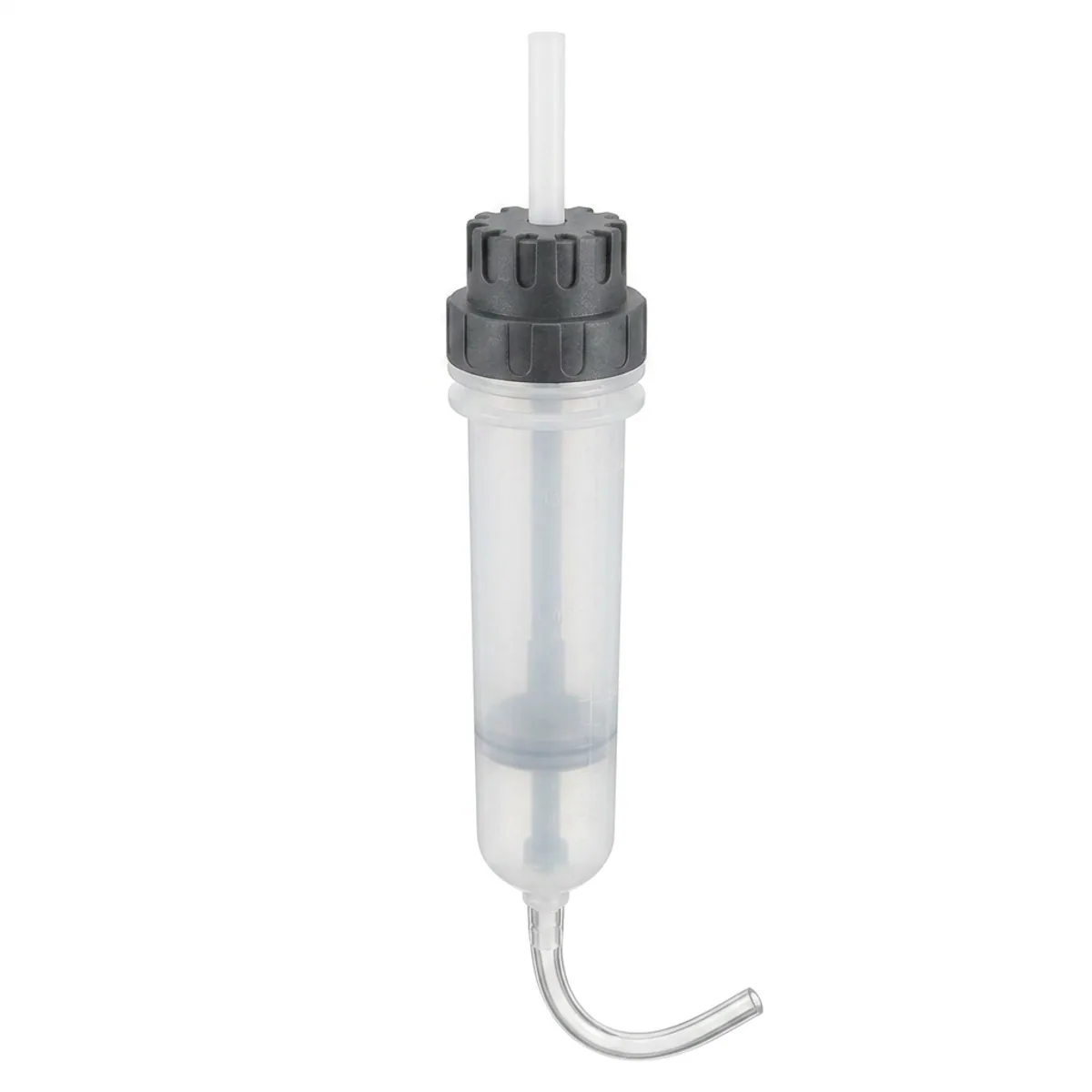
Vacuum, pressure and gravity
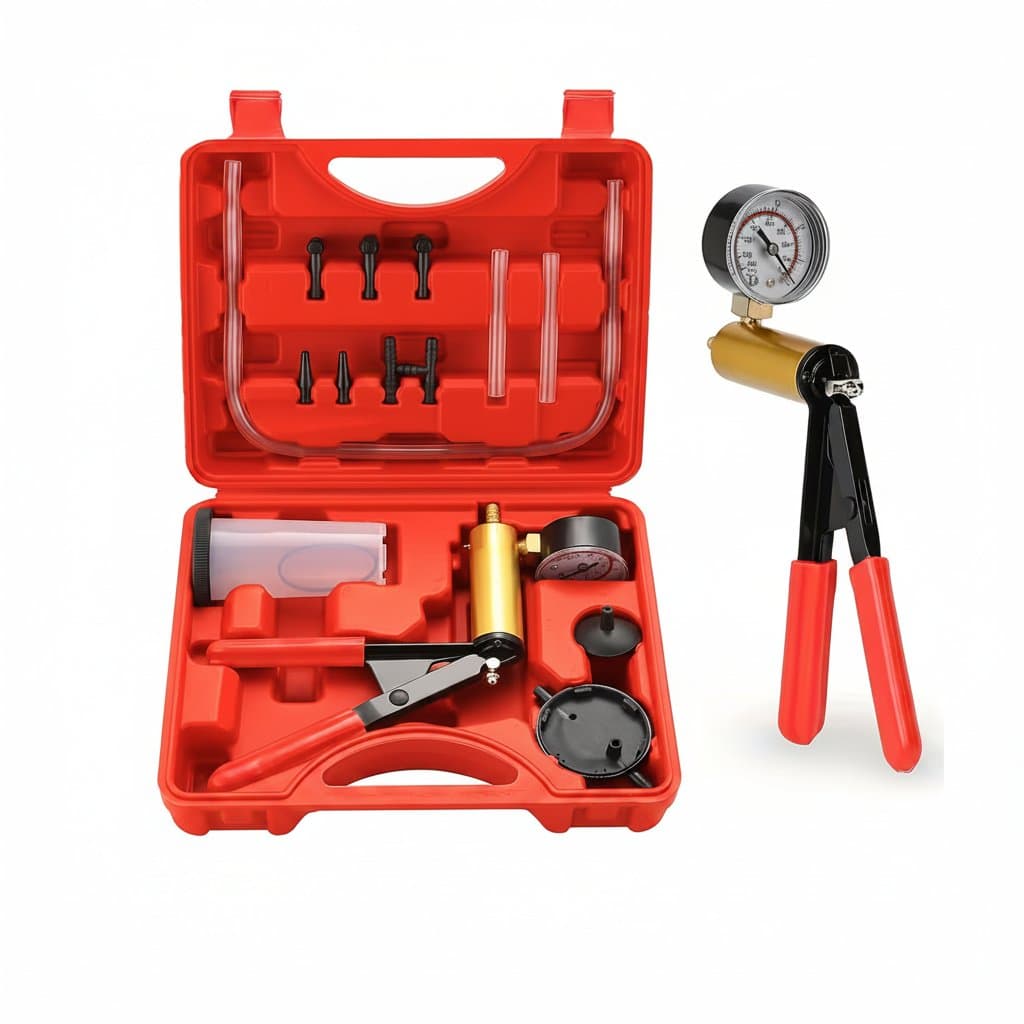
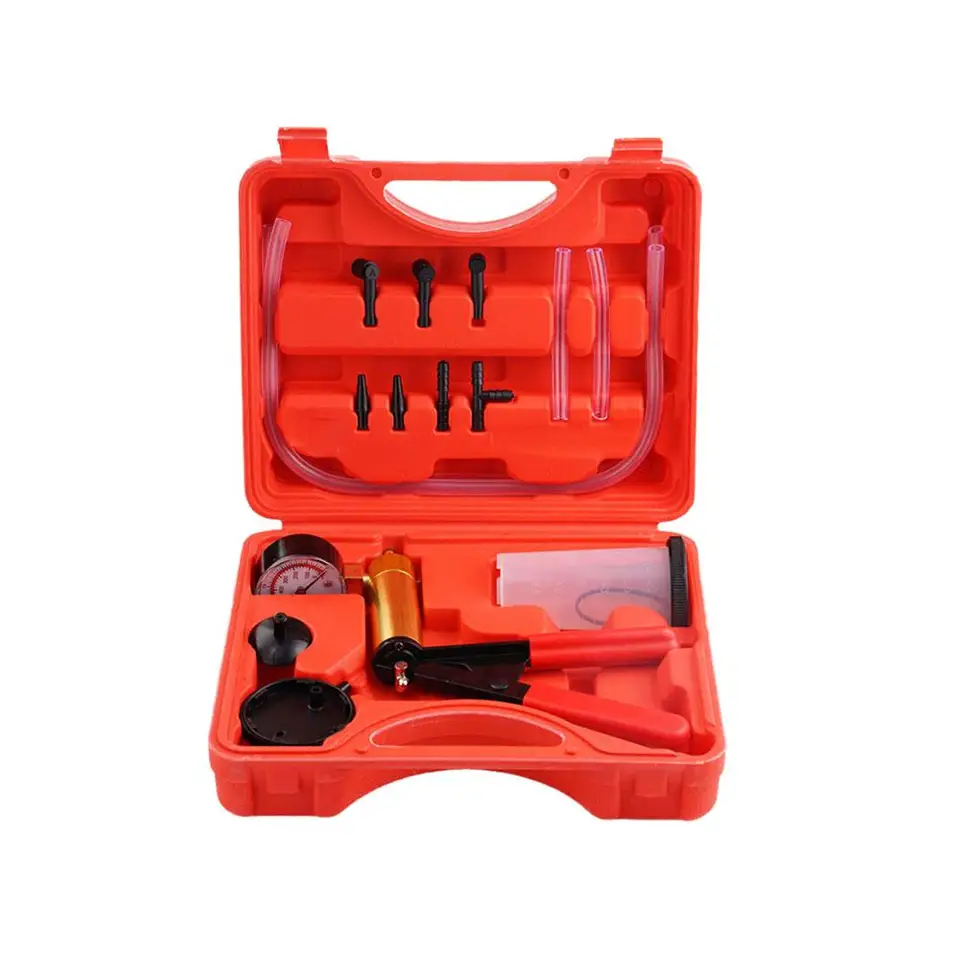
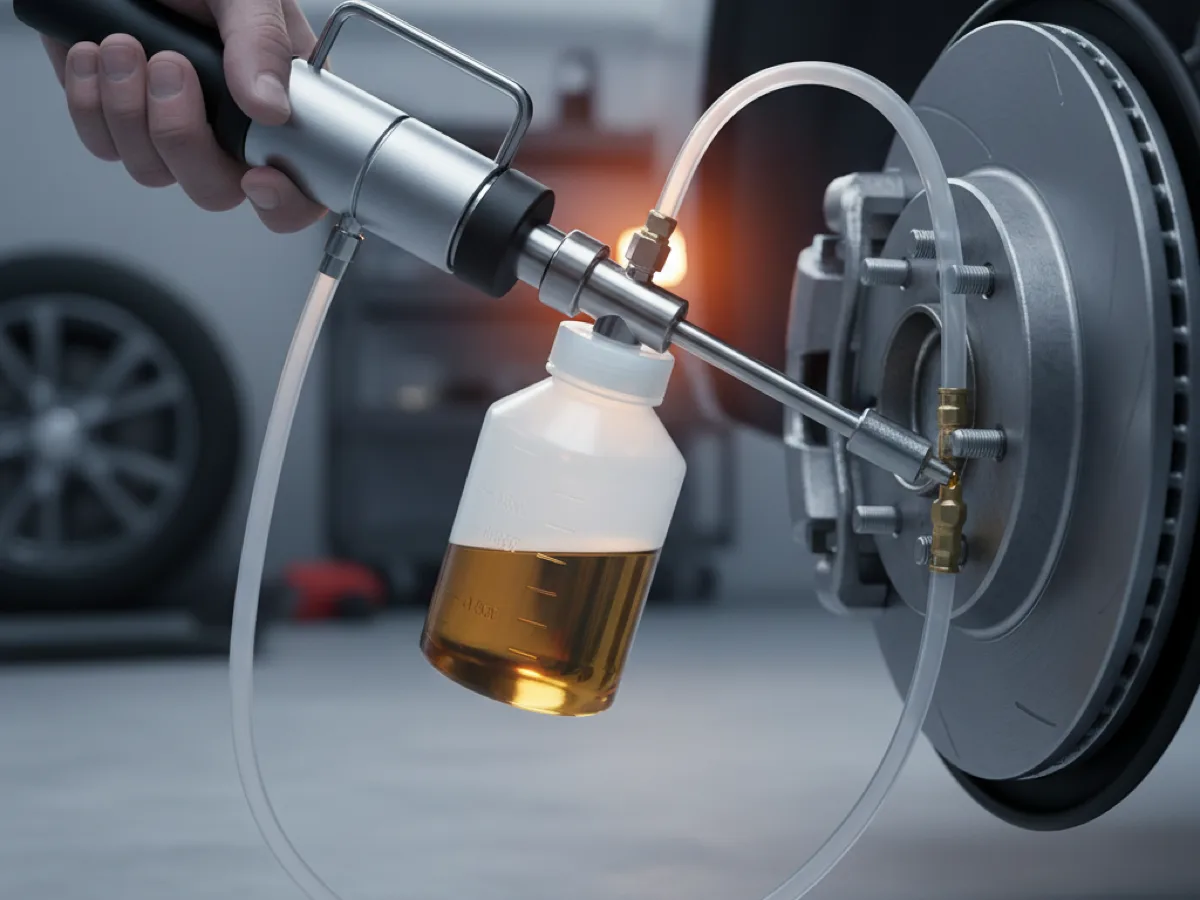
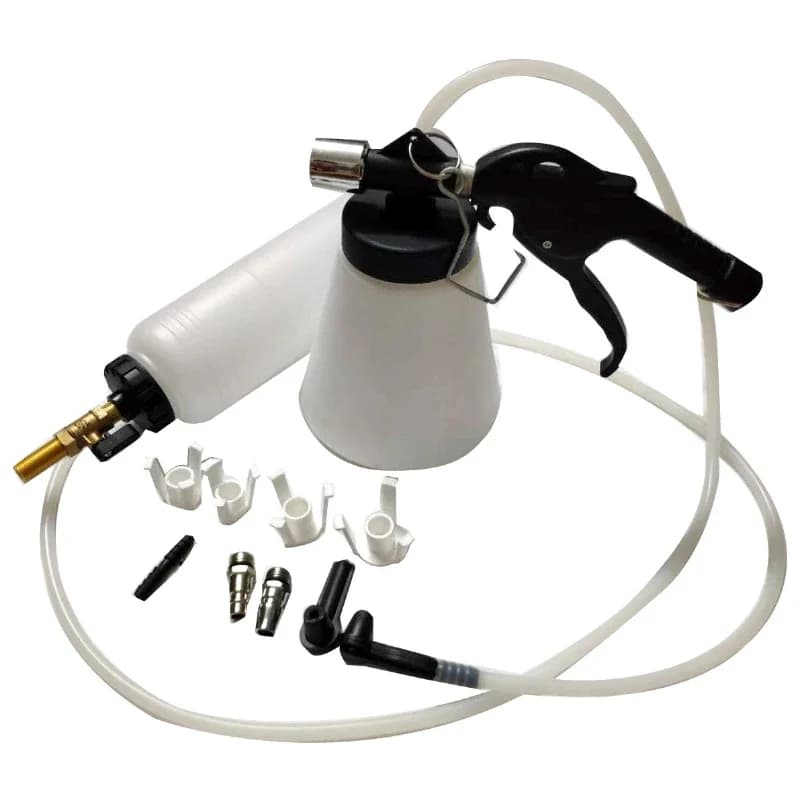
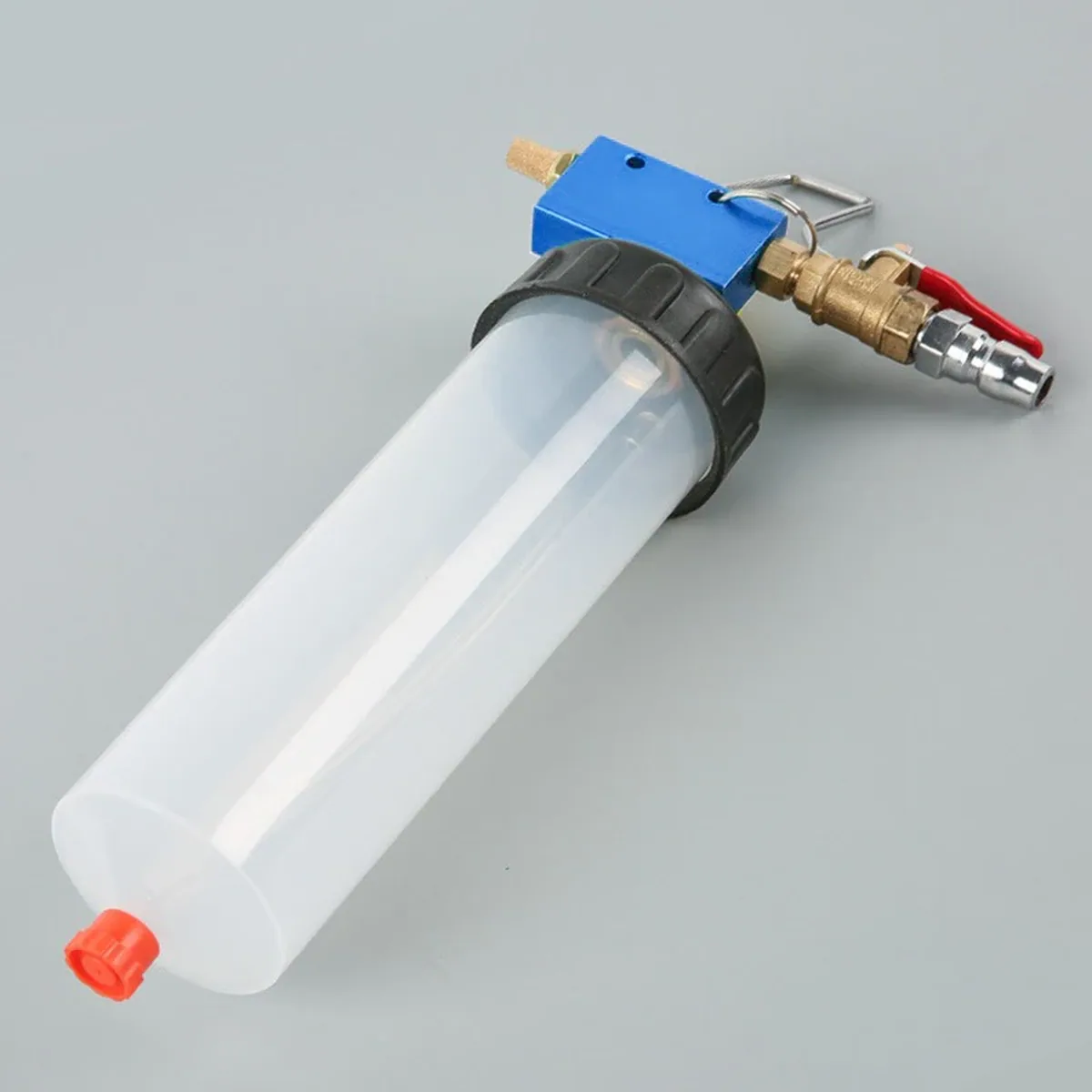
A vacuum bleeder pulls fluid out at the caliper. It is quick and cheap, and it has one well-known quirk: the vacuum can draw air past the threads of the bleed nipple itself, so you see bubbles in the tube that are not coming from inside the system. Smearing grease on the nipple threads, or just accepting a few bubbles as normal, is the usual answer.
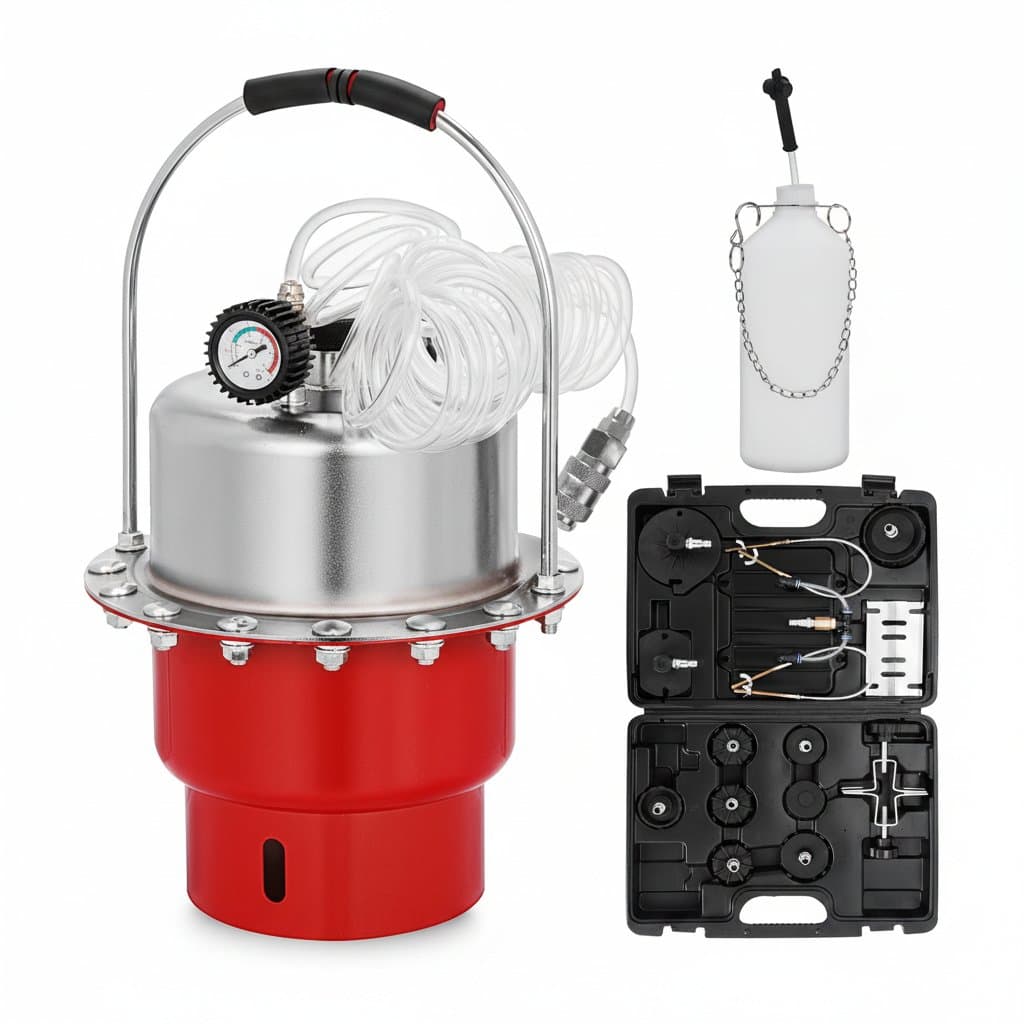
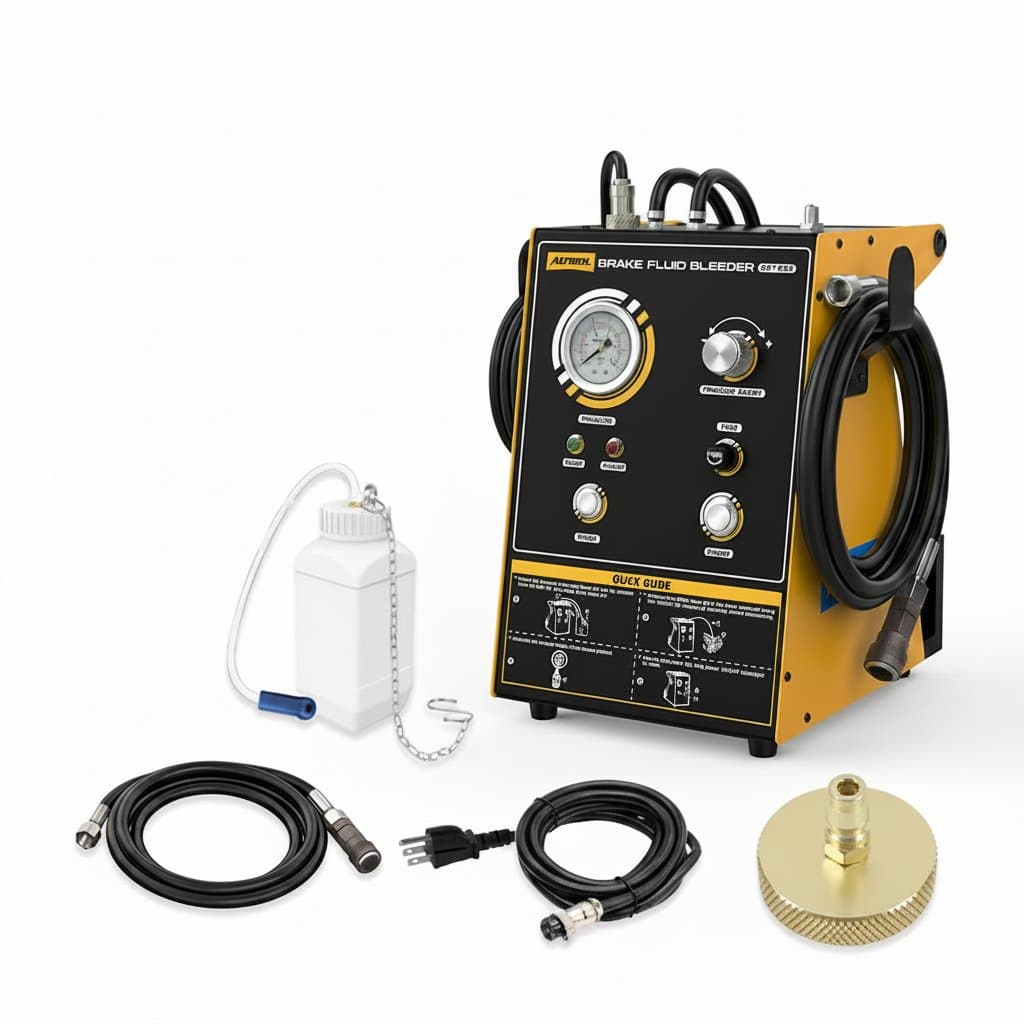
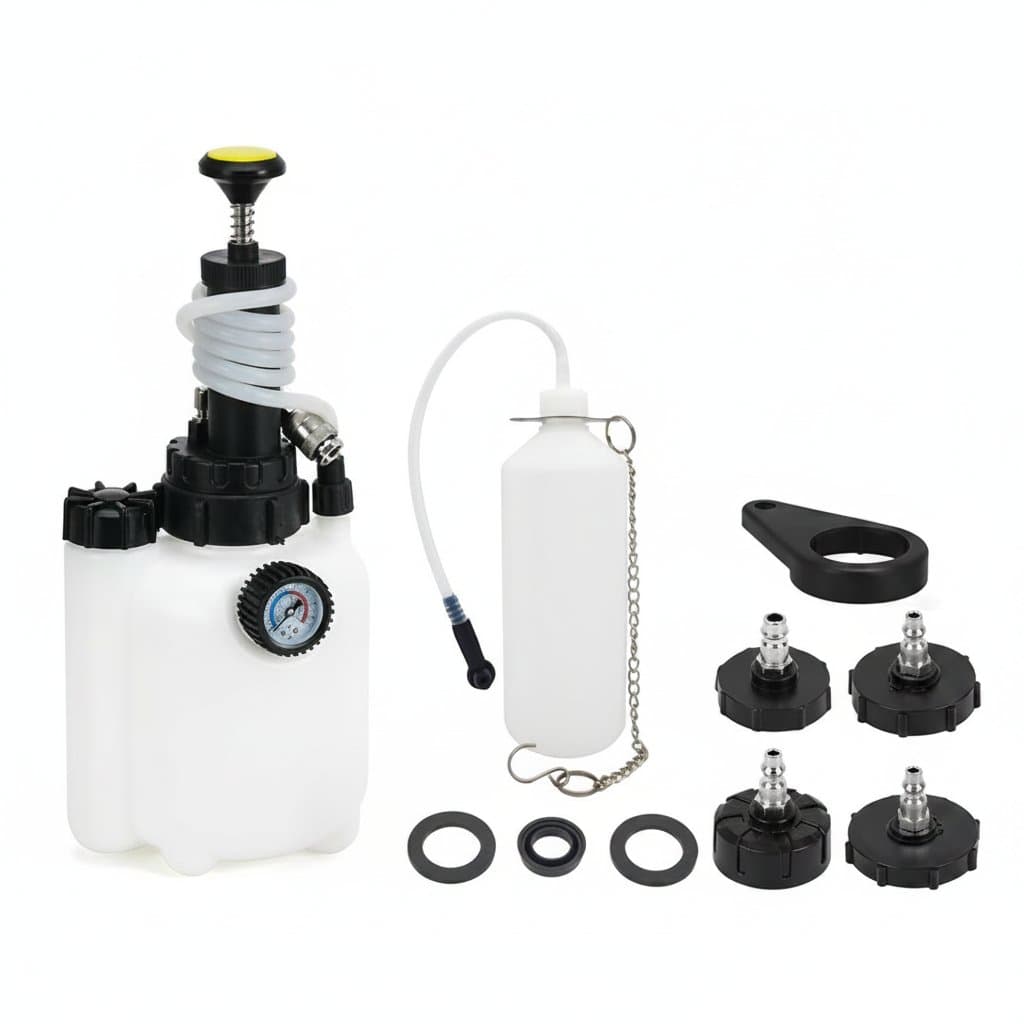
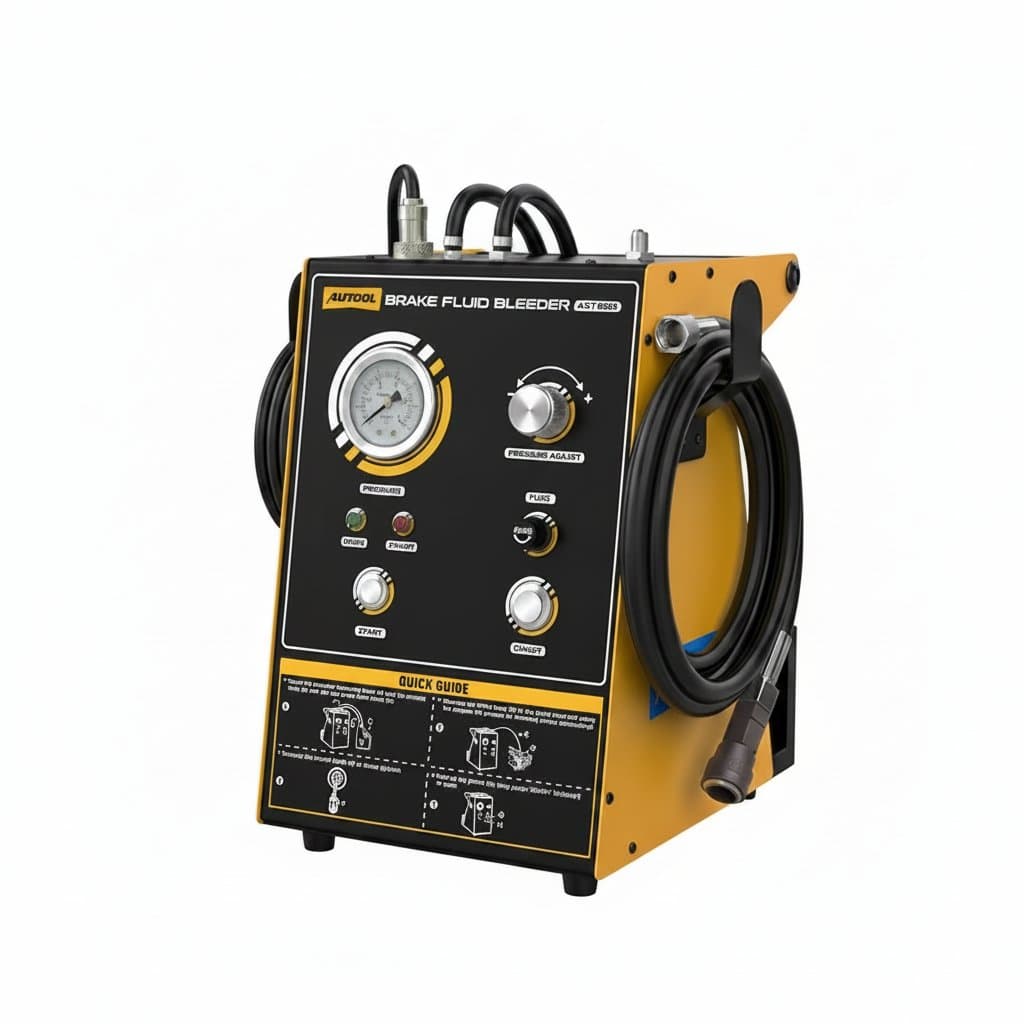
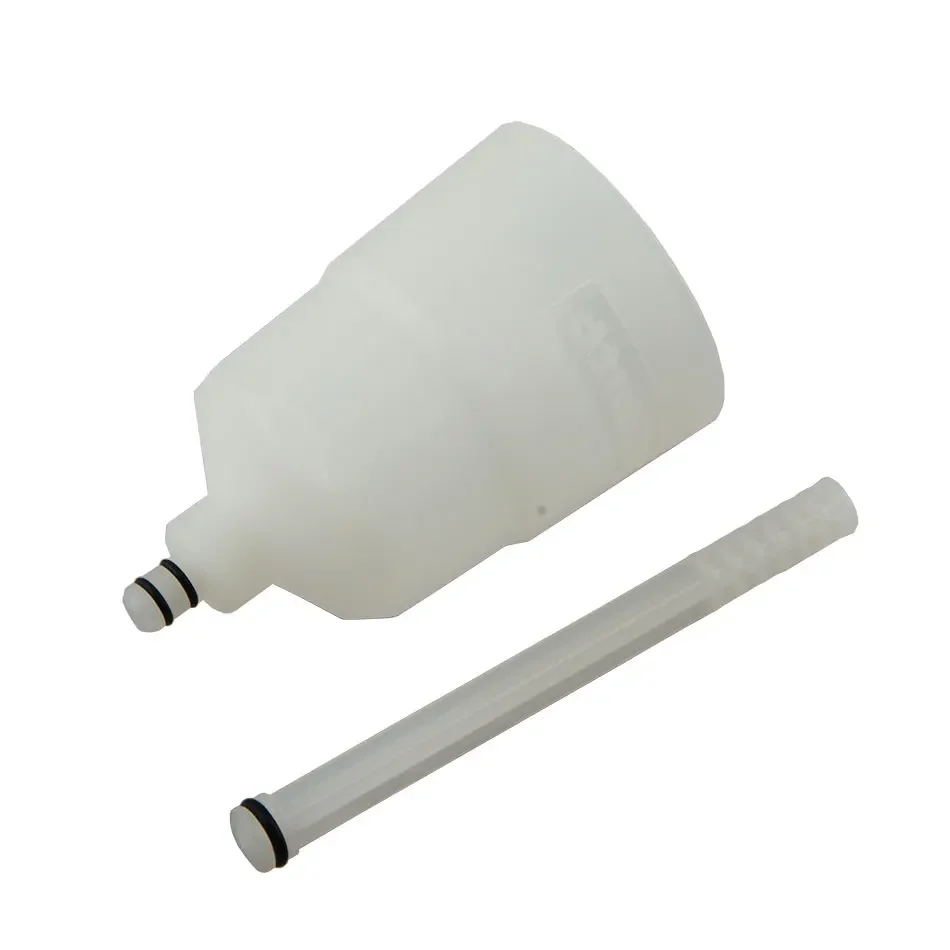
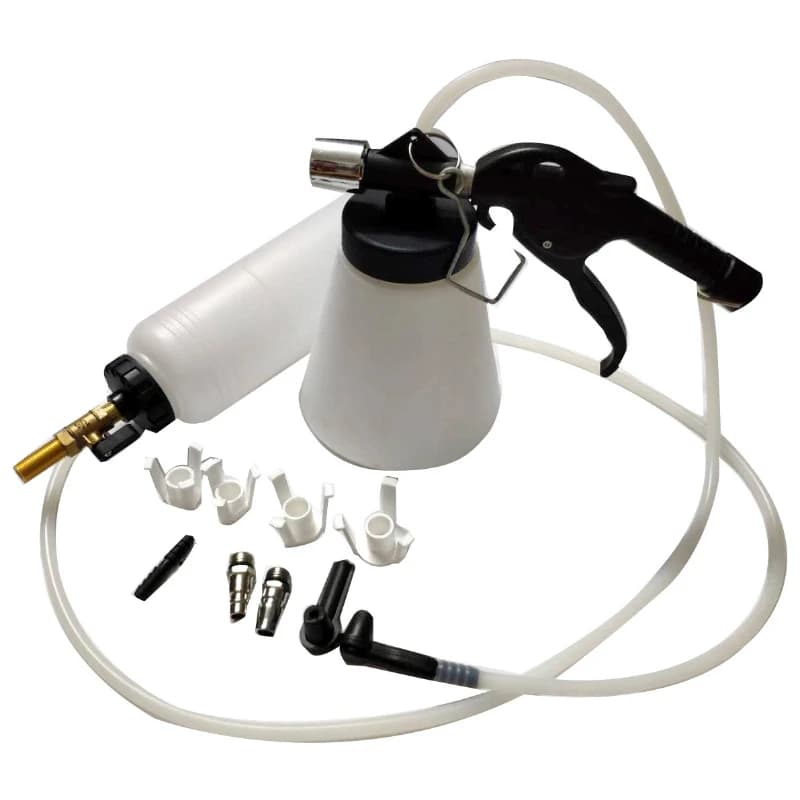
A pressure bleeder pushes from the reservoir instead, which avoids that problem entirely and keeps the reservoir topped as it goes. It is the method most workshops prefer. Gravity bleeding, simply opening a nipple and waiting, works on simple systems and requires nothing but patience, though it will not shift air trapped in an ABS block.
| Method | Strength | Limitation |
|---|---|---|
| Vacuum | Cheap, fast, one person | Draws air past the nipple threads, false bubbles |
| Pressure | Clean, keeps reservoir full, workshop standard | Needs a cap adaptor that fits your reservoir |
| Gravity | Needs almost nothing | Slow, and will not clear an ABS block |
| Two-person pedal | No equipment at all | Needs a second person and pedal discipline |
Brake fluid is changed on time, not on appearance
Glycol-based brake fluid is hygroscopic: it absorbs water out of the air through hoses and seals over time. Water lowers the boiling point, and a system that boils under heavy braking gives a pedal that goes to the floor exactly when you need it most. That is why fluid has a service interval measured in years rather than a condition to inspect.
Fluid that looks dark is overdue, but fluid that looks fine can still be saturated, which is why a moisture tester or simply changing on schedule beats judging by eye. Never mix glycol fluid with silicone DOT 5, and never reuse fluid drained from the system: it has been exposed to air and has picked up whatever it was going to pick up.
ABS systems and where a bleeder is not enough
On a vehicle with ABS, air can sit inside the hydraulic modulator where no amount of bleeding at the calipers will reach it. Getting it out means cycling the pump and the valves, and on most modern vehicles that requires a scan tool with the manufacturer bleed routine. Bleeding the corners alone leaves a pedal that never quite firms up.
The practical rule is that if the system has only been opened at a caliper or a flexible hose, corner bleeding is usually enough. If the modulator, the master cylinder or a hard line has been opened, or if the system has been run dry, plan on a scan tool. Check the sequence too, because the traditional furthest-corner-first order is not universal.
Nipples, adaptors and the things that go wrong
Bleed nipples seize and then shear, which turns a fluid change into a caliper replacement. Work penetrating oil in beforehand, use a proper six-point brake spanner rather than an open-ended one, and crack each nipple loose before connecting any equipment so you find the problem while everything is still together.
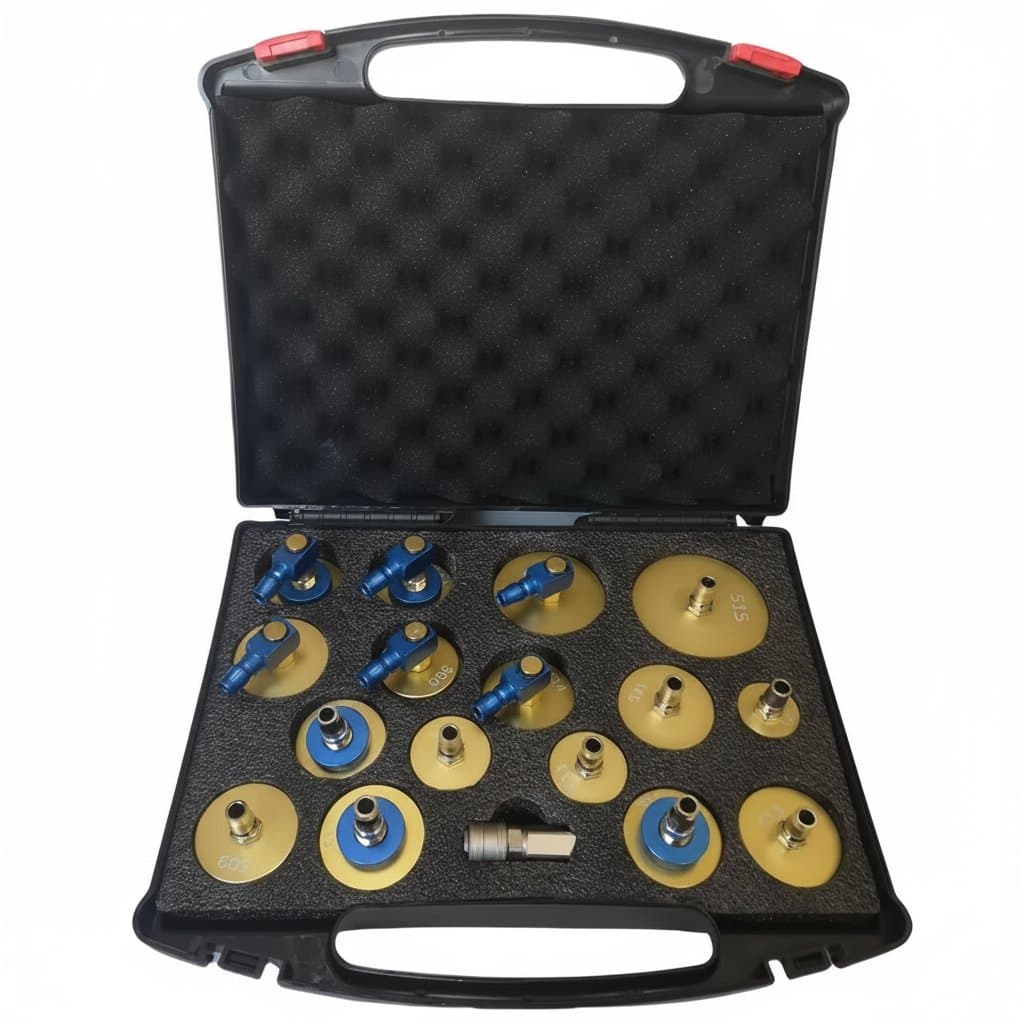
For a pressure bleeder the reservoir cap adaptor is the part that decides whether the kit is usable on your vehicles at all, so check the adaptor set covers what you work on. And catch the old fluid properly: it strips paint quickly and is harmful, so it goes in a sealed container for disposal rather than down a drain.